Published: 26 May 2026. The English Chronicle Desk. The English Chronicle Online.
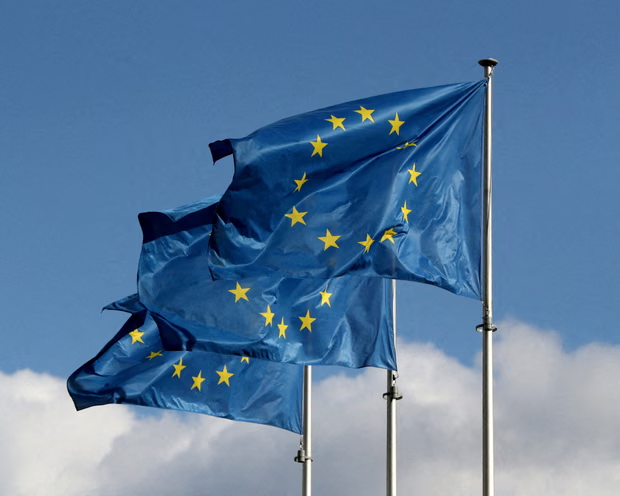
The European Union stands at a historic crossroads as it contemplates major changes. Brussels is currently designing strategy shifts to accommodate an ambitious wave of expansion. Senior officials are actively considering plans to restrict veto powers for future member states. This strategy aims to make the upcoming expansion process palatable to current members. The block intends to welcome several new countries before this decade concludes. Such a shift represents a fundamental transformation in how European decisions are made.
Under specific proposals from the European Commission, new nations would face strict limitations. Prospective states would not receive immediate powers to block collective regional decisions. This restriction would specifically apply to foreign policy matters and sensitive taxation issues. Normally, these areas require total unanimity among all members to pass successfully. The new framework seeks to alter that standard practice for incoming nations.
This policy discussion is highly relevant for the small nation of Montenegro. The former Yugoslav republic currently leads the race among nine official candidates. Home to just over six hundred thousand people, Montenegro aims for entry. The nation hopes to become the twenty-eighth member state by late twenty-eight. A technical drafting group recently convened to outline the formal accession treaty. This meeting indicates that fourteen years of intense negotiations are nearing completion.
However, current members want robust safeguards before opening the continental door wider. European officials want to prevent single countries from paralyzing vital regional decisions. This caution stems from recent difficult experiences involving the nation of Hungary. The previous pro-Russian administration in Budapest frequently blocked key financial packages. Most notably, they stalled a ninety-billion-euro loan intended to support Ukraine.
To prevent future gridlock, negotiators might insert time-limited bans on veto powers. This mechanism would appear directly inside the upcoming Montenegrin accession treaty. If successful, this arrangement will serve as a template for other candidates. Legal experts suggest this approach sits on the borderline of European law. It must remain strictly temporary to avoid creating second-class European citizens.
Meanwhile, Germany is pushing for additional acceleration of the enlargement process. The German Chancellor, Friedrich Merz, recently reached out to fellow European leaders. He advocated for innovative solutions to speed up Western Balkan integration efforts. Merz described the expansion of the union as an absolute geopolitical necessity. He also introduced a controversial proposal regarding temporary associate membership for Ukraine.
This associate status would allow Ukrainian officials to attend high-level summits. It would also grant them representation inside institutions without giving them votes. The German leader argued this reflects the unique reality of a nation. He believes this step would help facilitate ongoing peace talks with Russia. This suggestion did not receive a warm welcome from leadership in Kyiv.
President Volodymyr Zelenskyy quickly rejected the concept of partial membership on social media. He insisted that his nation deserves a complete and equal European position. The Ukrainian leader emphasized that anything less than full inclusion remains unacceptable. This disagreement highlights the complex diplomatic balancing act currently facing continental leaders.
European expansion plans had previously stalled for a significant period of time. However, the full-scale invasion of Ukraine changed the geopolitical landscape completely. The conflict injected urgent momentum into long-dormant membership talks with eastern neighbors. The European Commission subsequently suggested that new entries could occur by thirty-thirty. Officials identified both Montenegro and Albania as the most advanced candidate nations. They also praised Moldova for making rapid legislative progress over recent months.
Introducing a temporary delay on veto powers serves as a primary safeguard. Existing members must achieve total unanimity to welcome any new state into the fold. Officials are particularly worried about ratification votes in the nation of France. The French public will head to the polls for presidential elections next year. Public skepticism regarding the expansion of the bloc is rising significantly there. Recent polling indicates less than half of French respondents support further enlargement.
European diplomats argue that creative thinking is essential to secure continental stability. This creativity is vital across the Western Balkans, housing seventeen million people. Both Russia and China are actively trying to expand influence in that region. Observers believe Brussels must act decisively to counter these external geopolitical pressures.
One diplomat confirmed that delaying veto rights is a highly constructive solution. Another official noted that ongoing debates focus on mutual benefits for everyone. Internal reforms and unique treaty features are central to these complex discussions. Germany continues to lead the charge for deep structural updates to voting.
The German Foreign Minister, Johann Wadephul, spoke clearly about these institutional challenges. He stated that an enlarged union cannot function under old operational rules. A bloc with over thirty members requires streamlined decision-making to avoid total paralysis. However, the executive branch fears that waiting for treaty changes takes time. Demanding total consensus on internal reforms could delay urgent enlargement indefinitely.
Among all current candidate nations, Ukraine presents a uniquely challenging scenario. The country is distinguished by its massive geographic size and ongoing conflict. Furthermore, the estimated costs of national reconstruction are truly staggering and historic. Independent assessments placed the rebuilding cost at over five hundred billion dollars. This immense figure represents three times the total size of the Ukrainian economy.
European officials believe Ukraine can complete technical requirements within four years. However, the actual date of entry remains an intensely political question. Most leaders view entry as something tied directly to a final peace settlement. Thinktank experts believe a temporary block on veto powers is reasonable.
Engjellushe Morina, a senior fellow, shared insights on this diplomatic strategy. She noted that a temporary restriction is not an overly drastic measure. Politicians will likely use this tool to sell expansion to skeptical voters. The mechanism acts as a reassuring precautionary safeguard for anxious domestic electorates.
This strategy also protects the wider union from sudden internal political shifts. For instance, a new member could theoretically elect a pro-Russian government later. Brussels wants to waterproof the institution against these difficult hypothetical scenarios. The strategy provides a legal buffer against unexpected national policy reversals.
Leadership within the Montenegrin government maintains a positive outlook on the situation. Official sources confirm their ultimate goal remains complete and equal European integration. They desire all the rights and responsibilities that come with full membership. However, Podgorica does not oppose the introduction of reasonable safeguard mechanisms. They believe these tools can ensure the long-term sustainability of domestic reforms.
Related News:
 Spain Shuts Airspace to US Military Over Iran Conflict
 Italy Faces Third Successive World Cup Absence After Loss
 Spain Faces Backlash Over Xenophobic Chants in Egypt Draw
 Ukraine strikes Tuapse as oil disaster worsens
 Global order shifts amid Trump-era turmoil
 Putin Declares Russia Victory at Scaled Victory Day Parade
 Greece Probes Mystery Explosive Drone in Ionian Waters
 Romania’s Judicial Crisis: A System Under Siege
 Chaos at Valdebebas: Florentino Pérez Calls for Elections
 Zelenskyy warns over Oreshnik threat as Kyiv hit
 Cannes filmmakers split over AI’s role in cinema
 Former ICC prosecutor condemns US sanctions
 Russia Hits Kyiv With Hypersonic Ballistic Missile
 Saudi Officials Report Zubaidi Flee Before Yemen Peace Talks
 UK Targets in New York Bomb Threat Hoax: Man Jailed
 Gambia Supreme Court Hears Case to Overturn FGM Ban
 Trump targets Iran trade with 25% tariff warning
 US Senate rejects resolution limiting Trump military powers
 Gulf states warn Trump Iran strikes risk wider Middle East war
 Machado Trump medal gesture reshapes Venezuela power struggle
 Geopolitical football: Iran, Trump and the World Cup clash
 EU weighs response amid Greenland tariff crisis with Trump
 Shinzo Abe’s killer receives life sentence in Japan
 EU Says US Ties Have Suffered ‘Big Blow’ After Greenland Crisis
 China General Under Investigation Amid Leadership Purge
 Philippines ferry disaster leaves 15 dead, dozens missing
 Cambridge Faces Scrutiny Over Arms Investment Transparency
 Portugal Election Delivers Socialist Win as Far Right Surges
 Concerns rise for Canberra boy amid Iran detention fears
 Champions League Thrills as Atalanta and Galatasaray Advance
 Ukraine Sends Drone Experts to Defend US Bases in Jordan
 Abramovich Chelsea Sale Cash Faces Jersey Probe
 Yvette Cooper: UK Must Follow Principles, Not US Pressure
 Jury Rules Meta and YouTube Liable for Addictive Design
 The Woman Guarding Earth From the Threat of Asteroids
 Exiled Tycoon Warns of New Russian Attacks on UK Soil
 LA 2028: Millions of Affordable Olympic Tickets Announced
 Trump Slams Europe as Transatlantic Tensions Boil Over
 Inside the Deceptive Machine: A Former Producer Speaks Out
 A Global Voice For Justice: Stephen Lewis Dies At Age 88
 Hope and Fear as Iranians Flee Across the Turkish Border
 Reform UK Pledges To Halt Visas Over Reparations Demands
 US and Iran Agree to Two-Week Provisional Ceasefire
 Starmer visits Gulf as US and Iran agree ceasefire
 Pakistan Brokers Historic Peace Deal Amid Rising Tensions
 Trump Signals Hope for New Iran Talks as Ceasefire Fades
 US and Iran Pursue Extension of Ceasefire via Pakistan
 The General’s Gambit: Pakistan’s New Role in Global Peace
 Mexico, Spain and Brazil call for Cuba dialogue amid crisis
 Rat Poison Found in Baby Food Sparks Major Recall Row
 Pakistan’s Ambitious Bid for Middle East Peace
 Israeli Soldiers Jailed Over Vandalism of Lebanese Statue
 Trump Weighs Sending Afghan Allies to the Congo
 Trump Threatens UK With Big Tariff Over Tech Tax
 Prominent Voices Challenge Palestine Action Ban
 Security Scrutiny After Washington Shooting Incident
 Merz Criticises US Approach in Iran Conflict
 UK Envoy Sparks Controversy Over Special Relationship Claims
 Ukraine Urges UK to Seize Russian Oil Tankers
 US Calls Australia Media Law “Foreign Extortion”
 The Billionaire’s Secretary and the £1m Fraud
 Arteta urges Arsenal to step up in Atlético semi-final
 Mission to the World’s Edge: A Heroic Rescue in Tristan
 US and Mexico Face Heatwave as Floods Batter South Africa
 Mexico’s Missing: State Complicity in a Growing Crisis
 French Patient Told Hantavirus Was Just Anxiety
 Putin Signals War End as Russian Momentum Stalls
 Lee Lai Makes History with Landmark Stella Prize Victory
 Philippine Senator Flees After Days Under Senate Siege
 Alberta Separatist Bid Blocked by Canadian Court
 Big Tobacco Under Fire Over Controversial New Ad Campaign
 Court Upholds Landmark Win for Transgender Rights
 Liberal Senator Criticises Immigration Rhetoric
 Senate Moves to Restrict Trump’s War Powers on Iran
 ICC Arrest Warrant Threat Sparks West Bank Retaliation
 Taliban Codifies Strict New Marriage and Divorce Legislation
 Tony Abbott Returns as New Liberal Party President
 Pope Meets Families in Italy Toxic Waste Zone
 Discontent grows around Putin amid war strain
 Trump Diplomacy Faces Hurdles from Tehran to Tbilisi