Published: 26 May 2026. The English Chronicle Desk. The English Chronicle Online.
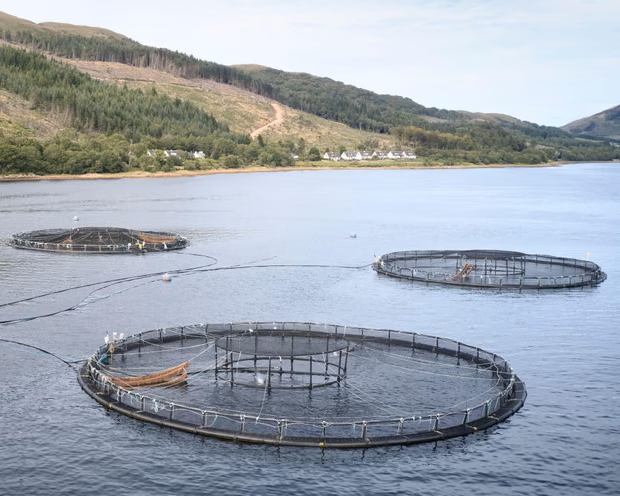
A major transparency row has erupted across the British aquaculture sector this week. Millions of farmed fish deaths have finally been disclosed to the public domain. These catastrophic losses occurred due to accidental poisoning and severe suffocation incidents. The grim realities were hidden inside closely guarded government animal welfare files until now.
An official watchdog recently issued a groundbreaking ruling forcing the release of information. This critical decision has exposed severe operational failures within Scotland’s multi-million-pound seafood industry. Environmental campaigners and animal welfare advocates have long suspected widespread problems on these sites. The newly published data confirms that massive mortality events happened regularly across several years.
The UK government’s Animal and Plant Health Agency previously blocked these files. Officials routinely refused to release the detailed inspection reports to independent investigators. The agency argued that public disclosure would cause significant detriment to commercial entities. They claimed that revealing operational failures would unfairly damage the reputations of companies. This protective stance sparked intense criticism from various transparency groups across the country.
However, the Information Commissioner’s Office looked closely at the ongoing secrecy policy. The commissioner officially ruled there were no valid grounds to withhold these documents. This legal decision was immediately hailed as a historic watershed moment for transparency. Campaign group Animal Equality UK strongly praised the ruling for empowering the public. The decision effectively broke the culture of secrecy surrounding corporate livestock production methods.
The ruling successfully triggered the initial release of several key animal health reports. These documents clearly outline the staggering scale and specific causes of fish mortality. One report detailed an incident at an innovative on-land salmon farming facility. This particular site was operated by Mowi, the largest salmon producer in Scotland. The records show that over one hundred thousand fish suffocated there recently.
This massive suffocation event occurred directly because a worker left the station unattended. The vital oxygen supply ceased completely while the system was left without supervision. In a separate incident at the same site, another disaster struck quickly. A sudden buildup of toxic hydrogen sulphide gas proved absolutely lethal to livestock. More than one million fish died within a brief ten-hour window there.
Despite the immense scale of this loss, regulatory bodies took no action. The Animal and Plant Health Agency failed to issue any formal enforcement penalties. Another official inspection report detailed similar severe issues at a different farming site. This facility was operated by Bakkafrost and held prestigious RSPCA welfare certification. Over six hundred thousand fish died from toxic gas buildup there in 2022.
The exact same lethal problem recurred on an even larger scale months later. This second gas buildup killed more than one and a half million fish. Once again, the government regulatory agency issued no formal fines or penalties. Critics argue that this lack of enforcement shows a pattern of regulatory failure. The industry appears to operate without facing meaningful consequences for major operational errors.
Similar systemic issues were also uncovered at a smaller independent trout farming facility. Inspectors discovered that approximately seventy thousand fish had died there during 2023. The remaining seven thousand survivors were subsequently killed for being economically unviable. Shockingly, the farm operator had never reported any deaths to official authorities. They completely bypassed the mandatory reporting systems managed by the Fish Health Inspectorate.
The regulatory response to this serious undeclared mortality event was remarkably lenient. The agency merely advised the operator to seek professional veterinary advice via email. They also sent a digital copy of the standard code of good practice. Campaigners argue this soft approach does nothing to deter future welfare violations. It demonstrates a worrying reliance on voluntary compliance rather than strict legal enforcement.
In reaching its final decision, the Information Commissioner’s Office exposed flawed logic. The agency had already released similar inspection reports voluntarily in the past. This previous disclosure heavily weakened their legal argument for withholding more recent files. Furthermore, the most controversial reports dated back to the year 2024. This timeline undermined claims that disclosure posed a current risk to business.
Despite this major legal victory, the battle for total transparency is not over. The new ruling does not mean future inspection reports will be published automatically. Citizens must still submit individual freedom of information requests for every document. This bureaucratic hurdle means the industry is not yet subject to routine openness. Campaigners must continue fighting through legal channels to monitor ongoing animal welfare standards.
The executive director of Animal Equality UK spoke passionately about the fresh disclosures. Abigail Penny stated firmly that the agency’s culture of secrecy must end now. She insisted that the public has a right to know about farming conditions. Consumers deserve to see whether tax-funded regulators are performing their duties correctly. The current system appears to protect corporate profits over genuine animal welfare concerns.
Penny explained that British people are utterly exhausted by this repetitive cycle. Large corporations repeatedly inflict severe suffering on animals while showing very little remorse. Meanwhile, the official bodies paid by taxpayers to hold them accountable look away. This tight-lipped regulatory approach serves only the interests of global salmon farming conglomerates. The charity demands that this vital information must never be buried in bureaucracy.
To push for further disclosures, Animal Equality recently published shocking undercover footage. The charity claims this video was recorded at a prominent Scottish Sea Farms site. The covert filming took place at the company’s Fiunary farm in March. It allegedly shows salmon suffering from total blindness and deep, open body wounds. The fish also exhibit severe sea lice infestations and missing facial features.
This specific farm site directly supplies major high street supermarkets across the United Kingdom. Scottish Sea Farms provides premium salmon products to Marks & Spencer retail stores. Additionally, the Fiunary facility is known to provide salmon products to Co-op supermarkets. The revelation has sparked intense concern among ethical shoppers who trust these brands. Consumers expect high welfare standards from supermarkets that charge premium prices for seafood.
Animal Equality has now instructed specialist lawyers to take formal legal action. The firm Advocates for Animals has submitted a detailed complaint to regulators. They are demanding that the government confirm exactly what enforcement action was taken. Furthermore, they want all inspection reports for this operator released immediately to public view. This move aims to leverage the commissioner’s ruling to uncover recent data.
An official spokesperson for the regulatory agency defended their current operational policies. They stated that the organization remains fully committed to openness and transparency. Every single information request is carefully considered on a strict case-by-case basis. Exemptions are only applied on grounds of confidentiality or sensitive commercial interests. This is necessary when full disclosure might prohibit the agency from working effectively.
The spokesperson added that they treat all poor welfare reports extremely seriously. They will not hesitate to take strong action if cruelty is found. Meanwhile, an industry spokesperson responded on behalf of all the named producers. They claimed that activist groups often present a highly misleading picture of farming. They asserted that Scotland’s salmon farmers actually support transparency around the popular fish.
The industry group stated that farms operate to world-leading welfare standards daily. These sites are backed by strict regulation, regular audits, and constant veterinary oversight. Survival rates are voluntarily published by the sector and remain at record highs. Furthermore, over one billion pounds has been invested in modern technology and care. This massive funding ensures that livestock welfare continually improves across the entire sector.
A major supermarket chain has also responded quickly to the unfolding public relations crisis. A Co-op spokesperson emphasized that they set incredibly high standards for all suppliers. They strictly use RSPCA-assured Scottish salmon across their entire national product range. The company is currently engaging urgently with the supplier to understand the situation. They will take swift action if their strict animal welfare standards are unmet.
Related News:
 Reeves Faces Setback as Labour May Miss Homes Target
 Kate Winslet to Narrate Film Highlighting King’s Environmental Mission
 Trump’s UK Ambassador Urges North Sea Drilling to Strengthen US Ties
 UK Bans Fake Numbers: Scammers Lose Their Trick
 Millionaires group urge Reeves to introduce wealth tax to ‘lift kids out of poverty’
 Reeves rejects £1bn plea for NHS redundancy payouts
 PM Condemns Leaks, Vows Loyalty to Ministers and Stability
 Inside the Helpline Protecting Missing Children in the UK
 PlayStation PS5 Deals Hit Lowest Prices Ahead of Black Friday
 Five-Year-Old Dies After Rare Tonsil Surgery Complication
 Starmer Says Labour’s Economic Plan Needs Years to Deliver
 UK unemployment rises to four-year high of 5.1% before budget
 Wiltshire Police Use Lasso to Catch Rampaging Village Goat
 Coasting Drinks: The Trend Redefining Alcohol Enjoyment This New Year
 Rising Hate Crimes Threaten Safety on UK Public Transport
 Starmer Faces Parliamentary Battles Over UK-EU ‘Reset’ Plan
 Met Police Vetting Failures Let Serial Rapists Remain
 Google Employee Claims Redundancy After Harassment Report
 Fatal Bolton Taxi Crash Claims Three Teens and Driver
 ScottishPower Tops List of Worst UK Energy Suppliers
 Judi Dench Champions Fight to Save London’s Green Spaces
 Crowborough Camp Welcomes First Asylum Seekers
 BBC Funding Crisis: Tim Davie Warns of Jeopardy Ahead
 Storm Chandra floods Somerset, triggers major incident declaration
 Artificial intelligence will cost jobs, admits Liz Kendall
 Older Women Vanish from BBC Screens, Review Confirms Bias
 Mandelson Faces Police Inquiry Over Epstein Leak
 Streeting moves on doctor pay to end strike dispute
 UK reports baby formula toxin poisoning cases across the country
 Morgan McSweeney downfall shocks Labour leadership
 Send spending gap leaves deprived areas behind
 Hidden Crisis: Domestic Abuse Suicide Toll in UK
 UK Unemployment Rate Climbs to 5.2% Peak
 Farage Unveils Reform UK Frontbench Team
 BBC World Cup Presenting Duties Shared Among Trio
 Placenta Accreta Warning as Hunt Urges Action
 Wales Approves Assisted Dying Bill Consent
 CPS Updates Guidance on Honour-Based and Dowry Abuse
 Rolling Hills and Heritage: A Car-Free Break in Leicestershire
 Corbyn Leads Your Party in Coordinated Left-Flank Strategy
 Asylum Seekers to Work After Year-Long Wait
 Starmer Row as Greens Demand Apology
 Inquiry into HMRC child benefit errors launched by NAO
 Rising Costs Force Families to Rethink Days Out
 Scott Mills Sacked by BBC Over Personal Conduct Claims
 Palantir Boss Defends NHS Deal Amid Government Break Clause
 Relationship with Trump may be beyond repair, Starmer warned
 UK Government Poised to Revive Stalled Hillsborough Law
 Home Office Faces Legal Risks Over Asylum Hotel Living
 Crisis in NHS Surgery Scheduling Hits Patients Hard
 Blue Badge Abuse: The Rising Tide of Public Hostility
 Scott Parker Leaves Burnley After Premier League Drop
 Silent Tracks: Rail Line Without Passengers
 RFU Backs Borthwick Despite England’s Poor Six Nations
 Major test for Labour as polls open in Great Britain
 Keir Starmer Struggles to Secure His Grip on Downing Street
 Farage Faces Standards Probe Over Cash Property Purchase
 Closing the Gap: UK Pensions Commission Demands Action
 Russian Electronic Attack Targets UK Defence Chief Jet
 UK Shoppers Face Prolonged Price Rises At Tills
 Tube Strike Brings Capital to a Standstill Over Shift Disputes
 BP Stands Firm on Amanda Blanc Amid Boardroom Storm
 Teaching Machines Right From Wrong in the Digital Age
 UK House Prices Drop For Third Month Due To War Fears
 The Hidden Crisis Eroding Trust in British Communities
 Deepfake Abuse on X Sparks Safety Concerns for Dissidents
 Stolen Mobiles Could Soon Become Useless Bricks
 Clean Air Initiatives Spark Major Fall in London Hospital Admissions
 United Kingdom Politics Worse Now Than Before Brexit, Warns MP
 Russian Tanker Captain Remanded in UK Court After Channel Seizure
 Shocking Zoo Incident Sparks Attempted Murder Probe
 The Hybrid School Revolution Defying the Social Media Ban
 UK Care Crisis: Row Explodes Over New Visa Settlement Rules
 Sainsbury’s Boss Optimistic As Grocery Inflation Eases
 NHS Urges Investigation For Irregular Periods
 US Airman Avoids British Court in Indecent Exposure Case
 Farage Warns Sky News Following Financial Inquiry
 Ann Widdecombe, Formidable Political Figure, Dies at 78
 UK Schools Struggle as Classrooms Top 40C
 Westminster Council Threatens Charing Cross Soup Kitchen