Published: 19 June 2026
The English Chronicle Desk
The English Chronicle Online
The Scottish Conservatives have celebrated a historic breakthrough after winning a Westminster by-election, marking the party’s first such victory in Scotland in more than half a century.
The result has been widely viewed as a significant moment in Scottish politics, providing a boost for the Conservatives while raising fresh questions about the electoral fortunes of their rivals ahead of future contests.

Party leaders described the outcome as evidence that voters remain willing to support the Conservatives in key constituencies despite challenging political conditions across the United Kingdom.
The by-election attracted considerable attention from political analysts, who saw it as an important test of public opinion and a potential indicator of wider trends within Scottish politics.
Conservative campaigners focused heavily on issues including the economy, public services, taxation and constitutional questions during the campaign, arguing that voters were looking for practical solutions rather than political division.
Following the announcement of the result, senior Conservative figures hailed the victory as a reward for local campaigning efforts and a sign that the party’s message was resonating with sections of the electorate.
The win is particularly notable because Westminster by-elections in Scotland have historically been difficult contests for the Conservatives, with the party often struggling to translate support into parliamentary gains.
Political historians noted that securing a by-election victory after more than 50 years represents a rare achievement and could become a symbolic milestone in the party’s efforts to rebuild its presence north of the border.
Meanwhile, rival parties sought to play down the significance of the result, arguing that by-elections are often influenced by local factors and do not necessarily predict outcomes at future general elections.
Labour representatives acknowledged the importance of the contest but insisted that broader electoral trends would ultimately be determined by national issues and government performance.
The Scottish National Party also faced scrutiny following the result, with commentators questioning whether shifting voter priorities may be reshaping the political landscape in some constituencies.
Analysts suggested that concerns about living costs, healthcare, education and economic growth played a significant role in influencing voters during the campaign.
The by-election result comes at a time when Scotland’s political environment remains highly competitive, with multiple parties seeking to position themselves as the strongest voice for Scottish interests at Westminster.
For the Conservatives, the victory provides an opportunity to claim momentum and demonstrate that they remain capable of winning seats in areas where electoral success has often proved elusive.
Party officials argued that the result reflects growing public interest in policies focused on economic stability, investment and public service reform.
However, political experts cautioned against drawing sweeping conclusions from a single by-election, noting that voter behaviour can vary significantly between local contests and nationwide elections.
Even so, the symbolic importance of the victory is unlikely to be overlooked.
Winning a Westminster by-election in Scotland for the first time in more than five decades gives Conservative strategists a high-profile success story and may strengthen morale among party activists.
The result is also expected to intensify debate over the future direction of Scottish politics, particularly as parties prepare for upcoming electoral battles at both Scottish and UK levels.
Observers say the outcome highlights the increasingly fragmented nature of the political landscape, where traditional loyalties can no longer be taken for granted and voters appear more willing to shift support between parties.

As celebrations continue among Conservatives and rivals assess the implications, attention will now turn to whether the party can build on its success and convert a historic by-election win into longer-term political gains.
For now, the result stands as one of the most notable electoral surprises in recent Scottish politics and a reminder that even long-standing political records can eventually be broken.
Related News:
 SNP Charging £750 per Ticket for Business Event Featuring ‘Beer and Blether’ with Stephen Flynn
 Sir John Curtice: Which Issues Will Decide the Elections
 Anas Sarwar Urged to Reform Westminster as Well as Holyrood
 Tommy and Gail Sheridan to Stand for New Political Party After Alba Demise
 “The Power Paradox”: Can Scotland’s Politicians Truly Bypass the ‘Hormuz’ of Energy Pricing?
 UK Must Act with Courage and Clarity on Israel-Palestine Conflict, Says Foreign Affairs Committee Report
 Chancellor Faces Mounting Pressure Amid “Impossible Trilemma” Over Tax Rises
 Radioactive Leak at UK’s Nuclear Warhead Base Sparks Outcry Over Safety and Secrecy
 Mutual Inconvenience: Why Alaska Was Chosen for the Trump-Putin Summit on Ukraine
 Chancellor Rachel Reeves Pushes for Sweeping Changes to Environmental Protections to Accelerate Development
 Is the UK Ready to Put Boots on the Ground in Ukraine? Assessing Military Capacity and Challenges
 Police Scotland Spends £500,000 Compensating Officers Over Trump Visit
 Britain’s Migration Challenge: Rising Asylum Numbers and Hotel Pressures
 Elon Musk Sparks New Controversy by Backing Tommy Robinson Amid Farage Feud
 Urgent Action Needed on Windrush Compensation as Survivors Speak of “Waiting to Die”
 Tanni Grey-Thompson Faces Abuse Over Opposition to Assisted Dying Bill
 TfL Invites RMT to Resume Talks as London Tube Strikes End
 Nigel Farage Unveils Controversial Immigration and Welfare Plans at Reform UK Press Conference
 Ed Miliband Warns UK Government on X, Citing Elon Musk as a “Dangerous Influence”
 Kemi Badenoch Unveils ‘Golden Rule’ to Halve Spending Cuts for Deficit Reduction at Tory Conference
 UK border officers deployed to Balkans to tackle migrant smuggling
 UK MPs warn of repeat riots over online misinformation
 Army Barracks to House Migrants as Hotels Phase Out
 Trump’s UK Ambassador Urges North Sea Drilling to Strengthen US Ties
 Millionaires group urge Reeves to introduce wealth tax to ‘lift kids out of poverty’
 Reeves rejects £1bn plea for NHS redundancy payouts
 PM Condemns Leaks, Vows Loyalty to Ministers and Stability
 Major Rent Reform Ends No-Fault Evictions in England
 Starmer Says Labour’s Economic Plan Needs Years to Deliver
 England delays four mayoral elections amid criticism
 UK Ministers Drop Foreign Student Targets for Global Education Push
 No Gas Boiler Ban as UK Warm Homes Plan Backs Heat Pumps
 Shinzo Abe’s killer receives life sentence in Japan
 Police response times face strict new national limits
 Labour policing overhaul sparks fears over growing central control
 Starmer warns of toxic division politics in Reform challenge
 Palantir contracts face UK halt calls over transparency
 Diane Abbott Slams Applause for Keir Starmer as PM Vows to Stay On After Mandelson-Epstein Row
 Could Manchester Lead the UK’s Economic Revival?
 Starmer Weighs Fast-Tracking Defence Boost
 Farage to Name Jenrick as Reform Chancellor Pick
 Civil Service Pay: Union Urges Ministers to End ‘Barking Mad’ Limits
 Antonia Romeo appointment sparks criticism
 Australian PM Says Former Prince Andrew Has Suffered ‘Extraordinary Fall’ but That Won’t Prompt Republic Referendum
 Farage Chagos Islands Row Sparks Fury
 Lord Mandelson Released on Bail After Arrest on Suspicion of Misconduct in Public Office
 Reform UK targets workers’ rights repeal
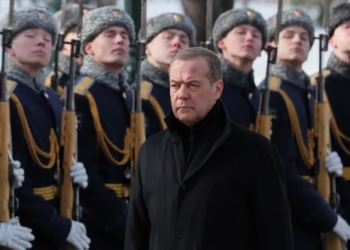 Russian Trade Routed Through British Islands Exposed
 Mandelson Arrest: Met Apologises to Hoyle
 No 10 Will Have No Say on Which Mandelson Papers Are Released
 Police Scotland Pays £8m Compensation to Staff
 Minister Meets Crews Who Will ‘Take Out’ Iranian Drones
 Thousands Protest Iran Strikes Outside US Embassy London
 UK Oil and Gas Supplies Reassured Amid Middle East Concerns
 Teen Wins Payout After TRNSMT Crush Horror
 UK Forces Ready to Seize Russian Shadow Fleet Vessels
 US Lawmaker Demands Testimony Over Sarah Ferguson’s ‘Close Epstein Ties’
 The 8 Million Dilemma: Why Britain’s Disability Safety Net is Facing a ‘2026 Reckoning’
 Labour to Back Down on Foie Gras and Fur Bans to Ease EU Trade Deal
 ‘It’s Heartbreaking’: NHS Training Freeze Leaves Resident Doctors in Limbo
 The Lasting Shadow: How Austerity Redefined UK Childhood
 Is Britain Ready? Experts Warn of ‘Bizarre’ Military Delay
 Foreign Office Chief Resigns Amid Mandelson Vetting Row
 “Jobs Will Go”: Rishi Sunak Warns AI is Already Eroding Entry-Level Opportunities
 Reform UK Vetting Scrutiny Amid Candidate Scandal
 Crackdown Backfires on UK Climate Protesters
 Reality Check on Reform: Minister Says Outright Abolition of Leasehold “Impossible”
 The “Dry” Life: Teens Trialing Social Media Bans Call Initial Disconnection “Boring” and “Dry”
 “Invisible Agony”: 98-Year-Old Woman Left in “Severe Pain” for Days Amidst Care Backlog
 “An Endurance Test for the Mind”: British Couple Sentenced to 10 Years in Tehran
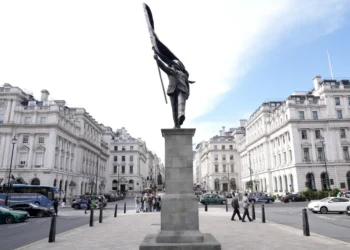 “Stealth and Scaffolding”: The Midnight Logistics Behind Banksy’s Latest London Plinth
 “The Cost of Conviction”: Palestine Action Activists Found Guilty Over ‘Clinical’ Factory Damage
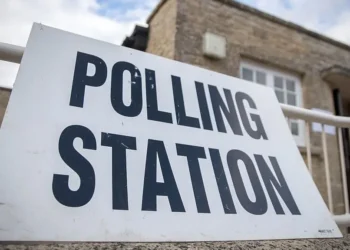 “The Local Gavel”: Polls Open Across Hampshire and Isle of Wight in Delayed ‘Milestone’ Vote
 Major test for Labour as polls open in Great Britain
 Farage Faces New Questions Over Private Helicopter Use
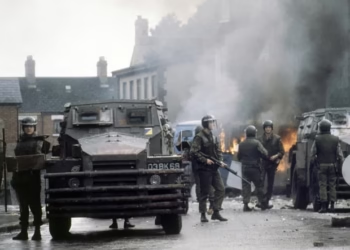 Secret Role of UK Security Services in Troubles Amnesty Law
 UK Faces Most Dangerous Era, Military Chief Warns
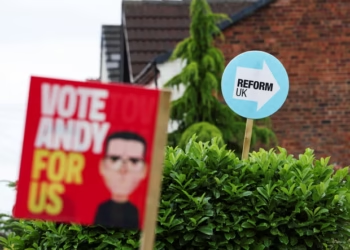 Digital Scrutiny Under the Spotlight in Makerfield
 Modernising the Military: Carns Demands Urgent Procurement Reform
 Prince George Set to Begin Studies at Eton This September