Published: 29 June 2026
The English Chronicle Desk
The English Chronicle Online
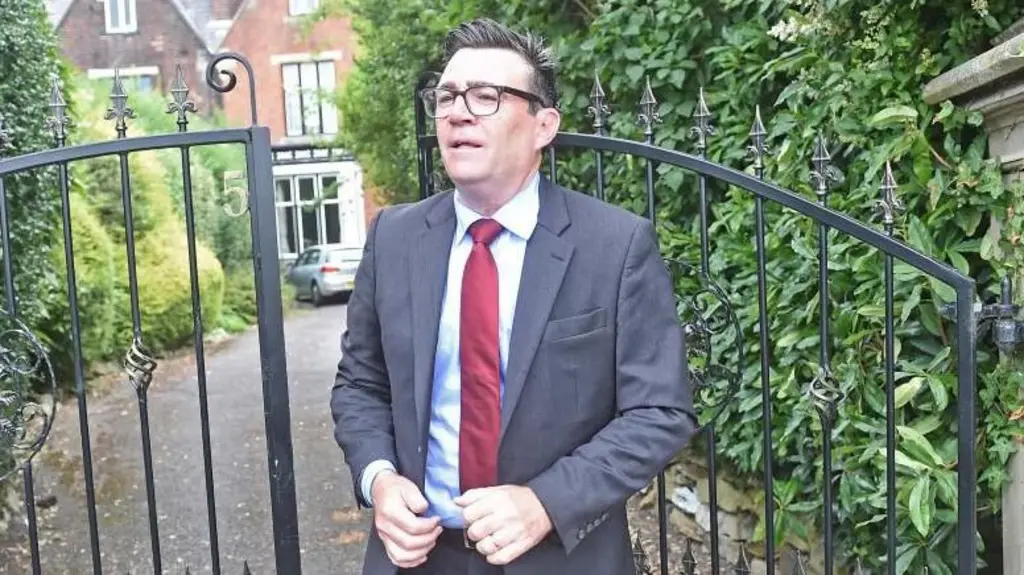
Andy Burnham is set to place regional devolution at the centre of Britain’s political future as he prepares to deliver his first major speech since returning to Westminster, outlining plans designed to transfer greater powers from central government to cities, towns and regional authorities across the country.
The highly anticipated address is expected to provide the clearest indication yet of Burnham’s political priorities following his return to Parliament and growing prominence within national politics.
Supporters say the speech will build on themes that have defined much of Burnham’s public career, particularly his long-standing belief that power, funding and decision-making should move away from Whitehall and closer to local communities.

The former Mayor of Greater Manchester has spent years advocating for stronger regional government, arguing that local leaders are often better positioned than ministers in London to understand and address the challenges facing their communities.
According to those familiar with the plans, Burnham will argue that Britain remains one of the most centralised democracies in the developed world and that excessive concentration of power in Westminster has contributed to regional inequalities, economic imbalances and declining trust in politics.
His proposed reforms are expected to focus on expanding the authority of regional mayors, strengthening local councils and granting greater control over areas such as transport, housing, skills training, economic development and aspects of public services.
The speech comes at a time when questions about regional inequality remain central to political debate.
While London and parts of the South East continue to attract significant investment and economic growth, many communities elsewhere have argued that they have not benefited equally from national prosperity.
Burnham has repeatedly maintained that regional leaders require more tools and resources if they are to address these disparities effectively.
During his years leading Greater Manchester, he became one of the country’s most recognisable advocates for devolution.
He frequently challenged governments over funding arrangements and local decision-making powers, particularly during periods of economic and public health pressure.
Those experiences are expected to feature prominently in his argument for a broader restructuring of governance.
Political analysts believe the speech represents an important moment in Burnham’s attempt to transition from regional leadership to a more national role.
Since returning to Westminster, he has increasingly positioned himself as a politician with ideas extending beyond local government.
By focusing on devolution, he is emphasising a policy area that has become closely associated with his political identity.
Supporters argue that stronger regional government could improve accountability by allowing voters to see more clearly who is responsible for local decisions.
They also contend that devolved authorities can respond more quickly to economic challenges and tailor policies to the needs of specific communities.
Business leaders in several regions have previously expressed support for greater local control over infrastructure projects, workforce development and investment strategies.
Many argue that economic decisions made closer to affected communities can produce better outcomes than nationally imposed solutions.
However, proposals for expanded devolution have also faced criticism.
Some opponents question whether local authorities possess the resources and institutional capacity required to take on additional responsibilities.
Others warn that increasing regional autonomy could lead to inconsistent standards and services across different parts of the country.
There are also concerns about how funding would be distributed and whether wealthier regions could benefit disproportionately from new powers.
Burnham is expected to address such criticisms by arguing that devolution should operate within a framework of national standards and shared objectives.
Rather than weakening the role of central government, supporters say the reforms would create a more balanced relationship between national and local institutions.
The speech is also likely to touch on economic growth and productivity.
Burnham has often argued that unlocking regional potential is essential to improving the country’s overall economic performance.
By giving local leaders greater authority over investment and development, he believes communities will be better positioned to attract businesses, create jobs and improve living standards.
Education and skills training are expected to feature prominently in the proposals.
Regional authorities may seek additional control over vocational education and workforce development programmes, enabling them to align training opportunities more closely with local economic needs.
Housing policy is another area where Burnham has frequently advocated for greater local influence.
Supporters of devolution argue that councils and regional leaders are often best placed to understand housing demand and coordinate development strategies.
The broader political significance of the speech has not gone unnoticed.
With Burnham increasingly viewed as one of Labour’s most influential figures, many observers see the address as an opportunity for him to demonstrate how his experience in local government could translate into a wider national vision.
Political commentators suggest the speech may also help define future debates about the structure of the British state.
Questions surrounding regional inequality, public service delivery and democratic accountability are likely to remain central issues in the years ahead.

For Burnham, the challenge will be convincing both policymakers and voters that devolution offers practical solutions rather than simply institutional reform.
His supporters believe the policy can help reconnect citizens with politics by bringing decision-making closer to everyday life.
Critics remain unconvinced, arguing that deeper economic and social challenges cannot be solved through constitutional changes alone.
Nevertheless, the speech is expected to reinforce Burnham’s reputation as one of the most vocal advocates of regional empowerment in modern British politics.
As attention turns to Westminster and the future direction of national policy, his proposals are likely to fuel renewed debate about who should hold power in Britain and how that power should be exercised.
Related News:
 UK Must Act with Courage and Clarity on Israel-Palestine Conflict, Says Foreign Affairs Committee Report
 The Fight for Trans Safety Is a Fight for Everyone’s Safety — MPs Must Debate This Crucial Issue
 Rylan Clark Criticizes UK Immigration Policies on This Morning, Sparking Public Debate
 Tanni Grey-Thompson Faces Abuse Over Opposition to Assisted Dying Bill
 Nigel Farage Unveils Controversial Immigration and Welfare Plans at Reform UK Press Conference
 Yvette Cooper Signals Global Momentum Towards Gaza Peace Deal Amid Humanitarian Crisis
 UK border officers deployed to Balkans to tackle migrant smuggling
 UK MPs warn of repeat riots over online misinformation
 Russia’s Latest Push to Win US Favors Shows Deep Desperation
 Army Officers Orders to Cut Ties with Men-Only Clubs
 Trump’s UK Ambassador Urges North Sea Drilling to Strengthen US Ties
BBC to Apologise Over Edited Trump Speech Amid Backlash
Trump’s UK Ambassador Urges North Sea Drilling to Strengthen US Ties
BBC to Apologise Over Edited Trump Speech Amid Backlash
 Britain deploys RAF specialists to assist Belgium with drone threats
 Millionaires group urge Reeves to introduce wealth tax to ‘lift kids out of poverty’
 Reeves rejects £1bn plea for NHS redundancy payouts
 PM Condemns Leaks, Vows Loyalty to Ministers and Stability
 Trump Urges Herzog to Grant Netanyahu Full Pardon
 Major Rent Reform Ends No-Fault Evictions in England
 Indian authorities demolish Kashmir home linked to Red Fort blast
 Greene Pushes Epstein Files Amid Trump Fallout
 December Run-Off in Chile as Election Produces No Winner
 Shadow Fleet at Sea: Europe’s Battle Against Illicit Oil Shipping
 Starmer Says Labour’s Economic Plan Needs Years to Deliver
 Khaleda Zia Death in Bangladesh: First Female PM Dies at 80
 US Senate rejects resolution limiting Trump military powers
 No Gas Boiler Ban as UK Warm Homes Plan Backs Heat Pumps
 Sussan Ley leadership milestone shakes Liberal future
 Police response times face strict new national limits
 Australia’s Opposition Coalition Reunites After Rift
 ‘Trump Will Be Gone in Three Years,’ Top Democrats Tell Europe
 Could Manchester Lead the UK’s Economic Revival?
 Australian Families Leave Syrian Camp for Home
 Civil Service Pay: Union Urges Ministers to End ‘Barking Mad’ Limits
 Ukraine Negotiator Reveals What It Feels Like Facing Russia
 Russian Trade Routed Through British Islands Exposed
 American Citizen Killed in Cuba Boat Shooting, U.S. Officials Say
 Iran’s Regime Still Intact — Coming Days Will Test Its Survival
 Police Scotland Pays £8m Compensation to Staff
 Finland Plans to Lift Decades‑Old Ban on Hosting Nuclear Weapons
 Minister Meets Crews Who Will ‘Take Out’ Iranian Drones
 Thousands Protest Iran Strikes Outside US Embassy London
 UK Oil and Gas Supplies Reassured Amid Middle East Concerns
 Nine Days of Strikes Reshape the Middle East
 Trump Pressures Congress Over Save America Act
 Iran War Puts Trump at Political Risk Amid Rising Prices
 After Mugabe: Family Feuds and Legal Battles
 Tommy and Gail Sheridan to Stand for New Political Party After Alba Demise
 Queensland Protest Laws Spark Free Speech Backlash
 Trump Nato threats expose Iran strategy vacuum
 Sri Lanka Sets Weekly Shutdown to Save Fuel
 NHS Satisfaction Rises for First Time Since 2019
 Trump Facing Backlash from Epstein Survivors Over Files
 UK Forces Ready to Seize Russian Shadow Fleet Vessels
 US Lawmaker Demands Testimony Over Sarah Ferguson’s ‘Close Epstein Ties’
 Trump Considers Military Operation to Seize Iran’s Uranium
 The 8 Million Dilemma: Why Britain’s Disability Safety Net is Facing a ‘2026 Reckoning’
 Report Says Pezzullo Acted ‘Recklessly’ in Dealings
 Oil and Diplomacy: Russian Refineries Burn as Zelenskyy Secures Middle East Shield
 Asian Powers Secure Energy Lifelines as Trump’s Hormuz Deadline Looms
 Starmer visits Gulf as US and Iran agree ceasefire
 The Great Chokehold: Why the Strait of Hormuz is the Epicenter of the 2026 Crisis
 Moldova River Crisis Exposes War’s Hidden Cost
 Is Britain Ready? Experts Warn of ‘Bizarre’ Military Delay
 The Fog of War and the Ticker Tape: Suspicious Trades Rile Washington
 The “Dry” Life: Teens Trialing Social Media Bans Call Initial Disconnection “Boring” and “Dry”
 “An Endurance Test for the Mind”: British Couple Sentenced to 10 Years in Tehran
 “The Pivot to Pakistan”: Trump Pauses ‘Project Freedom’ in Hormuz Amid Iran Deal Hopes
 “The Local Gavel”: Polls Open Across Hampshire and Isle of Wight in Delayed ‘Milestone’ Vote
 US Awaits Iran Reply on New Ceasefire Proposal
 Tony Abbott Returns as New Liberal Party President
 Discontent grows around Putin amid war strain
 Secret Role of UK Security Services in Troubles Amnesty Law
 Israel, Lebanon Agree on Fragile Ceasefire Deal
 UK Faces Most Dangerous Era, Military Chief Warns
 Trump Approves $700m Coal Industry Investment
 Israel Strikes Iran After Missile Attack
 Iran Team Arrives in Mexico Amid US Visa Dispute
 Digital Scrutiny Under the Spotlight in Makerfield
 Prince George Set to Begin Studies at Eton This September
 Starmer Set to Announce Exit Plan as Burnham Eyes No 10