Published: 14 August 2026 | The English Chronicle Desk | The English Chronicle Online
Sensitive medical information belonging to transplant patients across the UK was routinely transmitted through an unencrypted pager network, prompting NHS Blood and Transplant to admit a data breach and launch an internal investigation.
The disclosure has raised fresh concerns about the continued use of ageing communication technology within parts of the health service, particularly where highly confidential information is involved.
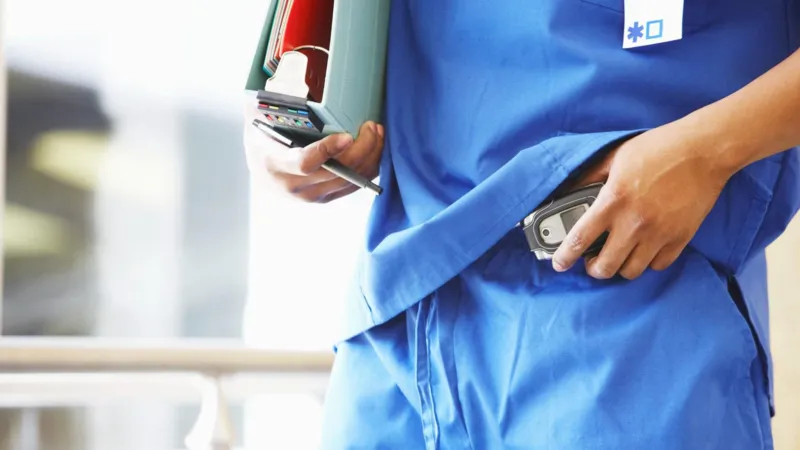
NHS Blood and Transplant, the organisation responsible for coordinating organ donation and transplantation services across England and the wider UK, confirmed that it had been sending patient information to hospital transplant teams through a system capable of delivering messages to pagers.
The information included patients’ names, dates of birth, the types of organs being offered or required, tissue-match scores and immunosuppression risk factors. The messages were intended to help transplant teams respond rapidly when organs became available, when timing can be critical.

However, the system was not encrypted, meaning the radio transmissions could potentially be intercepted by others who had access to the relevant frequency.
NHSBT said it was “deeply sorry” and confirmed that it had reported the incident to the Information Commissioner’s Office. It has now stopped sending sensitive patient information through the pager network.
The organisation said it had been surprised to discover that the messages were not encrypted and acknowledged that the vulnerability had existed within the communication system.
Anthony Clarkson, NHSBT’s head of organ transplantation, said the service had been using the system for urgent communications with transplant teams. Information could previously be transmitted by email, SMS and, until recently, pagers.
“We accept it was a data breach,” Clarkson said.
He added that urgent measures had been taken to prevent any messages containing sensitive information from being sent through the pager network and that an internal investigation had been launched to establish what happened and prevent a recurrence.
One of the most difficult questions is determining whether anyone actually accessed the information.
Because pager recipients cannot be tracked in the same way as users of modern digital communication platforms, NHSBT said it was unclear whether the unencrypted messages had been intercepted or how many people could potentially have been affected.
That uncertainty is particularly concerning because medical information is among the most sensitive forms of personal data.
The Information Commissioner’s Office said people expect their medical information to be handled securely and that organisations have legal responsibilities to protect it.
“NHS Blood and Transplant reported an incident to us and we are making inquiries,” an ICO spokesperson said.
The incident also highlights the continuing presence of pagers within parts of the NHS despite years of government efforts to replace them.
Pagers became widely associated with hospitals and emergency services because they were reliable, relatively inexpensive and capable of delivering alerts rapidly. They also have long battery lives and can operate effectively in environments where mobile phone signals may be unreliable.
Their radio signals can penetrate hospital buildings, including areas with thick walls designed to provide protection from X-rays and other radiation.
Those characteristics made pagers particularly useful for healthcare workers who needed to receive urgent messages.
But the technology also has major limitations when it comes to privacy.
Unlike modern encrypted messaging systems, traditional pager broadcasts can potentially be received by anyone able to access the relevant transmission. Messages are also generally one-way, meaning the recipient cannot reply directly through the pager.
Technology experts say this makes them fundamentally unsuitable for transmitting confidential medical information unless additional security measures are used.
Luca Arnaboldi, an assistant professor at the University of Birmingham, said he was particularly concerned about the risks posed by pager use within the NHS.
Pagers, he said, were “never meant for privacy”.
He explained that broadcasts could potentially cover large areas and that anyone able to receive the appropriate frequency could potentially listen to the transmission.
The absence of a reliable audit trail creates another problem. If a message is intercepted, organisations may not be able to establish who accessed it or exactly what information was obtained.
That is particularly problematic when medical information is involved because leaked data could potentially be used for identity fraud, harassment or other forms of exploitation.
The BBC investigation that prompted NHSBT’s admission also found that pager use extended well beyond transplant services.
Hundreds of messages were transmitted over a 10-day period across the network by ambulance trusts, hospitals and fire services.
The information reportedly included details relating to mental health incidents, medication and patients in medical emergencies.
One message included the name of a patient who was attempting to take their own life.
Ambulance services also used the system to provide operational information to crews, including addresses, patient ages and medical details.
The North West Ambulance Service said its pagers had now been fully withdrawn. The Northern Ireland Ambulance Service said pagers had largely been withdrawn from use.
Both services stressed that patient names were not included in the messages they transmitted.
The continued use of such systems has nevertheless raised questions about whether organisations have moved quickly enough to replace technologies that were designed for a very different era of communications.
In 2019, then-Health Secretary Matt Hancock announced that the NHS in England should stop using pagers by 2021. The policy was intended to encourage the health service to adopt more modern communication systems.
However, the NHS is a vast organisation made up of numerous trusts and services, and replacing legacy technology across every part of the system has proved complicated.
Pagers have remained attractive in some healthcare environments because of their reliability, long battery life and ability to operate inside large hospital buildings.
The problem is not necessarily the existence of pagers themselves but the nature of the information being transmitted through them.
The company that operates the pager network said it provides encrypted paging and secure messaging solutions, while customers determine how those services are deployed.
It said it had no visibility of or control over the content transmitted by customers.
The company also pointed to its terms and conditions, which warn that radio signals may be intercepted and advise customers not to transmit sensitive or personal information over radio or public networks.
That response places much of the responsibility on organisations deciding what information to send through the network.
For NHSBT, the breach demonstrates the risks of relying on legacy systems when speed and confidentiality must operate together.
Organ transplantation is an especially demanding area of healthcare because opportunities can arise suddenly. Teams may have only a limited period to determine whether an organ is suitable and coordinate the necessary procedures.
That operational pressure may help explain why the pager system remained in use.
But urgency cannot remove the requirement to protect patients’ personal information.
The Department of Health and Social Care said the NHS had made progress in replacing outdated technology and was working to ensure staff had access to secure and reliable digital tools.
The department also stressed that where legacy technologies remain in use, patient information must be handled securely and in accordance with data protection requirements.
The issue is particularly significant because the breach may not be limited to one isolated communication channel.
The wider investigation found that multiple emergency and healthcare organisations were still using pagers for operational messages. Although many of those messages did not contain names, information such as patient ages, locations, medication details and medical circumstances can still constitute sensitive personal information.
Northern Ireland presents an additional complication because health and social care are devolved matters. Responsibility therefore rests with the Northern Ireland Department of Health rather than the UK Department of Health and Social Care.
The Northern Ireland Ambulance Service said it recognised the importance of following best practice across the UK.
Meanwhile, the ICO’s inquiries will determine what further action may be necessary in relation to the NHSBT incident.
For patients whose information was transmitted through the system, one of the biggest concerns may be the uncertainty surrounding whether their information was actually intercepted.
NHSBT’s inability to identify recipients or establish whether the broadcasts were accessed means that some questions may never be fully answered.

The incident is therefore more than a story about old technology.
It raises fundamental questions about how the NHS manages sensitive information while balancing the demands of rapid communication, operational reliability and cybersecurity.
Healthcare organisations increasingly rely on digital systems, but many still operate alongside infrastructure that dates back decades. Those systems may remain useful for specific operational purposes, yet their limitations become increasingly serious when personal information is involved.
The NHSBT breach is a warning that modern healthcare security cannot depend solely on whether a communication system remains operational. It must also consider whether information transmitted through that system is protected from interception and whether there is a clear record of who can access it.
For NHSBT, the immediate response has been to stop sending sensitive patient information over the pager network and investigate how the vulnerability remained undiscovered.
The longer-term challenge will be ensuring that other NHS organisations learn from the incident before a similar breach occurs elsewhere.
The health service may have moved a long way from the pager era, but the latest incident shows that some of its communications infrastructure has not moved at the same speed as the technology surrounding it.
Related News:
 UK Launches World-First Gonorrhoea Vaccine Amid Record Infection Surge
 AI Tools Used by English Councils Found to Downplay Women’s Health Issues, Raising Concerns Over Gender Bias in Care
 Breakthrough Clinical Trial Lets 12-Year-Old Boy with Rare Skin Disorder Play Football
 Hot Tea and Coffee Found to Contain Highest Levels of Microplastics in Popular Drinks
 Expanded Access to Health Diagnostics in England Now Available Beyond Standard Hours
 Shocking Rise in Children’s Exposure to Violent Online Pornography Raises Alarm
 Ed Davey Urges UK to Attract US Cancer Scientists Amid Funding Cuts Under Trump
 Omeprazole Alert: NHS Issues Guidance on Safe Use for Heartburn and Indigestion
GPs in England Warn of Overload as Nationwide Online Appointment System Approaches
Omeprazole Alert: NHS Issues Guidance on Safe Use for Heartburn and Indigestion
GPs in England Warn of Overload as Nationwide Online Appointment System Approaches
 Eligibility Confusion Over COVID Vaccination Leaves Pharmacies Struggling Across the UK
 Majority of UK Men Would Opt for Prostate Cancer Screening, Survey Finds
 Scientists Announce First Potentially Accurate Blood Test for Chronic Fatigue Syndrome
 NHS May Pay 25% More for Medicines Amid US Drug Talks
 Survey Shows Most GPs Rushing Appointments
 Genetic Tests May Predict Return of Blood Cancer
 UK Woman Becomes Longest Survivor of Heart-Lung Transplant
 Thousands in the UK sue Johnson & Johnson over alleged talcum powder, linked to cancer
 ‘Game-Changing’ HIV Prevention Jab Set for NHS Approval
 Breath test could ‘revolutionise’ pancreatic cancer treatment
 How Bringing Forests Into Preschools Boosts Children’s Health
 Experts Urge Legal Right to Timely Cancer Care
 Patients to Test Health at Home to Ease NHS Winter Pressure
 North Sea oil workers must lose weight or face job loss
 No link found between paracetamol in pregnancy and autism
 UK launches major AI drive to fight deadly superbugs
 Coffins Now Too Large to Cremate Amid Rising Obesity Crisis
 Thinktank Urges Smaller Hospitals to End NHS ‘Permacrisis’
 NHS paediatric leave parents waiting months for answers
 Robo-Vaccination Could Transform Fight Against Bovine TB
 Mind Launches Inquiry into AI and Mental Health After Guardian Investigation
 Water Cremation Introduced in UK First
 Streeting Criticises SNP Over NHS App Dispute
 Surgeon’s op on patient 1,500 miles away a UK first
 Cancer Death Rate in Britain Falls by Nearly a Third
 ‘A Living Nightmare’: Parents of Vaccinated Teenager Speak Out After Rare Meningitis B Battle
 NHS Enlists AI in Major Push to Slash Hospital Waiting Lists
 ‘Zoom Dysmorphia’ Explosion: BDD Patients Quadruple in Post-Pandemic UK
 ‘The Best Decision I Ever Made’: A Mother’s Viral Plea After a Near-Miss with Lung Disease
 Paws for Peace: Frankie the Cockapoo Brings ‘Unfiltered’ Joy to MND Centre
 The Friendship Friction: Would You Call Out Your Friend’s Toxic Behaviour?
 Southern Skies: High Turnout and Surprise Visitors in Birdwatch 2026
 The ‘Pain-Free’ Revolution: Hospital Celebrates ‘Seismic’ Hip Surgery Milestone
 GSK cancer drug shows early promise in trials
 The Wheels of Hope: Charity Delivers ‘Seismic’ Joy Through Specialized Bikes for Children with Cancer
 Breakthrough in Women’s Health: ‘Non-Invasive’ Womb Cancer Test Nears National Rollout
 Global Readiness: First mRNA Bird Flu Vaccine Trial Enters Phase 3
 “It Felt Like Normal Life Just Dissolved”: Teenage Girls Invent Drug-Detecting Straw After Spiking Ordeal
 The “Weekend Gap”: 24/7 Stroke Care Still a Postcode Lottery Despite NHS Pledges
 Robotic Revolution: UK Surgeons Complete First “Fully Autonomous” Abdominal Procedure
 “The Weight of the Nation”: Campaigners Demand Overhaul of “Fragmented” Eating Disorder Care
 Breaking the Habit: Psilocybin Outperforms Nicotine Patches in Landmark Smoking Cessation Trial
 “Fear is a Choice”: The 80-Year-Old Great-Grandmother Defying the “Dopamine Desert”
 The “Dementia Deficit”: Why 2026 is the Breaking Point for UK Social Care
 Precision Without the Scalpel: UK Team Reaches “New Frontier” in Robotic Abdominal Surgery
 The Pathogen Protocol”: Third British National Monitored for ‘Nasty’ Suspected Hantavirus
 UK to Expand Prostate Cancer Trials for Black Men
 NHS Approves Landmark Ovarian Cancer Drug
 Emergency Caesareans Rise Across England
 Woman Warns of Lifelong Damage From Ketamine
 Ministers Prepare New Guidance on Children’s Screen Time
 Starmer Set to Unveil New Social Media Limits for Children
 UK Heatwaves May Have Claimed Thousands of Lives
 UK Considers Midnight Social Media Curfew for Teens
 Calls Grow to Ban Toxic Pet Flea Treatments
 Systemic Racism in Maternity Care Continues to Endanger Black Women in England, MPs Warn
 M&S and Morrisons Lead Christmas Supermarket Taste Test
 UK Bans Fake Numbers: Scammers Lose Their Trick
 Reeves rejects £1bn plea for NHS redundancy payouts
 Five-Year-Old Dies After Rare Tonsil Surgery Complication
 Children to Receive Home Vaccines as England Acts
 AI breast screening cuts later cancer diagnoses by 12%, study finds
 Most Statin Side-Effects Are Not Caused by Drugs, Study Confirms
 Half of Britons Avoid GP When Ill, Survey Reveals Growing Concern
 Social Media Giant Trial Reaches Final Jury Decision
 Charity Watchdog Takes Control of Learning Disability Care Home
 Councils Pressed to Use Universal Parking App to Cut ‘Unfair’ Fines
 ‘The Insulation Trap’: Knifeman Discovered Hiding Under Loft Padding After Six-Hour Standoff
 The Waiting Ward: ‘Month of Worry’ as Doctor Strikes Trigger Seismic Surgery Delays
 New Scan Offers Hope for Faster Endometriosis Diagnosis
 The “Dry” Life: Teens Trialing Social Media Bans Call Initial Disconnection “Boring” and “Dry”