Published: 14 August 2026 | The English Chronicle Desk | The English Chronicle Online
A small community group in Barrow is showing how creativity, friendship and shared activities can help men facing loneliness, anxiety and other challenges rebuild confidence and develop stronger connections with those around them.
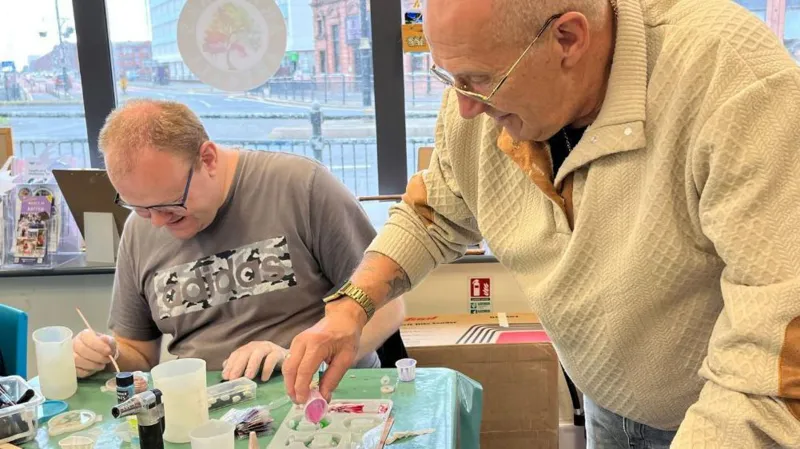
The Men’s Make and Mend sessions, launched in 2024 by ArtWorks Art4All, bring around 15 participants together each week for two-and-a-half hours of practical creative work. From glassmaking and jewellery to pottery and candlestick-making, the sessions offer participants an opportunity to learn new skills while spending time in a supportive environment.
The initiative was created after requests from men in the community for a place where they could meet others, develop friendships and make use of their practical and artistic abilities. Organisers say the relatively small size of the group has been important because many participants face circumstances that can make conventional social settings difficult.

For some, the sessions have become much more than an arts and crafts activity. They have provided structure, companionship and a reason to leave home, particularly for people experiencing bereavement, anxiety, depression or other health difficulties.
Sharon Tait, a volunteer with ArtWorks Art4All, said the sessions had “had a real effect” on those attending. She explained that several participants live with mental health difficulties or other conditions and therefore need an environment where they can feel comfortable and safe.
The group currently meets on Thursdays at a unit on Duke Street in Barrow town centre. Over the course of each session, members work on creative projects while talking to one another and gradually developing relationships.
For Dale, one of the participants, the group has been particularly important following the deaths of two members of his family. He said coming to the sessions had helped him cope with the loss and provided a routine that prevented him from becoming isolated at home.
“Coming to this group instead of sitting at home helps me get through that and gives me a routine,” he said.
His experience reflects one of the central aims of the project. Rather than treating loneliness simply as a lack of social contact, the organisers have tried to create a setting where friendships develop naturally through shared activity.
That approach has been especially significant for participants who may find ordinary social situations overwhelming.
Tait said the group includes someone living with dementia, several people with autism and participants experiencing mental health difficulties. For that reason, organisers have deliberately kept the group relatively small.
“The group itself is only small and that’s what they wanted because of their needs,” Tait said.
The group has also developed its own Messenger chat, allowing members to remain connected between weekly sessions. For organisers, the development is an indication that relationships formed through the project are extending beyond the workshop itself.
Tait described the Messenger group as “really lovely”, highlighting how a practical creative project has gradually developed into a wider social support network.
One of the factors behind the project’s success has been the decision to give participants a meaningful role in determining how the group develops.
When ArtWorks Art4All secured £3,350 from the Cumbria Community Foundation last year, organisers did not simply decide how the money should be spent. Instead, they asked participants what they believed would be most useful.
That process resulted in some unexpected choices.
Tait explained that organisers might initially have assumed the group needed additional tools and equipment, but the men themselves requested that a ceramic artist be brought in to teach pottery.
“[As organisers] we might’ve thought we needed a drill, but actually they said they needed a ceramic artist to come in and teach them pottery,” she said.
The decision reflected the principle that the participants should have ownership of their own group. Rather than simply receiving a service, members were able to influence the activities and direction of the project.
This sense of ownership can be particularly important for people who have experienced isolation or a loss of confidence. Having a say in decisions can help reinforce the idea that their views and interests matter.
The funding also allowed the group to organise trips outside Barrow, including visits to Muncaster Castle and the historic house and gardens at Holker Hall.
For some participants, these outings presented challenges that might appear relatively ordinary to others. Tait said several members experienced “debilitating anxiety” and that activities such as travelling by bus could represent significant hurdles.
Taking part in the trips therefore became an achievement in itself.
The experience gave participants opportunities to test themselves in unfamiliar environments while being supported by people they already knew and trusted. In that sense, the excursions complemented the creative sessions by helping members gradually expand their confidence beyond the workshop.
The experience of the Men’s Make and Mend group reflects wider concerns about loneliness and social isolation, particularly among people who may struggle to access traditional community activities.
Creative projects can offer an alternative route into social interaction because conversation does not have to be the sole purpose of attending. Participants can focus on making something together, learning a skill or completing a project while relationships develop naturally around the activity.
For people experiencing anxiety, depression, bereavement or other difficulties, that structure can make social participation feel more manageable.
The group also demonstrates the potential value of community organisations in identifying needs that may not be addressed by larger institutions. Its development was driven partly by requests from local men who wanted somewhere to meet and make friends.
Rather than imposing a predetermined programme, organisers have adapted the sessions around the participants’ needs.
That flexibility has helped create an environment where people with different experiences and abilities can participate at their own pace.
Despite the project’s progress, its future is uncertain.
The Cumbria Community Foundation funding that helped support the group’s activities has now run out. ArtWorks Art4All has consequently introduced a £3 charge for its sessions.
While the fee is intended to help cover costs, Tait is concerned that additional funding will be necessary if the group is to continue in the longer term.
For people already experiencing financial pressures, even a relatively modest charge could potentially create another barrier to participation. The organisers therefore hope to secure further grants or other financial support to keep the project accessible.
Tait warned that closing the group would represent a “huge loss to the people who come”.
That concern reflects the role the sessions have come to play in the lives of participants. The value of the project cannot easily be measured simply by the number of objects produced during each meeting.
Its impact is also visible in the friendships formed, the routines established and the confidence gained by people who might otherwise spend much of their time alone.
For Dale, the group has offered companionship during a difficult period of bereavement. For others, it has provided an opportunity to manage anxiety, practise social skills or simply spend time among people who understand their experiences.
The challenge now is ensuring that these benefits are not lost because of a lack of funding.
The story of Make and Mend suggests that tackling loneliness does not always require complicated solutions. Sometimes, providing a welcoming place, a regular routine and an activity that people genuinely enjoy can make a significant difference.
In Barrow, creative work has become the starting point for conversations, friendships and personal achievements. Participants have been able to learn from visiting artists, explore different forms of craft and take part in trips that once seemed difficult.
For organisers, the project’s success is rooted in listening to the people it was created to support.
As funding pressures grow, the group faces uncertainty, but its achievements since 2024 demonstrate the potential of community-led initiatives to address social isolation.
For the men who attend each Thursday, the workshop is not simply a place to make jewellery, glasswork or pottery. It is a place to meet people, establish a routine and feel part of a community.
If further funding can be secured, organisers hope Make and Mend will continue providing that sense of connection for years to come. For a group built around making and repairing objects, its wider achievement may ultimately be helping people rebuild confidence, relationships and a sense of belonging.
Related News:
 Karen Gillan Reveals What She Misses Most About Scotland’s Food and People
 BBC Apologises After Racial Slur Aired at BAFTAs by Guest With Tourette’s
 After Decades of Decline, Why Welsh Male Voice Choirs Are Back
 The Lough’s Lament: Can Fiction Spark a ‘Seismic’ Rescue for Lough Neagh?
 The Hidden Hoard of 1692: Glencoe Massacre Coins to be Displayed at Folk Museum
 Shaken, Stirred, and Syncopated: 2026 BBC Proms Unveils Boldest Lineup Yet
 ‘The Kings of the Rave’: Carl Cox ‘Humbled’ by Towering Mural Marking Prodigy Tour
 “A Magnet for People”: Hundreds Gather as Madness Star Sings at Primrose Hill Vigil
 “An Encyclopaedia in a Shirt”: Retired IT Analyst Becomes Seventh Millionaire Jackpot Winner
 A Century of Crust: The Family Pie Firm Celebrating 100 Years of Northern Soul
 The “Golden Tone”: Horn Virtuoso Invests £8,500 in Future Prodigy’s Dreams
 The “Invisible” Masterpiece: Banksy-Signed Statue Stuns London Commuters
 “A Tonic for the Nation” Reimagined: Southbank Centre Marks 75 Years of Artistic Rebellion
 Sycamore Gap Artwork Chosen After Public Vote
 Why Wimbledon Is Embracing Indian Flavours and Bollywood Beats
 Labour Utterly Humiliated by Straight-Talking Mum Who Cut Through Keir Starmer’s Insanity
 Renters Furious as Decent Homes Standard Delayed Until 2035
 Motorists Could Face ‘Mandatory’ Driving Ban for Road Offences Under Tougher Laws
 Snow and Rain Warnings as Cold Snap Continues in the UK
 Flooding May Worsen Before It Improves as More Rain Forecast for the UK
 Dad Found in Bed with Daughter 16 Years After Abandoning Her as a Child
 ‘Don’t Make Us Security Guards,’ Says Teacher Stabbed by Pupil
 Toddlers in Finland Lead the Fight to Save Sámi Language
 ‘We Pray for Peace’: Indian Filmmaker From Troubled State Who Won a BAFTA
 Will the New SEND Reforms in England Work? You Have Your Say
 BBC Edited a Second Racial Slur Out of BAFTA Ceremony
 ‘I Almost Died After a Touch‑and‑Go C‑Section’
 Calls Grow to Remove Billboard Following Lyra McKee Graffiti
 Father Dies by Suicide Weeks After Wedding in Clitheroe
 Sarah Ferguson Loses Another £1.5m Amid Financial Struggles
 Teen Wins Payout After TRNSMT Crush Horror
 Biker Suffers Fractured Spine After Hitting Pothole in Edinburgh
 ‘Heating Oil Suppliers Are Holding Us to Ransom’ as Prices and Cancellations Surge
 Rare Glimpse of Historic Bridge Thanks to Low Tide
 Families Tortured by Authorities During Investigations Inquiry Told
 The High Cost of Survival: How the 2026 Fiscal Outlook is Redefining British Life
 US Lawmaker Demands Testimony Over Sarah Ferguson’s ‘Close Epstein Ties’
 The Last of the Lords: Two Hereditary Peers to Retain Ceremonial Roles Amid Historic Ousting
 ‘Eye in the Sky’ Blinded: Photos Reveal Destroyed US Radar Jet at Saudi Base
 Four Teens Charged After Assault on Rescue Volunteer and Dog
 Woman Deported from China Over Manx Passport Mix-Up
 ‘My Hatred of Dogs is Ruining My Love Life’
 ‘The Final Word’: Kathleen Stock’s Polemic Against Assisted Dying Reshapes the UK Debate
 National Treasure: Raja Ravi Varma Masterpiece Smashes Indian Art Record with $17.9m Sale
 Heartbreak in Bournemouth: The Tragic Death of James Blanch
 Paws on the Wheel: Driver Facing Fine After Dog Photographed on Lap
 The Miracle of Phoenix: ‘Half Dead’ Rescue Dog Defies the Odds in Worcestershire
 The Pre-School Lottery: Families Left in ‘Holding Pattern’ as Local Places Vanish
 Toxic Trail: Dog Owners Warned Over ‘Vile’ Poisoned Meat Found in Parks
 The Waiting Ward: ‘Month of Worry’ as Doctor Strikes Trigger Seismic Surgery Delays
 MoD Has Lost Track of Veteran Recall List, Says Adviser
 ‘Is Nowhere Safe?’: British Jews Describe Living Under ‘State of Siege’ as Antisemitism Hits Record Highs
 ‘The Last of the Greatest’: UK’s Oldest WWII Veteran Passes Away Aged 109
 ‘A Sacred Space Shattered’: Two Found Guilty in London Church Drive-By Murder Trial
 “Jobs Will Go”: Rishi Sunak Warns AI is Already Eroding Entry-Level Opportunities
 Human Capital for AI Infrastructure: Meta Cuts 8,000 Staff to Fuel $135bn Bet
 “Three-Wheeled Triumph”: Mayor of Erewash Completes 2,000-Mile European Charity Run
 The “Cancer Commute”: Patient Warns of Breaking Point Over 40-Mile Treatment Trek
 The “Charles Charm” Offensive: Did the Royals Find Their Mojo in D.C.?
 Reality Check on Reform: Minister Says Outright Abolition of Leasehold “Impossible”
 A “Breaking Point” for Britain: Terror Adviser Warns Antisemitism is Now a National Security Emergency
 End of the “Beefeater” Era: Whitbread to Cut 3,800 Jobs in Radical Strategic Reset
 The “Dry” Life: Teens Trialing Social Media Bans Call Initial Disconnection “Boring” and “Dry”
 The £3,000 License: Learners “Held Hostage” by Cancelled Tests and Shifting Goalposts
 “Invisible Agony”: 98-Year-Old Woman Left in “Severe Pain” for Days Amidst Care Backlog
 “Stealth and Scaffolding”: The Midnight Logistics Behind Banksy’s Latest London Plinth
 “The Garden of Time”: Surrealist Sculptures and Living Flora Dominate the 2026 Met Gala
 Widow Distressed by Nine-Month Delay to Husband’s Pension Payment
 Sinkhole Outside Chip Shop “Has Cut Trade in Half”, Owner Says
 Prince George Set to Begin Studies at Eton This September
 Former Employee Alleges Sexual Assault by Business Founder as Investigation Draws Attention
 Buckingham Palace Confirms Harry Will Not Stay There
 London Tube Heat Reaches Dangerous Levels
 Jewish Students Describe Rising Antisemitism on UK Campuses
 Girlguiding Unveils First Uniform Redesign in 35 Years
 Burnham Considers Inquiry Into Epstein UK Connections
 Badenoch Defends Tory Candidate Over Antisemitism Case
 Tories Pledge Social Housing Ban for Foreign Nationals
 UK Economy Grows 0.4% as Growth Faces Fresh Challenges
 FAI Withdraws Infantino Backing as IFA Backs Uefa