Published: 05 August 2026. The English Chronicle Desk. The English Chronicle Online
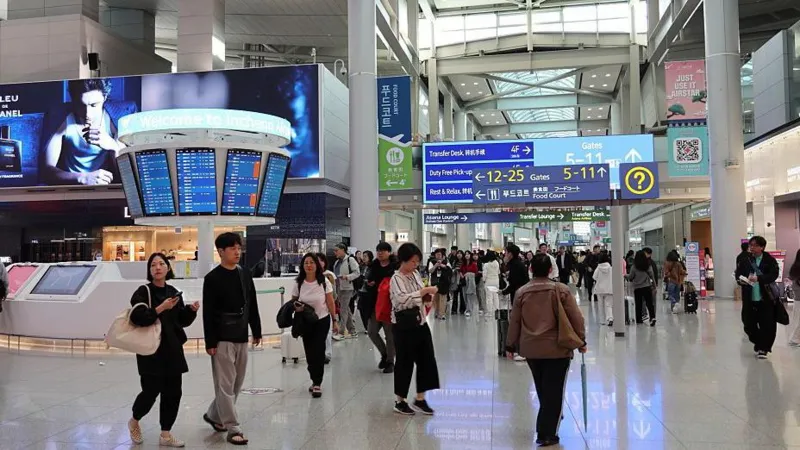
South Korea’s Incheon International Airport has overtaken London’s Heathrow to become the world’s busiest airport for international passenger traffic during the first half of 2026, according to preliminary figures from Airports Council International.
The milestone represents a dramatic change in the global aviation rankings. Incheon, which has spent much of the past two years outside the leading group of international hubs, handled approximately 38.4 million international passengers between January and June. Heathrow recorded 37.79 million, while Singapore’s Changi Airport ranked third with 34.53 million.
The figures place Incheon at the centre of a changing international aviation landscape, with geopolitical disruption, shifting passenger routes and airport infrastructure all contributing to its rapid rise.
The South Korean airport said the increase was partly linked to changes in global air travel caused by the conflict involving the United States and Iran. Disruptions affecting major Middle Eastern aviation hubs have encouraged some passengers who would previously have travelled through airports such as Dubai to use alternative routes.
Incheon said this change had contributed significantly to the growth in its transfer traffic. The airport recorded an 18% increase in transfer passengers compared with the same period last year.

The increase was particularly striking among passengers travelling between Asia and Europe. The number of transfer passengers at Incheon whose final destinations were in Europe increased by 63.2% to around 210,000 during the first six months of the year.
The development highlights how geopolitical instability can quickly reshape the international aviation network. Major airports traditionally compete for connecting passengers by offering extensive route networks, efficient transfers and convenient connections. When a major hub experiences disruption, passengers and airlines can rapidly redirect traffic towards alternative gateways.
For Incheon, that shift has provided an unexpected opportunity.
The airport’s rise is particularly notable because of its position in previous global rankings. Incheon ranked 12th in 2024 and 13th in 2025 in terms of international passenger traffic. Heathrow, meanwhile, ranked fifth in 2024 and seventh in 2025.
The latest figures therefore represent a substantial reversal in the fortunes of the two airports.
Heathrow remains one of the world’s most important aviation hubs and a critical gateway to the United Kingdom. Its location near London gives it access to one of the world’s largest metropolitan economies, while its extensive international network connects Britain with destinations across Europe, North America, Asia, Africa and the Middle East.
However, its position in the latest ranking demonstrates how quickly international aviation patterns can change.
Incheon has benefited not only from external circumstances but also from years of investment in infrastructure and connectivity.
Opened in 2001, Incheon International Airport was designed to serve as a major regional aviation hub connecting South Korea with the rest of Asia and the wider world. The airport now serves 158 international destinations.
That network gives it a significant advantage in attracting connecting passengers. Hong Kong International Airport serves 139 international destinations, while Shanghai Pudong serves 92 and Tokyo’s Narita Airport serves 86, according to the figures cited by Incheon airport authorities.
The breadth of Incheon’s network allows passengers to use South Korea as a connecting point between different regions, rather than simply travelling to Seoul as their final destination.
The airport corporation said the expansion of its infrastructure had also allowed it to accommodate increasing passenger volumes.
Airport capacity has become an increasingly important factor in the global aviation industry. As international travel recovers and demand for long-haul flights grows, airports must be able to process larger numbers of passengers without creating severe congestion.
Incheon has invested heavily in terminals, passenger processing systems and other facilities. The airport corporation says those improvements have helped it manage the recent increase in traffic while maintaining its competitiveness.
Kim Beom-ho, acting president of the Incheon airport corporation, credited the South Korean government, the public and airport employees for the achievement.
He said the airport planned to strengthen its competitiveness further by concentrating on passenger convenience.
That focus is becoming increasingly important as airports compete not simply on the number of destinations they serve but also on the quality of the passenger experience.
For travellers, factors such as immigration processing, baggage handling, terminal design, connections between flights, digital services, shopping and access to public transport can influence which airport they choose when several connecting options are available.
Incheon has developed a reputation as one of Asia’s major modern aviation facilities, with extensive connections to Seoul and other parts of South Korea.
Its latest position also underlines the growing importance of Asian airports in the global aviation system.
Asia is home to some of the world’s busiest international travel markets, supported by large populations, expanding middle classes, major commercial centres and strong tourism industries.
Airports in South Korea, Singapore, Japan, Hong Kong and mainland China compete intensely for transfer passengers. Their geographical positions allow them to connect travellers between Europe, North America, Southeast Asia, China, Japan and the wider Pacific region.
Incheon has increasingly positioned itself as a bridge between these markets.
The airport’s success could also have wider economic implications for South Korea. International airports are not simply transportation facilities. They support tourism, business travel, logistics, retail, hospitality and investment.
More connecting passengers can generate additional spending within airport terminals and contribute to demand for hotels, restaurants, transport services and other businesses.
The figures also provide a reminder of the continuing vulnerability of global aviation to geopolitical developments.
Air travel networks are highly interconnected. Conflict, airspace restrictions, security concerns or disruptions at a major hub can influence passenger flows thousands of miles away.
The movement of passengers away from Middle Eastern hubs demonstrates this effect. Airports that have historically dominated connections between Europe and Asia can lose traffic when travellers or airlines perceive routes as less convenient or more uncertain.
Dubai International Airport is expected to be particularly affected by the changes. It ranked second in the global airport rankings in both 2024 and 2025 based on full-year statistics, but the latest trends suggest it could fall outside the top five this time.
That would represent a significant change for an airport that has become synonymous with international connecting travel.
The shift should not necessarily be interpreted as a permanent change in the global aviation hierarchy. Airport rankings can fluctuate significantly depending on economic conditions, airline schedules, tourism demand and geopolitical circumstances.
If Middle Eastern aviation routes return to normal conditions, some of the traffic currently passing through Incheon could eventually move back towards traditional hubs.
Nevertheless, Incheon’s achievement demonstrates that the airport has developed sufficient capacity and connectivity to take advantage of changing circumstances.
For Heathrow, the latest ranking will provide another indication of the competitive pressures facing the UK’s aviation sector. London’s airport remains one of Europe’s most important hubs, but its relative position has fallen in recent international rankings.
The airport faces challenges involving capacity, infrastructure, passenger growth and competition from other global hubs.
The emergence of Incheon at the top of the international passenger ranking illustrates how competition is no longer confined to neighbouring airports. Modern aviation hubs compete globally for connecting passengers, airline routes and commercial investment.
For South Korea, meanwhile, the achievement represents an important moment of recognition for an airport that has been expanding its international role for more than two decades.

Whether Incheon can maintain the number-one position for the full year remains uncertain. The preliminary six-month figures provide only a snapshot of global aviation activity, and passenger flows can change considerably during the second half of the year.
But its performance so far has already demonstrated the airport’s growing influence.
The rise of Incheon above Heathrow is therefore more than a change in a ranking table. It reflects the impact of geopolitics on travel, the continuing expansion of Asian aviation and the importance of infrastructure in determining which airports become global hubs.
As airlines adjust their networks and passengers respond to changing conditions, the world’s aviation map continues to evolve. Incheon has now emerged as the clearest beneficiary of that transformation, placing South Korea’s main international gateway at the top of the global rankings for the first time.
Related News:
 UPS Cargo Plane Crash in Kentucky Kills Seven
 UK New Car Discounts Near £6,000 as Prices Are Slashed
 Gulf shipping crisis sparks food price fears
 UK Wage Growth Slows as Jobs Market Holds Firm
 Middle East Conflict to Hit UK Economy Hardest
 Southeast Asia Turns to Russia Amid Energy Crisis
 US Awaits Iran Reply on New Ceasefire Proposal
 Hormuz Talks Near Critical Stage
 UK Pushes for New EU Goods Trade Deal
 Reeves Fights to Keep Treasury Role Amid Labour Turmoil
 China mine blast death toll rises to 90
 Shein UK Faces Allegations of Shifting Majority of Profits to Singapore to Reduce UK Tax
 Reeves Faces Setback as Labour May Miss Homes Target
 Trump’s UK Ambassador Urges North Sea Drilling to Strengthen US Ties
 M&S Profits More Than Halve After Cyber-Attack
 Just Stop Oil Protesters Convicted Amid Climate Defence Row
 Tony Blair think tank warns Rachel Reeves must cut taxes if manifesto broken
 Palace May Restore Hyphen to Andrew Mountbatten-Windsor’s Name
 Millionaires group urge Reeves to introduce wealth tax to ‘lift kids out of poverty’
 Global markets drop amid tech sell-off and China slowdown
 Canada Passes Carney’s First Budget in Tight Parliamentary Vote
 Royal Navy Shadows Russian Warships Entering the Channel
 Starmer Says Labour’s Economic Plan Needs Years to Deliver
 Virgin Media Fined £23.8m Over Telecare Safety Failures
 Rising Water Bills Lift Troubled Thames Back to Profit
MPs warn AI financial risks threaten UK stability
Rising Water Bills Lift Troubled Thames Back to Profit
MPs warn AI financial risks threaten UK stability
 Households in England Face Rising Water Bills in April
 Trump and Chagos Deal Rift Over Iran Strikes
 Farage Chagos Islands Row Sparks Fury
 UK Job Vacancies Hit Five-Year Pandemic Low
 UK Youth Unemployment Surges Amid Tax Changes
 Strong Rebound for UK Housing Market Sees 6% More Homes
 Switching Energy Deal Can Save £200 as Price Cap Falls
 Trump rebukes Starmer over Iran strikes
 Oil Prices Surge Above $100 Amid Iran War
 Yvette Cooper: UK Must Follow Principles, Not US Pressure
 UniCredit’s Bold Move to Reshape European Banking
 Iran War Warning: Starmer Backs Ukraine Visit
 Charity Watchdog Takes Control of Learning Disability Care Home
 Australia Imposes Sudden Travel Ban on Iranian Visitors
 Trump Threatens Iran With Total Infrastructure Destruction
 ‘Better Off Not Planting’: UK Farmers Face 36% Fertiliser Spike as Gulf Crisis Bites
 The ‘Career Ceiling’: One in Five High Earners Say £100k Tax Trap is ‘Ruining’ Their Ambition
 Russia: The Unforeseen Winner of the Iran Conflict
 US Senators Slam Ticketmaster Over Sneaky New Fee Hikes
 Iceland Boss Offers Role to Sacked Waitrose Employee
 California fireworks blast: murder charges filed in case
 Policy Stand-Off: Streeting Denies Any ‘System Update’ to Resident Doctor Pay Deal
 Carmakers Face £3bn Gap in UK Loan Payout Scandal
 ‘The £100,000 Hammer’: War in Iran Forces UK Businesses to Absorb Historic Fuel Hikes
 Ukraine Urges UK to Seize Russian Oil Tankers
 Capitalism ‘Suicidal’, Warns Petro at Climate Summit
 US to Escort Trapped Ships Through the Strait of Hormuz
 Premier League drama defines crucial weekend
 Trump Threatens UN Budget Cuts as US Pushes ‘Trade Over Aid’ Agenda
 FCA Crackdown on Aggressive Claims Management Firms
 High Street Crisis: Fears Grow Over Post Office Closures
 Reeves to Fast-Track Clean Energy Amid Iran Crisis
 Oil Markets Face ‘Red Zone’ Threat Amid Iran Crisis
 Discontent grows around Putin amid war strain
 Farage and Reform UK Reshape British Politics
 Tube Strike Brings Capital to a Standstill Over Shift Disputes
 Rural Communities Face Severe Threat of Diesel Shortages
 UK Economy Suffers a Sharp Downturn as Iran Conflict Bites
 Flutter to Cancel London Stock Exchange Share Listing
 Thames Water Nationalisation Pushes Closer After Rescue Objected
 UK Inflation Holds at 2.8% Against All Expectations
 UK Job Vacancies Hit Five-Year Low as Wage Pressures Persist
 Elizabeth Warren Warns Corporate Mergers Could Be Reversed
 UK Households Suffer Squeeze As Disposable Incomes Drop
 UK Property Prices Stagnate Amid Growing Fears of Summer Slump
 The End of an Era: Halifax Brand to Vanish from High Streets
 Burnham Promises Relief on Cost of Living Crisis
 UK Government Cancels Higher Education Programme for Women and Girls
 Bangladesh Balances China Ties as India Relations Improve
 Violent London Clash After World Cup Semi-Final Match
 Bangladesh President to Step Down After Political Shift
 UK’s Largest Muslim Convention Scales Up Security Amid Rising Bigotry
 India’s Gen Z Protesters Claim Victory, Demand More Change
 Burnham Reaffirms Support for Ukraine During Zelensky Visit