Published: 25 June 2026. The English Chronicle Desk. The English Chronicle Online.
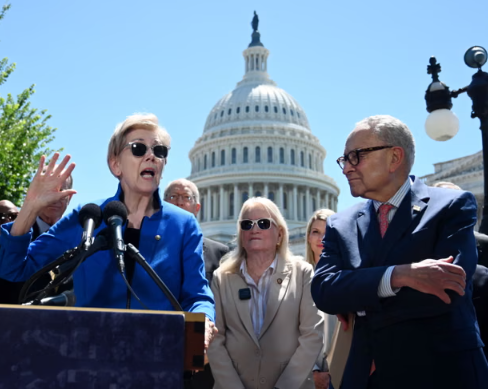
The political landscape in Washington is experiencing a significant shift as corporate consolidation reaches historic levels. Democratic Senator Elizabeth Warren has issued a sharp warning regarding recent major corporate mergers. She stated that deals approved under the current administration could face reversal by future leaders. Warren emphasized that corporate leaders must recognize the potential for significant political change ahead. She believes the current wave of business consolidation is ignoring long-term regulatory risks. The senator suggested that the political atmosphere could change dramatically after the next election cycle. This warning comes during a period of unprecedented activity in global corporate deal-making. Many industry experts are closely watching how these political statements might impact markets. The tension between regulatory oversight and corporate expansion remains a central debate topic.
At the heart of the current controversy is a massive media consolidation effort. The Department of Justice recently approved an impressive one hundred and eleven billion dollar merger. This transaction combines Warner Bros Discovery with the expanding Paramount Skydance media empire. Consequently, major news outlets like CNN and CBS News will share common ownership. This specific deal has raised substantial concerns regarding independent journalism across the nation. Critics worry about the concentration of media power within a single corporate entity. The Ellison family will now hold significant influence over these historic news institutions. Larry Ellison has maintained a long-term personal relationship with President Donald Trump. His son, David Ellison, is actively managing the newly expanded media conglomerate. This connection has prompted intense scrutiny from political figures and media watchdogs alike.
The internal dynamics at these major news networks are already showing signs of change. Following an earlier merger, David Ellison appointed Bari Weiss as a top news executive. Weiss joined CBS News despite having no previous experience working in television journalism. Since her appointment, the network has faced numerous allegations regarding potential political bias. These controversies have even affected highly respected programmes like the famous sixty minutes show. Now, employees at CNN are expressing deep concern about similar leadership changes happening. They fear that independent reporting could be compromised under the new management structure. Warren argued that having one ultimate decision-maker for multiple networks restricts diverse viewpoints. She expressed concern that audiences might receive a highly filtered version of global events. The preservation of journalistic integrity remains a vital concern for many democratic institutions.
Legal challenges to these massive corporate combinations may be developing behind the scenes. Several state attorneys general are reportedly preparing a lawsuit against the media merger. Although no official legal action has been announced, discussions are actively continuing onward. Warren suggested that the delay in filing reflects the immense complexity of antitrust cases. State officials must carefully coordinate their resources to challenge giant corporate legal teams. Gathering sufficient evidence to prove anti-competitive behavior requires substantial time and effort. A successful legal challenge would require unprecedented cooperation among multiple state legal departments. Legal experts suggest that state-level intervention represents a significant hurdle for corporate giants. The outcome of these potential lawsuits could reshape the future of antitrust enforcement. Meanwhile, corporations continue to defend their expansion plans as beneficial for market efficiency.
The current wave of consolidation extends far beyond the media and entertainment sectors. The administration recently gave approval for Nippon Steel to acquire United States Steel. This fourteen point nine billion dollar deal has sparked intense economic patriotism debates. Additionally, a thirteen point five billion dollar advertising merger has created an industry giant. Omnicom and Interpublic have combined forces to form the largest advertising agency globally. In the financial sector, Capital One is pursuing a thirty-five billion dollar acquisition. This massive deal involves acquiring Discover Financial to expand its credit card network. Each of these transactions represents a fundamental shift within its respective market sector. Critics argue these combinations reduce consumer choice and drive up average living costs. Proponents maintain that larger corporate scales are necessary to compete globally today.
Senator Warren delivered a pointed speech at the Open Market Institute recently. During her address, she accused the administration of favoring corporate donors over consumers. She suggested that massive campaign contributions have directly influenced recent antitrust approval decisions. Warren questioned the timing of multimillion-dollar donations made to high-profile presidential projects. She described the current regulatory environment as resembling a corporate pay-to-play scheme. The senator pledged to increase congressional oversight if her party gains legislative power. Her remarks reflect a broader frustration shared by many progressive lawmakers in Washington. They argue that regulatory agencies have failed to protect the public from monopolies. The administration has consistently denied these allegations, defending its business-friendly economic policies. This debate highlights the deep ideological divide regarding corporate power in America.
Other prominent Democratic senators have echoed Warren’s aggressive stance on corporate consolidation. Senator Chris Murphy previously shared his strong views on social media platforms earlier. He warned that newly formed information conglomerates would face scrutiny from future administrations. Murphy stated that a change in political power would lead to corporate breakups. He specifically targeted what he described as anti-democratic information monopolies in his message. These statements indicate a unified party strategy targeting recent large corporate mergers. The upcoming midterm elections in November could drastically alter the balance of power. Voters will decide control of both the Senate and the House Representatives. If Democrats regain the majority, legislative priorities will shift toward stricter market regulation. Lawmakers are already drafting potential policy changes to address corporate market dominance.
Regaining a legislative majority would provide Democrats with powerful new oversight tools. As the top Democrat on the banking committee, Warren holds significant institutional influence. However, passing new legislation remains challenging while a Republican president holds veto power. A sitting president can easily block bills that restrict corporate merger activities. Despite this legislative hurdle, existing antitrust laws offer alternative paths for intervention. Warren noted that federal law permits retroactive breakups of completed corporate mergers. If a deal is later found to violate anti-competitive statutes, it can legally be undone. This legal mechanism means current corporate approvals are not entirely permanent decisions. Future regulators could use these existing legal tools to dismantle large conglomerates. This possibility creates ongoing uncertainty for businesses engaged in major acquisitions today.
The debate over corporate power will likely intensify as the elections approach. Consumers are increasingly sensitive to price changes in everyday goods and services. Many economists link rising costs directly to a lack of genuine market competition. Progressive politicians are successfully using this economic argument to rally voter support. They promise that stronger antitrust enforcement will lead to lower consumer prices overall. Conversely, business leaders argue that consolidation drives innovation and reduces operational waste. They contend that government intervention harms economic growth and restricts market freedom. The contrasting viewpoints present voters with a clear choice regarding economic governance. The outcome of this debate will influence the corporate landscape for decades.
As the summer progresses, the global business community watches Washington with anticipation. The intersection of politics, law, and corporate finance has rarely been more contentious. Companies are moving forward with expansion plans while facing unprecedented political threats. The rhetoric from lawmakers suggests that corporate stability is tied to political outcomes. Legal scholars continue to debate the feasibility of reversing major approved transactions. Meanwhile, regular citizens navigate a changing media landscape dominated by fewer independent voices. The coming months will determine whether Warren’s political tsunami becomes a reality. For now, the corporate merger frenzy continues amidst growing threats of future intervention.
Related News:
 Reeves Faces Setback as Labour May Miss Homes Target
 Trump’s UK Ambassador Urges North Sea Drilling to Strengthen US Ties
 ABF May Split Primark from Food Division Amid Tough Market
 UPS Cargo Plane Crash in Kentucky Kills Seven
 M&S Profits More Than Halve After Cyber-Attack
 Tony Blair think tank warns Rachel Reeves must cut taxes if manifesto broken
 Oprah enjoys Meghan’s jam on English muffins
 MPs Press Rachel Reeves to Hike Gambling Taxes
 Millionaires group urge Reeves to introduce wealth tax to ‘lift kids out of poverty’
 UK toy market enjoys bumper year as ‘kidults’ fuel demand
 Global markets drop amid tech sell-off and China slowdown
 PM Highlights UK Business at G20 in South Africa
 Mossmorran Plant Closure Hits Cowdenbeath Hard
 UK Taskforce Unveils Plan to Streamline Nuclear Reactor Rules
 Steel billionaire Lakshmi Mittal reportedly leaves UK
 Starmer Says Labour’s Economic Plan Needs Years to Deliver
 Virgin Media Fined £23.8m Over Telecare Safety Failures
 Rising Water Bills Lift Troubled Thames Back to Profit
 Sainsbury’s CEO leads business honours in New Year list
 Starmer Faces Parliamentary Battles Over UK-EU ‘Reset’ Plan
 Phoenixism Costs UK Taxpayers Millions in Recruitment Sector
 ScottishPower Tops List of Worst UK Energy Suppliers
 City & Guilds pay surge sparks backlash amid £22m cuts
 UK Government Borrowing Drops to £11.6bn in December
 AI job losses UK: Britain faces sharper employment shock
 Most young adults in UK fear uncertain jobs and economic future
 Royal Mail delivery delays affect 16 million during Christmas
 UK Housing Market Shows Early Recovery Signs
 UK economy struggles as growth stalls at 0.1% in late 2025
 Bank of England Urged to Cut Rates to Spur Growth
 UK Unemployment Rate Climbs to 5.2% Peak
 UK shelves £110m border project amid trade strain
 UK Inflation Surprise Sparks Early Rate Cut Hopes
 Progress on gender equality at top UK firms ‘achingly slow’
 Strong Rebound for UK Housing Market Sees 6% More Homes
 Reeves Must Back Defence Plan or Face Dismissal, Says Unite Chief
 Switching Energy Deal Can Save £200 as Price Cap Falls
 OBR Reform Row Deepens Before Spring Forecast
 UK Hotel Data Sharing Probe Shakes Global Chains
 Rachel Reeves Faces Middle East Conflict Test
 Grocery Inflation Rises Amid War Fears
 Peak Greggs fears as profits tumble sharply
 BrewDog sold Highland estate for knockdown price after abandoning reforestation plans
 Yorkshire Water Funding Sparks Debate Amid Fines and Pay Row
 New £10bn rescue plan offered for Thames Water
 UK Energy Reform Could Cut Bills by £200
 Rising Costs Force Families to Rethink Days Out
 Hospitality Sector Teeters on Brink as Costs Surge
 Iceland Boss Offers Role to Sacked Waitrose Employee
 Student Loan Interest May Rise Despite 6% Cap
 Aegon Sells Historic UK Arm to Standard Life for £2bn
 Major Housebuilder Cuts Land Buying Amid Global Unrest
 UK Staycations Rise as Travel Fears Grow
 City & Guilds Sale Sparks Fees and Pay Uproar
 Silent Tracks: Rail Line Without Passengers
 Heathrow Chair Seeks Peace to Save Third Runway
Carillion Executives Banned After Reckless Misconduct
Heathrow Chair Seeks Peace to Save Third Runway
Carillion Executives Banned After Reckless Misconduct
 Lotus Boss Pledges Future to Norfolk and Seeks State Support
 Millionaires Back Higher Taxes to Save UK Public Services
 UK Firms Freeze Spending as Iran Conflict Bites
 Summer Shock: British Energy Bills Set for Grim July Hike
 Reeves to Fast-Track Clean Energy Amid Iran Crisis
 M&S Boss Slates Food Price Caps as ‘Preposterous’
 UK Urged to Build EU Rejoin Consensus, Says Miliband
 Tube Strike Brings Capital to a Standstill Over Shift Disputes
 Tube Strike Brings Capital to a Standstill Over Shift Disputes
 BP Stands Firm on Amanda Blanc Amid Boardroom Storm
 UK House Prices Drop For Third Month Due To War Fears
 Top Chefs Back Andy Burnham to Save UK Hospitality Sector
 UK Steel Crisis: Jingye Demands Payout After Takeover
 Flutter to Cancel London Stock Exchange Share Listing
 AI Scams Push UK Investment Fraud Past £220m
 Thames Water Nationalisation Pushes Closer After Rescue Objected
 Andy Burnham Enlists Economic Heavyweights for Leadership Bid
 Tories Clinch Shock Victory in Aberdeen South Byelection
 Rethinking the Blueprint for Youth Employment in Britain
 Sainsbury’s Boss Optimistic As Grocery Inflation Eases
 UK Households Suffer Squeeze As Disposable Incomes Drop
 Bank of England Eases Rules Despite Rising AI Risks
 BBC Faces Real Jeopardy as Licence Fee Income Declines