Published: 06 August 2026. The English Chronicle Desk. The English Chronicle Online
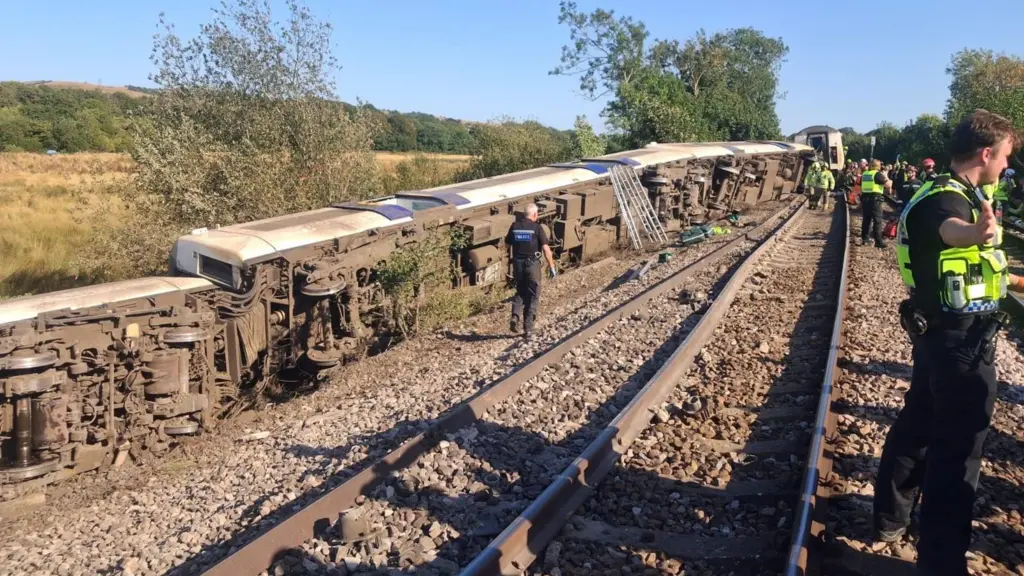
Passengers have described scenes of panic and fear after a train derailed in East Sussex, as investigators work to establish what caused the incident and whether any safety measures could have prevented it.
The derailment has prompted renewed attention on railway safety, emergency response procedures and the experiences of passengers caught inside a moving train when something went seriously wrong. Witness accounts describe a sudden and frightening disruption to what had been an ordinary journey, with passengers left trying to understand what was happening as the train came to an unexpected stop.
Authorities are examining the circumstances surrounding the incident, including the condition of the railway infrastructure, the train itself and events immediately before the derailment. Until the investigation is completed, the precise cause remains under examination.
For those on board, the incident was defined by uncertainty.
Passengers described a sudden change in the movement of the train, followed by confusion as people realised that something was wrong. Some reported hearing alarming noises and feeling the train move in an unusual way before it stopped.

In the immediate aftermath, passengers were faced with a difficult situation. People had to remain calm while waiting for instructions, while others attempted to contact family members or find out what had happened.
The psychological impact of such an event can be significant. Even when serious injuries are avoided, the experience of being inside a train that suddenly leaves the rails can leave passengers shaken for days or weeks afterwards.
Witnesses have described the atmosphere as one of panic and fear, with passengers concerned about whether the situation could become worse.
The response of railway staff and emergency services is therefore likely to form an important part of the investigation, particularly in determining how quickly passengers were assessed, evacuated or otherwise assisted.
Railway investigators are expected to examine multiple possible factors when determining why a train derailed.
These can include the condition of the track, signalling systems, points and other infrastructure, as well as the mechanical condition of the train. Investigators may also examine the train’s speed, its route and the circumstances immediately preceding the derailment.
A derailment does not necessarily have a single obvious cause. Railway accidents can result from a combination of infrastructure problems, equipment failures, operational issues or external circumstances.
Specialists will therefore seek to establish a detailed sequence of events rather than relying solely on initial witness accounts.
Evidence from the train and track will be particularly important. Investigators can examine physical damage and other evidence to determine how the train left the rails and whether anything unusual occurred before the incident.
Whenever a train derails, emergency response becomes a critical part of the wider safety picture.
Passengers may be trapped inside carriages, separated from railway staff or uncertain about whether it is safe to leave the train. Railway electricity systems and nearby tracks can also create additional risks, meaning passengers cannot simply evacuate without appropriate guidance.
Emergency crews must balance the need to reach those affected quickly with the requirement to ensure the surrounding railway environment is safe.
The response can involve railway personnel, police, ambulance crews, firefighters and specialist railway teams. Their work can include securing the area, checking passengers, establishing safe access routes and supporting the eventual recovery of the train.
For passengers, however, the first priority is often much simpler: understanding what has happened and knowing whether they are safe.
The accounts of those on board could help authorities understand how effectively information was communicated during the incident.
A derailment can have consequences far beyond the passengers travelling on the affected service.
Railway lines may need to be closed while investigators examine the scene and engineers assess damage. Services on nearby routes can then face delays, cancellations or diversions.
For commuters and other travellers, even a relatively local incident can create disruption across a wider section of the network.
The process of removing a derailed train can also be complex. Specialist equipment may be required to move damaged carriages safely, while engineers may need to repair tracks and inspect infrastructure before services can resume normally.
Railway operators generally prioritise safety over the speed of restoring services, particularly after an accident whose cause has not yet been established.
The East Sussex incident has also highlighted the importance of passengers knowing how to respond during railway emergencies.
Passengers are normally advised to follow instructions from railway staff and emergency responders rather than attempting to leave a train independently.
This is particularly important after a derailment because passengers may not know whether electrical equipment remains live or whether another train could be operating on an adjacent line.
The safest evacuation route can vary according to the circumstances of an incident.
For passengers who experienced the derailment, however, the theoretical safety procedures became a frightening reality. Their accounts underline the importance of having clear emergency plans and ensuring railway workers are trained to manage unusual situations.
Physical injuries are often the first concern after a transport accident, but the psychological consequences can also be substantial.
Passengers who experience a sudden derailment may later develop anxiety about travelling by train, particularly when they hear unfamiliar noises or feel unusual movement.
Children and older passengers can be especially affected by frightening incidents, while those who believed they were in serious danger may experience continuing distress.
Support following a railway accident therefore extends beyond medical treatment. Passengers may need access to information, reassurance and appropriate assistance as they process what happened.
Railway operators and authorities may also need to consider how information is communicated to those affected, particularly when investigations continue and definitive answers are not immediately available.
The investigation will ultimately need to establish why the train derailed and whether there were warning signs beforehand.
Among the central questions will be whether the train was operating normally, whether the track and associated infrastructure were in appropriate condition and whether any technical or operational problem contributed to the incident.
Investigators will also consider whether existing safety systems worked as intended and whether procedures followed by railway staff were appropriate.
The answers could determine whether additional safety measures are required.
If investigators identify a technical or infrastructure problem, recommendations could follow to prevent a similar incident elsewhere. If operational factors played a role, railway companies could be asked to review training or procedures.
Such investigations are not simply about assigning blame. Their broader purpose is to establish facts and identify lessons that could improve railway safety.
Britain’s railway network carries millions of passengers, making safety a central concern for operators, regulators and the travelling public.
Major railway accidents remain relatively uncommon, but each derailment serves as a reminder of the complex systems required to keep trains operating safely.
Modern railways rely on a combination of engineering standards, maintenance programmes, signalling technology, driver training and operational procedures. When something goes wrong, investigators examine how these layers of protection performed.
The experiences of passengers are also important because they provide a human account of what happened inside the train.
Their descriptions of panic and fear offer a reminder that behind technical investigations are people who may have suddenly believed their lives were at risk.
For now, the focus remains on establishing the cause of the derailment.
Passengers who were on the train will want clear answers about what happened and whether they were exposed to avoidable risks. Their families and the wider travelling public will also be watching the investigation closely.
Until investigators complete their work, it would be premature to draw conclusions about responsibility or the precise cause.
What is already clear is that the incident was deeply unsettling for those who experienced it.
The passengers’ accounts of panic and fear demonstrate the human impact of railway accidents, while the ongoing investigation will determine what happened and whether lessons need to be learned.
For the people travelling through East Sussex, the hope will be that those lessons lead to stronger safeguards and greater confidence that journeys on the railway remain as safe as they are expected to be.
Related News:
 UP IN FLAMES: Huge Blaze Rips Through Odeon Cinema, Students Evacuated
 Royal Mail Blames Poor Weather and Sickness for Delayed Deliveries
 Disability and LGBT Hate Crimes Set to Become Aggravated Offences
 Teacher Who Lied About Cambridge Degree Banned From Profession
 Illegal Skin Lightening Cream Being Sold in UK Butchers, Watchdog Warns
 Last‑ditch Call to Save Police Front Counters in London
 Deaf Woman Killed After Night Out With Strangers, Court Hears
 Two Teens Found Dead at East Yorkshire Holiday Park
 Dad Found in Bed with Daughter 16 Years After Abandoning Her as a Child
 I Confronted a Mugger with an 18-Inch Machete in London – No Wonder Tom Cruise is Leaving
 ‘Don’t Make Us Security Guards,’ Says Teacher Stabbed by Pupil
 Sadistic Pair Jailed for Blowing Up Sheep
 Grave of Murdered Toddler James Bulger Vandalised
 Calls Grow to Remove Billboard Following Lyra McKee Graffiti
 Sisters Who Could Not Swim Drowned While Paddling in Snowdonia, Inquest Hears
 Yorkshire School Issues Warning Over Social Media Trend Targeting Pupils
 Family of Girl Groomed by Ian Huntley Beg Medics to Save His Life
 Undercover officer deceived women with ‘grotesque and cruel’ lies, spycops inquiry told
 Gran Vows to Shield Huntley’s Daughter From Soham Killer’s Funeral
 Residents Say Hostility and Car Damage Now Routine Amid Birmingham’s Parking Chaos
 Courier Firm Bust After 14 Years as Evri Deliveries Face ‘Temporary Disruption’
 Teen Wins Payout After TRNSMT Crush Horror
 Biker Suffers Fractured Spine After Hitting Pothole in Edinburgh
 Scots Head Teacher Pays Tribute to Teen Who Died in Car Fire
 Jobless Man on £15k Benefits Accused of Hurling Abuse at Anti-Migrant Demo
 Travel Chaos on M8 and M74 Amid 70 mph Gales as Trains Also Cancelled
 Fuel Costs Are Rising — Drivers on the Frontline of the Price Surge
 Blind Woman Forced to Move Out After Leak Causes Ceiling to Cave In
 Second Man Arrested Over ‘Gunshot’ Death of Young Dad in Motherwell Home
 Rapist Caught After Victim Calls Police Mid-Attack

 Brutal Attack on Officer Leads to Five-Year Sentence
 Teen Admits Filming Westfield Chair Prank
 Families Tortured by Authorities During Investigations Inquiry Told
 Watchdog Probes Police Handling of Andrew Tate Abuse Claims
 Fire Crews Battle Major Blaze at Coventry Car Dealership
 Dawn Raids in Scotland and Spain: Eight Arrested in Major Organised Crime Sting
 ‘I Didn’t Realise’: ‘Housebound’ Benefit Cheat Caught Ziplining in Mexico
 Three-Minute Heist: Renoir, Cézanne, and Matisse Masterpieces Stolen in Italy
 Four Teens Charged After Assault on Rescue Volunteer and Dog
 How a Busy Saturday Night in Derby Descended into Chaos
 Shadow on the Playground: UK Children Report Record-High Sextortion Attempts
 Heartbreak in Bournemouth: The Tragic Death of James Blanch
 Rebranded or Reclaimed? Seized Tate Assets to Fund Domestic Abuse Support
 The Victim-Blame Loop: When Protection Orders Backfire
 The Courtroom Clash: Couple Denies Charges in Alleged Racially Motivated Assaults
 Justice Served: Man Jailed for Grooming Minor Met on Gaming Platform
 The East Peckham Tragedy: Third Victim Succumbs After Fatal Pony and Trap Crash
 Heroism on the Platform: Strangers Save Youth After Seizure on Train Tracks
 The Liquid Gold Heist: Arrests Made After Man Found with ’20 Olive Oil Bottles’
 ‘Thugs for Hire’: 17-Year-Old Charged in Counter-Terror Probe Following Synagogue Firebombing
 ‘A Sacred Space Shattered’: Two Found Guilty in London Church Drive-By Murder Trial
 ‘The Flyover Returns’: A40 Westway Reopens Overnight Following Month-Long Gridlock
 From Pints of Milk to Class A Drugs: The High Street Mini-Marts Hiding in Plain Sight
 NHS Safety Fears as Nurses Cover Doctor Gaps
 Walsall Rapist Jailed After Hate-Filled Online Trail
 Two Children Die in Wolverhampton House Fire Tragedy
 “Significant” Fire at Pink Punters: 51-Year-Old Man Arrested Following LGBT+ Club Blaze
 A “Breaking Point” for Britain: Terror Adviser Warns Antisemitism is Now a National Security Emergency
 The Shadow of the Blitz: 1,200 Plymouth Homes Evacuated as “Very Large” WW2 Bomb Unearthed
 500 Officers, 10 Arrests: Crewe Religious Group at Centre of Modern Slavery and Sex Crimes Probe
 “Justice Has No Expiry Date”: Six Arrested in Major Probe into Historical Child Sexual Abuse
 The £3,000 License: Learners “Held Hostage” by Cancelled Tests and Shifting Goalposts
 “A Trail of Blood and Debt”: County Lines Kingpin Handed Life Sentence for “Senseless” Gangland Murder
 The “Final Fence”: A Guide to Navigating the 2026 Badminton Horse Trials
 Victim says non-custodial rape sentence ‘rock in my face’
 Woman Warns of Lifelong Damage From Ketamine
 Man Arrested 22 Years After Leeds Teen Murder
 Sinkhole Outside Chip Shop “Has Cut Trade in Half”, Owner Says
 Woman Claims Swinging Website ‘Facilitated Abuse’ and Left Her Traumatised
 Suzy Lamplugh Mystery Still Haunts Detectives
 Man Admits Taking Ambulance With Patient Inside
 Funeral Scandal Sentencing Hears Claims of Missing Charity Donations
 PC Harper Family Angered by Early Release Policy
 Burnham Considers Inquiry Into Epstein UK Connections
 Families Furious After Jailed Funeral Boss Apologises
 Harper Widow Fights Early Release of Killer’s
 Councils to Get Powers to Block New Vape Shops
 Councils to Get New Powers to Block Vape and Betting Shops
 Farage faces Clacton battle as by-election stunt backfires