
Published: 11 August 2026 | The English Chronicle Desk | The English Chronicle Online
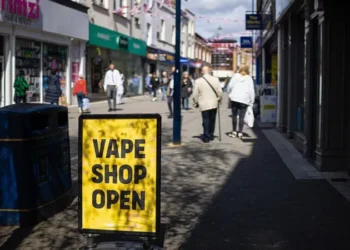
The government has announced plans to give councils greater control over what businesses can open on Britain’s high streets, including new powers to restrict vape shops, betting outlets and adult gaming centres.
Under the proposals, new vape shops in England would need planning permission before opening, while councils across Great Britain would gain greater freedom to refuse applications for betting shops and 24-hour gaming-machine venues. Ministers say the measures are intended to help communities reshape town centres that have suffered years of decline and, in some areas, become associated with antisocial behaviour and organised crime.
Prime Minister Andy Burnham said many town centres had been “hollowed out” over decades, leaving high streets that were increasingly unrecognisable to the communities that once depended on them.
The government argues that local residents should have a greater say over the types of businesses operating in their neighbourhoods, particularly where commercial premises are suspected of being linked to illegal activity.
The announcement comes against a backdrop of growing concern about the condition of British high streets. Empty shops, changing consumer habits, rising business costs and the growth of businesses selling vaping products and gambling services have become part of a wider debate about the future of town centres.
At the same time, investigations by BBC News have highlighted allegations of organised criminal activity involving some high street businesses, including the sale of illegal tobacco and vapes, suspected money laundering, illegal working and the distribution of drugs.
The government says its proposed planning reforms are intended to give local authorities additional tools to respond to these challenges rather than leaving communities with limited control over the businesses that occupy prominent high street locations.
Under the proposed changes in England, businesses whose primary purpose is selling e-cigarettes and vaping products would have to seek planning permission before opening. The government also intends to tighten the definition of a vape shop so businesses cannot avoid the planning requirements simply by describing themselves as convenience stores or general retailers.
Another significant change would affect betting shops and adult gaming centres. The government intends to remove the so-called “aim to permit” rule, which currently limits councils’ ability to refuse new betting shops and certain gaming-machine venues.
New adult gaming centres in England would also require planning permission, while councils would gain greater powers to regulate the concentration and location of these businesses.
Ministers are also proposing stronger closure powers for certain mini-markets and vape shops found selling illegal tobacco. In England and Wales, closure orders could potentially be extended for up to 12 months.
The proposals form part of a broader government effort to tackle problems on high streets while attempting to restore them as community spaces.
Burnham said the growth of vape shops, betting shops and “rogue operators” had displaced the shops, services and community facilities that many residents wanted to see.
He argued that local communities should be given a greater say over what opens in their town centres, presenting the reforms as part of a wider plan to improve Britain’s high streets.
Housing Secretary Angela Rayner has also pointed to concerns about vaping and gambling outlets appearing close to schools. She said some businesses had been linked to criminal activity, although allegations concerning individual businesses must be established through appropriate investigations and legal processes.
The National Crime Agency estimates that at least £1bn in criminal cash is laundered through high street businesses in the UK each year. Authorities have linked suspected criminal proceeds to activities including counterfeit goods, tax evasion, illegal working and illegal drug supply.
The government believes stronger planning powers could help councils respond to some of these problems, but opposition parties have questioned whether additional regulation will actually revive struggling high streets.
The Conservatives warned that increased planning restrictions could result in more empty commercial premises unless the government also addresses the financial pressures facing legitimate small businesses.
Sir James Cleverly, the Conservative shadow communities secretary, argued that rising business costs had already contributed to vacant retail units. He said further regulation could leave councils with more control over empty premises without addressing the economic reasons why businesses were closing.
The Liberal Democrats also called for tougher enforcement against illegal operators while arguing that the government needed to address wider problems affecting local businesses.
Reform UK similarly criticised the government’s approach, saying measures affecting planning would not be enough to revive high streets if businesses continued to face high employment and business-rate costs.
The Green Party said the proposals did not go far enough and called for further measures to support independent businesses, including changes to commercial rents.
The Betting and Gaming Council, which represents the gambling industry, said it supported strong action against criminal operators and agreed that local communities should have a say over their high streets.
However, the organisation disputed the suggestion that betting shops were simply expanding unchecked. It pointed out that thousands of betting shops had closed since 2019, reflecting wider changes in the gambling market and consumer behaviour.
The Local Government Association welcomed the prospect of councils and communities receiving greater influence over the composition of their high streets.
The debate has also been intensified by a series of investigations into alleged organised crime operating through some high street businesses.
Over the past 18 months, BBC investigations have reported alleged links between some mini-markets, vape shops and other businesses and activities including money laundering, illegal working, drug dealing and other forms of organised crime.
In 2025, BBC reporters accompanied the National Crime Agency during raids on businesses including barbers, mini-markets and vape shops amid intelligence suggesting that some premises were being used for money laundering and illegal working.
Other investigations reported alleged underground routes being used to supply illegal cigarettes to shops in Hull. Freedom of Information requests also identified thousands of businesses described as illegal shops operating across the UK, although the circumstances and legal status of individual premises varied.
Further BBC investigations examined allegations involving people buying and selling mini-markets for cash, attempts to avoid illegal-working penalties and organised crime networks operating across multiple towns.
The reports prompted a government response involving the National Crime Agency, Immigration Enforcement, HM Revenue and Customs and police forces.
Home Secretary Shabana Mahmood ordered an investigation into the issues raised, arguing that the evidence pointed to significant weaknesses in enforcement and regulation.
Concerns have extended beyond financial crime. BBC reporting has also highlighted allegations of drug sales and other harmful activity taking place around some high street businesses. In one West Midlands location, a law enforcement source described the area as “lawless”, while investigations subsequently contributed to the closure of several mini-markets and vape shops following action by police and Trading Standards.
The government has already announced a £30m enforcement operation targeting businesses suspected of involvement in money laundering, tax evasion and illegal working. Joint operations involving police, HMRC, Trading Standards and Immigration Enforcement have since taken place in different parts of the country.
The new planning proposals therefore form part of a much wider response to the challenges facing Britain’s high streets.
Supporters argue that planning law has an important role to play because councils need more than enforcement powers after a problem has already emerged. Giving local authorities greater control over new businesses could, they say, allow them to consider the cumulative impact of particular types of outlets on a neighbourhood.
Critics, however, warn that planning restrictions alone cannot solve the underlying economic problems affecting town centres.
High streets are facing competition from online shopping, changing consumer habits, high commercial rents, business rates and increased operating costs. Independent retailers may also struggle to compete with large chains and online businesses.
There is therefore a risk that restricting certain businesses without making it easier for other businesses to move into vacant premises could simply leave more units unused.
The government’s challenge will be to balance community concerns with the need to maintain economically viable town centres.
Vape shops and gambling businesses are legitimate commercial operations when they comply with the law, and planning decisions must distinguish between lawful businesses and premises genuinely connected to criminal activity. At the same time, councils and residents need effective mechanisms to respond when businesses repeatedly breach regulations or contribute to serious community problems.
The proposals also raise questions about how much control local government should have over the commercial character of town centres. Greater local authority powers could allow communities to shape their high streets according to local priorities, but inconsistent planning decisions between councils could create uncertainty for businesses.
For the government, the reforms are being presented as part of a longer-term effort to restore confidence in town centres and give residents a stronger voice.
Whether they succeed will depend on more than preventing new vape and betting shops from opening. A sustainable high street will also require investment, viable businesses, accessible public services and safe public spaces.
The government’s plans represent a significant attempt to shift some control over high street development towards councils and local communities. But the measures will ultimately be judged by whether they make town centres safer, more attractive and economically sustainable.
For residents who have watched familiar shops disappear while empty units and controversial businesses become increasingly visible, the reforms offer the possibility of greater local influence. For businesses, they bring additional planning requirements and uncertainty.
The central question is whether stronger regulation can be combined with meaningful economic support. Without that balance, critics argue, councils could gain more power over high streets without gaining the resources needed to make them thrive.
As the government develops the proposals, the future of Britain’s high streets is likely to remain a political and economic battleground. The success of the reforms will depend on whether they can deliver what ministers promise: town centres shaped not simply by market forces, but by the needs and priorities of the communities that use them.
Main Category:
UK News
Sub Categories:
Business & Economy | Crime | Law | Politics | Life & Society
SEO Section
News Combination SEO Title:
Focus Key:
Meta Description:
Related News:
 Councils to Get Powers to Block New Vape Shops
 Last‑ditch Call to Save Police Front Counters in London
 ‘An Evil Man is Dead’: Australian Fugitive Dezi Freeman Shot Dead After 216 Days
 PC Harper Family Angered by Early Release Policy
 Burnham Considers Inquiry Into Epstein UK Connections
 Harper Widow Fights Early Release of Killer’s
 Tasers Introduced in UK Prisons to Combat Rising Violence and Protect Staff
 David Lammy Faces Possible Legal Challenge Over Foreign Office Secondment Scheme
 Police Advised to Disclose Ethnicity of Suspects in High-Profile Cases
 Jailed Georgian Opposition Leaders Warn UK of Iranian Links to Ruling Party
 Boris Johnson Breached Rules on Post-Office Business Contacts
 Lucy Powell urged ministers to reconsider costly legal case for Labour donor’s firm
 French Taxi Driver Cleared in David Lammy Theft Case After Fare Dispute
 Emails Show Epstein Funded Mandelson’s Husband After Jail
 Police Probe Mandelson Over Alleged Epstein Leak
 Disability and LGBT Hate Crimes Set to Become Aggravated Offences
 How Much Could Andrew’s Arrest Hurt the Royal Family?
 Sadistic Pair Jailed for Blowing Up Sheep
 Grave of Murdered Toddler James Bulger Vandalised
 Labour MP’s Partner Arrested on Suspicion of Spying for China
 Police Scotland Pays £8m Compensation to Staff
 Family of Girl Groomed by Ian Huntley Beg Medics to Save His Life
 Undercover officer deceived women with ‘grotesque and cruel’ lies, spycops inquiry told
 Gran Vows to Shield Huntley’s Daughter From Soham Killer’s Funeral
 Jobless Man on £15k Benefits Accused of Hurling Abuse at Anti-Migrant Demo
 Rapist Caught After Victim Calls Police Mid-Attack

 Ram-Raid Gang Hit Livingston Store in Arson Escape
 Families Tortured by Authorities During Investigations Inquiry Told
 Watchdog Probes Police Handling of Andrew Tate Abuse Claims
 Fire Crews Battle Major Blaze at Coventry Car Dealership
 Dawn Raids in Scotland and Spain: Eight Arrested in Major Organised Crime Sting
 US Lawmaker Demands Testimony Over Sarah Ferguson’s ‘Close Epstein Ties’
 The Last of the Lords: Two Hereditary Peers to Retain Ceremonial Roles Amid Historic Ousting
 ‘My Daughter is Under the Rubble’: The Human Cost of the Tehran Strikes
 ‘Eye in the Sky’ Blinded: Photos Reveal Destroyed US Radar Jet at Saudi Base
 ‘Full and Immediate Access’: Netanyahu Reverses Palm Sunday Ban on Latin Patriarch
 Three-Minute Heist: Renoir, Cézanne, and Matisse Masterpieces Stolen in Italy
 ‘Ghost Offences’: Data Reveals No Children Charged with New ‘Adult Crime’ Laws in 11 Years
 The $100 Billion Peace: Trump’s ‘Grand Bargain’ Ends Iran Conflict at a Staggering Cost
 Heartbreak in Bournemouth: The Tragic Death of James Blanch
 Rebranded or Reclaimed? Seized Tate Assets to Fund Domestic Abuse Support
 The Victim-Blame Loop: When Protection Orders Backfire
 The Courtroom Clash: Couple Denies Charges in Alleged Racially Motivated Assaults
 Justice Served: Man Jailed for Grooming Minor Met on Gaming Platform
 Mass Arrests at London Palestine Protest Spark Debate
 MoD Has Lost Track of Veteran Recall List, Says Adviser
 ‘A Sacred Space Shattered’: Two Found Guilty in London Church Drive-By Murder Trial
 The ‘Axiom of Fraud’: £39.5m Hole Discovered in Second Major Law Firm Collapse
 The ‘Fill Up and Flee’ Spree: Fuel Thefts Surge 62% as Petrol Prices Rocket
 “Jobs Will Go”: Rishi Sunak Warns AI is Already Eroding Entry-Level Opportunities
 NHS Safety Fears as Nurses Cover Doctor Gaps
 Reform UK funding: mystery billionaire revealed
 “We Are Shielding Them”: UK Families Face £11 Billion Hit as Iran War Bills Surge
 “Significant” Fire at Pink Punters: 51-Year-Old Man Arrested Following LGBT+ Club Blaze
 “A Pint-Sized Crisis”: Publicans Warn of Industry ‘Carnage’ as Energy and Tax Hikes Loom
 The “Invisible” Tape: Leaked Video Contradicts Police Denial in Brutal Arrest Case
 High Street “Lawlessness”: Council Staff Under Attack from “Link-up” Gangs
 Reality Check on Reform: Minister Says Outright Abolition of Leasehold “Impossible”
 A “Breaking Point” for Britain: Terror Adviser Warns Antisemitism is Now a National Security Emergency
 500 Officers, 10 Arrests: Crewe Religious Group at Centre of Modern Slavery and Sex Crimes Probe
 “Justice Has No Expiry Date”: Six Arrested in Major Probe into Historical Child Sexual Abuse
 “A Trail of Blood and Debt”: County Lines Kingpin Handed Life Sentence for “Senseless” Gangland Murder
 “Not a Game Show”: Sir John Major Slams the “Projected Career” Culture of Modern No. 10
 UK may ban protests amid rising antisemitism fears
 US Condemns Alleged ‘Two-Tier’ UK Policing
 Man Arrested 22 Years After Leeds Teen Murder
 Teen Among Arrests at Nowak Protest as Three Charged
 Widow Distressed by Nine-Month Delay to Husband’s Pension Payment
 Henry Nowak Murder: How the Case Shocked Britain and Drew US Attention
 Woman Claims Swinging Website ‘Facilitated Abuse’ and Left Her Traumatised
 Review Calls for Major Overhaul of Police Leadership
 Watchdog Says MI5 Knew Agent’s Violent Misogynistic Views
 Technical Subjects to Be Expanded for Pupils Aged 14
 Reform UK Reports Polanski to Police Over T-Shirt Post
 Hong Kong Activist Allowed to Stay in UK After Threat
 Badenoch Defends Tory Candidate Over Antisemitism Case
 Families Furious After Jailed Funeral Boss Apologises
 Can Schools Really Predict Which Children Will Become NEETs?
 PC Harper’s Mother Finds Hope After No 10 Call