Published: 11 August 2026 | The English Chronicle Desk | The English Chronicle Online
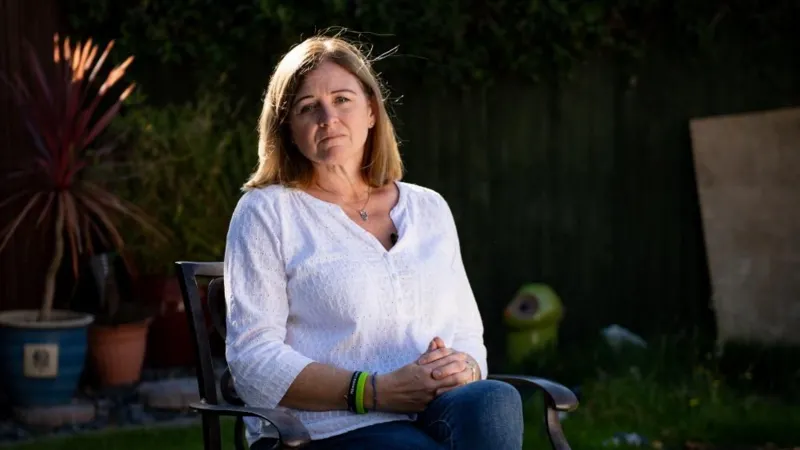
The mother of PC Andrew Harper says a direct call from Downing Street has given her renewed hope that her son’s killers could be prevented from benefiting from an early prison release scheme.
Debbie Adlam said she was contacted by the deputy chief of staff to Prime Minister Andy Burnham to discuss the government’s efforts to prevent Jessie Cole and Albert Bowers from being released early.
The two men were sentenced to 13 years in prison for manslaughter in connection with the death of PC Harper in 2019. Under changes to the sentencing system introduced this year, they are due to become eligible for release from custody in January.
For Adlam, the call from No 10 represented an important change after weeks of uncertainty and conflicting statements about whether the government could intervene.
“For me, it’s hope, but I can’t afford to be too hopeful,” she told the BBC.
Her caution reflects the uncertainty that has surrounded the issue. While the prime minister has said he wants the most serious offenders, including those convicted over PC Harper’s killing, to remain in prison for their full sentences, the government has also previously indicated that creating an exemption for individual offenders would be difficult.
Adlam says she is not seeking special treatment for her family. Instead, she wants emergency workers and those convicted of killing them to receive stronger protection under the early release system.
She argues that the principle should extend beyond her own son’s case.
“What I’m asking for is not a special case for Andrew,” she has said. “It’s about all emergency workers.”
PC Harper, a 28-year-old Thames Valley Police officer from Wallingford in Oxfordshire, was killed in August 2019 after responding to reports of a quad bike theft in Berkshire.
He was dragged behind a vehicle as three teenagers attempted to escape the scene. His death shocked the policing community and generated widespread public sympathy for his family.
Cole and Bowers were subsequently convicted of manslaughter and sentenced to 13 years in prison in 2020.
The sentences became a continuing source of controversy, particularly because the men were not convicted of murder. Their potential early release has now reignited debate about sentencing, victims’ rights and the government’s attempts to reduce pressure on an overcrowded prison system.
Under the previous arrangements, prisoners convicted of certain serious violent and sexual offences generally had to serve at least two-thirds of their sentence before becoming eligible for release.
Changes introduced this year have altered those arrangements, allowing some prisoners to qualify for release earlier.
The government introduced the measures as part of a wider attempt to manage severe pressure on the prison estate.
But the prospect of PC Harper’s killers benefiting from the changes has prompted anger from his family, police organisations and members of the public.
Downing Street had previously warned that it would not be possible simply to exclude one or two individual offenders convicted of manslaughter from the scheme.
That position appeared to soften after the prime minister asked the justice secretary to explore whether there was a lawful way to prevent Cole and Bowers from being released early.
In a later statement, Burnham said he was becoming increasingly confident that efforts to increase prison capacity would allow the government to reduce the number of prisoners released early.
He also specifically referred to the case of those convicted over PC Harper’s death, saying he wanted to prevent their early release altogether.
The statement has offered some reassurance to Adlam, but she remains wary.
She said the conflicting announcements had caused considerable distress for her family and had left them unsure about what would ultimately happen.
“I think the fact it’s actually come from Downing Street, I’ve got to try and have some faith in it,” she said. “But at the same time I’ve got to protect my own feelings.”
For a family that has spent years living with the consequences of PC Harper’s death, the prospect of his killers being released before completing the sentence handed down by the court has been particularly painful.
Adlam said she believes the government must ensure that the final policy is carefully considered rather than appearing rushed.
“Everybody is watching this,” she said. “This is obviously extremely personal to us but it’s to do with the country as a whole really.”
She added that she was not asking for the killers to receive a longer sentence than the court originally imposed.
“They weren’t given extreme sentences and I’m only asking for them to do what they were given,” she said.
The case has also become a significant issue for police officers and their representative organisations.
Aileen O’Connor, chairman of the Thames Valley Police Federation, said the possibility of excluding Cole and Bowers from the early release arrangements offered “a little glimmer of hope”.
She said police officers routinely place themselves in dangerous situations to protect the public and argued that the government should demonstrate that it recognises the sacrifices made by emergency workers.
“Police officers up and down this country run towards danger,” she said. “They put themselves on the line every single day.”
PC Harper, she added, had paid the ultimate price while carrying out the job he had chosen.
The government has acknowledged the strength of feeling surrounding the case.
Housing, Communities and Local Government Secretary Angela Rayner said ministers were examining every available option in relation to the prison crisis and the possibility of preventing PC Harper’s killers from being released early.
She said the trauma experienced by Harper’s family and other victims affected by the prison-release debate was unacceptable.
Rayner said the prime minister had made clear that he did not want serious offenders such as those convicted over PC Harper’s death to be released early and had instructed the justice secretary to examine possible solutions.
The issue is expected to return to Parliament in September, when ministers are due to set out further details of their approach to the prison system.
The debate comes at a difficult time for the government. Britain’s prisons have faced sustained overcrowding, with authorities under pressure to create additional capacity while managing a large and growing prison population.
Early release arrangements have therefore become an important part of the government’s attempt to prevent prisons from reaching capacity.
However, cases involving particularly serious offences present a political and moral challenge.
Critics of broad early release policies argue that victims and their families should not be forced to watch offenders leave prison earlier than they expected when sentences were imposed.
Supporters of reform argue that governments must have mechanisms to manage prison populations safely and that release decisions can form part of wider rehabilitation and public-protection policies.
The disagreement is therefore not simply about one family. It reflects a much wider question about what a prison sentence should mean and how governments should balance public safety, victims’ expectations, rehabilitation and the practical limitations of the prison system.
For Lissie Harper, PC Harper’s widow, the campaign has become a determination to ensure that the sentence imposed on her husband’s killers is respected.
She has said she will not give up and has encouraged people to support a petition calling for Cole and Bowers to be denied early release.
“Justice should mean justice and serving the sentence given,” she said.
The petition established by the Thames Valley Police Federation has attracted more than 900,000 signatures, reflecting the strength of public concern over the case.
For Debbie Adlam, however, the campaign is not simply about numbers or political pressure.
It is about the memory of a son who died while doing his job and the belief that the sentence imposed on those responsible should carry meaning.
She has welcomed the contact from Downing Street but remains careful not to interpret the government’s latest assurances as a final victory.
After years of uncertainty, she knows that policy decisions can change and that political promises must eventually be translated into legislation and practical action.
For now, the call from No 10 has provided something the family had been struggling to find: a measure of hope.
Whether that hope becomes reality will depend on the government’s ability to find a legally robust solution that can withstand scrutiny while addressing the wider crisis facing Britain’s prisons.
The decision will also be watched closely by police officers, emergency workers, victims’ families and the wider public, many of whom see the case as a test of how seriously the government treats sentences handed down for attacks on those who protect and serve the public.
For Adlam, the priority remains simple: she wants the sentence imposed on her son’s killers to be respected.
And as ministers prepare to return to the issue in Parliament, the Harper family’s long campaign has ensured that the question of early release will remain firmly in the national spotlight.
Related News:
 Burnham Considers Inquiry Into Epstein UK Connections
 Harper Widow Fights Early Release of Killer’s
 Last‑ditch Call to Save Police Front Counters in London
 Inside Kyiv’s resolve as conflict nears five‑year mark
 Undercover officer deceived women with ‘grotesque and cruel’ lies, spycops inquiry told
 Ecuador Deploys 75,000 Forces in Anti-Gang Drive
 ‘An Evil Man is Dead’: Australian Fugitive Dezi Freeman Shot Dead After 216 Days
 ‘Ghost Offences’: Data Reveals No Children Charged with New ‘Adult Crime’ Laws in 11 Years
 Police Suspect Help in Missing Alice Springs Girl Case
 US Charges Sinaloa Governor in Major Cartel Case
 Cartel crackdown raises fears of fresh violence
 Barrister Criticises Trial After Suicide Case Verdict
 Immigration Judges Fear Pressure in Trump Era
 Bondi Points to Blanche Over Epstein File Release
 South Africa Launches Illegal Migration Crackdown
 Man Arrested 22 Years After Leeds Teen Murder
 Teen Among Arrests at Nowak Protest as Three Charged
 Six More to Appear in Court Over Henry Nowak Protest Arrests
 Watchdog Says MI5 Knew Agent’s Violent Misogynistic Views
 Democrats Urge Maine Senate Candidate to Leave Race
 Murder Probe Continues After Arrest Release
 Uncle of Man Arrested in Ann Widdecombe Investigation Says Family Was Left ‘Shocked’ by News
 Suzy Lamplugh Mystery Still Haunts Detectives
 Man Admits Taking Ambulance With Patient Inside
 PC Harper Family Angered by Early Release Policy
 Man Jailed After Noise Dispute Ends in Fish Killing
 UK Charity Watchdog Probes Settlement Donations
 Families Furious After Jailed Funeral Boss Apologises
 Thai School Shooting Leaves Nation Demanding Answers
 Evidence Links South African Forces to Detective’s Murder
 Former Thai MP accused of killing official on camera
 Tasers Introduced in UK Prisons to Combat Rising Violence and Protect Staff
 French Taxi Driver Cleared in David Lammy Theft Case After Fare Dispute
 Disability and LGBT Hate Crimes Set to Become Aggravated Offences
 Nine Arrested in France Over Death of Far‑Right Student
 How Much Could Andrew’s Arrest Hurt the Royal Family?
 Epstein Eyed Record Label Investment to Access Women, Files Suggest
 Hillary Clinton Tells House Panel She Had No Idea of Epstein’s Crimes
 Grave of Murdered Toddler James Bulger Vandalised
 Calls Grow to Remove Billboard Following Lyra McKee Graffiti
 Man on Trial for Rape That Led to Andrew Malkinson’s Wrongful Jailing
 Labour MP’s Partner Arrested on Suspicion of Spying for China
 Police Scotland Pays £8m Compensation to Staff
 After Mugabe: Family Feuds and Legal Battles
 Rapist Caught After Victim Calls Police Mid-Attack
 Missing Cuba-Bound Aid Ships Spark Urgent Search
 Mandelson’s Phone Messages Requested in Files Release
 Families Tortured by Authorities During Investigations Inquiry Told
 Watchdog Probes Police Handling of Andrew Tate Abuse Claims
 US Lawmaker Demands Testimony Over Sarah Ferguson’s ‘Close Epstein Ties’
 The Last of the Lords: Two Hereditary Peers to Retain Ceremonial Roles Amid Historic Ousting
 ‘My Daughter is Under the Rubble’: The Human Cost of the Tehran Strikes
 ‘Eye in the Sky’ Blinded: Photos Reveal Destroyed US Radar Jet at Saudi Base
 ‘Full and Immediate Access’: Netanyahu Reverses Palm Sunday Ban on Latin Patriarch
 ‘I Will Not Abandon Him’: Pauline Hanson Stands by Ben Roberts-Smith After War Crime Charges
 The Fallen Icon: Ben Roberts-Smith Charged with Five War-Crime Murders
 The $100 Billion Peace: Trump’s ‘Grand Bargain’ Ends Iran Conflict at a Staggering Cost
 Heartbreak in Bournemouth: The Tragic Death of James Blanch
 The Changing Face of Georgia: Trump-Backed Clay Fuller Wins Election
 Rebranded or Reclaimed? Seized Tate Assets to Fund Domestic Abuse Support
 The Gilgo Beach Case: Heuermann Expected to Plead Guilty to Eighth Victim
 The Masked Frontier: Allegations of Greek Police Using Proxies for ‘Seismic’ Border Pushbacks
 MoD Has Lost Track of Veteran Recall List, Says Adviser
 ‘A Sacred Space Shattered’: Two Found Guilty in London Church Drive-By Murder Trial
 “Significant” Fire at Pink Punters: 51-Year-Old Man Arrested Following LGBT+ Club Blaze
 US Court Weighs Fate of TPS for Migrants
 Tragedy in the Red Centre: Outback Search Ends in Discovery of Missing Girl’s Body
 A “Breaking Point” for Britain: Terror Adviser Warns Antisemitism is Now a National Security Emergency
 500 Officers, 10 Arrests: Crewe Religious Group at Centre of Modern Slavery and Sex Crimes Probe
 Florida Surgeon ‘Devastated’ Over Fatal Surgery Error
 Zelensky Invites Putin to Direct Peace Talks
 South Africa Tightens Borders in New Migration Crackdown
 Trump’s Major Recruitment Drive Targets Border Patrol Growth
 Erika Kirk Faces Husband’s Alleged Killer in Court
 Le Pen’s Popularity Holds Despite Conviction
 Police Rule Out Political Motive in Widdecombe Killing
 Two Held After Woman Found Dead in Liverpool Hotel
 Badenoch Defends Tory Candidate Over Antisemitism Case
 Trump Renews Push to End Birthright Citizenship
 Suspect Planned Spokane Wildfire on Dry, Windy Day