Published: 10 August 2026. The English Chronicle Desk. The English Chronicle Online
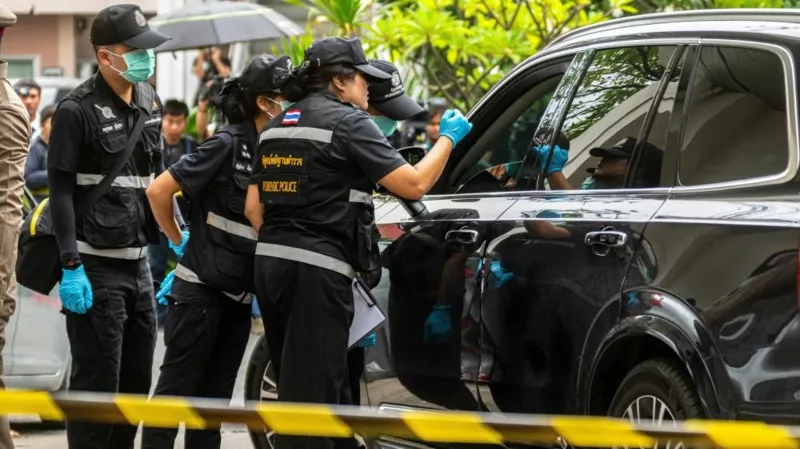
A former Thai lawmaker has allegedly shot dead a senior local official in Nonthaburi province before calling a political commentator during a YouTube livestream and apparently telling her what he had done, in a case that is likely to intensify debate over gun control in Thailand.
Former Nonthaburi MP Chalong Reawraeng is accused of shooting Thongchai Yenprasert, a former police official and president of the Nonthaburi Provincial Administrative Organisation, outside Thongchai’s office.
Thongchai was reportedly struck in the neck and later died in hospital. His driver was also wounded, suffering gunshot injuries to his arm and hand.
The incident has attracted particular attention because of what allegedly happened immediately afterwards. Chalong contacted political commentator Anchalee Paireerak while she was presenting a live programme on YouTube and appeared to confess to the shooting.

Footage of the livestream, seen by the BBC, shows Anchalee answering a telephone call in the middle of her programme. At first, viewers could not hear what the caller was saying, but the commentator’s reaction suggested she had been told something serious.
“Did he die? Did he die? You shot him in the head?” she was heard asking the caller.
She then instructed him to remain where he was and wait for police.
“Don’t go anywhere,” she told him.
The call has become a striking part of the investigation because it appears to show the alleged suspect discussing the incident almost immediately after it occurred. Police subsequently arrested Chalong.
The circumstances surrounding the shooting remain under investigation, and the allegations against Chalong have not been established in court.
After his arrest, Chalong was allowed to speak to reporters at a police station. During the unusual press conference, he attempted to explain his version of events while smoking a cigarette.
He said that he had not intended to kill Thongchai and described the victim as a “good friend”. Chalong claimed the two men had been involved in a personal dispute and suggested that Thongchai had been angry with him.
According to Chalong’s account, he approached Thongchai because he wanted to speak with him. He said Thongchai refused to have a conversation and pushed him away.
“He [Thongchai] then pushed me, saying ‘I don’t want to talk, I don’t want to talk,'” Chalong told reporters.
Chalong said he subsequently followed Thongchai towards his vehicle.
He claimed that when he produced his firearm, he had no intention of firing. According to his account, the situation escalated after Thongchai’s driver allegedly drew another gun and pointed it towards him.
“When I pulled the gun out, I didn’t intend to shoot him. But then [Thongchai’s driver] pulled his gun out and pointed it at me, so I fired,” he said.
Investigators will now have to establish what happened during the confrontation, including who drew a firearm first, what caused the dispute and whether the shooting was planned or resulted from an escalating argument.
Thongchai, who had previously served as a police colonel, held a prominent position in local government as president of the Nonthaburi Provincial Administrative Organisation, commonly known as the PAO.
The position gives its holder significant responsibilities in local administration, making the killing particularly notable in a country where political and local government rivalries can sometimes become highly contentious.
Local media reports have suggested that the two men had a personal dispute, but authorities have not publicly established a definitive motive.
The shooting occurred at an especially sensitive moment for Thailand.
Just three days earlier, the country had been shaken by a separate shooting in which a 14-year-old boy killed eight people at his home and school before taking his own life. That attack, in Nonthaburi province, was described as one of Thailand’s worst mass shootings in years.
The two incidents are not believed to be connected.
Nevertheless, the latest killing is likely to intensify public discussion about the availability and regulation of firearms in Thailand.
Following the school shooting, Prime Minister Anutin Charnvirakul ordered authorities to strengthen enforcement of existing gun laws. Police were instructed to establish checkpoints as part of a broader firearms crackdown.
The proposed measures include tighter controls over the possession, carrying and use of guns.
Thailand has one of the highest levels of civilian gun ownership in South-East Asia. The country’s history of gun-related violence has repeatedly prompted calls for stronger regulation, although enforcing existing restrictions remains a major challenge.
The two shootings occurring within days of each other have therefore placed renewed attention on the question of how firearms are obtained, stored and carried.
In the case involving Chalong, the alleged use of a firearm during a confrontation involving prominent local figures also raises questions about how people with access to weapons can become involved in potentially lethal disputes.
The circumstances of the latest case will depend heavily on forensic evidence, witness accounts and any available surveillance footage.
Police are also expected to examine the alleged telephone conversation with Anchalee, as well as the suspect’s actions before and after the shooting.
The livestream has already provided an unusual public record of the moments following the incident. Anchalee’s shocked reaction captured the apparent confession in real time, although viewers could not hear the full conversation.
Such footage can potentially assist investigators, but it must also be interpreted carefully. A person’s statements during an emotionally charged telephone call do not by themselves establish all the circumstances of a crime.
The authorities will need to determine whether Chalong’s explanation of self-defence is supported by evidence.
His statement that he did not intend to shoot Thongchai will also be examined against the physical evidence and testimony from the driver’s perspective.
The driver, who was injured in the incident, could become an important witness in establishing how the confrontation developed.
For the family and supporters of Thongchai, however, the investigation comes after a sudden and violent loss.
Thongchai’s death has removed a former senior police officer and sitting local government leader from the community he represented. The circumstances of his killing are likely to remain a major subject of public attention as investigators establish what led to the confrontation.
The case also illustrates how quickly an apparent personal dispute can become a public tragedy when firearms are involved.
Thailand has previously experienced shootings involving political figures, military personnel, former security officers and civilians. Each incident has contributed to a wider debate over gun ownership and the effectiveness of existing safeguards.
The government’s response to the recent school shooting suggests that firearms regulation is already becoming a political priority. The killing of a local official just days later could add further pressure for authorities to demonstrate that stricter enforcement is possible.
At the same time, the case highlights the distinction between introducing new regulations and ensuring that existing laws are effectively enforced.
For the moment, police face the more immediate task of establishing exactly what happened outside Thongchai’s office.

Chalong has been arrested and has publicly offered his account of the confrontation. Prosecutors and investigators will ultimately have to assess that account against evidence collected at the scene and testimony from witnesses.
The alleged confession on YouTube has made the case unusually visible, but the livestream is only one element of a much larger investigation.
As Thailand mourns yet another victim of gun violence, the shooting is likely to become part of a wider national conversation about firearms, personal disputes and the responsibilities surrounding gun ownership.
The central questions remain unresolved: what caused the confrontation, who initiated the escalation and whether the shooting could have been prevented.
Those answers will now rest with investigators and, ultimately, Thailand’s justice system.
Related News:
 US Charges Sinaloa Governor in Major Cartel Case
 Cartel crackdown raises fears of fresh violence
 Bondi Points to Blanche Over Epstein File Release
 Teen Among Arrests at Nowak Protest as Three Charged
 Six More to Appear in Court Over Henry Nowak Protest Arrests
 Watchdog Says MI5 Knew Agent’s Violent Misogynistic Views
 Democrats Urge Maine Senate Candidate to Leave Race
 Murder Probe Continues After Arrest Release
 Uncle of Man Arrested in Ann Widdecombe Investigation Says Family Was Left ‘Shocked’ by News
 Trafficked Indonesian Babies Face Uncertain Futures
 Pradhan Resigns Amid Protests
 Burnham Considers Inquiry Into Epstein UK Connections
 UK Charity Watchdog Probes Settlement Donations
 Harper Widow Fights Early Release of Killer’s
 Thai School Shooting Leaves Nation Demanding Answers
 Evidence Links South African Forces to Detective’s Murder
 Jharkhand Exam Protest Intensifies Over Corruption Claims
 Tasers Introduced in UK Prisons to Combat Rising Violence and Protect Staff
 Police Advised to Disclose Ethnicity of Suspects in High-Profile Cases
 Jailed Georgian Opposition Leaders Warn UK of Iranian Links to Ruling Party
 Boris Johnson Breached Rules on Post-Office Business Contacts
 French Taxi Driver Cleared in David Lammy Theft Case After Fare Dispute
 Victims’ commissioner Baroness Newlove dies aged 63
 South African Detained After Neo-Nazi Rally in Australia
 Trump Signs Bill Releasing Justice Department Files on Epstein
 Files Link Andrew to Epstein Dinner After Prison Release
 Emails Show Epstein Funded Mandelson’s Husband After Jail
 Police Probe Mandelson Over Alleged Epstein Leak
 Last‑ditch Call to Save Police Front Counters in London
 Nine Arrested in France Over Death of Far‑Right Student
 South Korea’s Ex-President Faces Death Penalty in Insurrection Trial
 How Much Could Andrew’s Arrest Hurt the Royal Family?
 Andrew Released Under Investigation After Arrest
 Hillary Clinton Tells House Panel She Had No Idea of Epstein’s Crimes
 Nepal Holds First General Election Since Gen Z Protests Toppled Government
 Man on Trial for Rape That Led to Andrew Malkinson’s Wrongful Jailing
 Nepal Election 2026: When Will We Get the Results?
 Labour MP’s Partner Arrested on Suspicion of Spying for China
 Police Scotland Pays £8m Compensation to Staff
 Undercover officer deceived women with ‘grotesque and cruel’ lies, spycops inquiry told
 After Mugabe: Family Feuds and Legal Battles
 Point-Blank Gunshot Misses Indian Politician
 Utah Bereavement Author Convicted in Husband’s Poisoning Case
 Children’s Author Convicted in Husband Poisoning Case
 Belarus Leader Gifts Rifle to Kim Jong Un
 Mandelson’s Phone Messages Requested in Files Release
 ‘Ghost Offences’: Data Reveals No Children Charged with New ‘Adult Crime’ Laws in 11 Years
 Swalwell Faces Pressure to Quit Governor Race
 Mass Arrests at London Palestine Protest Spark Debate
 Ben Roberts-Smith Denies War Crime Allegations in First Statement
 Harmeet Dhillon Faces Scrutiny in DOJ Role Debate
 Police Suspect Help in Missing Alice Springs Girl Case
 The “Invisible” Tape: Leaked Video Contradicts Police Denial in Brutal Arrest Case
 US states redraw maps after voting rights ruling
 Under the Lens: Senior Officer Suspended as IOPC Probes “Disturbing” Arrest Footage
 Immigration Judges Fear Pressure in Trump Era
 Gunman Killed After White House Security Shootout
 Trump-Netanyahu Call Fuels Iran Talk Crisis
 Zelensky Invites Putin to Direct Peace Talks
 Ex-Wife of Dubai Royal Relative Held in Custody
 US Condemns Alleged ‘Two-Tier’ UK Policing
 Man Arrested 22 Years After Leeds Teen Murder
 South Africa Tightens Borders in New Migration Crackdown
 Henry Nowak Murder: How the Case Shocked Britain and Drew US Attention
 Review Calls for Major Overhaul of Police Leadership
 Punjab’s Anti-Sacrilege Law Triggers Political Debate
 Erika Kirk Faces Husband’s Alleged Killer in Court
 Police Rule Out Political Motive in Widdecombe Killing
 Suzy Lamplugh Mystery Still Haunts Detectives
 Ecuador Police Battle Gangs in Growing Drugs War
 Ransom Notes May Hold Key to Solving Nancy Guthrie Kidnapping Case
 Two Held After Woman Found Dead in Liverpool Hotel
 Malaysian School Murder Trial Puts Spotlight on Juvenile Justice
 Armed Man Arrested Near Trump Golf Course
 Indian Women Protesters Face Online Abuse
 Families Furious After Jailed Funeral Boss Apologises
 Trump Renews Push to End Birthright Citizenship
 Suspect Planned Spokane Wildfire on Dry, Windy Day
 Harper Case Officer Condemns Possible Early Release
 Murkowski Opposes Trump Attorney General Pick