**Published: 10 August 2026. The English Chronicle Desk. The English Chronicle Online**
Thousands of students and job seekers have intensified protests in the eastern Indian state of Jharkhand, demanding sweeping reforms to the government recruitment system amid allegations of irregularities in a civil service examination.
The demonstrations, centred on the state capital Ranchi, have continued for more than two weeks, with protesters refusing to end their campaign despite the state government agreeing to several of their demands.
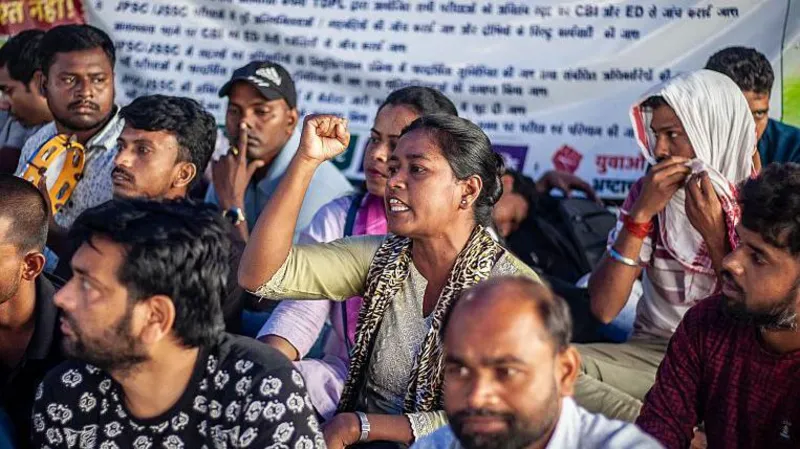
Students, candidates preparing for government examinations and volunteers have gathered in large numbers as pressure grows on the Jharkhand government to address allegations surrounding the conduct and results of examinations organised by the Jharkhand Public Service Commission, or JPSC.
The immediate dispute centres on a preliminary civil service examination held in April. Candidates became increasingly suspicious after results were announced in July, claiming that purported answer sheets circulating on social media raised questions about the performance of some successful candidates.

Those claims have not been independently established, but they have fuelled wider concerns among candidates who say the recruitment process must be transparent and credible if young people are expected to invest years preparing for highly competitive government jobs.
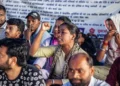
The demonstrations have transformed Ranchi into the centre of a growing confrontation between students and the state authorities. Protesters have assembled at a stadium since 25 July, with some reportedly sleeping outdoors while others have undertaken hunger strikes.
Images from the state capital have shown large groups of demonstrators gathered in the streets alongside police and journalists. Security has been strengthened around important government buildings as protesters prepare to march towards the state assembly.
The campaign comes at a particularly sensitive moment for India’s examination system. Across the country, young people have increasingly raised concerns about paper leaks, alleged manipulation and delays affecting competitive examinations.
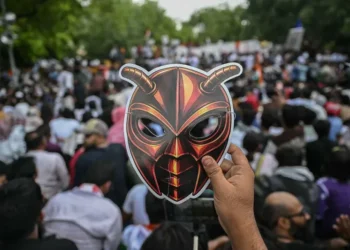
Earlier in the summer, thousands of young Indians attempted to march towards the national parliament in Delhi during a wider protest movement over alleged examination paper leaks. The movement, associated with the self-described India’s Cockroach Janta Party, was not an established political party but a protest organisation that gained support from students across several states.
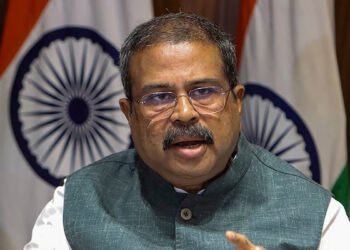
That five-week campaign ended on 25 July following the resignation of Education Minister Dharmendra Pradhan, according to the information supplied for this report.
The Jharkhand protests, however, have developed along a different political path.
Unlike the largely non-party character of the earlier nationwide demonstrations, the Ranchi campaign has received backing from political organisations. The Bharatiya Janata Party, which is in opposition in Jharkhand, has openly supported the protesters and has used the allegations to criticise the state government.
The BJP has demanded a federal investigation by India’s Central Bureau of Investigation, commonly known as the CBI. It has also raised the issue inside the state assembly and organised demonstrations in support of the candidates.
The political involvement has complicated an already tense situation, with the government warning against allowing the dispute to become a vehicle for political confrontation.
Jharkhand Chief Minister Hemant Soren has accused vested interests of attempting to destabilise democratic institutions in the state. He has also said that the protest should not be politicised while reiterating his commitment to ensuring that candidates receive justice.
The state government has nevertheless taken several significant steps in response to the campaign.
Following talks with representatives of the protesters, officials agreed to cancel the disputed examination as well as two other examinations. Three members of the JPSC reportedly resigned as pressure mounted.
The commission’s chairman, L Khiangte, had already stepped down on 22 July. He has also been questioned as part of the investigation into the allegations surrounding the examination.
The state’s Criminal Investigation Department is investigating the alleged irregularities. More than a dozen people have reportedly been arrested as investigators attempt to determine whether there was any organised attempt to manipulate the examination process.
Investigators are also examining the role of a private company involved in parts of the examination process. Candidates have questioned how the company was selected and whether the arrangements used to administer the examination were sufficiently secure.
Those questions are likely to remain central to the investigation because the integrity of a recruitment examination depends not only on the conduct of candidates but also on the systems used to prepare, distribute, collect and evaluate examination material.
For protesters, however, cancelling examinations is not enough.
Their main outstanding demand is for the investigation to be transferred to the CBI. They argue that a federal investigation would provide greater independence and public confidence than an inquiry conducted solely by state authorities.
The demand reflects a broader problem facing India’s competitive examination system. Government jobs are highly sought after, particularly among young people facing intense competition in a difficult employment market. A single examination can determine whether a candidate progresses towards a career in the public sector, meaning allegations of unfairness can have consequences far beyond one test.
Candidates often spend years preparing for examinations, paying for coaching, study materials and accommodation while waiting for recruitment cycles. Any suggestion that examination results have been compromised can therefore produce significant anger and frustration.
The Jharkhand dispute also demonstrates how quickly questions about individual examinations can become broader demands for institutional reform.
Students are not only asking for the cancellation of the disputed test. They are calling for greater transparency in recruitment procedures, stronger safeguards against leaks and manipulation, and accountability when irregularities are suspected.
The government faces a difficult balancing act. It must demonstrate that allegations are being investigated seriously while avoiding conclusions before the evidence has been tested.
The arrests made by the CID indicate that investigators consider the allegations serious enough to warrant criminal scrutiny. But arrests and questioning do not establish guilt, and any individuals accused of wrongdoing remain entitled to due process.
For the protesters, the issue is also about trust.
A recruitment commission depends heavily on public confidence. Candidates need to believe that examinations are conducted under equal conditions and that results reflect performance rather than connections, money or manipulation.
When that confidence weakens, even legitimate examination results can become difficult to defend.
The involvement of both the BJP and members of the wider governing political alliance has further increased the pressure on the JPSC and the state administration. The BJP’s demand for a CBI investigation puts the government in a politically difficult position, while the authorities’ decision to cancel multiple examinations demonstrates the seriousness with which they are responding to the agitation.
The protests also come at a time when examination-related controversies have become a recurring source of political tension in India. With millions of young people competing for a relatively limited number of public-sector positions, recruitment examinations have become politically sensitive events.

For students in Ranchi, the immediate objective remains obtaining what they consider a credible investigation.
The government has promised that justice will be delivered, while the protesters insist that their campaign will continue until their remaining demands are addressed.
The coming days are therefore likely to determine whether the dispute can be resolved through further negotiations or whether the demonstrations will develop into a larger political confrontation.
At the heart of the dispute is a question that extends beyond one examination in Jharkhand: can India’s public recruitment system maintain the confidence of a generation of young people whose educational and professional futures increasingly depend on competitive examinations?
For the candidates camped out in Ranchi, the answer will depend not simply on the cancellation of examinations but on whether authorities can establish, through a transparent and credible investigation, what went wrong and who should be held accountable if wrongdoing is proved.
Until those questions are answered, the protests are unlikely to disappear.
Related News:
 Pradhan Resigns Amid Protests
 BJP Loses Stronghold After Student Protest Fallout
 China-critical UK academics face ‘extremely heavy’ pressure from Beijing
 Inside Kyiv’s resolve as conflict nears five‑year mark
 Nepal Holds First General Election Since Gen Z Protests Toppled Government
 Nepal Election 2026: When Will We Get the Results?
 Mandelson’s Phone Messages Requested in Files Release
 The ‘Pakistan Protocol’: How Islamabad Pulled the World Back from the Brink
 City & Guilds Sale Sparks Fees and Pay Uproar
 FBI Links Brown University Shooting to Long-Term Grievances
 US Charges Sinaloa Governor in Major Cartel Case
 Cartel crackdown raises fears of fresh violence
 US states redraw maps after voting rights ruling
 City & Guilds Faces Governance Crisis Over Sale
 Immigration Judges Fear Pressure in Trump Era
 Trump-Netanyahu Call Fuels Iran Talk Crisis
 Xi Jinping to Make Rare North Korea Visit
 China Targets Viral Micro Drama Content
 Bondi Points to Blanche Over Epstein File Release
 Teen Among Arrests at Nowak Protest as Three Charged
 Six More to Appear in Court Over Henry Nowak Protest Arrests
 Punjab’s Anti-Sacrilege Law Triggers Political Debate
 Watchdog Says MI5 Knew Agent’s Violent Misogynistic Views
 Democrats Urge Maine Senate Candidate to Leave Race
 Murder Probe Continues After Arrest Release
 Uncle of Man Arrested in Ann Widdecombe Investigation Says Family Was Left ‘Shocked’ by News
 India’s Youth Revolt Challenges Modi Government
 Trafficked Indonesian Babies Face Uncertain Futures
 India’s ‘Cockroach’ Protesters Begin Talks With Government
 Indian Women Protesters Face Online Abuse
 Burnham Considers Inquiry Into Epstein UK Connections
 UK Charity Watchdog Probes Settlement Donations
 Harper Widow Fights Early Release of Killer’s
 Trump Renews Push to End Birthright Citizenship
 Thai School Shooting Leaves Nation Demanding Answers
 Murkowski Opposes Trump Attorney General Pick
 Evidence Links South African Forces to Detective’s Murder
 Tanni Grey-Thompson Faces Abuse Over Opposition to Assisted Dying Bill
 French Taxi Driver Cleared in David Lammy Theft Case After Fare Dispute
 Trump Urges Herzog to Grant Netanyahu Full Pardon
 Major Rent Reform Ends No-Fault Evictions in England
 US National Guard Member Killed in DC Shooting
 ICC to Rule on Duterte’s Provisional Release
 Tory Free Schools Waste £325m on Failed Projects
 UK Ministers Drop Foreign Student Targets for Global Education Push
 American democracy faces crisis after Trump’s return
 Australia’s Opposition Coalition Reunites After Rift
 Students Begin Covid Compensation Claim Against 36 More Universities
 Nine Arrested in France Over Death of Far‑Right Student
 Civil Service Pay: Union Urges Ministers to End ‘Barking Mad’ Limits
 Duterte Refuses to Attend ICC Pre-Trial Hearing Over ‘Drug War’ Case
 Labour MP’s Partner Arrested on Suspicion of Spying for China
 Police Scotland Pays £8m Compensation to Staff
 After Mugabe: Family Feuds and Legal Battles
 Queensland Protest Laws Spark Free Speech Backlash
 Sri Lanka Sets Weekly Shutdown to Save Fuel
 Nepal to swear in ex-rapper as new prime minister
 US Lawmaker Demands Testimony Over Sarah Ferguson’s ‘Close Epstein Ties’
 ‘Eye in the Sky’ Blinded: Photos Reveal Destroyed US Radar Jet at Saudi Base
 The “Protective Shield”: Who is Todd Blanche, the New Acting U.S. Attorney General?
 Report Says Pezzullo Acted ‘Recklessly’ in Dealings
 The Moral Crisis Looming Within the American Chain of Command
 The Changing Face of Georgia: Trump-Backed Clay Fuller Wins Election
 The Frozen Frontier: Why Frostbite is the Least of Concerns for Canada’s Arctic Forces
 Fading Maple Leaf: Why Indian Students Are Reconsidering the Canadian Dream
 Judicial Whiplash: Virginia Court Pauses Redistricting 24 Hours After Public Vote
 Crackdown Backfires on UK Climate Protesters
 “The Cost of Conviction”: Palestine Action Activists Found Guilty Over ‘Clinical’ Factory Damage
 Florida Surgeon ‘Devastated’ Over Fatal Surgery Error
 US Awaits Iran Reply on New Ceasefire Proposal
 US green card applicants must apply from abroad, DHS says
 Discontent grows around Putin amid war strain
 UK Faces Most Dangerous Era, Military Chief Warns
 Son Urges Iran Prisoner Exchange for Jailed British Pair
 Prince George Set to Begin Studies at Eton This September
 Le Pen’s Popularity Holds Despite Conviction
 Police Rule Out Political Motive in Widdecombe Killing
 Jewish Students Describe Rising Antisemitism on UK Campuses
 Burnham Reaffirms Support for Ukraine During Zelensky Visit
 Two Held After Woman Found Dead in Liverpool Hotel