Published: 10 August 2026. The English Chronicle Desk. The English Chronicle Online
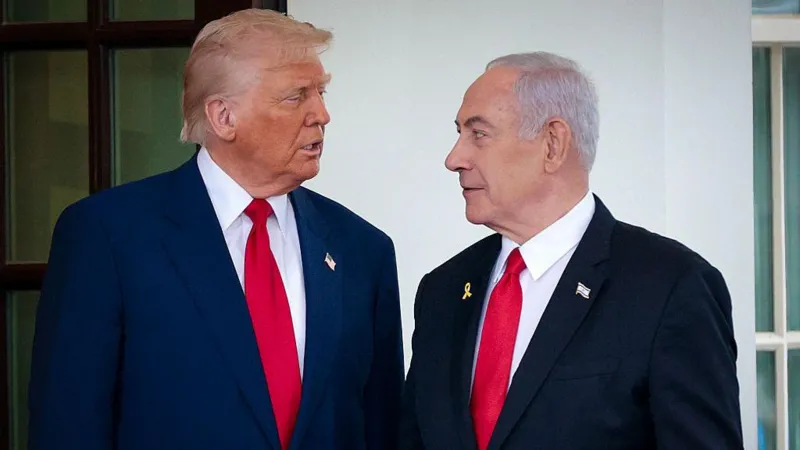
Israeli Prime Minister Benjamin Netanyahu has rejected a 15-point US-backed plan for ending the conflict in Gaza, insisting that Israel will not withdraw its forces until Hamas has been genuinely and verifiably disarmed.
The rejection creates a major obstacle for President Donald Trump’s effort to advance a broader political settlement in Gaza and comes at a particularly sensitive moment, with disagreements over the sequence of disarmament and Israeli withdrawal threatening to undermine negotiations.
Speaking at a cabinet meeting on Sunday, Netanyahu made clear that Israel does not accept the document in its current form. He said Israeli forces would remain in place until Hamas’s weapons capability had been dismantled and warned that Israel would continue taking action against threats to its troops and citizens.
“Israel rejects the 15-point document,” Netanyahu said, according to the material supplied for this report.
He added that there would be no military withdrawal until Hamas was “genuinely” disarmed, stressing that Israel would not accept what he described as a merely symbolic or “fictitious” disarmament.

The statement puts Netanyahu at odds with an initiative developed by the Trump administration and promoted through its Board of Peace, which has argued that the plan provides the clearest available framework for bringing the Gaza conflict towards a lasting settlement.
At the heart of the disagreement is a fundamental question over sequencing. Israel wants Hamas to surrender its weapons before Israeli troops withdraw, while Hamas has indicated that any substantial handover of heavy weapons would depend on Israel ending military operations and withdrawing its forces from Gaza.
That difference has the potential to become one of the most difficult issues in implementing the proposed agreement.
A senior Hamas official told the BBC that the organisation remained committed to the agreement and was prepared to engage in its implementation. The official also called on mediators to ensure that all sides respected the commitments that had been reached.
The conflicting positions mean that although both sides have continued to refer to the agreement, there is no clear consensus over how its central security provisions should be carried out.
The US-backed plan was announced as an attempt to establish a framework covering several interconnected issues, including Hamas’s disarmament, the withdrawal of Israeli forces, reconstruction in Gaza and the establishment of a Board of Peace to supervise implementation.
For Washington, the proposal represents an attempt to move beyond repeated cycles of ceasefire and renewed fighting by establishing a mechanism through which security, governance and reconstruction could be addressed together.
But Netanyahu’s rejection demonstrates the political difficulties facing the plan inside Israel.
The Israeli prime minister is under pressure from members of his governing coalition who have taken a hard line against concessions over Gaza. Some figures on the Israeli right have already criticised the proposed framework and argued against steps that could result in a significant Israeli military withdrawal.
National Security Minister Itamar Ben Gvir has reportedly described the draft as unacceptable and has faced calls from elements of the coalition for a new cabinet discussion over the future of the Gaza arrangement.
Netanyahu therefore faces competing pressures. On one side is his close relationship with Trump and the importance of maintaining US political and diplomatic support. On the other is pressure from his domestic political allies and security establishment to ensure that Hamas cannot retain the capacity to threaten Israel.
The Israeli leader’s decision to reject the plan does not necessarily mean that discussions with Washington have ended.
Netanyahu said Israel was continuing to communicate with US officials about the next steps. He acknowledged that Washington had presented several ideas, some of which Israel considered acceptable and others which it rejected.
The comments suggest that negotiations could continue around the precise implementation of the plan, particularly over how disarmament would be verified and when Israeli forces would be expected to move back.
Nickolay Mladenov, a senior diplomat involved in the implementation of Trump’s Gaza initiative, defended the framework and said discussions were still continuing.
Mladenov argued that the proposal was designed to provide a gradual and verifiable process rather than requiring Israel to withdraw immediately without guarantees over Hamas’s weapons.
He said the plan was intended to ensure that progress could be monitored and that each stage could be stopped or reversed if necessary.
According to Mladenov, Israel would not be expected to complete its withdrawal before there was verification that Hamas was actually taking steps towards disarmament.
That approach could potentially offer room for compromise, but the central disagreement remains over who should move first and what conditions must be satisfied before the next stage begins.
The dispute comes against the background of a devastating conflict that began after the Hamas-led attack on southern Israel on 7 October 2023. About 1,200 people were killed in the attack and 251 others were taken hostage, according to figures cited in the supplied material.
Israel subsequently launched a major military campaign in Gaza.
The human cost has been enormous. The United Nations has said that around 1.9 million people, representing approximately 90% of Gaza’s population, have been displaced during the conflict.
Gaza’s health ministry has reported more than 73,000 deaths since the beginning of the war. The UN has regarded the ministry’s overall casualty figures as reliable, although individual circumstances surrounding deaths remain subject to verification.
The scale of displacement and destruction has made reconstruction another central component of any prospective peace agreement.
Even if a political settlement is reached, rebuilding Gaza would be a huge undertaking requiring substantial international funding, functioning infrastructure and a political framework capable of providing security and basic services.
That process would also depend heavily on the future role of Hamas and the structure of governance in Gaza.
For Israel, the presence of armed Hamas forces remains a fundamental security concern. For Hamas, surrendering its weapons without guarantees concerning Israeli withdrawal and the future of Gaza would represent a potentially existential concession.
Those opposing positions explain why the question of disarmament has become the defining issue in the latest phase of negotiations.
Trump has presented the plan as a route towards long-term peace and security, but Netanyahu’s rejection demonstrates the limits of US influence over Israel’s military and political decisions.
Although Washington remains Israel’s closest international ally, Netanyahu has repeatedly demonstrated that his government will resist proposals that it believes could compromise Israeli security.
The challenge for US negotiators will now be to find a formula that satisfies Israel’s demand for verifiable disarmament while also providing Hamas and its supporters with sufficient guarantees to make a weapons handover politically and practically possible.
A phased process could offer one possible route. Under such an arrangement, disarmament measures and Israeli troop movements could take place simultaneously, with independent verification determining whether each side had fulfilled its obligations before the next stage began.
However, such a system would require agreement on who would carry out the verification, what would constitute complete disarmament and what consequences would follow if either side failed to comply.
The issue is further complicated by the continuing insecurity in Gaza and the deep distrust that has developed between the parties during the conflict.
For civilians, the priority remains an end to violence, the restoration of basic services and the opportunity to return to homes and communities that have been devastated by war.

The latest dispute therefore carries consequences far beyond the political relationship between Netanyahu and Trump. Whether the 15-point framework can be renegotiated or replaced could determine whether the current diplomatic effort develops into a sustainable peace process or becomes another failed attempt to resolve the Gaza conflict.
For now, Netanyahu’s position is unequivocal: Israel will not withdraw on the basis of an agreement that does not first guarantee the genuine disarmament of Hamas.
Hamas, meanwhile, continues to argue that disarmament must be linked to an Israeli withdrawal and an end to military action.
Bridging that gap will be the central challenge for mediators in the days ahead. Until the two sides can agree on a sequence that both regard as credible and enforceable, Trump’s Gaza peace initiative will remain under severe pressure.
Related News:
 Cooper: Joining US Strikes on Iran ‘Not in Britain’s Interest’
 Trump’s Iran Endgame Unclear After Mixed Messaging on War Aims
 Israel Launches Fresh Strikes on Tehran & Beirut; US Warns “Hardest Hits” Ahead
 Middle East Crisis Escalates as Oil Routes Shake Markets
 US Launches New Strikes as Iran Says Civilian Infrastructure Hit
 Houthis Strike Saudi Arabia as Middle East Tensions Rise
 Israel and Hezbollah Exchange Fire as Conflict Worsens
 Iran’s Regime Still Intact — Coming Days Will Test Its Survival
 Allies of US in the Gulf Bear Brunt of Iran Attacks
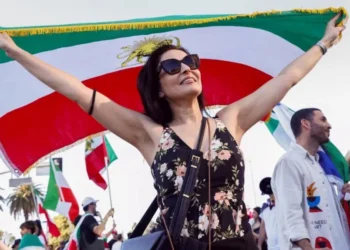 Hopes and Fears as US Iranians Take to Streets After Toppling of Supreme Leader
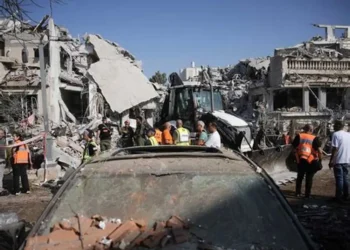 Retaliations Continue on Day Two of US-Israel Attacks on Iran
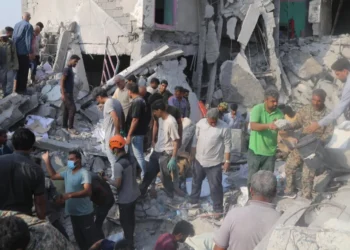 At Least 153 Dead After Reported Strike on School, Iran Says
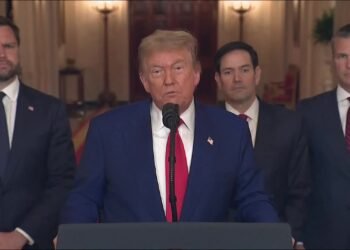 At Least 153 Dead After Reported Strike on School, Iran Says
 ‘It’s Eerie’ – Dubai on Edge as City Comes Under Attack
 BBC Reports from Beit Shemesh After Deadly Iranian Missile Strike
 Iran, the US, and a World Cup That Starts in Three Months
 Months of Planning Behind US‑Israeli Mission to Target Iran’s Supreme Leader
 UK Will Allow US to Use Bases to Strike Iranian Missile Sites, PM Says
 What Khamenei’s Death Means for Russia and China
 Rubio Responds to Reported Strike on Iranian School
 Scots Caught Up in Middle East Crisis ‘Just Waiting for the Next Explosion’
 Why the US and Israel attacked Iran
 Three Days In, This War’s End Is Still Unclear
 US Has ‘Enough Weapons for Forever War,’ Trump Says
 Israel Strikes Lebanon After Hezbollah Rocket Fire as Iran Conflict Widens
 Israel’s New Airstrikes on Tehran & Beirut After US Embassy in Riyadh Is Hit
 Israel Launches Ground Invasion of Lebanon Amid Widening Middle East War
 Iranian Rockets Are Testing the Resolve of Dubai’s Instagram Stars
 US Embassy in Riyadh Hit by Iranian Drones as Israeli Troops Enter Southern Lebanon
 US Senate Backs Trump War Powers Amid Iran Missile Barrage
 UK Prepares Aircraft Carrier for Middle East Crisis
 Nine Days of Strikes Reshape the Middle East
 Putin Orders Evacuation at Iran Nuclear Plant Amid ‘Catastrophe’ Fears
 Video Analysis Suggests US Missile Hit Base Near Iran School
 Iran Says Intelligence Chief Killed in US-Israeli Strike as Trump Threatens ‘Hell’ Without Deal
 Activists allege abuse after Gaza flotilla seizure
 Global order shifts amid Trump-era turmoil
 “The Silence of the Victor”: Why Iranians Fear a More Ruthless, Entrenched Regime Post-War
 “The Pakistan Paradox”: Trump’s Peace Hopes Clouded by Blockades and ‘Red Line’ Caveats
 “The 14-Point Ultimatum”: Iran Reviews US Peace Proposal as Trump Predicts War Will Be ‘Over Quickly’
 Tensions Emerge in Netanyahu-Trump Alliance
 Putin Declares Russia Victory at Scaled Victory Day Parade
 “The Fragile Truce Shatters”: Israeli Airstrikes Kill 19 in Southern Lebanon as Clashes Escalate
 Hunger increasingly weaponised in global conflicts
 Former ICC prosecutor condemns US sanctions
 “A Fragile Ceasefire Shattered”: The Escalating Humanitarian and Security Crisis in Southern Lebanon
 European Allies Set Peace Terms for Ukraine
 Iran and Israel Pause Strikes but Warn Retaliation Will Follow Any New Breach
 US Launches New Strikes on Iran as Trump Issues Stark Warning to Tehran
 Iranian Airport and Bridges Hit as US Forces Board Ship Amid Ports Blockade
 ‘What Was Their Crime?’: Inside the Iranian School Where Strike Killed 120 Children
 Palestinian Village Faces Weekly Attacks as Residents Describe Fear and Uncertainty
 Machado Trump medal gesture reshapes Venezuela power struggle
 Fears of New Arms Race as US-Russia Nuclear Weapons Treaty Expires
 Iran Says ‘Guiding Principles’ Agreed With US at Nuclear Talks
 Ukraine Negotiator Reveals What It Feels Like Facing Russia
 In Maps: Strikes Across Iran and the Middle East
 The Third Day of the US‑Israeli War With Iran
 Civilian Deaths in Iran Pass 700 Amid Fear of Bombs and Regime Clampdown
 How Depleted Weapons Stockpiles Could Affect the Iran Conflict
 Macron Finds ‘Freedom Fries’ Redemption in Iran Crisis
 Thousands Protest Iran Strikes Outside US Embassy London
 US Bombers Arrive at RAF Base Amid Rising Iran Tensions
 Iran’s New Leader Faces Existential Test
 Ukraine War Becomes Flashpoint in Hungarian Election
 Yvette Cooper: UK Must Follow Principles, Not US Pressure
 Trump Iran War Stance Hardens as Conflict Widens
 Trump’s Confidence Undimmed — But Every Iran Option Carries Risk
 Israel Says Iran Security Chief Larijani ‘Killed’
 US and Iran Pursue Extension of Ceasefire via Pakistan
 Ukraine Urges UK to Seize Russian Oil Tankers
 US Calls Australia Media Law “Foreign Extortion”
 “The Tightrope Walk”: Lula and Trump Meet at White House to ‘Recalibrate’ Fractured Alliance
 “The Peace Dividend”: Oil Prices Plunge and Global Stocks Surge on Reports of Iran Ceasefire Deal
 “Hold Off”: Trump Pauses ‘Scheduled’ Strike After 11th-Hour Appeal From Gulf Allies
 Discontent grows around Putin amid war strain
 Israel Strikes Iran After Missile Attack
 Trump’s Iran Legacy Hangs on Tehran Deal
 Lebanon Reports 18 Killed in Israeli Strikes as Israel Announces Deaths of Four Soldiers
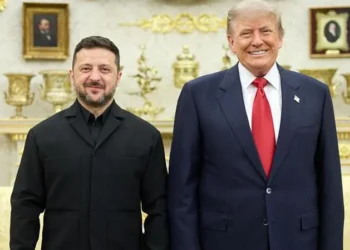 Trump Hosts Zelensky and Netanyahu as Ukraine and Iran Conflicts Shape Global Agenda