
Published: 29 July 2026 | The English Chronicle Desk | The English Chronicle Online
Residents of a Palestinian village in the occupied West Bank have described living under a constant state of fear, claiming that repeated attacks by Israeli settlers have turned daily life into a struggle for safety and survival.
Families living in the community say they have faced frequent harassment, intimidation and confrontations, with some describing moments when groups of settlers surrounded homes and created an atmosphere of fear among residents.
The accounts highlight the growing tensions in the West Bank, where violence involving Israeli settlers and Palestinians has become a major international concern. Human rights organisations and international officials have repeatedly called for an end to attacks on civilians and urged authorities to protect communities affected by escalating violence.
For residents of the village, the threat is not limited to isolated incidents but has become part of everyday life.
Families say they have changed their routines because of concerns about possible attacks. Some avoid travelling after dark, while others remain alert whenever unfamiliar groups appear near their homes or farmland.
Residents describe feeling trapped between fears of violence and uncertainty about whether authorities will provide adequate protection.
One resident said the community had become accustomed to hearing reports of confrontations but that the repeated nature of the incidents had created deep anxiety among families, particularly children.
Parents say young people in the village have been affected emotionally, with some becoming frightened whenever they hear shouting, vehicles approaching or disturbances outside their homes.
Residents have alleged that groups of Israeli settlers have repeatedly entered areas near the village, damaging property, threatening residents and disrupting daily activities.
Some families claim their agricultural land has been targeted, affecting livelihoods that depend on farming and livestock.
For many Palestinian communities in the West Bank, land is not only an economic resource but also closely connected to family history and identity.
Farmers say restrictions and security concerns have made it increasingly difficult to access fields, particularly during periods of heightened tension.
Human rights groups have documented numerous incidents of settler violence in the West Bank, including reports of property damage, physical attacks and intimidation.
Israeli authorities have said that violent acts by individuals are investigated and that those responsible can face legal consequences.
The situation in the West Bank has become more volatile amid wider Israeli-Palestinian tensions.
The territory has been occupied by Israel since the 1967 Middle East war, and its status remains one of the central issues in the Israeli-Palestinian conflict.
More than half a century of competing claims, failed peace negotiations and ongoing disputes over land and security have contributed to continued instability.
Israeli settlements in the West Bank are considered illegal under international law by most countries, although Israel disputes this position and argues that the issue should be resolved through negotiations.
The expansion of settlements and rising settler violence have become major points of disagreement between Israel, Palestinians and the international community.
Residents say the consequences of insecurity extend beyond moments of direct confrontation.
Many describe feeling unable to live normally because they are constantly preparing for possible incidents.
Children may avoid outdoor activities, farmers may delay working on land, and families may hesitate to leave homes unattended.
Community leaders say fear has affected social and economic life, with some residents considering leaving because they no longer feel safe.
However, others say they remain determined to stay because leaving would mean losing their connection to their homes and land.
The reported increase in settler violence has drawn attention from international organisations and foreign governments.
The United Nations and several human rights groups have warned that attacks against civilians threaten regional stability and increase tensions.
They have called on Israeli authorities to ensure accountability for those responsible for violence and to protect Palestinian civilians.
International officials have also warned that continued unrest in the West Bank could make prospects for a political solution even more difficult.
Israeli officials have rejected accusations that the state supports violence against Palestinians and say security forces act against illegal actions regardless of who commits them.
Authorities have stated that extremist violence is unacceptable and that individuals responsible for criminal acts should be prosecuted.
However, Palestinian residents and rights organisations argue that enforcement has often been insufficient and that many attacks occur without meaningful consequences.
The issue has become politically sensitive within Israel, where opinions differ sharply over settlement policy and the government’s approach to security in the West Bank.
Aid organisations working in Palestinian communities say ongoing insecurity creates additional humanitarian challenges.
Families affected by violence may require medical assistance, psychological support and help repairing damaged property.
Humanitarian workers say fear and instability can have long-term effects, especially on children who grow up experiencing repeated conflict.
Mental health specialists warn that prolonged exposure to threats can contribute to anxiety, stress and trauma.
For many residents, the conflict is experienced through ordinary moments: protecting homes, caring for families and trying to maintain livelihoods.
Farmers who once worked freely on their land now describe planning their activities around security concerns.
Families who once saw their villages as peaceful communities now describe a life shaped by uncertainty.
Despite these difficulties, many residents say they are determined to remain and continue their daily lives.
They argue that leaving would mean surrendering their homes and allowing fear to determine their future.
The situation in the West Bank is occurring alongside broader regional tensions, including the ongoing conflict between Israel and Palestinian armed groups in Gaza.
Violence in Gaza and political disputes throughout the region have increased international attention on Palestinian territories.
Observers warn that without meaningful efforts to reduce tensions and address underlying political issues, violence could continue to spread.
Diplomats have repeatedly called for renewed efforts toward a long-term solution that addresses security concerns, Palestinian rights and the future status of disputed territories.
For residents of the village, the immediate priority remains safety.

They want protection from attacks, accountability for those responsible and the ability to live without constant fear.
Their experiences reflect a broader struggle faced by many communities caught in one of the world’s longest-running conflicts.
As political leaders debate possible solutions, residents say their concerns are much more immediate: protecting their families, maintaining their homes and finding a way to live peacefully.
For those living in villages affected by repeated violence, the conflict is not simply a political issue discussed in international meetings. It is a daily reality that shapes where they go, what they do and how they imagine the future.
Related News:
 UK Prepares Aircraft Carrier for Middle East Crisis
 Death, displacement and military duties: children plunged into crisis
 Aid Crisis Grows as Hormuz War Disrupts Supply
 Activists allege abuse after Gaza flotilla seizure
 Middle East Crisis Escalates as Oil Routes Shake Markets
 Trump Announces 3-Day Russia–Ukraine Ceasefire Deal
 Former ICC prosecutor condemns US sanctions
 Houthis Strike Saudi Arabia as Middle East Tensions Rise
 Iran Leader Blames Protesters, Says They Serve Trump
 Thousands Protest ICE in New York Against Trump Deportation Campaign
 ‘Anyone who runs is shot’: Russian soldiers describe killings of troops who refuse orders
 Middle East Flights Halted After Iran Strikes
 Israel and Hezbollah Exchange Fire as Conflict Worsens
 Iran’s Regime Still Intact — Coming Days Will Test Its Survival
 Allies of US in the Gulf Bear Brunt of Iran Attacks
 Hopes and Fears as US Iranians Take to Streets After Toppling of Supreme Leader
 Retaliations Continue on Day Two of US-Israel Attacks on Iran
 At Least 153 Dead After Reported Strike on School, Iran Says
 At Least 153 Dead After Reported Strike on School, Iran Says
 ‘It’s Eerie’ – Dubai on Edge as City Comes Under Attack
 BBC Reports from Beit Shemesh After Deadly Iranian Missile Strike
 Iran, the US, and a World Cup That Starts in Three Months
 Cooper: Joining US Strikes on Iran ‘Not in Britain’s Interest’
 Trump’s Iran Endgame Unclear After Mixed Messaging on War Aims
 Rubio Responds to Reported Strike on Iranian School
 Scots Caught Up in Middle East Crisis ‘Just Waiting for the Next Explosion’
 Why the US and Israel attacked Iran
 Israel Launches Fresh Strikes on Tehran & Beirut; US Warns “Hardest Hits” Ahead
 Three Days In, This War’s End Is Still Unclear
 US Has ‘Enough Weapons for Forever War,’ Trump Says
 Israel Strikes Lebanon After Hezbollah Rocket Fire as Iran Conflict Widens
 Israel’s New Airstrikes on Tehran & Beirut After US Embassy in Riyadh Is Hit
 Israel Launches Ground Invasion of Lebanon Amid Widening Middle East War
 Iranian Rockets Are Testing the Resolve of Dubai’s Instagram Stars
 US Embassy in Riyadh Hit by Iranian Drones as Israeli Troops Enter Southern Lebanon
 US Senate Backs Trump War Powers Amid Iran Missile Barrage
 Thousands Protest Iran Strikes Outside US Embassy London
 US Bombers Arrive at RAF Base Amid Rising Iran Tensions
 Mojtaba Khamenei Chosen as Iran’s New Supreme Leader
 Tehran Oil Depot Strikes Darken City With Toxic Smoke
 Nine Days of Strikes Reshape the Middle East
 Putin Orders Evacuation at Iran Nuclear Plant Amid ‘Catastrophe’ Fears
 Mojtaba Khamenei Supporters Rally as Iranians Fear Repression
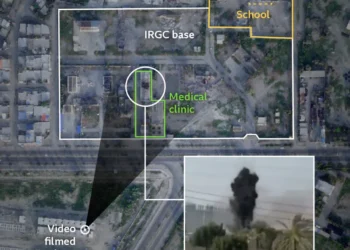 Video Analysis Suggests US Missile Hit Base Near Iran School
 Iran Defiance Grows Amid US-Israel War Pressure
 Hormuz Crisis Sparks Global Oil Market Fears
 Middle East crisis live: Supreme leader ‘safe’, Iran and Israel escalate conflict
 Iranian Exile Factions Seek US Backing for Iran’s Future
 Injured Mojtaba Khamenei Elevated as Iran Leader
 China Approves ‘Ethnic Unity’ Law Requiring Minorities to Learn Mandarin
 Anti-Regime Iranians Turn Anger Toward Trump
 Trump Iran War Stance Hardens as Conflict Widens
 Ghalibaf Iran: Survivor Emerges in Shifting Power Game
 Iran Says Intelligence Chief Killed in US-Israeli Strike as Trump Threatens ‘Hell’ Without Deal
 Ten Dead as Israeli Strikes and Internal Clashes Rock Gaza
 Iran Crisis Tests Trump’s Global Leadership
 Judge halts deportation of Yemeni refugees in US
 Trump likens US Navy actions to ‘pirates’
 Global order shifts amid Trump-era turmoil
 “The Silence of the Victor”: Why Iranians Fear a More Ruthless, Entrenched Regime Post-War
 Ceasefire Standoff Deepens in Ukraine War
 Afghan Families Left in Limbo Face Risk of Deportation
 “A Ten-Minute Eternity”: The Morning Lebanon’s Horizon Turned to Ash
 Tensions Emerge in Netanyahu-Trump Alliance
 Putin Declares Russia Victory at Scaled Victory Day Parade
 “Double Trauma”: Iranian Activist Tells BBC How Fear of War Intensifies the ‘National Security’ Weight of Repression
 “The Fragile Truce Shatters”: Israeli Airstrikes Kill 19 in Southern Lebanon as Clashes Escalate
 Israeli Strikes in Lebanon Kill 10 Amid Ceasefire Strain
 Hunger increasingly weaponised in global conflicts
 Trump Claims Iran Peace Deal Near Completion
 “A Fragile Ceasefire Shattered”: The Escalating Humanitarian and Security Crisis in Southern Lebanon
 Millions Gather for Khamenei’s Six-Day State Funeral
 Ukraine Creates Long-Range Strike Command
 Dreyfus Statue Finally Gets Permanent Paris Home
 US Launches New Strikes as Iran Says Civilian Infrastructure Hit
 US and Iran Pause Strikes as Diplomatic Talks Loom
 Trump Hosts Zelensky and Netanyahu as Ukraine and Iran Conflicts Shape Global Agenda
 Australian Families Leave Syrian Camp for Home
 ‘I Would Scream in My Sleep’: Alawite Women from Syria Tell of Kidnap and Rape
 Report Says Pezzullo Acted ‘Recklessly’ in Dealings