Published: 7 August 2026
The English Chronicle Desk
The English Chronicle Online
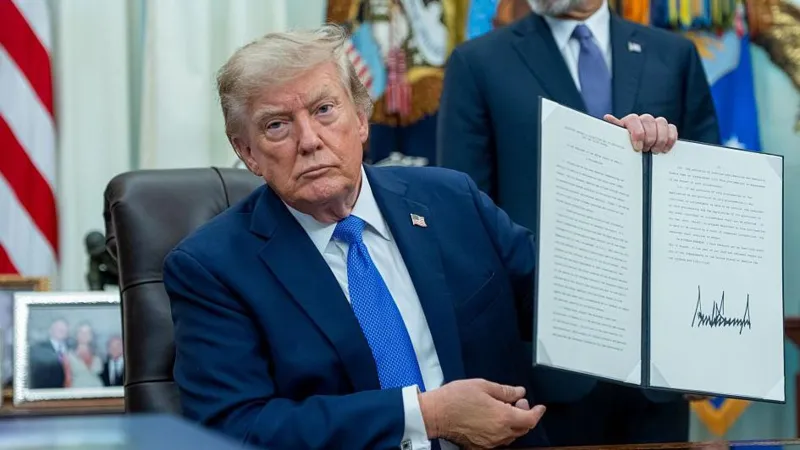
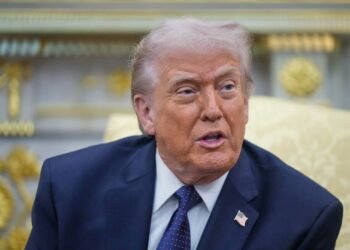
US President Donald Trump has renewed his long-running effort to restrict birthright citizenship in America, signing new executive orders aimed at changing how citizenship is granted to children born on US soil.
The move has reignited one of the country’s most controversial constitutional debates, with immigration supporters accusing the administration of attempting to undermine a long-established legal principle, while Trump and his allies argue that the current system encourages illegal immigration and requires reform.
Birthright citizenship, known legally as jus soli, grants citizenship to most people born within the United States regardless of their parents’ immigration status. The principle is rooted in the 14th Amendment to the US Constitution, which was adopted in 1868 after the Civil War and was designed in part to guarantee citizenship rights for formerly enslaved people.
Trump has repeatedly criticised the policy, arguing that the US is one of the few developed countries that automatically grants citizenship to children born to non-citizens.

His latest executive actions seek to limit automatic citizenship for some children born in the US, particularly those whose parents are undocumented immigrants or do not have permanent legal status.
The administration says the orders are intended to clarify the interpretation of the 14th Amendment and prevent what it describes as the misuse of citizenship rules.
Trump has previously claimed that the current system creates an incentive for people to enter the country illegally because their children can automatically become US citizens.
Supporters of the policy change say the president has a responsibility to strengthen border controls and address illegal immigration.
However, legal experts and civil rights organisations have challenged the authority of the president to make such a significant change through executive action.
Opponents argue that birthright citizenship is protected by the Constitution and cannot be removed without a constitutional amendment or a ruling from the US Supreme Court.
The issue is expected to face immediate legal challenges, with several states, advocacy groups and immigration organisations preparing to challenge the executive orders in federal courts.
Legal scholars have noted that the Supreme Court previously interpreted the 14th Amendment broadly, including in the landmark 1898 case United States v Wong Kim Ark, which confirmed citizenship rights for children born in the US to Chinese immigrant parents.
Critics of Trump’s approach say the president is attempting to bypass Congress and the courts by changing a constitutional right through executive authority.
The American Civil Liberties Union and other groups have warned that the orders could create uncertainty for thousands of families and could result in children born in the US being denied citizenship documents.
They argue that children should not be punished for their parents’ immigration status.
Supporters of Trump’s policy disagree, saying that citizenship laws should reflect national interests and that automatic citizenship should not apply in cases where parents have no legal connection to the country.
The debate comes as immigration remains one of the most politically sensitive issues in the United States.
Trump has made border security and immigration enforcement central themes of his political agenda. During his previous administration and his election campaigns, he repeatedly promised tougher measures against illegal immigration.
The latest executive orders are part of a broader effort by the administration to reshape immigration policy, including increased enforcement actions, stricter asylum rules and efforts to reduce illegal entry across the US-Mexico border.
The White House has argued that immigration laws have been weakened for decades and that stronger action is needed to protect American workers and public resources.
Trump supporters have welcomed the move, saying birthright citizenship has been exploited and that the US should follow stricter immigration models used by some other countries.
Several countries have already limited automatic citizenship based on birthplace, requiring at least one parent to have citizenship or legal residency.
Opponents, however, say comparisons with other countries overlook America’s unique constitutional history.
They argue that birthright citizenship has played an important role in integrating immigrant communities and maintaining equal treatment under the law.
The controversy has also created uncertainty among immigrant families.
Some parents worry about how the policy could affect their children’s future rights, access to education, employment opportunities and legal protections.
Immigration advocates have urged affected families to seek legal advice and avoid misinformation about the changes.
The administration has insisted that the executive orders are lawful and that the government has the authority to define eligibility for citizenship documentation.
However, legal battles are expected to determine whether the president can make such a major change without action from Congress or an amendment to the Constitution.
The courts will likely examine whether the executive orders conflict with the wording and historical interpretation of the 14th Amendment.
The issue could eventually reach the Supreme Court, where justices may be asked to reconsider more than a century of legal precedent surrounding birthright citizenship.
Political reactions have been sharply divided.
Republican lawmakers and conservative groups have praised Trump’s decision, saying it addresses what they view as a major weakness in the immigration system.

Democrats and immigration rights organisations have condemned the move, describing it as unconstitutional and harmful to American families.
The debate also highlights deeper questions about the meaning of citizenship in modern America.
Supporters of birthright citizenship argue that it represents a commitment to equality by ensuring that people born in the country have the same legal status regardless of their background.
Opponents argue that citizenship should be connected to legal immigration and national membership.
As the legal fight begins, the future of birthright citizenship remains uncertain.
Trump’s latest executive orders have once again placed immigration policy at the centre of national debate, setting up a major constitutional confrontation that could shape American citizenship law for generations.
Related News:
 Inside Kyiv’s resolve as conflict nears five‑year mark
 US states redraw maps after voting rights ruling
 Thousands Protest ICE Operations in Nationwide US Day of Action
 Billionaire Les Wexner Tells US Lawmakers He Was ‘Naive’ and ‘Conned’ by Epstein
 US Partially Evacuates Beirut Embassy Amid Rising Iran Tensions
 US Senate Vote Fails to Rein in Trump War Powers on Iran
 Trump Removes Kristi Noem From Homeland Security Role
 US Charges Sinaloa Governor in Major Cartel Case
 US Court Ruling Reshapes Voting Rights Landscape
 Cartel crackdown raises fears of fresh violence
 Judge halts deportation of Yemeni refugees in US
 Trump warns Iran as Middle East tensions surge again
 US ‘Narco Boat’ Strikes Draw Global Outcry
 US Court Restores Abortion Pill Access Temporarily
 Immigration Judges Fear Pressure in Trump Era
 Trump’s Revenge Drive Deepens GOP Divide
 Former ICC prosecutor condemns US sanctions
 Gunman Killed After White House Security Shootout
 Trump-Netanyahu Call Fuels Iran Talk Crisis
 Zelensky Invites Putin to Direct Peace Talks
 Republicans Defy Trump on Ukraine Aid Bill
 Democrats Urge Maine Senate Candidate to Leave Race
 Mystery Grows Over Mitch McConnell’s Health
 Trump Ally Lindsey Graham Dies at 71 After Sudden Illness
 Armed Man Arrested Near Trump Golf Course
 UK Charity Watchdog Probes Settlement Donations
 Trump Administration Dismisses 17 Immigration Judges, Sparking Debate Over Judicial Independence
 Trump Urges Herzog to Grant Netanyahu Full Pardon
 US Justice Department Files Lawsuit Against California Over Partisan Voting Maps
 Trump Deploys DHS to Charlotte in Major Arrest Operation
 US National Guard Member Killed in DC Shooting
 Russia losses Ukraine war peace talks intensify amid rising deaths
 Trump Escalates Minnesota Immigration Surge Amid Rising Tensions
 Trump Threatens Strong Action If Iran Executes Protesters
 EU Says US Ties Have Suffered ‘Big Blow’ After Greenland Crisis
 Fears of New Arms Race as US-Russia Nuclear Weapons Treaty Expires
 Nine Arrested in France Over Death of Far‑Right Student
 American Citizen Killed in Cuba Boat Shooting, U.S. Officials Say
 Trump Faces Questions Over Iran Conflict Plan
 US Senate Backs Trump War Powers Amid Iran Missile Barrage
 Nepal Holds First General Election Since Gen Z Protests Toppled Government
 How Depleted Weapons Stockpiles Could Affect the Iran Conflict
 Pete Hegseth Iran War Remarks Spark Alarm
 Iran War Puts Trump at Political Risk Amid Rising Prices
 Queensland Protest Laws Spark Free Speech Backlash
 Trump’s Confidence Undimmed — But Every Iran Option Carries Risk
 Mandelson’s Phone Messages Requested in Files Release
 Israel Enacts Death Penalty Law for Palestinians Following 12-Hour Debate
 ‘In Our Backyard’: FBI Labels Michigan Synagogue Attack as Hezbollah-Inspired Terrorism
 The “Protective Shield”: Who is Todd Blanche, the New Acting U.S. Attorney General?
 Report Says Pezzullo Acted ‘Recklessly’ in Dealings
 The Bench Strikes Back: Lower Court Judges Emerging as Main Obstacle to Trump’s Executive Pivot
 The Moral Crisis Looming Within the American Chain of Command
 The Changing Face of Georgia: Trump-Backed Clay Fuller Wins Election
 Capitol Hill Showdown: Bill Gates to Testify in Expanding Epstein Inquiry
 The Prediction Prohibition: White House Staff Barred from Betting on Political Markets
 The Frozen Frontier: Why Frostbite is the Least of Concerns for Canada’s Arctic Forces
 The Masked Frontier: Allegations of Greek Police Using Proxies for ‘Seismic’ Border Pushbacks
 Judicial Whiplash: Virginia Court Pauses Redistricting 24 Hours After Public Vote
 Return of the “Skiffs”: Threat Level Raised as Somali Pirates Seize Second Vessel in a Week
 Trump Threatens UN Budget Cuts as US Pushes ‘Trade Over Aid’ Agenda
 “The Cost of Conviction”: Palestine Action Activists Found Guilty Over ‘Clinical’ Factory Damage
 Florida Surgeon ‘Devastated’ Over Fatal Surgery Error
 Tensions Emerge in Netanyahu-Trump Alliance
 US Awaits Iran Reply on New Ceasefire Proposal
 US green card applicants must apply from abroad, DHS says
 Tulsi Gabbard exits after turbulent intelligence tenure
 UK Faces Most Dangerous Era, Military Chief Warns
 Israel Strikes Iran After Missile Attack
 Son Urges Iran Prisoner Exchange for Jailed British Pair

 Trump Helps Clear Balogun for Belgium World Cup Clash
 Trump’s Major Recruitment Drive Targets Border Patrol Growth
 Trump’s New Vision for 250 Years of US Expansion
 Le Pen’s Popularity Holds Despite Conviction
 Trump Refuses to Sign Housing Bill, But Law Takes Effect
 US Unveils Fresh Tariffs on Global Trading Partners
 Burnham Reaffirms Support for Ukraine During Zelensky Visit
 Trump Hosts Zelensky and Netanyahu as Ukraine and Iran Conflicts Shape Global Agenda
 Burnham Considers Inquiry Into Epstein UK Connections