Published: 14 August 2026 | The English Chronicle Desk | The English Chronicle Online
Delhi is preparing for one of badminton’s biggest international events with an unusual priority alongside the usual preparations for elite sport: keeping monkeys and pigeons out of the stadium.
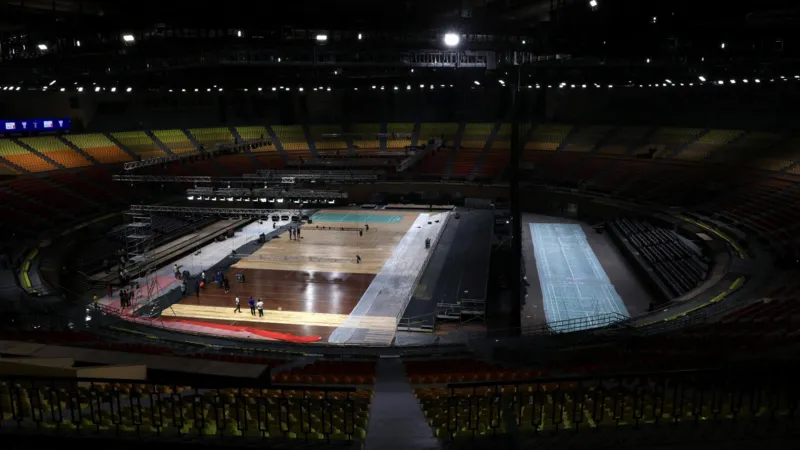
The Indian capital will host the BWF World Championships at the Indira Gandhi Indoor Stadium from 17 to 23 August, bringing together many of the world’s leading badminton players. But after a series of unexpected wildlife interruptions during the India Open earlier this year, organisers are taking additional precautions to ensure that the attention remains on the athletes rather than the animals.
The measures include replacing wooden doors with automatically locking double-door systems, installing high-grade nets over potential openings and sealing gaps around the stadium. Organisers have also used a non-toxic gel on selected areas and handles where pigeons could potentially land.
The preparations follow an embarrassing episode during January’s India Open, when pigeon droppings interrupted play and a monkey was spotted inside the stadium. The tournament was also affected by concerns about Delhi’s winter air pollution, with several players complaining about the conditions.

For Indian sporting authorities, the forthcoming World Championships represent an opportunity to demonstrate that the capital can host a major international tournament smoothly and professionally.
The Indira Gandhi Indoor Stadium is a familiar landmark in Delhi’s sporting landscape. Built for the 1982 Asian Games, the complex was later renovated ahead of the 2010 Commonwealth Games. Officials say the venue has now undergone further work ahead of the badminton championships.
Ambar Pratap Singh, executive director of the Sports Authority of India, said structural upgrades had been carried out at three major arenas within the stadium complex. Lighting has also been addressed following complaints from players during the India Open that shadows were appearing on the badminton court.
But the animal-control measures have attracted perhaps the greatest public curiosity.
Delhi has long struggled with interactions between humans and urban wildlife, particularly rhesus macaques. The smaller monkeys are widespread in the city and have frequently become a nuisance around government buildings, residential areas and public venues.
One traditional method of discouraging rhesus macaques involves the use of langur calls. Langurs are larger, long-tailed monkeys found across much of South Asia, and their calls can frighten rhesus macaques away.
A video showing a man apparently imitating the call of a langur circulated widely on social media in India this week. Several reports suggested that people capable of mimicking the larger monkeys had been brought in to protect the World Championships venue.
The Badminton Association of India has, however, clarified that it has not specifically hired someone for that purpose as part of its championship preparations.
Sanjay Mishra, the association’s general secretary, told the BBC that a person capable of imitating langur calls had briefly been present in the northern section of the large stadium complex. He said the individual was not specifically employed by the association as a dedicated monkey-control worker.
The unusual story nevertheless captured public imagination, partly because the tactic has a long history in Delhi.
During the 2010 Commonwealth Games, authorities used real black-faced langurs at some venues to discourage rhesus macaques from entering areas being used by athletes and visitors.
When India hosted the G20 summit in 2023, authorities adopted a different approach. Life-size cutouts of langurs were placed at various locations around Delhi in an effort to deter monkeys.
The measures ahead of the badminton championships are more focused on preventing animals from entering the stadium in the first place.
According to Mishra, potential entry points have been examined across the venue. Openings have been covered with nets, while gaps in the roof and exhaust vents have been sealed or repaired. The introduction of automatically locking double doors is intended to provide an additional barrier against birds and animals entering the building.
Pigeons were a particularly visible problem during the India Open.
A men’s singles match between Singapore’s Loh Kean Yew and India’s HS Prannoy was interrupted twice after pigeon droppings landed on the court. What should have been a sporting contest became an unexpected discussion about stadium management and the difficulties of hosting indoor events in a densely populated city.
The problem is not merely cosmetic. A badminton court must be kept clean and safe, and interruptions caused by contamination can disrupt players’ concentration and affect the rhythm of a match.
The January tournament also placed Delhi’s environmental conditions under scrutiny.
During the cooler months, northern India frequently experiences severe air pollution, with Delhi among the areas most affected. This year was no exception. Players reported difficulties dealing with the air, particularly when travelling outdoors.
Loh said he struggled to breathe and wore a mask outside his hotel room, while Danish player Mia Blichfeldt described the conditions as unhealthy.
Those complaints added another layer of pressure for organisers already dealing with the unexpected appearance of wildlife inside the venue.
The World Championships therefore offer India a chance to present a different image.
The tournament will feature reigning world champions Shi Yuqi of China in the men’s singles and Akane Yamaguchi of Japan in the women’s singles. India will also have considerable interest in the competition, with two-time Olympic medallist PV Sindhu among the country’s leading hopes on home soil.
For Indian badminton fans, the focus will naturally be on the results. For organisers, however, the event carries a broader significance.
India is increasingly seeking a greater role as a host of major international sporting competitions. The country is scheduled to host the Commonwealth Games in 2030 and has also expressed ambitions to stage the Olympic Games in 2036.
The ability to manage everything from venue infrastructure and lighting to security, environmental conditions and unexpected wildlife encounters is therefore part of the wider test.
The monkey and pigeon preparations may sound unusual, but they reflect the practical challenges of operating a major sporting facility in one of the world’s largest and most densely populated cities.
The authorities are attempting to address the problem before the first shuttlecock is struck rather than waiting for another animal-related interruption to become an international headline.
There is also an element of symbolism in the preparations. The India Open showed how quickly a major sporting event can become associated with issues unrelated to the competition itself. Pigeon droppings stopping a match and a monkey appearing inside the stadium provided memorable images, but they were hardly the publicity Indian badminton officials would have wanted.
This time, the intention is to make the venue less accessible to Delhi’s opportunistic wildlife and more suitable for the world’s best badminton players.

For the organisers, that means keeping doors closed, sealing gaps, installing protective nets and dealing with potential pigeon landing areas. It also means ensuring that the venue’s structural and lighting improvements meet the standards expected at a global championship.
The measures will inevitably attract humour and curiosity, particularly in a city where monkey-control stories have become part of public life. But behind the novelty is a serious effort to avoid preventable disruptions.
A successful World Championships would give India an opportunity to demonstrate that lessons from earlier events have been taken seriously.
If everything goes according to plan, the coming week in Delhi will be remembered for powerful smashes, long rallies, dramatic victories and the emergence of new champions.
The organisers will have achieved their goal if the monkeys remain outside, the pigeons stay away from the court and the headlines are finally dominated by badminton.
For a country eager to establish itself as a major destination for international sport, that may be the most important victory of all.
Related News:
 England’s Euro Odyssey: A Tale of Grit, Glory and the Lionesses’ Miraculous March to the Final
 London Set to Honour Euro 2025 Champions as Lionesses Take Victory Parade Through the Capital
 Tottenham Takes On Newcastle
 Golden Glory Beckons: Ballon d’Or 2025 Nominee Frenzy Ignites Global Football Stage
 Rugby Confronts Safety Concerns with Smart Mouthguards at Women’s World Cup
 Premier League Supercomputer Predicts Tough Season for Man Utd Amid Three-Team Title Battle
 India Triumph in Dubai Amid Unexpected Twists
 Everton Held by West Ham as Bowen Cancels Out Keane’s Header in Nuno’s First Game
 Mbappé Hat-Trick Powers Real Madrid to 5-0 Rout Over Kairat
 Monaco Hold Man City to Dramatic 2-2 Draw as Eric Dier Converts Late Penalty
 Arsenal Edge Past West Ham Amid Injury Concerns
 Chaos at Ibrox as Martin’s Rangers Era Comes to an End
 Questions Remain as Rugby Legend Lewis Moody Faces Motor Neurone Disease Diagnosis
 Hyped by Zlatan, Hidden by Maldini: Italy’s Rising Star Francesco Camarda
 Son of ex-England footballer dies in tractor crash
 Brentford 3-2 Liverpool: Reds suffer fourth straight PL defeat
 Wolvaardt’s Masterclass Fires South Africa into First World Cup Final
 UK and Ireland Announce Venues for Euro 2028 Tournament
 Saka Solidifies Role as Tuchel’s Key England Lieutenant
 Tiny Curacao Makes History as Smallest Nation to Reach World Cup
 Australia Face Big Changes as Cummins and Lyon Ruled Out of Ashes
 Damien Martyn in Induced Coma After Meningitis Diagnosis
 Raducanu Battles Injury as Britain Exit United Cup
 Manchester United Fan Group Targets Jim Ratcliffe Over Club Chaos
 Geopolitical football: Iran, Trump and the World Cup clash
 Yamal and Rashford Shine as Barcelona Reach Copa Semis
 ICC Men’s T20 World Cup – Everything You Need to Know
 Is This Premier League Striker a Secret Maths Genius?
 ALL GUNNS BLAZING: Arsenal vs Wigan LIVE SCORE – FA Cup Updates
 Swearing, Illicit Filming & Rule Changes – What Next in Curling Cheating Row?
 Hilary Knight speaks out on Trump’s recent hockey remarks
 Manchester United Face Huge Bill After Ruben Amorim Exit
 Can Chelsea Kick‑Start Faltering Palmer?
 India T20 World Cup Triumph Seals Historic Title Defence
 Abramovich Chelsea Sale Cash Faces Jersey Probe
 Scotland World Cup Party in Boston Gets Green Light After Security Breakthrough
 Iranian Captain Departs Australia Amid Asylum Tension
 Schmeichel Injury Sparks Denmark Debate
 Sunderland Stun Newcastle as Brobbey Strikes Late Winner
 English Football’s Managerial Merry-Go-Round Has Become a Circus
 Eddie Howe Faces Seven Game Test to Secure Newcastle Future
 Tiger Woods: Golf Legend Steps Away to Seek Treatment
 Can Congress Stop US Sports Teams From Moving Cities?
 Miles Jupp: How the Magic of the Ashes Sparked a Bold Blag
 Van Dijk Rallies Liverpool for Massive PSG Comeback
 Premier League Clubs Tense Over Regulator Costs
 Cricket’s New Era: Seeking Substance Beyond the Glitz
 Beyond the Swoosh: Anta Sports Overtakes Rivals to Become Global Top Three
 “Three-Wheeled Triumph”: Mayor of Erewash Completes 2,000-Mile European Charity Run
 George North Announces Retirement From Rugby
 Premier League drama defines crucial weekend
 Arteta urges Arsenal to step up in Atlético semi-final
 Miami Upgrades Shake Up F1 Title Fight
 Arsenal Fans Face High Costs for Champions League Final
 Champions at Last: Arsenal Conquer the Premier League
 The Battle for Wembley Sparking Unprecedented Legal Warfare
 Fans Bring Flags and Fire to World Cup Scenes
 Fans Invited to Share Scotland World Cup Stories
 Iran Team Arrives in Mexico Amid US Visa Dispute
 Football Regulator Contacts West Ham Over “Serious Allegations” Linked to Sullivan
 Saka Playing Through Pain As England World Cup Campaign Looms
 England Cruise Past Costa Rica as World Cup Warm-Up Sharpens Tuchel’s Vision
 Tuchel’s England Mission Goes Beyond Football Success
 Historic Victory for Canada as They Defeat Nine-Man Qatar
 Stokes Retirement Announcement Dominates Dramatic Fourth Day of Deciding Test
 Canada Secure Historic Last 16 Spot with Late Goal
 Paraguay Shock Germany in Historic Penalty Shootout
 Haaland Heroics Send Norway Into Historic Last 16 Knockout
 Trump Helps Clear Balogun for Belgium World Cup Clash
 Belgium Thrashes USA After Red Card Controversy
 Kane vs Haaland: Which Striker Would You Choose?
 Djokovic Faces Sinner in Epic Wimbledon Semi-Final
 Lamine Yamal’s Birthday: Football, Fame, and France
 Argentina End England’s World Cup Dream With Semi-Final Victory
 Who Am I? Guess World Cup Star No 40 – The Mystery Player Captivating Football Fans
 World Cup Rings for Winners as Trump Attendance Confirmed
 Sixteen Titles in Five Years: How Spain Built an Unrivalled Era of Football Dominance
 Zidane Confirmed as France Head Coach After Long Wait
 Avalanche Claims Nepal’s Greatest Mountain Guides
 FAI Withdraws Infantino Backing as IFA Backs Uefa