Published: 29 September ‘2025. The English Chronicle Desk
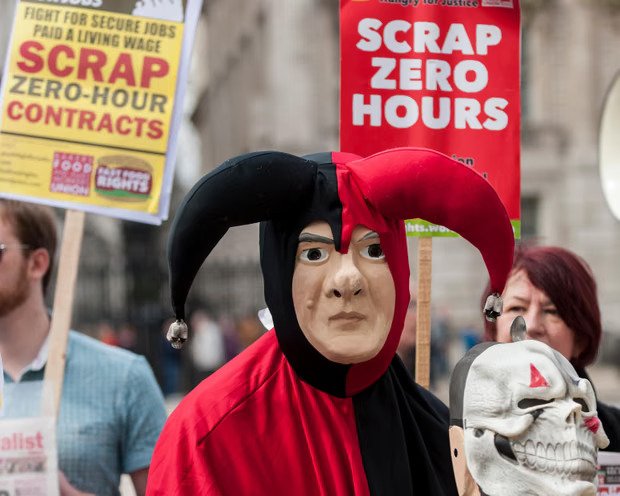
A landmark employment bill currently progressing through the UK Parliament is projected to enhance workplace protections for over a million workers, according to a detailed analysis by a leading thinktank. The legislation, aimed at addressing long-standing issues surrounding job insecurity, would impose stricter obligations on employers and introduce measures designed to prevent exploitative practices, including zero-hours contracts and unfair dismissal procedures.
Research conducted by The Work Foundation, a respected labour and employment thinktank affiliated with Lancaster University, examined the potential effects of key provisions within the bill, specifically the proposed ban on zero-hours contracts and the introduction of “day one” rights allowing employees to claim compensation immediately after unfair dismissal. The analysis revealed that if these measures had been in place during the 2023-24 period, approximately 1.2 million workers would have been protected from severe workplace insecurity. The findings highlight the significance of the bill, which has garnered support from trade unions due to its potential to transform employment practices across multiple sectors.

The report further suggested that the legislation would not only safeguard those in precarious positions but would also improve conditions for employees already working under contracts with some existing protections. According to the analysis, implementation of the proposed measures in 2023 could have increased the number of workers in secure employment by 3.9 million, raising the total to 17.8 million individuals enjoying enhanced job stability. This data underscores the broad scope and potential impact of the employment rights bill, emphasizing the far-reaching benefits that could arise if the legislation is enacted without significant dilution.
While some components of the bill are scheduled to take effect as early as April next year, other critical reforms, such as the prohibition of zero-hours contracts and the curbing of practices whereby employers terminate and rehire staff on less favorable terms, are set to be phased in over the subsequent two years. However, trade unions have raised concerns that the government may weaken certain protections, notably by replacing immediate “day one” unfair dismissal rights with a six-month qualifying period, a move they argue would substantially diminish the effectiveness of the reforms.
Employer groups have also voiced opposition to various aspects of the legislation, arguing that the proposed changes could place additional burdens on businesses. They are expected to lobby intensively during the Labour Party conference to influence ministers, particularly David Lammy, the incoming deputy leader, and Peter Kyle, the new business secretary, to delay or adjust certain provisions to accommodate business interests. The ongoing debate underscores the balancing act between enhancing workers’ rights and maintaining flexibility for employers, a challenge that has characterized much of the discourse surrounding the bill.
Political shifts have further complicated the bill’s trajectory. Angela Rayner, a key architect of the legislation, lost her deputy leadership role last month, while former business secretary Jonathan Reynolds was reassigned as chief whip. Both figures had been anticipated to shepherd the bill through Parliament and ensure its implementation via secondary legislation, adding to uncertainty regarding the pace and scope of forthcoming reforms.
Union leaders have expressed frustration at what they perceive as attempts to undermine the bill’s original intent. Sharon Graham, general secretary of the Unite union, criticized moves to introduce exemptions for local councils, which would allow them to terminate and rehire staff on inferior pay and conditions if facing financial distress. While similar opt-outs had already been secured by private-sector organizations, Graham warned that such measures risked diluting the bill’s core purpose and undermining its impact on workers’ security.
Despite these concerns, the bill is expected to receive royal assent in the coming weeks, though hundreds of amendments tabled in the House of Lords—primarily aimed at delaying or weakening the legislation—still need to be considered. The Work Foundation has urged the government to resist pressures to compromise and maintain the integrity of the reforms, arguing that the legislation’s primary objectives must remain intact to achieve meaningful improvements in workers’ rights.
A central feature of the analysis was the projected impact of a statutory probation period, an innovation designed to complement day one rights. According to the thinktank, had the bill been enacted with a six-month probation period in 2023, the number of individuals experiencing severe job insecurity would have fallen from 6.8 million to 5.6 million. If a two-year probation period had been shortened to one year, 6.1 million workers would still have remained in insecure employment, with only 700,000 gaining additional protections. These findings illustrate the significant role that statutory probation provisions play in safeguarding workers against abrupt terminations and precarious employment arrangements.
Ben Harrison, director of The Work Foundation, emphasized the broader socioeconomic importance of strengthening workplace rights. “Enhancing workers’ protections is essential for improving living standards for millions of people across the UK,” he said. “While it is appropriate for the government to engage with employers to ensure measures are practical, ministers must not compromise the core benefits of this legislation. Even seemingly minor adjustments can have profound consequences for the livelihoods of working people.”
The analysis also highlighted the particular vulnerability of zero-hours contract workers. The report estimated that 92.5 percent of individuals on such contracts would have benefited from guaranteed hours had the legislation been in effect in 2023, translating to roughly one million workers. A smaller proportion, 7.5 percent, would have remained outside the protections due to insufficient tenure with their employer, falling short of the three-month qualifying period. This statistic underscores the bill’s potential to transform the experiences of a significant segment of the workforce, many of whom face inconsistent income and limited employment stability.

Experts have noted that the bill could have a particularly profound effect on young women, a demographic disproportionately represented in roles with minimal job security. Claire Reindorp, chief executive of the Young Women’s Trust, highlighted the potential life-changing impact of the reforms. “These measures could fundamentally improve the working lives of young women, offering greater certainty and fairness,” she said. “For the benefits to be fully realized, the legislation must be implemented in full and without delay, allowing those who are most vulnerable to experience tangible improvements in their employment conditions.”
The employment rights bill represents a crucial step in modernizing the UK’s labour market, addressing issues that have long plagued both employees and unions. By eliminating exploitative practices and providing workers with immediate recourse in cases of unfair dismissal, the legislation seeks to foster a more equitable balance of power between employers and employees. It also aligns with broader objectives of social justice and economic stability, reflecting the government’s commitment to protecting the workforce in an evolving economic landscape.
While challenges remain—ranging from political reshuffles to potential amendments from the House of Lords—the underlying analysis confirms that the bill could profoundly enhance job security for millions of workers. Its successful enactment would signal a decisive move toward modernizing employment law and providing a more stable foundation for the UK’s workforce. Both trade unions and labour rights advocates remain vigilant, calling on the government to resist diluting the measures and to prioritize the long-term benefits for employees over short-term political or business pressures.
As the UK moves toward the bill’s implementation, attention will increasingly focus on ensuring compliance across sectors, monitoring the efficacy of statutory protections, and assessing the real-world impact on workers’ day-to-day experiences. With over a million individuals standing to gain more secure terms, the employment bill represents a critical moment in the ongoing evolution of labour rights in the country, reinforcing the principle that fair, predictable, and secure employment should be a standard rather than an exception.
Related News:
 MPs Warn Thousands Still Face Poverty Despite Labour’s Welfare Reform Retreat
 Chancellor Faces Mounting Pressure Amid “Impossible Trilemma” Over Tax Rises
 Labour Members Push for Wealth Tax as Public Finance Crisis Deepens
 Larger Families Could Gain Thousands if Labour Ends Two-Child Benefit Cap
 Reeves Weighs New Property Tax on Homes Worth Over £500,000
 Rachel Reeves Hosts Top UK and US Financial Executives as Trump’s State Visit Begins
 Privatisation of UK Industries Exacerbates Cost of Living Crisis, Warns Green Party Leader
 Resolution Foundation Chief Urges Chancellor Reeves to Rethink Budget Before November
 Farage’s Reform UK Receives £100,000 from Design Firm with Past Tax Issues
 Rachel Reeves Faces Criticism Over Appearance at Gambling Industry Event Amid Tax Review
 King Charles Earns Over £1 Million from Duchy Land Linked to Scrapped HS2 Project
 Gatwick Secures Approval for £2.2bn Second Runway Expansion
 Labour to Unveil Ambitious Plan for 12 New Towns to Tackle England’s Housing Crisis
 Holding Reform to Account: Why a Principled Conservative Future Matters
 Kemi Badenoch Unveils ‘Golden Rule’ to Halve Spending Cuts for Deficit Reduction at Tory Conference
 Bridget Phillipson Urges Starmer to Scrap Two-Child Benefit Cap
Rachel Reeves to Confirm Changes to Britain’s Planning System
Rachel Reeves Signals Tax Rises, Spending Cuts Ahead
Bridget Phillipson Urges Starmer to Scrap Two-Child Benefit Cap
Rachel Reeves to Confirm Changes to Britain’s Planning System
Rachel Reeves Signals Tax Rises, Spending Cuts Ahead
 Rachel Reeves urged to consider welfare cuts to boost fiscal credibility
 Rachel Reeves to lead UK trade push in Saudi Arabia amid rights debate
 Green Party Surges Past Labour in Latest UK Poll
 Celebrities and Charities Demand UK Government Act on Child Poverty
 Rachel Reeves Eyes 20% Tax on Assets for UK Departures
 Trump’s UK Ambassador Urges North Sea Drilling to Strengthen US Ties
 Rachel Reeves Set to Break Labour Pledge and Raise Income Tax
Thinktanks Urge Rachel Reeves to Reform UK Tax System
MPs Press Rachel Reeves to Hike Gambling Taxes
Rachel Reeves Set to Break Labour Pledge and Raise Income Tax
Thinktanks Urge Rachel Reeves to Reform UK Tax System
MPs Press Rachel Reeves to Hike Gambling Taxes
 Labour Urged to Honour Tax Pledges Ahead of Budget
 Labour Falls to Fourth in Poll, Faces Historic Election Loss
 Cuts to home insulation funding threaten UK climate goals
 PM Highlights UK Business at G20 in South Africa
Reeves to Crack Down on Benefit Fraud While Lifting Two-Child Limit
PM Highlights UK Business at G20 in South Africa
Reeves to Crack Down on Benefit Fraud While Lifting Two-Child Limit
 Starmer Says Labour’s Economic Plan Needs Years to Deliver
 UK Must Act with Courage and Clarity on Israel-Palestine Conflict, Says Foreign Affairs Committee Report
 Radioactive Leak at UK’s Nuclear Warhead Base Sparks Outcry Over Safety and Secrecy
 Mutual Inconvenience: Why Alaska Was Chosen for the Trump-Putin Summit on Ukraine
 UK Government Expands ‘Deport Now, Appeal Later’ Policy to 23 Countries
Chancellor Rachel Reeves Pushes for Sweeping Changes to Environmental Protections to Accelerate Development
UK Government Expands ‘Deport Now, Appeal Later’ Policy to 23 Countries
Chancellor Rachel Reeves Pushes for Sweeping Changes to Environmental Protections to Accelerate Development
 Inflation Latest: Cost of Living Expected to Rise Again in Key Figures Released Today
 Is the UK Ready to Put Boots on the Ground in Ukraine? Assessing Military Capacity and Challenges
 Palestine Action Ban Protesters Plan Tactic to Overwhelm Police at Next London Demonstration
 Police Scotland Spends £500,000 Compensating Officers Over Trump Visit
 Britain’s Migration Challenge: Rising Asylum Numbers and Hotel Pressures
 Elon Musk Sparks New Controversy by Backing Tommy Robinson Amid Farage Feud
 Urgent Action Needed on Windrush Compensation as Survivors Speak of “Waiting to Die”
 Shein UK Faces Allegations of Shifting Majority of Profits to Singapore to Reduce UK Tax
 Tanni Grey-Thompson Faces Abuse Over Opposition to Assisted Dying Bill
 Rising Food Bank Dependence Highlights Deepening Hardship Across the UK
 TfL Invites RMT to Resume Talks as London Tube Strikes End
 Zarah Sultana Seeks Legal Action After Bitter Clash with Jeremy Corbyn Over Party Membership Funds
 Nigel Farage Unveils Controversial Immigration and Welfare Plans at Reform UK Press Conference
 Mahmood Pledges Reform of Modern Slavery Laws After Court Blocks Deportation Appeal
 UK Government Backs Return of International Rail Travel to Kent Stations
 Ed Miliband Urges Labour to Confront Billionaire-Backed Opposition to Net Zero Goals
 A Third of EU Citizens in UK Report Discrimination by Public Bodies Post-Brexit
 Senior Tories Condemn Badenoch’s Vow to Repeal Climate Change Act as Catastrophic
 Home Secretary condemns Gaza protests after Manchester synagogue attack as “un-British”
 UK households brace for October benefit payments and rising energy costs amid cost-of-living pressures
 Digital ID Plans Ignite Debate Over £600m Treasury Tax Boost and Privacy Concerns
 Robert Jenrick Reiterates Controversial Comments on Birmingham’s Integration as Backlash Grows
 Public Trust in SNP Hits Historic Low Amid NHS Concerns
 Yvette Cooper Backs Digital ID Plan for UK Teens
 Johnson Suggests Mandelson Linked to China Spy Controversy
 Ministry of Justice fails to file £11bn in spending receipts
Rachel Reeves signals welfare reform ahead of key budget
Ministry of Justice fails to file £11bn in spending receipts
Rachel Reeves signals welfare reform ahead of key budget
 Reform UK candidate fined £19,000 after using AI-generated cases to challenge election
 The debate over England’s compulsory reading test for 13-year-olds
 William Steps Up Over Prince Andrew Palace Response
 Zarah Sultana Launches Party to Change Politics
 FBI Director Kash Patel Defends Girlfriend Amid Government Jet Claims
 Tony Blair think tank warns Rachel Reeves must cut taxes if manifesto broken
 Starmer Faces Growing Dissent as Labour MPs Weigh Leadership Challenge
 Pressure Mounts on Starmer to Sack Chief of Staff Over Briefing Row
 Peers Flood Assisted Dying Bill with 942 Amendments
 Global markets drop amid tech sell-off and China slowdown
 Mossmorran Plant Closure Hits Cowdenbeath Hard
 Most Tories Expect to Support a Farage-Led Government
 Labour MP claims devolution bill is ‘blatant discrimination’ against Cornwall
 Millions Face Higher Taxes Under Reeves New Budget
 Rising Water Bills Lift Troubled Thames Back to Profit