Published: 07 November 2025. The English Chronicle Desk. The English Chronicle Online.
Nigel Farage’s Reform Party is riding high in the polls, appearing unstoppable as disillusionment with Britain’s traditional political parties deepens. Yet one question looms large: does the party have the substance to address the country’s most persistent problems, or will it falter under the weight of expectation, leaving the same old platitudes in its wake?
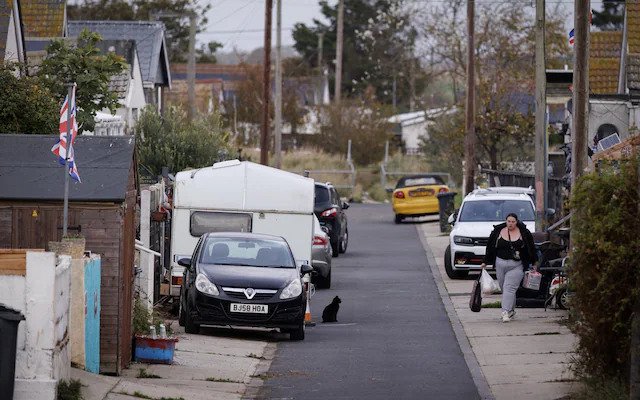
The answer may lie in Jaywick, an Essex village that has become emblematic of Britain’s “left behind” communities. Located in Farage’s Clacton constituency, Jaywick has consistently ranked as the most deprived place in England for four consecutive years. While Farage expressed sympathy, locals are seeking more than compassion—they want transformative change.
I recently travelled to Jaywick to meet the people shaping its future. Unlike the 2015 Channel 5 documentary Benefits By The Sea, which sensationalised the village’s struggles by highlighting extreme cases, I sought out its most determined and enterprising residents—the dreamers, the builders, and the resilient eccentrics who refuse to give up despite systemic neglect.

Among them was Joanne, a mother turned entrepreneur opening a health food shack serving additive-free chicken wings, and Richard, a carpet and vinyl trader carving out a niche in fitting caravans across the village. Mo, a psychic who was drawn to Jaywick by its energy and coastal charm, now hosts tarot evenings despite having to close her curiosity shop. Michael, a retrofit entrepreneur, reflected from his office overlooking the sea that he had “the best office view in the country.” And then there are the volunteers at the local foodbank, huddled under blankets in the freezing, bare-shelved space, quietly keeping the community going.
What these residents shared paints a picture of a village angry, but not for the reasons outsiders assume. Many Jaywickers remain bitter about their portrayal in Benefits By The Sea, which branded them as emblematic of Britain’s welfare dependency. Jade Copeland, a local resident, explained: “We are poor, but there is no fear. I can walk down the street at 4am without a quiver. If I need help, I can knock on any door.” Their anger is aimed less at the state of their homes and more at the blindness of London and Westminster to their resilience and potential.
Walking through Jaywick’s Brooklands estate, with its purple-painted chalets, boarded-up casino, and abandoned sofas, it becomes clear that the village’s story is not one of fatalism but of frustrated hope. There is a strong sense that locals have preserved a unique way of life, rooted in community and adaptability, even as governments have repeatedly failed to address their needs.
Jaywick defies the traditional “left behind” stereotype. It is neither a post-industrial town nor an inner-city enclave. Built on a floodplain and originally designed as a chalet park, it has been consistently deprioritised by successive governments, creating a vacuum of opportunity and investment. Locals express fatigue with top-down solutions that fail to recognise the complexities of their situation.
The village’s residents are not calling for generic housing estates or one-size-fits-all solutions. Instead, they are advocating for investment in people and grassroots enterprise. While business ventures like dog grooming and tailoring continue to thrive, others argue for subsidised rents and energy to support local startups. Some hope for a one-stop service hub for those dealing with mental health challenges, drug addiction, and social support needs.
History underscores the challenge of regenerating areas like Jaywick. Post-war brutalist housing schemes destroyed the tight-knit urban village, while Thatcher-era “get on your bike” rhetoric overlooked the social immobility faced by working-class residents. Blair-era multi-stakeholder initiatives spawned bureaucratic inefficiency, and Tory “levelling up” programs have frequently veered into localized pork-barrel politics. Labour under Keir Starmer has yet to propose a new vision capable of addressing these entrenched inequalities.
Westminster elites often dismiss Jaywick as beyond saving. Matthew Parris, writing in 2014, infamously suggested that “Clacton-on-Sea is going nowhere. Its voters are going nowhere, it’s rather sad, and there’s nothing more to say.” Yet such an attitude overlooks the ingenuity and grit of Jaywick’s residents, many of whom are former East Enders who have carved out a distinctive, resilient community despite decades of neglect.
Global examples provide a blueprint for bottom-up regeneration. In Grand Rapids, Michigan, a former furniture hub, local officials nurtured small businesses into design innovators, prioritising rapid decision-making and streamlined support. In Clarksdale, Mississippi, former cotton town residents transformed the town into a hub of live blues music, creating a global cultural destination. Both examples illustrate the potential of empowering local actors, rather than imposing top-down grandiose schemes.
For Farage and the Reform Party, Jaywick represents both an opportunity and a test. If they can harness a vision of grassroots-led regeneration—combining minimal bureaucracy, targeted investment, and support for local enterprise—they may achieve genuine, lasting impact. Conversely, failure to deliver could reinforce perceptions that Reform is little more than a vehicle for rhetoric without substance, leaving the “left behind” once again disappointed.
Reform’s current appeal is built largely on disillusionment with traditional politics, particularly around issues of immigration and governance. Yet in places like Jaywick, the stakes are higher than general political dissatisfaction. Locals demand policies that address tangible realities—affordable housing, sustainable business support, reliable public services, and community safety. These are the measures that will determine whether Reform can transcend populism to become a serious governing force.

The people of Jaywick are acutely aware that their village embodies a national dilemma. They face the juxtaposition of poverty and potential, decay and community resilience, neglect and ingenuity. “We want action, not platitudes,” one resident said. “We are tired of outsiders telling us what we need without listening to what we want.”
For Farage, the path forward requires more than charismatic campaigning; it demands practical, implementable solutions tailored to unique local contexts. Jaywick could serve as a microcosm for Reform’s broader approach, providing a model for how the party might translate national ambitions into tangible local outcomes. Success here could legitimise their broader platform; failure could be fatal to their credibility.
As Britain prepares for its next election, the scrutiny on Jaywick—and by extension, Farage’s Clacton seat—will intensify. Media, political analysts, and voters alike will watch closely to see whether Reform can move beyond rhetoric and deliver meaningful change to one of the country’s most challenged yet resilient communities.
Ultimately, Jaywick is not just a symbol of deprivation. It is a test of political imagination, commitment to grassroots empowerment, and the ability to listen to and work with communities rather than imposing solutions from above. For Nigel Farage, the question is stark: can Reform rise to the occasion and provide the innovation and vision that Jaywickers seek? Or will they collapse under the scrutiny of the village that could make or break them? The answer may well define the party’s future.
Related News:
 British Woman in Iran ‘Losing Hope’ Amid Ongoing Detention
 BBC Journalist Held and Interrogated in Vietnam
 Boris Johnson: Tories Risk Election Loss if They ‘Bash the Green Agenda’
 Prince Andrew Under Pressure as MPs Question Royal Lodge Rent Arrangements
 Green Party Surges Past Labour in Latest UK Poll
 Celebrities and Charities Demand UK Government Act on Child Poverty
 Sultana says new party is aiming to ‘run government’
 Reform Councillor Defects to Tories Over ‘Uncomfortable’ Policies
 Experts Question HMRC Over Possible Child Benefit Privacy Breach
 Trump’s UK Ambassador Urges North Sea Drilling to Strengthen US Ties
 FBI Director Kash Patel Defends Girlfriend Amid Government Jet Claims
 Phillipson urges careful review of gender recognition guidance
 French Taxi Driver Cleared in David Lammy Theft Case After Fare Dispute
 Rachel Reeves Set to Break Labour Pledge and Raise Income Tax
 Thinktanks Urge Rachel Reeves to Reform UK Tax System
 Who is Rama Duwaji? What Zohran Mamdani’s wife has said about Gaza and ICE as he’s elected NYC mayor
 Company linked to Michelle Mone owes £39m in tax
 Lancashire council plans to close care homes and day centres
MPs Press Rachel Reeves to Hike Gambling Taxes
Lancashire council plans to close care homes and day centres
MPs Press Rachel Reeves to Hike Gambling Taxes
 Met Police Culture Makes Racial Harm ‘Inevitable’
 Nicola Sturgeon Urges SNP to Oppose New Oil Fields
 Lisa Nandy Broke Rules by Appointing Donor as Football Regulator
 Eleven Arrested After Pro-Palestine Protest at Villa Match
 Labour Falls to Fourth in Poll, Faces Historic Election Loss
Boris Johnson accused of undermining BBC leadership
Labour Falls to Fourth in Poll, Faces Historic Election Loss
Boris Johnson accused of undermining BBC leadership
 Remaining rebel Labour MPs have whip restored
 Cuts to home insulation funding threaten UK climate goals
 Tim Davie resigns as BBC director general amid bias claims
 ‘Reckless’ cuts to victims’ services will cost more than they save
 BBC director-general and news chief resign amid bias row
 Starmer Faces Growing Dissent as Labour MPs Weigh Leadership Challenge
 BBC Faces Backlash as Reform UK Withdraws from Film
 Wes Streeting Denies Leadership Plot Against Starmer
 Tim Davie Defends BBC Amid Bias Scandal Storm
 Farage appointee to lead Reform youth accused of anti-British views
Palace to reinstate hyphen in Andrew’s surname
Donald Trump threatens BBC over edited speech
Farage appointee to lead Reform youth accused of anti-British views
Palace to reinstate hyphen in Andrew’s surname
Donald Trump threatens BBC over edited speech
 British state supplied victims to ‘worst sex offender in history’
 Politics latest: Starmer ‘will fight any leadership coup’ as Streeting denies attempt to oust Labour PM
 Peers Flood Assisted Dying Bill with 942 Amendments
 England’s Special Needs Support Faces Breaking Point
 MoD warned over Excel risks before Afghan data breach
 Your Party Turmoil Deepens Over Withheld Donations
 UK Unveils Fast-Track Deportation and Asylum Overhaul
 Crowborough Protest Over Plan to House 600 Asylum Seekers
 UK Asylum Overhaul Sparks Debate Over Human Rights and Deportations
 UK Asylum Reforms: Temporary Refugee Status and Faster Deportations
 UK Candidate Moved to Safe House After Election Threats
 Mahmood Defends Tough Overhaul of UK Asylum System
 Scottish Ministers Express Alarm Over UK Asylum Reforms
 UK Warns China After MI5 Issues Espionage Alert
 Westminster Advances Legacy Bill Amid Criticism
 Minister Defends Tough New Asylum Reform Plan
 UK Net Migration Falls Sharply After ONS Revisions
 UK Vulnerable to Attack, Defence Committee Finds
 Labour Faces Historic Decline in Wales
 Rama Rebukes Mahmood for Targeting Albanian Families
 Russian Vessel Used Lasers on RAF Pilots, UK Claims
 PM Shares Emotional Letter to Son on Men’s Struggles
 MP Offers Seat to Help Burnham Challenge Starmer
 PM Highlights UK Business at G20 in South Africa
 Boris Johnson Oversaw Toxic No 10 Culture, Covid Inquiry Finds
 Kate Forbes: Motherhood Harder Than Politics
 Welsh Government Christmas 2020 Lockdown Criticised
Reeves to Crack Down on Benefit Fraud While Lifting Two-Child Limit
Welsh Government Christmas 2020 Lockdown Criticised
Reeves to Crack Down on Benefit Fraud While Lifting Two-Child Limit
 BBC to Expand Standards Panel and Create Deputy Director Role
 Most Tories Expect to Support a Farage-Led Government
 BBC Chairman Faces Scrutiny Over Bias Claims
 Labour MP claims devolution bill is ‘blatant discrimination’ against Cornwall
 English Mayors Set to Introduce Tourist Taxes
 Ex-Classmate Accuses Farage of Dishonesty on Racism Claims
 Millions Face Higher Taxes Under Reeves New Budget
 Peers Get Extra Time to Debate Assisted Dying Bill
 Planned Palestinian Flag Raising at Belfast City Hall Faces Delay Amid Legal Concerns
 UK Military Chiefs Warn Funding Gap Threatens Defence
 Ex-Brexit MEP Rejects Claim of Pro-Russia Payments
 Labour U-turn: Unfair Dismissal Rights Delayed Six Months
 Government righting decades-old injustice for miners
 UK refugee resettlement under UN schemes drops sharply in one year
 UK delays ruling on China embassy plan until January