Published: 13 November 2025 | The English Chronicle Desk | The English Chronicle Online
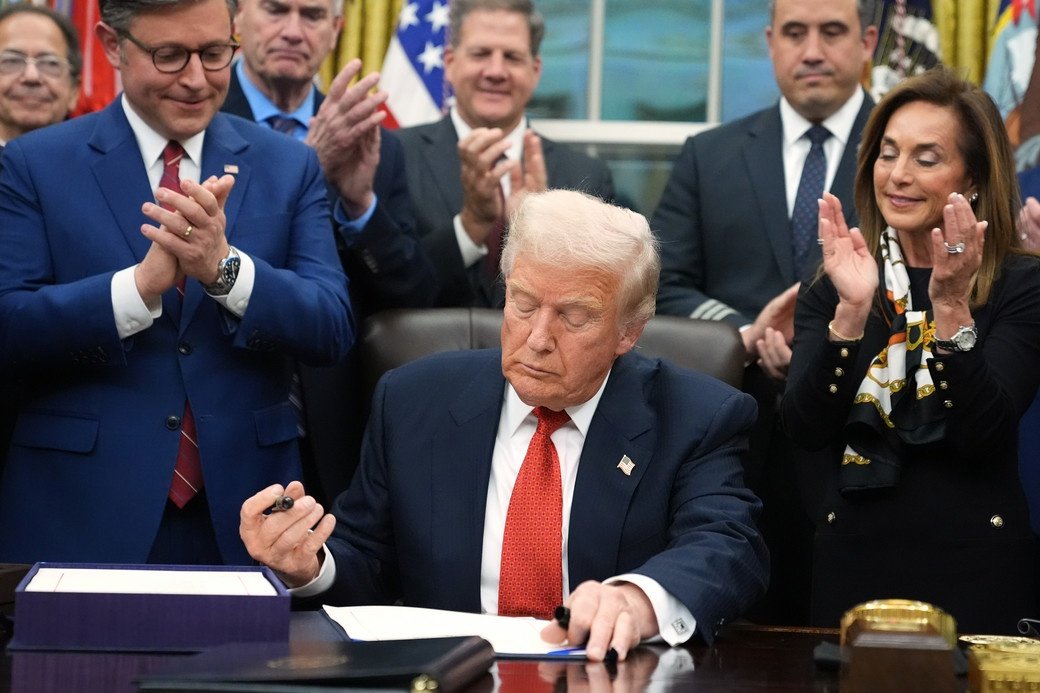
President Donald Trump has signed a short-term spending bill to reopen the federal government, officially ending the longest shutdown in United States history. The bill, which was passed by the House of Representatives in a 222–209 vote late Wednesday night and approved narrowly by the Senate two days earlier, brings an end to the 43-day impasse that left federal workers unpaid and many public services suspended.
Speaking from the Oval Office after signing the legislation into law, President Trump said the government would “resume normal operations,” acknowledging the hardship many Americans endured during the shutdown. “People were hurt so badly,” he said, referring to the 1.4 million federal employees who were either furloughed or working without pay since the shutdown began in October.
The funding package allows government agencies to reopen in the coming days, restoring critical services and easing travel disruptions that had rippled across the country. The Federal Aviation Administration (FAA) had been forced to scale back operations due to staff shortages, leading to widespread flight delays. Officials hope normal air traffic control services will resume before the busy Thanksgiving holiday weekend.
The effects of the shutdown were felt nationwide — from delayed food aid programmes and halted infrastructure projects to the suspension of various social services. Even members of Congress faced difficulties returning to Washington to cast their votes. Wisconsin Republican Derrick Van Orden famously rode his motorcycle nearly 1,000 miles to reach the Capitol in time for the final vote.

However, the measure is a temporary fix. It only funds the government until 30 January, meaning lawmakers will need to revisit the issue early in the new year to prevent another potential shutdown.
Before signing the bill, Trump placed blame squarely on Democrats for causing the deadlock. “They did it purely for political reasons,” he said. “When we come up to midterms and other things, don’t forget what they’ve done to our country.”
The dispute began when Senate Democrats, though in the minority, refused to back a temporary funding bill unless Republicans agreed to extend key health insurance subsidies for low-income Americans, which were due to expire at the end of the year. Republicans insisted that such policy discussions should take place only after government operations were restored.
After weeks of deadlock, a breakthrough came when eight Senate Democrats broke ranks, voting in favour of the compromise measure in exchange for a promise of a future vote in December on extending those healthcare subsidies. The move prompted sharp criticism from within their party.
House Minority Leader Hakeem Jeffries and California Governor Gavin Newsom condemned the deal, arguing it offered no meaningful solutions to the nation’s healthcare challenges. Senator Chuck Schumer, the Democratic leader in the Senate, called the package “a failure to address America’s healthcare crisis.”
However, others defended the compromise. Virginia Senator Tim Kaine, one of the Democrats who supported the measure, said federal workers in his state were “saying thank you” for reaching an agreement that allowed them to return to work and receive back pay.

The funding bill also guarantees that all federal employees will be fully compensated for the period they went without pay during the shutdown. It provides full-year funding for the Department of Agriculture, military construction projects, and legislative agencies. Additionally, it ensures continued funding for the Supplemental Nutrition Assistance Program (SNAP), which supports roughly one in eight Americans, through to September next year.
Wednesday’s session also saw the swearing-in of Adelita Grijalva, the newest Democratic representative from Arizona. Her arrival was met with applause on the House floor, though her addition did not alter the balance of power enough to influence the outcome of the funding vote.
Grijalva, elected on 23 September to fill the seat once held by her late father, Congressman Raul Grijalva, was immediately involved in party efforts to advance a separate legislative initiative. Democrats tapped her to back a petition seeking the release of files related to the late financier and convicted sex offender Jeffrey Epstein. The petition, which requires seven legislative days before it can be formally considered, will force House leadership to schedule a vote within two legislative days once the waiting period expires.
In a surprise move, House Speaker Mike Johnson announced that the vote on the Epstein documents would be scheduled for next week.
While the immediate crisis has been resolved, the political battle over government funding and healthcare policy is far from over. Both parties are now preparing for renewed negotiations ahead of the 30 January deadline, setting the stage for another high-stakes showdown in Washington.
Related News:
 British Woman in Iran ‘Losing Hope’ Amid Ongoing Detention
 BBC Journalist Held and Interrogated in Vietnam
 UK University Suspends Human Rights Research Following Pressure from China
 UK University Faces Counter-Terror Probe Over China Pressure
 Zohran Mamdani becomes New York City’s first Muslim mayor
 Abigail Spanberger Elected Virginia’s First Female Governor
 Mikie Sherrill Elected New Jersey’s Governor in Key Win
Zohran Mamdani names all-female transition team for NYC mayoralty
China-critical UK academics face ‘extremely heavy’ pressure from Beijing
Mikie Sherrill Elected New Jersey’s Governor in Key Win
Zohran Mamdani names all-female transition team for NYC mayoralty
China-critical UK academics face ‘extremely heavy’ pressure from Beijing
 British military receives first Ajax armoured vehicles – eight years late
 BBC to Apologise Over Edited Trump Speech Amid Backlash
 Second world war veterans honoured as King leads Remembrance Sunday
 Britain deploys RAF specialists to assist Belgium with drone threats
 BBC director-general and news chief resign amid bias row
 Night after night, Belgium is on high alert.
 Ukraine-Russia war latest: Putin’s troops exploit bad weather to force Kyiv withdrawal from multiple towns
 Trump Claims Victory as Longest Shutdown Ends
 New Epstein Files Spark Political Clash in Washington
 Hamas Fighters in Gaza Tunnels Stall Ceasefire Progress
 Ukraine Energy Corruption Scandal Hits Zelensky’s Inner Circle
 Early Trends Suggest Modi’s Alliance Leading in Key Bihar Election
 US Justice Department Files Lawsuit Against California Over Partisan Voting Maps
 Berlin Reintroduces Military Service Amid Rising Security Concerns
 Greene Pushes Epstein Files Amid Trump Fallout
 Trump Deploys DHS to Charlotte in Major Arrest Operation
 Former President Backs Public Release of Epstein Records
 December Run-Off in Chile as Election Produces No Winner
 UN Security Council Approves Trump’s Gaza Peace Plan
 Ukraine to Get 100 French Rafale Jets in Historic Deal
 Canada Passes Carney’s First Budget in Tight Parliamentary Vote
 Why Russian Liberals Push Strongly Pro-Israel Narratives
 Congress Approves Release of Epstein Files, Trump Expected to Sign
 Trump Says Crown Prince Knew Nothing About Khashoggi Death
 Shadow Fleet at Sea: Europe’s Battle Against Illicit Oil Shipping
 Rama Rebukes Mahmood for Targeting Albanian Families
 Russian Vessel Used Lasers on RAF Pilots, UK Claims
 Pentagon Officials in Ukraine to Discuss War End
 Turkey to Host COP31 After Breakthrough Deal with Australia
 US Military Team Visits Kyiv Amid War Talks
 WhatsApp Messages Expose Nathan Gill’s Bribery
 Venezuela Threatens Nobel Winner Machado with Fugitive Status
 Texas Governor Faces Lawsuit From CAIR
 Mamdani’s Vision: Affordable, Democratic Socialism
 Trump Envoy to Discuss Ukraine Peace at Kremlin
 Pope Leo XIV Begins Historic Trip to Turkey and Lebanon
 Georgians Defy Government Crackdown After Year of Protests
 Putin Intensifies Territorial Demands Before US Talks
 India’s Labour Law Overhaul Sparks Fierce Debate
 Video shows Israeli troops kill Palestinians after surrender
 Trump to Recheck Green Cards from 19 Nations After DC Attack
 Carney’s Alberta Pipeline Deal Sparks Immediate Pushback
 Chinese & Japanese Boats Clash Near Disputed Islands
 Putin Meets US Envoy Amid Key Ukraine Peace Talks
 Ireland Boosts Ukraine Aid as Zelensky Visits Dublin
 Kremlin Talks With US Yield No Ukraine Peace Breakthrough
 Putin visits India as Ukraine peace, trade push intensifies
 Russia-Ukraine war update: Key events, day 1,379
 Global campaign launched to free Palestinian leader Barghouti
 UK Must Act with Courage and Clarity on Israel-Palestine Conflict, Says Foreign Affairs Committee Report
 Radioactive Leak at UK’s Nuclear Warhead Base Sparks Outcry Over Safety and Secrecy
 Mutual Inconvenience: Why Alaska Was Chosen for the Trump-Putin Summit on Ukraine
 Hong Kong Summons UK and Australian Envoys Following Asylum Grants to Democracy Activists
 Is the UK Ready to Put Boots on the Ground in Ukraine? Assessing Military Capacity and Challenges
 Channel Crossings Surge: Over 1,000 People Arrive in the UK in Small Boats in a Single Day
 Widow of Charlie Kirk Forgives Killer at Emotional Memorial Service
 Yvette Cooper Signals Global Momentum Towards Gaza Peace Deal Amid Humanitarian Crisis
 Russia’s Latest Push to Win US Favors Shows Deep Desperation
 Army Officers Orders to Cut Ties with Men-Only Clubs
Trump’s UK Ambassador Urges North Sea Drilling to Strengthen US Ties
Army Officers Orders to Cut Ties with Men-Only Clubs
Trump’s UK Ambassador Urges North Sea Drilling to Strengthen US Ties
 French Taxi Driver Cleared in David Lammy Theft Case After Fare Dispute
 Millionaires group urge Reeves to introduce wealth tax to ‘lift kids out of poverty’
 Reeves rejects £1bn plea for NHS redundancy payouts
 Peers Flood Assisted Dying Bill with 942 Amendments
 Orban Says Ukraine Has ‘No Chance’ as EU Support Continues
 Haiti Qualifies for World Cup Despite Coach Never Visiting Country
 Most Tories Expect to Support a Farage-Led Government
 Two National Guard Soldiers Critically Injured Near White House
 Southern Lebanon reels as Israeli strikes shatter communities
 Jordan Bardella: France’s Young Presidential Contender
 EU plans $105bn Ukraine aid using frozen Russian assets