Published: 14 November 2025. The English Chronicle Desk. The English Chronicle Online
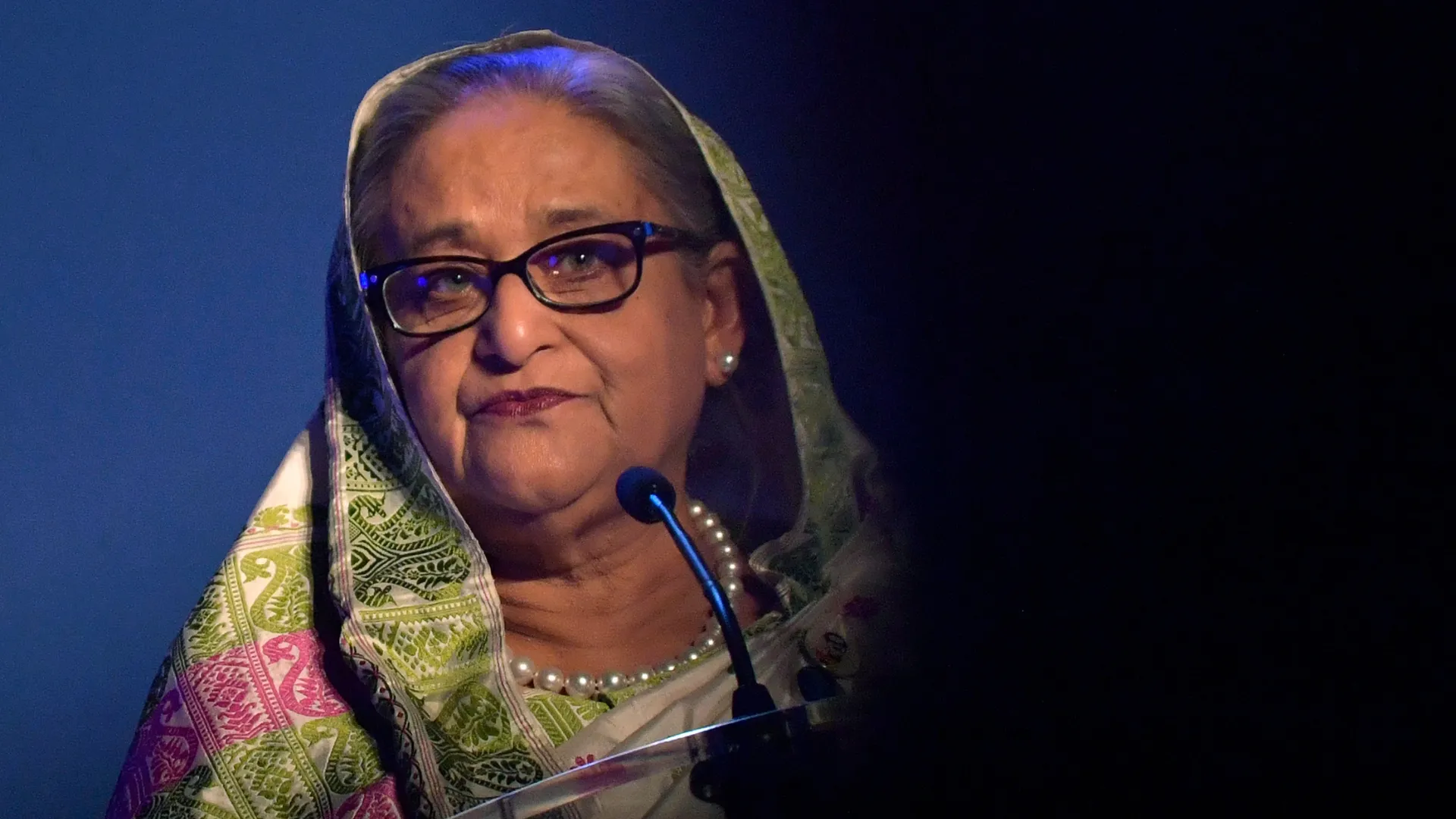
Bangladesh’s former prime minister Sheikh Hasina has categorically denied committing crimes against humanity during a deadly crackdown on last year’s uprising that ultimately led to her ousting, speaking to the BBC just days before a special tribunal is set to deliver its verdict. The tribunal, which has been conducting trials in absentia, is expected to rule on allegations that Hasina was the primary architect of hundreds of killings during mass protests against her autocratic rule. Prosecutors are seeking the death penalty if she is found guilty.
In her first interview since fleeing Bangladesh on 5 August 2024, Hasina described the trial as a “farce” orchestrated by a “kangaroo court” controlled by political opponents. She told the BBC that the proceedings were predetermined, aimed at delivering a “pre-ordained guilty verdict,” and denied any involvement in ordering violence against civilians.
“I’m not denying that the situation got out of control, nor that many lives were lost needlessly,” Hasina said in an email interview. “But I never issued any order to fire on unarmed civilians.” She insisted that her political opponents were using the trial to “liquidate” her Awami League party as a political force, adding that she had not been able to defend herself properly or appoint legal representation.
The tribunal has formally indicted Hasina, alongside former home minister Asaduzzaman Khan Kamal and former inspector general of police Chowdhury Abdullah Al-Mamun. While Khan remains in hiding, the latter has pleaded guilty but has yet to be sentenced. Security has been significantly tightened in and around the tribunal in Dhaka ahead of Monday’s verdict, which marks a critical moment for Bangladesh as well as for the relatives of those killed during the student-led anti-government protests that ousted Hasina.

UN human rights investigators have reported that up to 1,400 people were killed when Hasina’s government used systematic, deadly force against protesters during what has been described as an attempt to cling to power. Leaked audio of one of her phone calls, verified by BBC Eye earlier this year and played during the trial, suggested that she may have authorised the use of “lethal weapons” in July 2024. Despite this, Hasina maintains she had no direct involvement in ordering security forces to fire upon protesters.
The tribunal’s proceedings come amid a broader reckoning with abuses committed during Hasina’s 15-year rule. Many critics and political opponents were allegedly abducted, detained in secret jails, or killed unlawfully. Following her removal from power, authorities discovered numerous clandestine detention centres holding prisoners who had been held without legal process for extended periods. Hasina, however, denied knowledge or involvement in these activities.
“This is denied in terms of my own involvement,” she said. “But if there is evidence of abuse by officials, let us have it examined properly in an impartial, depoliticised process.” She also rejected allegations of extra-judicial killings and disappearances for which human rights groups have implicated her, arguing that as head of government, she cannot be held personally accountable without clear and verifiable evidence.
Lawyers representing Hasina have filed an urgent appeal to the United Nations, citing serious fair trial and due process concerns at the International Crimes Tribunal in Bangladesh. Their statement highlighted the lack of access to legal counsel, the predetermined nature of proceedings, and what they described as political interference in the judicial process.
The tribunal’s verdict will have profound implications for Bangladesh, not only for Hasina and her associates but also for the country’s political landscape. The Awami League is currently banned from standing in the upcoming general elections scheduled for February, raising concerns among observers that the political environment remains heavily influenced by ongoing legal actions against former officials.
Analysts have noted that the trial reflects a highly polarised political climate in Bangladesh. Hasina’s supporters argue that she has been unfairly targeted due to her long tenure and the perceived threat her party poses to the new government. Critics, however, emphasise the severity of the crackdown and the documented evidence of human rights violations, underscoring the necessity of accountability at the highest levels of leadership.
Speaking about the trial, Hasina reiterated that she had been unable to participate in her defence due to her exile in India. She insisted that her ousting and the subsequent legal actions were politically motivated, and argued that any legitimate investigation should be conducted in an impartial and depoliticised manner. “If there is evidence, let it be examined,” she said, “but it must be done fairly, without political influence, and with due process for all involved.”
The allegations against Hasina have also brought international scrutiny. Human rights organisations have condemned the use of excessive force against protesters during the 2024 uprising and have called for independent investigations into the killings, disappearances, and abuse of detainees. The UN has repeatedly urged the Bangladeshi government to ensure transparency and impartiality in all proceedings against former officials.

In addition to the charges of crimes against humanity, Hasina and other senior members of her former government are facing separate corruption trials, which they also deny. These cases contribute to the ongoing debate over governance, accountability, and political legitimacy in Bangladesh. Observers note that the outcomes of these trials, combined with the upcoming tribunal verdict, will likely influence the political trajectory of the country for years to come.
As the tribunal prepares to issue its decision, security remains heightened in Dhaka, reflecting both the sensitivity of the trial and the potential for public unrest. The verdict is anticipated with intense interest, not only in Bangladesh but also internationally, as a barometer of justice, political stability, and the country’s commitment to human rights.
In conclusion, Sheikh Hasina’s BBC interview underscores her unwavering denial of involvement in crimes against humanity during her tenure as Bangladesh’s prime minister. Her comments highlight claims of political persecution, lack of due process, and concerns over the impartiality of the tribunal. With the verdict imminent, Bangladesh faces a defining moment that will shape the nation’s legal and political landscape, address the grievances of families affected by the 2024 uprising, and set a precedent for accountability and governance in the country’s future.
Related News:
 UK Home Office to Launch French Beach Signage to Warn Asylum Seekers of Risks
 Father’s Tip Leads to Arrest in Charlie Kirk Murder Case
 Charlie Kirk Killing Used to Mobilise UK’s Largest Far-Right Rally in Decades
 UK and Ireland Set to Unveil New Proposals to Address Northern Ireland’s Troubles Legacy
Channel Crossings Surge: Over 1,000 People Arrive in the UK in Small Boats in a Single Day
UK and Ireland Set to Unveil New Proposals to Address Northern Ireland’s Troubles Legacy
Channel Crossings Surge: Over 1,000 People Arrive in the UK in Small Boats in a Single Day
 UK Recognises State of Palestine in Push to Preserve Hope for Peace
 Jailed Georgian Opposition Leaders Warn UK of Iranian Links to Ruling Party
 China’s Mega Embassy in London Faces Further Delay
 Prince Andrew met alleged Chinese spies during Pitch@Palace China trips
 Kosovo agrees to host Britain’s refused asylum seekers
 UK University Faces Counter-Terror Probe Over China Pressure
 Second world war veterans honoured as King leads Remembrance Sunday
 Ukraine-Russia war latest: Putin’s troops exploit bad weather to force Kyiv withdrawal from multiple towns
 New Epstein Files Spark Political Clash in Washington
 Ukraine Energy Corruption Scandal Hits Zelensky’s Inner Circle
 New review urges UK to repatriate Shamima Begum, others from Syria
 Indian authorities demolish Kashmir home linked to Red Fort blast
 Greene Pushes Epstein Files Amid Trump Fallout
 UN Security Council Approves Trump’s Gaza Peace Plan
 WhatsApp Messages Expose Nathan Gill’s Bribery
 Venezuela Threatens Nobel Winner Machado with Fugitive Status
 Trump Envoy to Discuss Ukraine Peace at Kremlin
 Video shows Israeli troops kill Palestinians after surrender
 Guinea-Bissau President Flees After Military Coup
 Kinnock’s Rebuke Echoes Loudly as Corbyn Allies Launch Left-Wing Breakaway: “A Gift to Farage”
 UK and Norway Forge Stronger Ties Through Joint Sanctions and Enhanced Defence Cooperation
 Trump Administration Dismisses 17 Immigration Judges, Sparking Debate Over Judicial Independence
 Modi’s London Visit Seals Historic UK-India Trade Pact Amid Global Tensions
 UK Must Act with Courage and Clarity on Israel-Palestine Conflict, Says Foreign Affairs Committee Report
 Tasers Introduced in UK Prisons to Combat Rising Violence and Protect Staff
 Northern Ireland Family of Three Shot Dead in Maguiresbridge Home Incident
 Seventeen Dead as Russia Targets Ukrainian Prison in Devastating Airstrike
 Trump Threatens 100% Tariff on Nations Importing Russian Oil Amid India Standoff Over Ukraine War
 Netanyahu Announces Plan to Take Over Gaza City, Escalating Conflict Further
 Radioactive Leak at UK’s Nuclear Warhead Base Sparks Outcry Over Safety and Secrecy
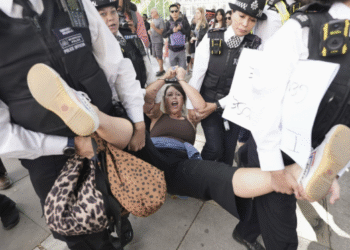 Mass Arrests in London as Protest Defies Ban on Palestine Action
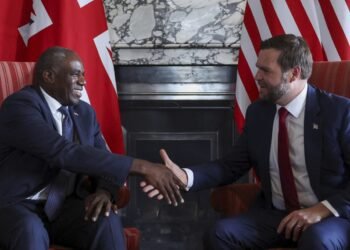 Lammy and Vance Meet in Britain to Advance US-Brokered Ukraine Peace Talks
 Mutual Inconvenience: Why Alaska Was Chosen for the Trump-Putin Summit on Ukraine
 Hong Kong Summons UK and Australian Envoys Following Asylum Grants to Democracy Activists
 Is the UK Ready to Put Boots on the Ground in Ukraine? Assessing Military Capacity and Challenges
 Urgent Action Needed on Windrush Compensation as Survivors Speak of “Waiting to Die”
 Protests Expected as Israeli Arms Firms Join Global Defence Trade Fair in London
 Trump Appears Sidelined as Israel’s Unprecedented Strikes Hit Qatar
 Conservative Influencer Charlie Kirk Fatally Shot During University Debate
 Thousands Gather in London to Protest Donald Trump’s Second UK State Visit
 Zarah Sultana Seeks Legal Action After Bitter Clash with Jeremy Corbyn Over Party Membership Funds
 Widow of Charlie Kirk Forgives Killer at Emotional Memorial Service
 Denmark Investigates Professional Drone Incursions Across Multiple Airports, No Evidence of Russian Involvement
 UK Fighter Jet Purchase Could Breach Nuclear Treaty, Warns CND
 Yvette Cooper Signals Global Momentum Towards Gaza Peace Deal Amid Humanitarian Crisis
 A Third of EU Citizens in UK Report Discrimination by Public Bodies Post-Brexit
 Public Trust in SNP Hits Historic Low Amid NHS Concerns
 Cooper Unveils £4m Cyber Plan Against Russian Hackers
 Johnson Suggests Mandelson Linked to China Spy Controversy
 Rachel Reeves signals welfare reform ahead of key budget
 Ireland Votes as Two Women Compete for Presidency
 Russia’s Latest Push to Win US Favors Shows Deep Desperation
 WW2 Pilot’s Long-Lost Crash Site Unearthed in Essex
 Experts Warn Russia’s Burevestnik Missile Could Destabilise Arms Control
 Johnson Approved China’s London ‘Super-Embassy’ in 2018
 FBI Director Kash Patel Defends Girlfriend Amid Government Jet Claims
 French Taxi Driver Cleared in David Lammy Theft Case After Fare Dispute
 Just Stop Oil Protesters Convicted Amid Climate Defence Row
 BBC to Apologise Over Edited Trump Speech Amid Backlash
 Britain deploys RAF specialists to assist Belgium with drone threats
 ‘Reckless’ cuts to victims’ services will cost more than they save
 Trump Urges Herzog to Grant Netanyahu Full Pardon
 US Justice Department Files Lawsuit Against California Over Partisan Voting Maps
 Oklahoma Governor Grants Last-Minute Clemency to Death Row Inmate
 Israel Confirms Returned Hostage as Meny Godard
 Navy cuts scrap key landing upgrade for UK F-35B jets
 Trump Deploys DHS to Charlotte in Major Arrest Operation
 Pentagon Officials in Ukraine to Discuss War End
 Most Tories Expect to Support a Farage-Led Government
 Two National Guard Soldiers Critically Injured Near White House
 Southern Lebanon reels as Israeli strikes shatter communities
 India’s Labour Law Overhaul Sparks Fierce Debate
 Jordan Bardella: France’s Young Presidential Contender
 EU plans $105bn Ukraine aid using frozen Russian assets
 Global campaign launched to free Palestinian leader Barghouti