Published: 24 November 2025. The English Chronicle Desk. The English Chronicle Online.
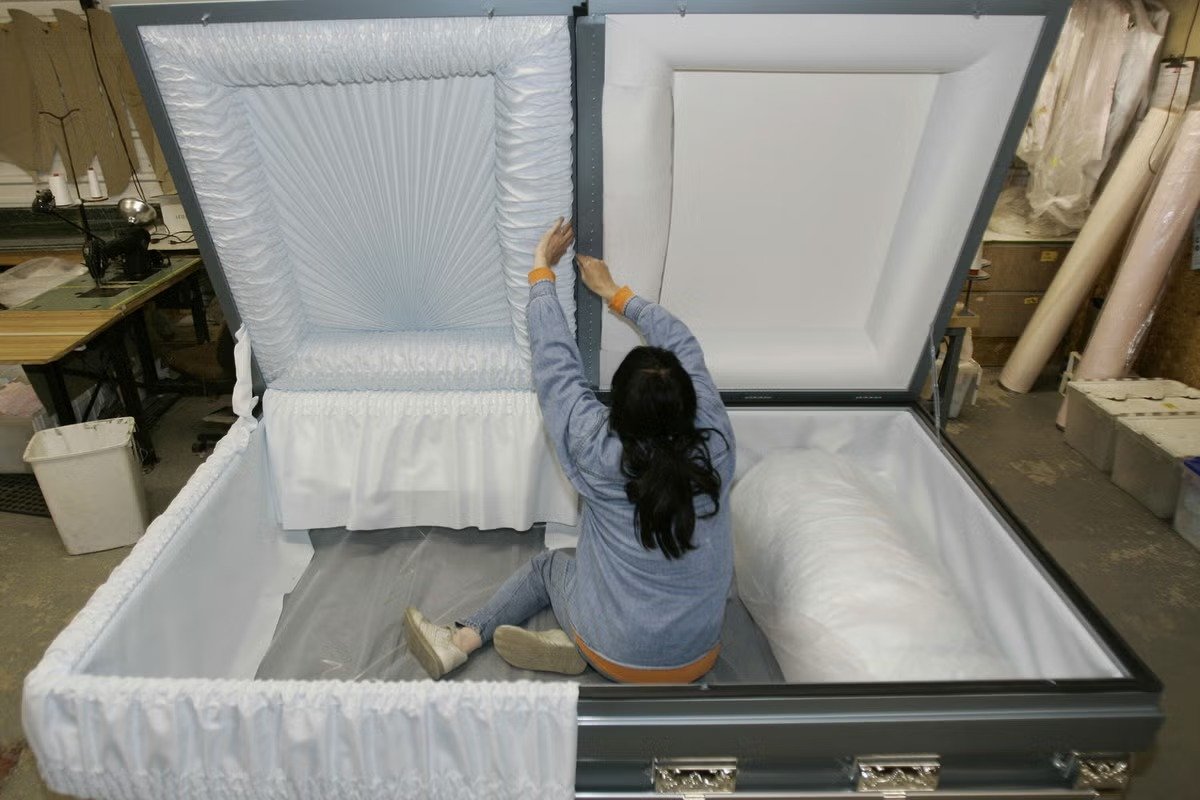
Funeral directors across Britain are warning that an increasing number of coffins are now too large to be cremated, reflecting the country’s escalating obesity crisis. Scotland’s largest independent funeral home has reported a steady rise in the use of wider caskets and heavier pall-bearers, alongside the need for more powerful cremation furnaces. These changes, industry experts say, highlight the broader societal impact of rising body weights and the challenges faced in providing dignified funeral services for all.
Tim Purves, president of the National Association of Funeral Directors (Scotland), explained that the funeral industry has had to adapt gradually as population sizes have increased. “We always ensure people are treated with dignity and respect, regardless of their size. But we are noticing that people are generally getting bigger, which adds practical complications for our work,” he said. He added that, in recent decades, coffin widths have expanded significantly to accommodate these changes.
Historically, the standard width for a coffin was around 18 inches. Today, 20-inch coffins are the norm, and in some instances, 24-inch caskets or even larger are required. In extreme cases, the size of a coffin has made cremation impossible, forcing families to opt for burial instead. Funeral directors also report logistical challenges when handling extremely large coffins, including difficulties with mechanised catafalques in crematoriums.

The Inspector of Burial, Cremation and Funeral Directors in Scotland confirmed that the industry has increasingly encountered issues with handling very large and heavy coffins. One notable incident involved a casket resting on a mechanised platform that could not be lowered due to its excessive size, creating both logistical and emotional difficulties during the service. Such cases underscore how rising obesity levels are affecting multiple aspects of life—and death.
Public Health Scotland (PHS) reports that approximately two-thirds of Scots are overweight, with around one-third classified as obese. Recent projections indicate that unless urgent action is taken, obesity rates will continue to increase dramatically over the next 15 years. PHS estimates that by 2040, an additional 150,000 Scots could be classified as obese, placing further strain on healthcare and funeral services.
Dr Grant Wyper, principal epidemiologist at PHS, explained that adult obesity is projected to rise sharply in Scotland over the coming decades. “We estimate 3.3 million cases of adult excess weight by 2040, with obesity rates rising most sharply among women. Between 2025 and 2040, we anticipate an additional 118,000 female and 36,000 male cases of obesity,” he said. These figures reflect a growing public health challenge that will continue to affect families and social services alike.
Funeral directors have had to adjust beyond coffin sizes, implementing larger teams to manage pall-bearers and acquiring furnaces capable of cremating heavier bodies. These adaptations, while necessary, highlight the real-life consequences of rising obesity for professionals in the funeral industry. They also emphasise the wider societal implications, as more individuals face health challenges linked to excess weight.
The crisis has prompted calls for a broader public health response to reduce obesity levels across the UK. Health authorities stress that preventative measures, including better nutrition education, public awareness campaigns, and access to weight management programmes, are vital. Without intervention, the physical and logistical challenges currently affecting the funeral sector may become far more widespread.
The rise in coffin sizes also illustrates the cultural and infrastructural impacts of obesity. Funeral homes, crematoriums, and associated services are having to invest in new equipment, adapt buildings, and plan for heavier workloads. These shifts indicate that obesity is not only a health issue but also a societal concern that influences planning, logistics, and the dignity of end-of-life care.

As Britain faces one of the highest obesity rates in Europe, Scotland remains particularly affected. With over 1.5 million adults living with obesity, the trend shows no signs of slowing. Public Health Scotland warns that without decisive action, these numbers will continue to rise, creating further challenges for families, health services, and the funeral industry alike.
Funeral directors remain committed to providing respectful services for all, regardless of size, but they urge greater public awareness of the broader impact of obesity. The intersection of health, infrastructure, and cultural practices highlights the complex consequences of rising body weights, making this a matter of national concern.
Related News:
 Experts Urge Legal Right to Timely Cancer Care
 North Sea oil workers must lose weight or face job loss
 No link found between paracetamol in pregnancy and autism
 Breakthrough Clinical Trial Lets 12-Year-Old Boy with Rare Skin Disorder Play Football
 Expanded Access to Health Diagnostics in England Now Available Beyond Standard Hours
 Shocking Rise in Children’s Exposure to Violent Online Pornography Raises Alarm
 Majority of UK Men Would Opt for Prostate Cancer Screening, Survey Finds
 UK Woman Becomes Longest Survivor of Heart-Lung Transplant
 Mother dies after black market weight loss injection
 Young Woman Missed 13 Times by GPs Before Bowel Cancer Diagnosis
 Hospice Cuts Raise Alarm Across England Amid Funding Crisis
 How Bringing Forests Into Preschools Boosts Children’s Health
 Critically Endangered Spider Rediscovered in UK After 40 Years
 Experts Warn on Home Birth Risks, Call for Skilled Midwives
 Patients to Test Health at Home to Ease NHS Winter Pressure
 NHS Takes Over Nuffield Hospital in ‘Windfall’ for London Care
 Crisis charity to become landlord amid UK housing emergency
 NHS frontline staff forced to cover gaps as managers remain scarce
 UK Disability Pay Gap Means Millions Work for Free From Today
 Shouting Works Best to Deter Gulls, UK Study Finds
 Reeves rejects £1bn plea for NHS redundancy payouts
 NHS trust fined after woman takes life in mental health unit
 Leading doctors issue warning amid ‘bad’ flu season
 New Research Explains Severe Diabetes in Children
Working-Class Men with Prostate Cancer Left Behind by NHS
New Research Explains Severe Diabetes in Children
Working-Class Men with Prostate Cancer Left Behind by NHS
 New Campaign Trains Vets to Spot Farmers’ Health Risks
 ‘Traumatic Wait’: Northern Ireland Women Face Breast Cancer Delays
 Healthy Habits in Your 30s That Boost Life in Your 70s
 Thinktank Urges Smaller Hospitals to End NHS ‘Permacrisis’
 David Cameron Reveals Prostate Cancer Diagnosis, Advocates Screening
 NHS paediatric leave parents waiting months for answers
 Five-Year-Old Dies After Rare Tonsil Surgery Complication
 Fibromyalgia Patients Struggle as NHS Fails to Provide Care
 More Patients Now Contacting GPs Online, Data Shows
 The Ketamine Crisis in the UK is a Silent Epidemic Leaving Users with Lifelong Pain
 Woman Warned She Might Need Leg Amputation to Survive After Liquid Brazilian Butt Lift
 Alarming rise in abusive teen relationships in the UK sparks urgent warnings
 Inquest Finds Agency Worker Failings Led to Unlawful Death of Vulnerable 14-Year-Old
 Why E-Bikes and E-Scooters Are Making Streets a ‘Nightmare’ for Blind People
 One in Three GPs in England Do Not Work in NHS, Raising Concerns Over Access to Care
 Persistent Offenders Owe Over £700m in Ulez Fines as TfL Cracks Down on Evasion
 UK Doctors Guilty of Sexual Misconduct Continue Practising Amid Weak Sanctions, Research Finds
 Starmer Unveils Plan for NHS “Online Hospital” to Tackle Waiting Lists
 Women Challenge Meta Over Targeted Ads After Miscarriage
 Genetic Tests May Predict Return of Blood Cancer
£18 Prostate Cancer Test Could Save Thousands of Lives
Pregnant Women in England Face Rising Risk of Severe Birth Injury
Genetic Tests May Predict Return of Blood Cancer
£18 Prostate Cancer Test Could Save Thousands of Lives
Pregnant Women in England Face Rising Risk of Severe Birth Injury
 One in 12 Secondary Pupils Sent to Isolation Weekly
 M&S and Morrisons Lead Christmas Supermarket Taste Test
 UK Health Leaders Push for Urgent Tobacco & Vape Bill
 Peterborough Mosques Tighten Security After Attack
 UK Woman Loses Child Benefit After Booking Flight She Never Took
 Celebrities and Charities Demand UK Government Act on Child Poverty
 Children to Learn Local History in Major Curriculum Overhaul
 The Lowry Hotel: Manchester’s Iconic Five-Star Retreat
 UK Bans Fake Numbers: Scammers Lose Their Trick
 Prince William Plants Trees with Brazil’s Nature Heroes
 Greta Thunberg Backs Student Facing UK Visa Revocation
 Kent village told to remove flags before Christmas lights go up
 London’s Childlessness Crisis: Schools Closing as Families Shrink
 How to get help when a child goes missing – call 999 urgently
 ‘Reckless’ cuts to victims’ services will cost more than they save
 Northern Lights may illuminate UK skies this week
 Politics latest: Starmer ‘will fight any leadership coup’ as Streeting denies attempt to oust Labour PM
 PM Condemns Leaks, Vows Loyalty to Ministers and Stability
 Son Reveals UK Couple in Iran Resort to Hunger Strike for Help
 Senator John Fetterman Hospitalized After Fall from Heart Flare-Up, Keeps Sense of Humor
 New AI tool could cut wasted efforts in organ transplants
 Mum Calls for New Licence Rules After Teen Road Death
 Stroke Patient Mistaken for Drunk, Care Delayed
 Mother Watches in Horror as Teen Daughter Dies on Tracks
 Van Dwellers Face Eviction After Park Misuse Sparks Outcry
 Commuters warned as yellow snow and ice alert hits Northern Ireland
 Labour MP claims devolution bill is ‘blatant discrimination’ against Cornwall
 Vicki Fears Losing Motability Car
 Delhi’s Toxic Air Crisis Leaves Children Sick and Vulnerable
 Machynlleth High Street Left Without Christmas Lights
 Search underway for British man overboard off Tenerife
 “Enough is Enough”: Local MP Vows to Fight Rainham Quarry Plans
 Virgin Media Fined £23.8m Over Telecare Safety Failures