Published: 10 January 2026. The English Chronicle Desk. The English Chronicle Online.
Iran has entered a new wave of unrest as citizens launched protests against government actions, despite a tightening internet blackout. These Iran protests have reignited tensions nationwide, with demonstrators calling for political reform and accountability from the supreme leader. Social media footage and eyewitness reports show that public dissent continues to grow, even as authorities attempt to suppress gatherings in Tehran, Mashhad, and other cities.
The demonstrations began after the Iranian currency sharply devalued, sparking fears across households and businesses. Within days, anger shifted from economic concerns to broader political demands, challenging the state’s authority and calling for an end to repressive practices. Verified videos show Iranians banging pots and chanting slogans against leadership figures, while security forces responded with increasingly forceful measures. The unrest mirrors the scale of the 2022–2023 protests, which erupted following the custody death of Mahsa Amini.

Supreme Leader Ayatollah Ali Khamenei, in his first public address since protests erupted on 28 December, condemned demonstrators as “vandals” and accused them of following foreign agendas. He warned authorities would not waver, signaling a potential intensification of violent suppression. Khamenei cited external influences as justification for the crackdown, linking protests to foreign political maneuvers.
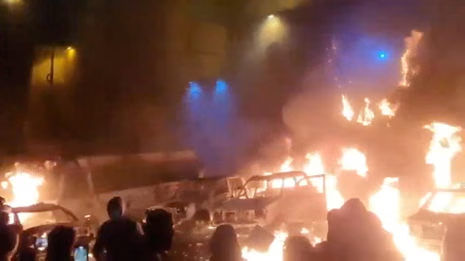
On Tehran’s streets, demonstrators defied the internet blackout, marching through neighborhoods while chanting anti-government slogans. Footage from Mashhad, Tabriz, and Qom confirmed that unrest is widespread, with large numbers participating despite the risk of arrests or injury. According to the Human Rights Activists news agency, at least 50 people have been killed, and more than 2,270 detained in connection with the unrest. Amnesty International condemned the internet blackout as a deliberate attempt to obscure the “grave human rights violations” carried out during the crackdown.
The protests have been marked by escalating violence and a heavy-handed state response. In Zahedan, security forces reportedly opened fire on demonstrators, wounding several. Iranian state media framed the demonstrations as orchestrated by “terrorist agents” from the US and Israel, claiming foreign involvement motivated public dissent. Press TV reported authorities had captured spies from Israel’s Mossad planning false-flag operations to blame the state for civilian casualties.
International responses have been swift. France, Germany, and the UK jointly urged Iran to protect citizens’ rights and allow peaceful assembly. The US rejected Tehran’s accusations, calling them “delusional attempts” to divert attention from domestic challenges. Meanwhile, former US President Donald Trump suggested the supreme leader might be considering leaving Iran as unrest intensifies.
Protests continued despite a near-total internet shutdown that began Thursday evening. Monitoring groups confirmed the blackout persisted over 36 hours, severely limiting communications and reporting. Students and activists attempted to bypass restrictions using previously established online “tunnels,” allowing them to share information externally. These efforts demonstrate the resilience of citizens determined to express dissent despite heavy repression.
Reza Pahlavi, the exiled son of the late Shah, actively encouraged demonstrations, calling for citizens to rally at 8pm local time. He urged international attention and warned authorities against exploiting the blackout to suppress protests. Supporters of Pahlavi chanted his name and advocated a transition to democratic governance, echoing sentiments linked to Iran’s pre-1979 political system. Many protesters remain united under his symbolic leadership, although the movement is largely decentralized.

Eyewitness accounts described violent suppression by security forces, including Basij militias and plainclothes squads targeting crowds indiscriminately. Despite these dangers, citizens continued to occupy streets, expressing determination to challenge government authority. Analysts note that Iran’s deteriorating economy and international conflicts have amplified public frustration, particularly among younger generations demanding systemic reform.
In Tehran, protesters raised the pre-1979 Iranian flag, symbolically rejecting the current regime. While state media projected normalcy, reports from human rights groups suggest hundreds of injuries and dozens of fatalities have occurred, though exact numbers remain difficult to confirm.
The ongoing Iran protests reveal the growing determination of citizens to confront authoritarian rule, even as authorities prepare further suppression. Human rights organizations continue documenting violations despite restricted communication, emphasizing the importance of international attention for accountability. Nationwide unrest shows no signs of abating, placing Iran at a critical juncture that could reshape its political landscape in the months ahead.
Related News:
 British Woman in Iran ‘Losing Hope’ Amid Ongoing Detention
 BBC Journalist Held and Interrogated in Vietnam
 US Super-Rich Are Draining Planet’s Safe Climate Space
 UK University Suspends Human Rights Research Following Pressure from China
 UK University Faces Counter-Terror Probe Over China Pressure
 Top Christmas Books Reads: Classics to Cozy Romcoms
 World Whisky Tour: 9 Global Gems
 UPS Cargo Plane Crash in Kentucky Kills Seven
 Just Stop Oil Protesters Convicted Amid Climate Defence Row
China-critical UK academics face ‘extremely heavy’ pressure from Beijing
Just Stop Oil Protesters Convicted Amid Climate Defence Row
China-critical UK academics face ‘extremely heavy’ pressure from Beijing
 Tension and Turmoil at Aston Villa v Maccabi Match
 BBC to Apologise Over Edited Trump Speech Amid Backlash
 Lando Norris Dominates Brazil GP to Strengthen F1 Title Bid
 Britain deploys RAF specialists to assist Belgium with drone threats
 Palace May Restore Hyphen to Andrew Mountbatten-Windsor’s Name
 US Senate Passes Funding Bill to End Historic Shutdown
 Suicide Bombing at Islamabad Court Kills 12, Injures Dozens
 BBC’s Tim Davie to Address Staff Amid Trump $1bn Threat
 Ronaldo Confirms Final World Cup and Plans Retirement
 Ukraine-Russia war latest: Putin’s troops exploit bad weather to force Kyiv withdrawal from multiple towns
 Algeria Pardons French-Algerian Novelist Sansal After Year in Jail
 Hitler’s DNA Confirms He Truly Had Only One Testicle
 US Justice Department Files Lawsuit Against California Over Partisan Voting Maps
 Oklahoma Governor Grants Last-Minute Clemency to Death Row Inmate
 US Pushes Global Effort to Stop Arms Flow to Sudan RSF Forces
 Israel Confirms Returned Hostage as Meny Godard
 Greene Pushes Epstein Files Amid Trump Fallout
 Trump Deploys DHS to Charlotte in Major Arrest Operation
 December Run-Off in Chile as Election Produces No Winner
 Zelenskyy Signs Fighter Jet Deal Amid Russian Drone Attacks
 Orban Says Ukraine Has ‘No Chance’ as EU Support Continues
 Irish Hero Parrott Says Goal Brought First Tears in Years
 Canada Passes Carney’s First Budget in Tight Parliamentary Vote
 Israeli Strike Kills 13 Near Palestinian Camp in Lebanon
 Zelensky Meets US Envoy in Turkey to Push Ukraine Peace Talks
 Shadow Fleet at Sea: Europe’s Battle Against Illicit Oil Shipping
 Tiny Curacao Makes History as Smallest Nation to Reach World Cup
 Haiti Qualifies for World Cup Despite Coach Never Visiting Country
 Deadly Russian Strikes Hit Western Ukraine, 20 Killed in Ternopil
 Rama Rebukes Mahmood for Targeting Albanian Families
 Pentagon Officials in Ukraine to Discuss War End
 Ukraine Peace Plan: Zelensky Ready for Dialogue
 Vietnam Battles Deadly Floods as Rains Continue
 Venezuela Threatens Nobel Winner Machado with Fugitive Status
 At Least Three Dead in Bangladesh Earthquake
 Barcelona Returns to Camp Nou vs Athletic Bilbao
 Royal Navy Shadows Russian Warships Entering the Channel
 Israel Confirms Hamas Returned Dror Or’s Body
 Trump Envoy to Discuss Ukraine Peace at Kremlin
 Twenty-Four Nigerian Schoolgirls Freed After Abduction
 US Suspends Afghan Immigration After White House Shooting
 Two National Guard Soldiers Critically Injured Near White House
 Georgians Defy Government Crackdown After Year of Protests
 Southern Lebanon reels as Israeli strikes shatter communities
 Mbappe Scores 4 as Real Madrid Edge Olympiakos
 Man City Lose, Champions League Risk
 Sri Lanka Floods Leave 56 Dead, Dozens Missing
 India’s Labour Law Overhaul Sparks Fierce Debate
 Video shows Israeli troops kill Palestinians after surrender
 A Colourful Cultural Escape in Mexico’s Querétaro
 Tokyo court rules Japan’s same-sex marriage ban constitutional
 Chinese & Japanese Boats Clash Near Disputed Islands
 Indonesia to Repatriate Two Dutch Drug Convicts
 ‘Extinct’ Antelope Returns to Sahara, Bringing Hope
 EU plans $105bn Ukraine aid using frozen Russian assets
 Global campaign launched to free Palestinian leader Barghouti
 American Mother Extradited From UK to U.S. on Murder Charges
 Khaleda Zia, Bangladesh’s First Female Prime Minister, Dies at 80
 Russia losses Ukraine war peace talks intensify amid rising deaths
 Facebook Slow to Remove Bondi Attack Praise, Anti-Hate Group Claims
 Australian Cruise Ship Freed After Reef Grounding in Papua New Guinea
 Zelenskyy Accuses Russia of Sabotaging Peace Talks
 Trump ‘Not Worried’ as China Conducts Massive Taiwan Wargame
 Khaleda Zia Laid to Rest with State Honour in Dhaka
 US Cities Erupt in Protests Against Trump’s Venezuela Military Action
 Maduro Faces Court in New York Over Drugs and Weapons Case
 Albanese Opens Door to Bondi Royal Commission Amid Rising Pressure
 Trump Escalates Minnesota Immigration Surge Amid Rising Tensions
 Venezuela Oil Shift to US Could Disrupt China Supplies
 Trump Exits UN Climate Treaty, Shocking Global Leaders