Published: 10 January 2025
The English Chronicle Desk
The English Chronicle Online
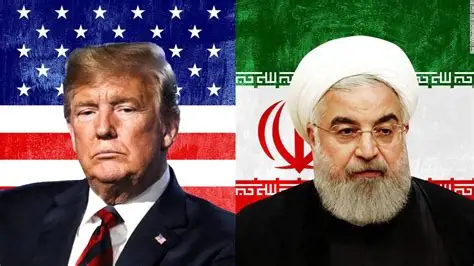
In a striking declaration that has reverberated across global diplomatic circles, former U.S. President Donald Trump said the United States “stands ready to help” Iranians in their struggle for freedom, offering support to a population embroiled in one of the most significant protest movements the country has seen in years. The comments, made in a forceful social media post and reiterated in public statements, have heightened tensions between Washington and Tehran while underscoring the fraught geopolitical landscape surrounding Iran’s internal upheaval.
“Iran is looking at FREEDOM, perhaps like never before. The USA stands ready to help!!!” Trump wrote on his Truth Social platform on Saturday, capturing both his administration’s rhetoric on Iran and his political posture toward the crisis. The statement, signalling solidarity with demonstrators and a willingness to assist their aspirations, comes against a backdrop of widespread protests across Iran that began in late December and have since expanded to hundreds of cities.
Iranian protests, initially triggered by steep inflation and a dramatic fall in the value of the rial, quickly morphed into broader demonstrations against the clerical regime, with citizens demanding political and economic reforms. As the unrest has grown, Iranian authorities have responded with a stringent crackdown, including internet blackouts, mass arrests, and violent suppression of crowds. According to human rights groups, at least 72 people have been killed and more than 2,300 detained amid the demonstrations, though the true toll may be higher due to restricted communications inside the country.

Trump’s call for support of the Iranian people reflects more than rhetorical encouragement; it forms part of a broader effort to signal U.S. engagement in a crisis that has drawn intense international attention. While Trump did not specify what forms of assistance Washington would provide, his remarks revived debate over how far the United States might go to influence events inside Iran without direct military intervention. In earlier comments, Trump suggested that the U.S. could take action short of deploying ground forces if Iran’s leadership brutally suppresses peaceful protests, including measures that would “hit them very, very hard” where it hurts.
The implications of Trump’s announcement are significant. For many Iranians protesting in the streets, public backing from a global superpower may offer a moral boost. Images and videos circulating on social media, despite government efforts to restrict internet access, show crowds united by calls for change and chants against the ruling establishment. Analysts say such scenes reflect deep-seated frustration with political repression, economic hardship, and years of limited opportunity.
However, the U.S. offer of support has not been universally welcomed. Iranian state officials have sharply criticised Trump’s rhetoric, describing it as foreign interference designed to destabilise the country and undermine national sovereignty. Tehran’s leadership has accused Washington and its allies of orchestrating unrest, framing the protests as externally driven rather than acknowledging domestic grievances. These claims have been used to justify intensified security operations, including the deployment of Revolutionary Guard units and the arrest of individuals accused of inciting unrest.
International responses have been mixed. Several Western governments have expressed concern over the use of force against protesters and urged restraint, while stopping short of explicitly endorsing Trump’s comments. Diplomatic efforts continue behind the scenes, with regional mediators such as Oman engaging Iranian officials in attempts to de-escalate tensions and explore pathways toward stability.
Trump’s remarks also carry domestic political significance. Strong rhetoric on foreign policy, particularly regarding adversarial states such as Iran, has historically resonated with key segments of the U.S. electorate. By positioning the United States as a champion of freedom in the Middle East, Trump reinforces a narrative of American leadership and contrasts his approach with critics who advocate for more cautious or multilateral engagement.
Analysts say the statement increases pressure on Iran’s leadership at a time when the regime is seeking to maintain control amid mounting dissent. Iran’s judiciary has adopted a hard-line stance, warning of severe punishments for those accused of threatening state security. Senior officials have framed the unrest as an existential challenge, intensifying rhetoric against both domestic opponents and foreign actors.
From a broader geopolitical perspective, Trump’s declaration highlights the complex interplay between internal unrest, international diplomacy, and regional security. The United States has long relied on sanctions and diplomatic pressure to influence Iran’s behaviour, particularly over its nuclear programme and regional activities. Openly aligning with Iranian protesters marks a more assertive posture, one that some experts warn could escalate tensions and provoke harsher responses from Tehran.

Economic pressures remain a central driver of the unrest. Iran’s economy has been weakened by years of sanctions, compounded by inflation, unemployment, and a collapsing currency that has eroded purchasing power. While the protests carry strong political messages, they are deeply rooted in economic dissatisfaction, complicating efforts to reach a sustainable resolution.
Supporters of Trump argue that demonstrating resolve and offering support to freedom movements abroad aligns with America’s historical commitment to democratic values. They contend that diplomatic pressure and moral backing can help protect civilians and encourage reform without triggering direct conflict.
As demonstrations enter their third week, Iran’s situation remains volatile, with no clear indication of de-escalation. Communication restrictions continue to limit independent reporting, leaving the international community reliant on satellite imagery, eyewitness accounts, and human rights organisations for insight into developments on the ground.
For now, Trump’s statement stands as a bold signal of U.S. support for the Iranian people’s aspirations. Whether it results in concrete action, influences decision-making in Tehran, or reshapes diplomatic engagement remains uncertain. What is clear is that Iran’s internal crisis has captured global attention, and U.S. involvement is likely to shape regional dynamics in the weeks ahead.
Related News:
 Putin Intensifies Territorial Demands Before US Talks
 Trump to Recheck Green Cards from 19 Nations After DC Attack
 Russia losses Ukraine war peace talks intensify amid rising deaths
 Trump Escalates Minnesota Immigration Surge Amid Rising Tensions
 Kinnock’s Rebuke Echoes Loudly as Corbyn Allies Launch Left-Wing Breakaway: “A Gift to Farage”
 UK and Norway Forge Stronger Ties Through Joint Sanctions and Enhanced Defence Cooperation
 Trump Administration Dismisses 17 Immigration Judges, Sparking Debate Over Judicial Independence
 Lammy Condemns Israel’s Targeting of Starving Palestinians: Sanctions Threatened Amid Global Outrage
 Modi’s London Visit Seals Historic UK-India Trade Pact Amid Global Tensions
 UK Must Act with Courage and Clarity on Israel-Palestine Conflict, Says Foreign Affairs Committee Report
 Philippine Supreme Court Halts Impeachment of Sara Duterte, Fuelling 2028 Election Speculation
 New Missile, New Balance: US Precision Strike Weapons Redefine Taiwan’s Defence Horizon
 Trump Threatens 100% Tariff on Nations Importing Russian Oil Amid India Standoff Over Ukraine War
 MPs Call on UK Government to Delay Biometric Visa Checks for Gaza Students Amid Humanitarian Crisis
 Netanyahu Announces Plan to Take Over Gaza City, Escalating Conflict Further
 Radioactive Leak at UK’s Nuclear Warhead Base Sparks Outcry Over Safety and Secrecy
 Lammy and Vance Meet in Britain to Advance US-Brokered Ukraine Peace Talks
 Mutual Inconvenience: Why Alaska Was Chosen for the Trump-Putin Summit on Ukraine
 Prominent Al Jazeera Journalist Anas al-Sharif Among Five Reporters Killed in Israeli Airstrike on Gaza
 Hong Kong Summons UK and Australian Envoys Following Asylum Grants to Democracy Activists
 Is the UK Ready to Put Boots on the Ground in Ukraine? Assessing Military Capacity and Challenges
 Ukraine-Russia War Latest: Trump Suggests Putin Avoiding Zelensky Summit Due to ‘Personal Dislike’
 Protests Expected as Israeli Arms Firms Join Global Defence Trade Fair in London
 Trump Appears Sidelined as Israel’s Unprecedented Strikes Hit Qatar
 Conservative Influencer Charlie Kirk Fatally Shot During University Debate
 Thousands Gather in London to Protest Donald Trump’s Second UK State Visit
Trump Urges UK to “Call Out the Military” to Secure Borders Amid State Visit
Thousands Gather in London to Protest Donald Trump’s Second UK State Visit
Trump Urges UK to “Call Out the Military” to Secure Borders Amid State Visit
 Channel Crossings Surge: Over 1,000 People Arrive in the UK in Small Boats in a Single Day
 Widow of Charlie Kirk Forgives Killer at Emotional Memorial Service
Trump’s UN Speech Criticises London and UK Policies, Draws Far-Right Attention
Widow of Charlie Kirk Forgives Killer at Emotional Memorial Service
Trump’s UN Speech Criticises London and UK Policies, Draws Far-Right Attention
 Denmark Investigates Professional Drone Incursions Across Multiple Airports, No Evidence of Russian Involvement
 UK Fighter Jet Purchase Could Breach Nuclear Treaty, Warns CND
 Yvette Cooper Signals Global Momentum Towards Gaza Peace Deal Amid Humanitarian Crisis
 A Third of EU Citizens in UK Report Discrimination by Public Bodies Post-Brexit
 Jailed Georgian Opposition Leaders Warn UK of Iranian Links to Ruling Party
 Misinformation and Political Pressure Force Weston-super-Mare to Abandon Refugee Sanctuary Plan
 Public Trust in SNP Hits Historic Low Amid NHS Concerns
 Johnson Suggests Mandelson Linked to China Spy Controversy
 Witness statements reveal the CPS China spy row collapse in the UK
 Rachel Reeves signals welfare reform ahead of key budget
 Kosovo agrees to host Britain’s refused asylum seekers
 Ireland Votes as Two Women Compete for Presidency
 Russia’s Latest Push to Win US Favors Shows Deep Desperation
 Experts Warn Russia’s Burevestnik Missile Could Destabilise Arms Control
 British Woman in Iran ‘Losing Hope’ Amid Ongoing Detention
 Johnson Approved China’s London ‘Super-Embassy’ in 2018
 BBC Journalist Held and Interrogated in Vietnam
 UK University Suspends Human Rights Research Following Pressure from China
 UK University Faces Counter-Terror Probe Over China Pressure
 BBC to Apologise Over Edited Trump Speech Amid Backlash
 Britain deploys RAF specialists to assist Belgium with drone threats
 Ukraine-Russia war latest: Putin’s troops exploit bad weather to force Kyiv withdrawal from multiple towns
 Trump Urges Herzog to Grant Netanyahu Full Pardon
 US Justice Department Files Lawsuit Against California Over Partisan Voting Maps
 Indian authorities demolish Kashmir home linked to Red Fort blast
 Greene Pushes Epstein Files Amid Trump Fallout
 Trump Deploys DHS to Charlotte in Major Arrest Operation
 December Run-Off in Chile as Election Produces No Winner
 Canada Passes Carney’s First Budget in Tight Parliamentary Vote
 Shadow Fleet at Sea: Europe’s Battle Against Illicit Oil Shipping
 Rama Rebukes Mahmood for Targeting Albanian Families
 Pentagon Officials in Ukraine to Discuss War End
 India’s COP30 Delay Raises Global Climate Concerns
 Venezuela Threatens Nobel Winner Machado with Fugitive Status
 Trump Envoy to Discuss Ukraine Peace at Kremlin
 Two National Guard Soldiers Critically Injured Near White House
 Georgians Defy Government Crackdown After Year of Protests
 US National Guard Member Killed in DC Shooting
 India’s Labour Law Overhaul Sparks Fierce Debate
 Video shows Israeli troops kill Palestinians after surrender
 EU plans $105bn Ukraine aid using frozen Russian assets
 Global campaign launched to free Palestinian leader Barghouti
 American Mother Extradited From UK to U.S. on Murder Charges
 Libya’s Army Chief Killed in Plane Crash in Turkey
 Trump Taiwan China drills: US President Downplays Tensions
 Zelenskyy Accuses Russia of Sabotaging Peace Talks
 Khaleda Zia Laid to Rest with State Honour in Dhaka
 US Cities Erupt in Protests Against Trump’s Venezuela Military Action
 Maduro Faces Court in New York Over Drugs and Weapons Case
 Albanese Opens Door to Bondi Royal Commission Amid Rising Pressure