Published: 14 January 2026. The English Chronicle Desk. The English Chronicle Online
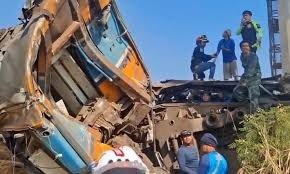
At least 28 people have been killed and dozens more injured after a construction crane collapsed onto a moving passenger train in north-eastern Thailand, in one of the country’s deadliest transport and construction-related disasters in recent years. The incident occurred at around 09:00 local time on Tuesday, sending shockwaves across the nation and prompting urgent calls for accountability, tighter safety standards, and a comprehensive investigation.
According to Thai authorities, the crane fell directly onto the train as it passed beneath a construction site, derailing several carriages and crushing parts of the train. One carriage reportedly caught fire following the impact, further complicating rescue efforts. Official records indicate that approximately 195 passengers were onboard at the time of the accident, travelling from Bangkok to Ubon Ratchathani province near the Lao border.
Emergency responders arrived swiftly at the scene, working for several hours to evacuate passengers trapped inside damaged carriages. Rescue teams later confirmed that all passengers had been accounted for, with 64 people sustaining injuries of varying severity. Among the injured were a one-year-old child and an 85-year-old elderly passenger. Eight of those hurt remain in critical condition and are receiving intensive medical care at regional hospitals.

Eyewitness accounts described scenes of panic and devastation as the crane collapsed without warning. Thirasak Wongsoongnern, a member of the train staff who survived the incident, told local media that passengers were violently thrown into the air as the crane struck the train. He said confusion and fear spread rapidly as smoke and flames emerged from one of the carriages, while survivors struggled to escape through shattered windows and twisted metal.
The crane was being used in the construction of an elevated railway line forming part of a major China-backed infrastructure project designed to link Bangkok with neighbouring Laos. That route connects with an existing Chinese-built high-speed railway that runs from Laos into south-western China, a flagship component of Beijing’s regional transport strategy. The accident has raised serious questions about safety oversight on large-scale infrastructure projects, particularly those involving active rail corridors.
Thai Prime Minister Anutin Charnvirakul responded forcefully, calling for those responsible to be identified and punished. Speaking to reporters, he said such an incident could not be dismissed as an unavoidable accident. “Someone must be punished and held accountable,” he said. “Accidents like this can only happen due to negligence, skipped steps, deviations from the design, or the use of incorrect materials.” His remarks underscored growing public anger and demands for transparency.
The government has ordered a full investigation into the collapse, focusing on construction practices, safety protocols, and coordination between railway operators and construction contractors. Transport officials have also instructed inspectors to review similar construction sites nationwide, particularly where cranes or heavy equipment operate near active rail lines.
Thailand has a long history of deadly construction and transport accidents, often attributed to weak enforcement of safety regulations, inadequate worker training, and pressure to meet tight project deadlines. Critics argue that safety standards are frequently compromised in pursuit of rapid infrastructure development, especially on projects linked to international investment and regional connectivity.
This tragedy comes amid increased scrutiny of Thailand’s transport infrastructure following several fatal incidents in recent years involving road bridges, construction sites, and rail crossings. Public confidence in safety oversight has been eroded, and advocacy groups have renewed calls for stricter penalties for companies that violate safety regulations.

Medical teams across the region have been mobilised to support the injured, while counselling services have been offered to survivors and families of victims. Hospitals in Ubon Ratchathani and nearby provinces remain on high alert as authorities monitor the condition of those seriously wounded.
The accident has also reignited debate over the pace and management of Thailand’s ambitious rail expansion plans. While improved connectivity is widely seen as essential for economic growth and regional integration, experts warn that infrastructure development must not come at the expense of human lives. Analysts say the disaster could delay construction timelines and lead to stricter oversight of foreign-backed projects.
As investigators work to determine exactly what caused the crane to collapse, questions remain about whether warning signs were missed and whether proper safety barriers were in place to protect passing trains. For now, the focus remains on supporting victims, ensuring accountability, and preventing similar tragedies in the future.
The scale of the loss has left the country in mourning, with flags lowered at several government buildings and messages of condolence pouring in from across Southeast Asia. For many families, however, answers cannot come soon enough, as they seek justice for loved ones lost in a disaster that authorities say should never have happened.
Related News:
 Iran Protesters Defy Crackdown as Violent Clashes Intensify
 British Woman in Iran ‘Losing Hope’ Amid Ongoing Detention
 BBC Journalist Held and Interrogated in Vietnam
 US Super-Rich Are Draining Planet’s Safe Climate Space
 UK University Suspends Human Rights Research Following Pressure from China
 UK University Faces Counter-Terror Probe Over China Pressure
 Top Christmas Books Reads: Classics to Cozy Romcoms
 World Whisky Tour: 9 Global Gems
 UPS Cargo Plane Crash in Kentucky Kills Seven
 Just Stop Oil Protesters Convicted Amid Climate Defence Row
 Tension and Turmoil at Aston Villa v Maccabi Match
 BBC to Apologise Over Edited Trump Speech Amid Backlash
 Lando Norris Dominates Brazil GP to Strengthen F1 Title Bid
 Britain deploys RAF specialists to assist Belgium with drone threats
 Palace May Restore Hyphen to Andrew Mountbatten-Windsor’s Name
 US Senate Passes Funding Bill to End Historic Shutdown
 Suicide Bombing at Islamabad Court Kills 12, Injures Dozens
 BBC’s Tim Davie to Address Staff Amid Trump $1bn Threat
 Ronaldo Confirms Final World Cup and Plans Retirement
 Ukraine-Russia war latest: Putin’s troops exploit bad weather to force Kyiv withdrawal from multiple towns
 Algeria Pardons French-Algerian Novelist Sansal After Year in Jail
 Hitler’s DNA Confirms He Truly Had Only One Testicle
 US Justice Department Files Lawsuit Against California Over Partisan Voting Maps
 Oklahoma Governor Grants Last-Minute Clemency to Death Row Inmate
 US Pushes Global Effort to Stop Arms Flow to Sudan RSF Forces
 Israel Confirms Returned Hostage as Meny Godard
 Greene Pushes Epstein Files Amid Trump Fallout
 Trump Deploys DHS to Charlotte in Major Arrest Operation
 December Run-Off in Chile as Election Produces No Winner
 Zelenskyy Signs Fighter Jet Deal Amid Russian Drone Attacks
 Orban Says Ukraine Has ‘No Chance’ as EU Support Continues
 Irish Hero Parrott Says Goal Brought First Tears in Years
 Canada Passes Carney’s First Budget in Tight Parliamentary Vote
 Israeli Strike Kills 13 Near Palestinian Camp in Lebanon
 Zelensky Meets US Envoy in Turkey to Push Ukraine Peace Talks
 Shadow Fleet at Sea: Europe’s Battle Against Illicit Oil Shipping
 Tiny Curacao Makes History as Smallest Nation to Reach World Cup
 Haiti Qualifies for World Cup Despite Coach Never Visiting Country
 Deadly Russian Strikes Hit Western Ukraine, 20 Killed in Ternopil
 Rama Rebukes Mahmood for Targeting Albanian Families
 Pentagon Officials in Ukraine to Discuss War End
 Ukraine Peace Plan: Zelensky Ready for Dialogue
 Vietnam Battles Deadly Floods as Rains Continue
 Venezuela Threatens Nobel Winner Machado with Fugitive Status
 At Least Three Dead in Bangladesh Earthquake
 Barcelona Returns to Camp Nou vs Athletic Bilbao
 Royal Navy Shadows Russian Warships Entering the Channel
 Israel Confirms Hamas Returned Dror Or’s Body
 Trump Envoy to Discuss Ukraine Peace at Kremlin
 US Suspends Afghan Immigration After White House Shooting
 Two National Guard Soldiers Critically Injured Near White House
 Georgians Defy Government Crackdown After Year of Protests
 Southern Lebanon reels as Israeli strikes shatter communities
 Mbappe Scores 4 as Real Madrid Edge Olympiakos
 Man City Lose, Champions League Risk
 Sri Lanka Floods Leave 56 Dead, Dozens Missing
 India’s Labour Law Overhaul Sparks Fierce Debate
 Video shows Israeli troops kill Palestinians after surrender
 Tokyo court rules Japan’s same-sex marriage ban constitutional
 Chinese & Japanese Boats Clash Near Disputed Islands
 Indonesia to Repatriate Two Dutch Drug Convicts
 ‘Extinct’ Antelope Returns to Sahara, Bringing Hope
 EU plans $105bn Ukraine aid using frozen Russian assets
 Global campaign launched to free Palestinian leader Barghouti
 American Mother Extradited From UK to U.S. on Murder Charges
 Khaleda Zia, Bangladesh’s First Female Prime Minister, Dies at 80
 Russia losses Ukraine war peace talks intensify amid rising deaths
 Facebook Slow to Remove Bondi Attack Praise, Anti-Hate Group Claims
 Australian Cruise Ship Freed After Reef Grounding in Papua New Guinea
 Zelenskyy Accuses Russia of Sabotaging Peace Talks
 Khaleda Zia Laid to Rest with State Honour in Dhaka
 US Cities Erupt in Protests Against Trump’s Venezuela Military Action
 Maduro Faces Court in New York Over Drugs and Weapons Case
 Albanese Opens Door to Bondi Royal Commission Amid Rising Pressure
 Trump Escalates Minnesota Immigration Surge Amid Rising Tensions
 Venezuela Oil Shift to US Could Disrupt China Supplies
 Trump Says US Must ‘Own’ Greenland to Block Russia, China
 US Clears Nvidia AI Chip Sales to China in Policy Shift
 Trump Threatens Strong Action If Iran Executes Protesters
 India’s Failing Juvenile Justice System Denies Minors Reform