Published: 01 February 2026. The English Chronicle Desk. The English Chronicle Online
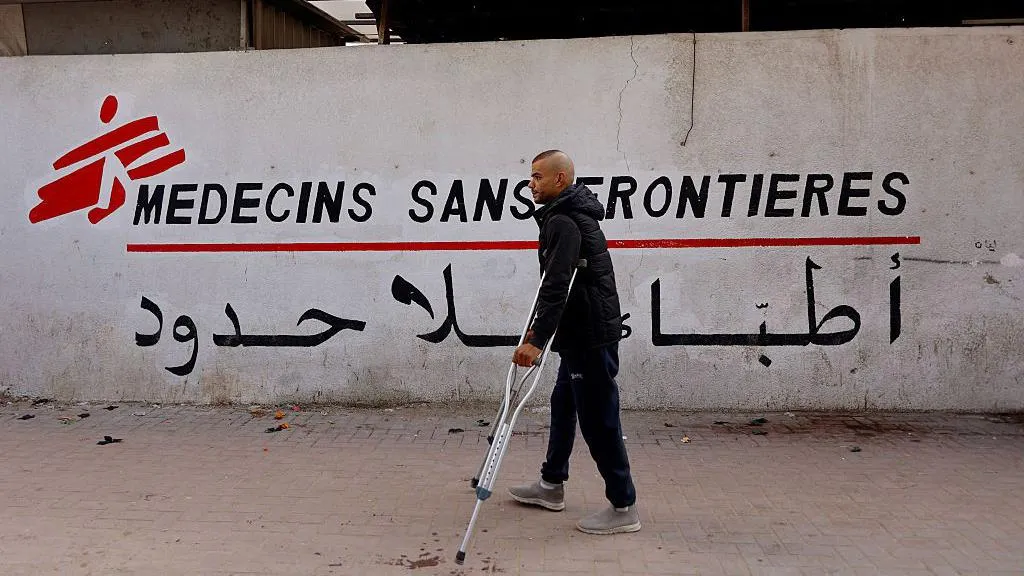
Israel has announced it will move to ban Médecins Sans Frontières, also known as Doctors Without Borders, from operating in Gaza after the medical charity refused to hand over a detailed list of its staff working in the territory. The decision has triggered sharp criticism from humanitarian groups and international observers, who warn it could significantly worsen an already catastrophic healthcare crisis for civilians caught in the conflict.
The Israeli government said the move followed MSF’s refusal to comply with a directive requiring humanitarian organisations to submit documentation about both local and international employees in Gaza. Officials claim the request forms part of a broader security effort, arguing that some individuals working for international charities may have links to armed groups including Hamas and Islamic Jihad. MSF has strongly denied any such allegations, calling them unfounded and dangerous.
In a statement released on Friday, MSF confirmed it had informed Israeli authorities that it would not provide a full list of its Palestinian and international staff without firm guarantees regarding how that information would be used. The organisation said it had sought assurances that any data shared would be limited strictly to administrative purposes and would not endanger employees or their families. According to MSF, despite repeated attempts, Israeli officials failed to provide those guarantees.

Israel’s Ministry of Diaspora Affairs and Combating Antisemitism responded by saying it was “moving to terminate the activities” of MSF in Gaza. The ministry argued that submission of staff lists was a standard requirement applied to all humanitarian organisations operating in the area, and accused MSF of non-compliance. Officials insisted the policy was designed to prevent what they described as infiltration of militant operatives into humanitarian structures.
This dispute stems from a wider regulatory crackdown announced by Israel on 30 December, when it said it would revoke licences of 37 international non-governmental organisations working in Gaza and the occupied West Bank. Those organisations were told their operations would have to cease within 60 days unless they met new registration requirements. Alongside MSF, the list included well-known groups such as ActionAid and the Norwegian Refugee Council.
At the time, Israeli authorities said the new measures were necessary to ensure national security during wartime. They argued that humanitarian cover could be exploited by armed groups, a claim that aid organisations have repeatedly rejected. Ten countries, including the United Kingdom, France, and Canada, condemned the move, warning it would severely restrict access to essential services for Palestinians and further undermine humanitarian law.
MSF stressed that it had attempted to find a compromise. In its statement, the organisation said it was prepared, as an “exceptional measure,” to share names of staff under strict conditions prioritising safety. However, it concluded that meaningful engagement with Israeli authorities on those conditions had failed. Without guarantees, MSF said it could not risk exposing its staff to potential targeting, detention, or harm.
Humanitarian officials warn the consequences of Israel’s decision could be profound. Sam Rose, director of Gaza affairs for the United Nations agency for Palestinian refugees, UNRWA, told the BBC that banning MSF would have “major negative consequences” for healthcare delivery inside Gaza. He noted that MSF plays a critical role in sustaining basic medical services amid widespread destruction and shortages.
Rose also highlighted the context in which MSF’s concerns arise. Over the past two years, large numbers of healthcare workers and humanitarian staff have been killed in Gaza, often while performing their duties. According to MSF, around 1,700 healthcare staff have been killed since the war began, including 15 employees of the organisation itself. Aid groups argue that sharing detailed staff information without safeguards could further expose workers to lethal risks.

MSF currently provides at least 20 percent of all hospital beds in Gaza and operates around 20 health centres across the territory. The organisation says that in the past year alone it carried out more than 800,000 medical consultations and assisted with over 10,000 infant deliveries. It has also been involved in providing drinking water and emergency care in areas where infrastructure has collapsed under sustained bombardment.
For many Gazans, MSF facilities represent one of the last functioning elements of a shattered healthcare system. Hospitals have been repeatedly damaged or destroyed, medical supplies remain scarce, and doctors often work under extreme conditions with limited electricity, clean water, or protective equipment. Aid agencies warn that any reduction in humanitarian presence risks accelerating preventable deaths from injury, disease, and childbirth complications.
The broader political backdrop remains highly volatile. The current war in Gaza began after the Hamas-led attack on southern Israel on 7 October 2023, in which about 1,200 people were killed and 251 taken hostage. Israel responded with a large-scale military campaign in Gaza, arguing it was necessary to dismantle Hamas. According to the Hamas-run health ministry, more than 71,660 people have been killed during Israel’s offensive.
A ceasefire that began on 10 October 2025 brought a temporary reduction in fighting, but violence has continued. Palestinian authorities say at least 509 Palestinians have been killed since the ceasefire took effect, while Israel reports that four of its soldiers have also died during this period. Humanitarian groups say the ceasefire has not translated into sufficient relief, with restrictions on aid and movement still severely limiting access to civilians in need.
Israel has consistently accused Hamas of embedding itself within civilian infrastructure, including hospitals and aid operations, a claim Hamas denies. Aid organisations say such accusations have increasingly been used to justify restrictions on humanitarian work. They warn that conflating neutral medical organisations with armed groups undermines protections enshrined in international humanitarian law.
Legal experts note that under the Geneva Conventions, medical personnel and humanitarian workers are afforded special protections during armed conflict. Forcing organisations to disclose sensitive staff information without safeguards could violate those principles, particularly if such data leads to targeting or intimidation. Israel maintains that its policies are lawful and necessary for security, but critics argue they erode neutrality and independence of humanitarian action.
The potential expulsion of MSF also carries symbolic weight. Doctors Without Borders has long been regarded as one of the most prominent and outspoken humanitarian organisations globally. Its withdrawal, whether forced or voluntary, could discourage other groups from operating in Gaza or from challenging restrictive conditions imposed by authorities.
For Gaza’s civilians, impact may be immediate and severe. Patients reliant on MSF-run facilities for surgery, maternal care, and chronic illness treatment could find themselves without alternatives. Aid agencies warn that already overstretched hospitals may simply be unable to absorb additional patients if MSF operations are halted.
As diplomatic pressure mounts, it remains unclear whether Israel and MSF might still reach a last-minute compromise. Some international officials have urged Israel to reconsider, warning that further constriction of humanitarian space risks deepening a crisis that has already reached unprecedented levels.
For now, Israel’s announcement signals a hardening stance toward international aid groups at a moment when humanitarian needs in Gaza remain overwhelming. Whether this move stands or is reversed may shape not only immediate access to healthcare, but also broader norms governing humanitarian work in conflict zones worldwide.
Related News:
 British Woman in Iran ‘Losing Hope’ Amid Ongoing Detention
 BBC Journalist Held and Interrogated in Vietnam
 UK University Suspends Human Rights Research Following Pressure from China
 UK University Faces Counter-Terror Probe Over China Pressure
 Abigail Spanberger Elected Virginia’s First Female Governor
 Mikie Sherrill Elected New Jersey’s Governor in Key Win
China-critical UK academics face ‘extremely heavy’ pressure from Beijing
Mikie Sherrill Elected New Jersey’s Governor in Key Win
China-critical UK academics face ‘extremely heavy’ pressure from Beijing
 British military receives first Ajax armoured vehicles – eight years late
 BBC to Apologise Over Edited Trump Speech Amid Backlash
 Britain deploys RAF specialists to assist Belgium with drone threats
 BBC director-general and news chief resign amid bias row
 Ukraine-Russia war latest: Putin’s troops exploit bad weather to force Kyiv withdrawal from multiple towns
 Trump Claims Victory as Longest Shutdown Ends
 New Epstein Files Spark Political Clash in Washington
 Hamas Fighters in Gaza Tunnels Stall Ceasefire Progress
 US Justice Department Files Lawsuit Against California Over Partisan Voting Maps
 South Sudan President Removes Vice-President Amid Political Uncertainty
 Berlin Reintroduces Military Service Amid Rising Security Concerns
 Greene Pushes Epstein Files Amid Trump Fallout
 Trump Deploys DHS to Charlotte in Major Arrest Operation
 December Run-Off in Chile as Election Produces No Winner
 Canada Passes Carney’s First Budget in Tight Parliamentary Vote
 Why Russian Liberals Push Strongly Pro-Israel Narratives
 Congress Approves Release of Epstein Files, Trump Expected to Sign
 Shadow Fleet at Sea: Europe’s Battle Against Illicit Oil Shipping
 Rama Rebukes Mahmood for Targeting Albanian Families
 Russian Vessel Used Lasers on RAF Pilots, UK Claims
 Pentagon Officials in Ukraine to Discuss War End
 US Military Team Visits Kyiv Amid War Talks
 WhatsApp Messages Expose Nathan Gill’s Bribery
 Venezuela Threatens Nobel Winner Machado with Fugitive Status
 Texas Governor Faces Lawsuit From CAIR
 Mamdani’s Vision: Affordable, Democratic Socialism
 Trump Envoy to Discuss Ukraine Peace at Kremlin
 Pope Leo XIV Begins Historic Trip to Turkey and Lebanon
 Zambia’s President Faces Stone-Throwing Anger Amid Challenges
 Georgians Defy Government Crackdown After Year of Protests
 India’s Labour Law Overhaul Sparks Fierce Debate
 Video shows Israeli troops kill Palestinians after surrender
 Trump to Recheck Green Cards from 19 Nations After DC Attack
 Carney’s Alberta Pipeline Deal Sparks Immediate Pushback
 Guinea-Bissau President Flees After Military Coup
 Chinese & Japanese Boats Clash Near Disputed Islands
 Putin Meets US Envoy Amid Key Ukraine Peace Talks
 EU plans $105bn Ukraine aid using frozen Russian assets
 Global campaign launched to free Palestinian leader Barghouti
 UK Aid Cuts Could Undermine Global Influence, Experts Warn
 Thailand and Cambodia Agree Ceasefire After Weeks of Deadly Clashes
 Myanmar’s Military Election: Fear and Intimidation Surround Vote
 Russia losses Ukraine war peace talks intensify amid rising deaths
 Zelenskyy Accuses Russia of Sabotaging Peace Talks
 Trump ‘Not Worried’ as China Conducts Massive Taiwan Wargame
 Khaleda Zia Laid to Rest with State Honour in Dhaka
 Maduro Faces Court in New York Over Drugs and Weapons Case
 Albanese Opens Door to Bondi Royal Commission Amid Rising Pressure
 Shock US Raid: Maduro Pleads Not Guilty in Manhattan Court
 Trump Escalates Minnesota Immigration Surge Amid Rising Tensions
 Herzog Visit Sparks Labor Protest in Australia
 Venezuela Frees Political Prisoners in Major Peace Move
 Austrian Airlines Halts Tehran Flights Amid Political Unrest
 Iran Protesters Defy Crackdown as Violent Clashes Intensify
 Iran Leader Blames Protesters, Says They Serve Trump
 Trump Eyes Strong Military Options Amid Iran Protest Crackdown
 Trump Threatens Strong Action If Iran Executes Protesters
 Trump Policies Boost China’s Global Rise, Survey Finds
 Machado Trump medal gesture reshapes Venezuela power struggle
 Trump Receives Machado’s Nobel Medal in White House Meeting
 Iran unrest slows under brutal crackdown and global tensions
 EU weighs response amid Greenland tariff crisis with Trump
 US Considers Asylum for British Jews Amid Rising Antisemitism
 ICE street raids expose a chilling future for public freedoms
 US Africa aid remarks spark anger after leaked State email
 Trump Launches “Board of Peace” Amid Global Diplomacy Push
 EU Says US Ties Have Suffered ‘Big Blow’ After Greenland Crisis
 Andrew Hastie Emerges as Leadership Rival to Ley
 Russia Strikes Kyiv and Kharkiv as Peace Talks Enter Day Two
 Pentagon Signals Reduced Role in Deterring North Korea
 Starmer China visit underscores clear-eyed national security stance
 Starmer China visit raises human rights pressure on Beijing
 Thousands Protest ICE Operations in Nationwide US Day of Action