Published: 15 April 2026. The English Chronicle Desk. The English Chronicle Online.
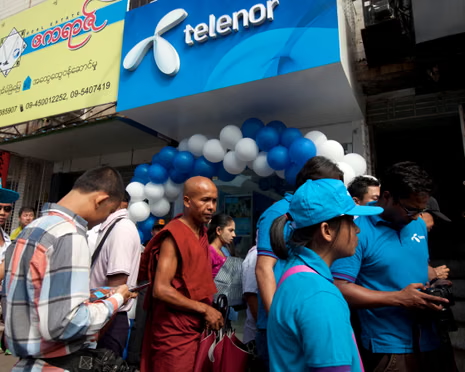
The ethical foundations of international telecommunications are currently facing a profound and public test. A major legal challenge has emerged against the Norwegian state-owned telecoms giant known as Telenor. This case centres on accusations of complicity in the brutal suppression of democratic activists. The narrative begins in the dark interrogation rooms of Myanmar where activists faced immense pressure. Aung Thu endured two weeks of severe torture without revealing any secrets to the military. His captors eventually turned to digital surveillance to break the resistance of the local population. They requested specific user data from Telenor which was then the largest provider in Myanmar. This company entered the nation in 2013 during a hopeful period of democratic transition. It promised to provide vital connections for a population long isolated from the global stage.
The Norwegian government remains the majority shareholder in this massive and influential telecommunications corporation. Activists like Aung Thu now feel a deep sense of betrayal by the firm. A significant class-action lawsuit alleges the company handed over sensitive data of many customers. This information included precise residential addresses and the last known locations of various targeted individuals. The lawsuit represents over one thousand two hundred customers who were potentially compromised by these actions. Plaintiffs argue that Telenor helped prop up the military junta currently ruling the country. This assistance reportedly led to the arrest of dissidents who faced jail and execution. The legal filing in Norway claims the company failed to protect or inform these victims. A parliamentary inquiry into the role of the Norwegian government is expected later this year.

Internal transparency reports from Telenor show it complied with nearly all military data requests received. The company reportedly fulfilled ninety-six percent of the one hundred and fifty-three orders for information. Documents obtained by the Norwegian state broadcaster NRK confirm these troubling and extensive data transfers. These records indicate that the phone number for Aung Thu was specifically listed in September. At that time the activist was already suffering inside a prison cell for his work. Aung Thu told reporters that many of his close colleagues have since completely disappeared. He remains unable to find any trace of those who were in contact with him. The activist was first jailed in 2021 for his role in the spring revolution. This movement rose to resist the military coup that ousted the elected civilian government.
The legal journey for Aung Thu took a particularly dark turn during his initial detention. He was released during a prisoner amnesty in October only to be immediately detained again. New charges were brought under counter-terrorism laws right at the gates of the prison. He believes this second arrest followed the release of his personal data by the company. This transfer happened despite internal assessments warning of the high risk of such a move. The Justice and Accountability Initiative is now leading the legal charge against the Norwegian firm. This Swedish rights organisation is supported by several prominent international research and legal groups. The class-action case represents more than one thousand customers who did not opt out. They are seeking at least eleven million euros in compensation for the damages suffered.
Before exiting the country in 2022 Telenor served eighteen million customers across the entire nation. Advocacy directors suggest that the company built a brand based entirely on public trust. That trust was allegedly breached with severe and life-altering consequences for many innocent people. Even those who escaped physical harm have been forced to live a life underground. Some have had to flee their homes and families to avoid the reaching grasp. Reports suggest the data shared included information on the deposed leader Aung San Suu Kyi. It also included details on Phyo Zeya Thaw who was tragically executed by the regime. His wife Tha Zin is now a lead complainant in this landmark legal case. She notes her husband was arrested in a safehouse shortly after his data was requested.
The company website admits to complying with various orders to block major social media sites. They restricted access to Facebook and Twitter while also shutting down entire parts of the network. Digital rights activists describe these actions as the creation of a digital iron curtain. These measures targeted opposition politicians and blocked vital information from reaching sensitive conflict zones. Human rights lawyers argue that the company portrayed itself as a wholesome and safe entity. Adverts focused on connecting friends while masking the potential for state surveillance and military cooperation. Activists likely believed that an international company would uphold much higher standards of user privacy. Instead the firm allegedly provided granular details about the daily movements of young politicians.

A spokesperson for the company defended their actions by citing the safety of their staff. They claim they were legally obliged to share metadata but not the content of messages. Employees were working under extreme pressure with their lives potentially at stake during the crisis. The firm maintains there is no direct link between their data handling and rights violations. However the Norwegian public is now demanding greater accountability for their own government’s silent role. Records show the government held twenty-seven meetings with the firm after the military coup happened. Officials state that operational decisions are made by a board that must respect human rights. Former ministers argue that this situation damages the international image of Norway as a peacekeeper.
The reputation of Norway as a global defender of human rights is currently under threat. Many citizens feel that these actions do not align with the values of their nation. It is considered vital to ensure that such a breach of trust never happens again. The outcome of this lawsuit could set a major precedent for corporate responsibility in conflict. International firms may now face much stricter scrutiny regarding their operations in authoritarian or unstable regimes. The victims in Myanmar continue to seek justice for the digital betrayal they experienced. They hope the legal system in Norway will hold the powerful corporation to account. This case highlights the dangerous intersection of technology and state power in the modern age. The world is watching to see if corporate profits outweighed the lives of democratic activists.
Related News:
 Indonesia blocks Grok chatbot over sexual content risk
 The Woman Guarding Earth From the Threat of Asteroids
 California Defies Trump With Strict New AI Standards
 Artemis II: Humanity Returns to the Lunar Frontier
 Mapping the Mind: The Universal Fingerprint of Psychedelics
 Jimmy Wales Slams Australia Social Media Ban Policy
 Court Upholds Landmark Win for Transgender Rights
 US AI Growth Faces Backside as Datacenters Hit Drought
 AI Deepfakes of Farage and Bailey Spark Bank of England Alert
 AI to Help Botanists Win the Critical Race Against Extinction
 AI Lawyer Triumphs in Landmark English Court Victory
 Telstra Software Fault Triggers Massive Nationwide Outage
 Japan Vows to Bolster Security Against Espionage
 UK Bans Fake Numbers: Scammers Lose Their Trick
 Vibe coding’ named Collins dictionary’s word of the year
 Patients to Test Health at Home to Ease NHS Winter Pressure
 Britain deploys RAF specialists to assist Belgium with drone threats
 Northern Lights may illuminate UK skies this week
 Sundar Pichai Cautions on AI Hype and Market Risks
 Google Removes Some AI Health Summaries Over Safety Concerns
 Friedman Uninvited From 2024 Adelaide Writers’ Week
 Spoof “Make America Go Away” Caps Rally Denmark Over Greenland
 EU launches Grok AI probe into X over explicit images
 ABC Facebook Page Briefly Hacked, Adult Photos Posted
 Meta trial over child exploitation claims begins
 BT Names New Openreach Chief Amid Major Fibre Expansion
 Tech Trends Set to Transform Life in 2026
 Stewart Brand on Musk, Bezos and a Life of Long Thinking
 New Zealand Covid Response Praised Despite Lingering Scars
 The Kill Line: A Shifting Vision of the American Dream
 ‘Drinking from a Fetid Pond’: Superbug Genes in Lough Neagh
 Diplomacy on the Brink: Pakistan’s Risky Peace Mission
 Teenage Titan: Sooryavanshi Smashes IPL Records
 Canadian Mother and Daughter Released From ICE Detention
 Reform UK Pledges To Halt Visas Over Reparations Demands
 US and Iran Agree to Two-Week Provisional Ceasefire
 Israel Defies Ceasefire as Lebanon Operations Persist
 Islamabad Hosts Historic Peace Talks Between Iran and USA
 Artemis II Returns After Historic Moon Flyby
 Trump Signals Hope for New Iran Talks as Ceasefire Fades
 Trump’s Presidency: A House of Cards Collapsing?
 Robots Outpace Humans in Beijing Half-Marathon
 US Forces Seize Iranian Ship Near Hormuz Blockade
 Trump Starts $166bn Tariff Refund Process
 UK Faces Growing Threat of Scale Hacktivist Attacks
 Investigation: Offshore Loans and Sanctions
 Prominent Voices Challenge Palestine Action Ban
 Cross-Border Crisis Shatters Fragile Afghan Peace
 The Burning Lens: An Iranian Artist’s Visual Resistance
 FIFA Confirms Global Ban for Benfica Star Prestianni
 One Nation Candidate’s Surprising Ties to Independents
 US and Mexico Face Heatwave as Floods Batter South Africa
 Putin Signals War End as Russian Momentum Stalls
 Romania’s Judicial Crisis: A System Under Siege
 Scepticism and tight security as Beijing braces for Trump
 Philippine Senator Flees After Days Under Senate Siege
 Fragile Truce Shattered as Violence Escapes Diplomatic Control
 Secrecy Down Under: Albanese Faces FoI Scandal
 Tony Abbott Returns as New Liberal Party President
 Discontent grows around Putin amid war strain
 Teaching Machines Right From Wrong in the Digital Age
 Oman Defies US Pressure Over Strategic Strait of Hormuz
 Ex-CIA Agent Accused of $40m Gold Theft and Fake Spy Unit
 Stolen Mobiles Could Soon Become Useless Bricks
 Aukus Deal Facing Fierce Backing and Historic Criticism
 Thai Princess Bajrakitiyabha Passes Away at 47
 Tragic Loss of Australian Sprinter Jemma Stapleton
 UK Ministers Lobby Trump Over Under-16s Social Media Ban
 Trump Urged to Condemn UFC Fighter Over Obama Slurs
 Russian Tanker Captain Remanded in UK Court After Channel Seizure
 US Military Pacific Boat Strike Kills Three People
 US Battles Auction of Titanic Artifacts
 Trump’s Mount Rushmore Speech: A Divisive Anniversary
 Sydney Records Hottest June Since 1859 as Expert Warns New High a ‘Signature’ of Global Warming
 Telstra Software Fault Triggers Massive Nationwide Outage
 Trump Swaps Planes Amid Iran Tensions
 Rotterdam Museum Honours Artist With Peanut Butter Floor
 Bangkok Nightclub Blaze Claims 30 Lives Amid Negligence Probe
 Yemen Accuses Iran of Violating National Sovereignty
 Houthis Strike Saudi Arabia as Middle East Tensions Rise