Published: 23 April 2026. The English Chronicle Desk. The English Chronicle Online.
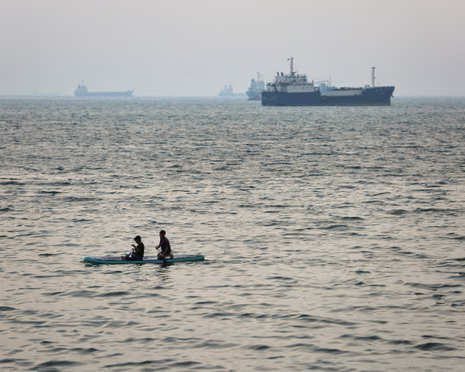
The Strait of Hormuz remains a dangerous flashpoint as regional tensions reach a boiling point. Iranian forces have recently seized two commercial vessels within this crucial international maritime shipping waterway. This aggressive action follows a deepening standoff between the United States and the Iranian government. Both nations are now enforcing separate and competing blockades across this vital global transit route. The waterway previously facilitated nearly twenty percent of all international oil and liquefied gas shipments daily. This current impasse has cast significant doubt over the possibility of resuming any stalled peace negotiations soon. Mohammad Bagher Ghalibaf is the influential speaker of the Iranian parliament and acts as lead negotiator. He stated clearly on Wednesday that reopening the strait remains impossible under these highly volatile conditions. Ghalibaf cited flagrant breaches of the existing ceasefire agreements by both the United States and Israel. He specifically condemned the American naval blockade as a form of hostage-taking for the world economy. The Iranian leader further accused both nations of persistent warmongering and failed attempts at military aggression. He emphasized that these foreign powers would not achieve their strategic goals through such heavy-handed bullying tactics.
The Islamic Revolutionary Guard Corps issued a statement confirming their naval forces intercepted two specific ships. These vessels were reportedly attempting to cross the sensitive strait before being diverted directly to shore. Iran’s semi-official news agency identified these vessels as the Panama-flagged MSC Francesca and the Liberia-flagged Epaminondas. Officials accused the ships of attempting to exit the vital waterway in a covert and unauthorized manner. The Greek government has already confirmed that one of these cargo ships is indeed Greek-operated and owned. A UK-based maritime security organization also reported multiple disturbing attacks on various vessels throughout the day. One particularly alarming incident involved an Iranian gunboat firing directly upon a merchant vessel passing through. This hostile engagement reportedly caused substantial damage to the bridge and severely threatened the safety of crew. These seizures represent the first time Iran has exerted such direct control since the war began earlier. The conflict ignited on twenty-eighth February and shows no signs of cooling down in the current climate. These actions follow reports of the United States firing upon and seizing an Iranian cargo vessel recently. American forces also boarded an Iranian oil tanker while it navigated through the vast Indian Ocean.
President Donald Trump recently engaged in a series of unpredictable policy shifts regarding the ongoing regional hostilities. He threatened renewed violence on Tuesday just hours before announcing a unilateral extension of the existing ceasefire. The White House press secretary stated that the president remains satisfied with the current naval blockade efforts. Karoline Leavitt explained that the administration understands Iran is operating from a position of relative weakness. She noted that the cards remain firmly in President Trump’s hands as this complex crisis continues unfolding. The United States continues strangling the Iranian economy through this comprehensive and highly restrictive naval blockade strategy. Officials estimate that the nation is losing roughly five hundred million dollars every single day of closure. The American president has struggled to manage the massive economic and diplomatic fallout resulting from this war. Despite his efforts, the regime in Tehran has not been overthrown, nor has its nuclear program ceased. The forced closure of this critical maritime passage has triggered a truly spiraling global economic crisis today.
President Trump initially pressured Iran to end the blockade but failed to achieve any meaningful diplomatic breakthrough. His decision to impose a secondary blockade has only intensified fuel price hikes and long-term inflationary risks. Asian countries heavily dependent on Gulf oil imports have suffered the most severe consequences of this disruption. These nations now face acute shortages of essential fuel, fertilizer, and various raw materials transiting the strait. While Western nations appear better insulated, they are certainly not immune to the severe economic shocks surfacing. Germany is Europe’s largest economy and was forced to halve its 2026 growth forecast this week. Greece also announced a significant aid package totaling five hundred million euros for struggling households and farmers. Prime Minister Kyriakos Mitsotakis noted that the national economy is holding up better than most observers originally expected. He acknowledged that the stress of high costs for fuel, food, and elder care remains immense. The United Nations maritime agency is urgently appealing for assistance for thousands of seafarers currently stranded here. The International Maritime Organization estimates that twenty thousand sailors remain trapped aboard two thousand ships in the Gulf.
Iran recently indicated it received new diplomatic proposals from Washington, but noted a wide gap between them. Pakistan has attempted to act as a mediator, but recent high-level meetings in Islamabad never actually materialized. A luxury hotel was prepared for these critical talks but ultimately remained completely empty on Wednesday afternoon. Iranian officials never formally accepted the invitation, and the American delegation led by JD Vance remained home. One Pakistani official expressed deep frustration because all logistical preparations for the historic talks were fully completed. He described the situation as a major setback that they had not anticipated during the planning phase. Iranian officials had not explicitly refused the offer, leaving international observers confused about the true diplomatic path. President Trump withdrew from the historic nuclear agreement during his first term because he strongly disliked it. He was heavily influenced by Israeli leaders who frequently discouraged any form of diplomacy with the Iranians. For many years, Israel pushed the United States to bomb Iranian facilities, but no administration ever agreed. They viewed such kinetic actions as highly counterproductive and feared the exact chaos currently gripping the region.
The situation remains further destabilized by intense fighting between Israel and the Iranian proxy group, Hezbollah, in Lebanon. A fragile ten-day ceasefire is currently in place, but it is expected to expire this coming Sunday. Israeli strikes killed five people in Lebanon on Wednesday, according to reports from official Lebanese state media outlets. Journalist Amal Khalil was tragically killed while reporting on the situation near the town of al-Tayri today. She was working alongside a photographer when an Israeli strike suddenly hit the vehicle directly in front. They sought shelter in a nearby house, which was subsequently targeted by a second Israeli munitions strike. Rescuers eventually retrieved the photographer, who suffered a serious head injury during the initial chaotic blast sequence. When they attempted to recover Khalil, a sound grenade blocked their path to the badly damaged building. Civil defense teams later pulled her lifeless body from the rubble after the dangerous area was secured. The Israeli military claimed they received reports of journalists being injured but denied preventing any emergency rescue efforts. Hezbollah responded by launching an attack on northern Israel, citing flagrant violations of the agreed-upon ceasefire terms. Lebanese authorities report that over two thousand four hundred people have been killed since the war began. The Lebanese president announced that plans for historic direct negotiations between Lebanon and Israel are currently underway. These discussions are highly significant because the two nations have never maintained any formal diplomatic relations before. Israel has repeatedly invaded and occupied Lebanon for decades while the government struggles to contain Hezbollah militia.
Related News:
 UK Banks Granted Reprieve as BoE Delays Basel III Capital Rules Until 2028
 Singapore Corruption Scandal: Details Emerge on Iswaran’s Luxury Flight and Ties to Tycoon Ong Beng Seng
 Corfu Beyond the Crowds: Discovering Serenity in Southern Villages and Hidden Taverns
 Zelenskyy Signs Fighter Jet Deal Amid Russian Drone Attacks
 Sundar Pichai Cautions on AI Hype and Market Risks
 Shadow Fleet at Sea: Europe’s Battle Against Illicit Oil Shipping
 Snow and Ice Cause Travel Chaos in North Yorkshire
 Director Michael Caton-Jones Reflects on Career and Beginnings
 Inside the Helpline Protecting Missing Children in the UK
 PlayStation PS5 Deals Hit Lowest Prices Ahead of Black Friday
 US Suspends Afghan Immigration After White House Shooting
 Five-Year-Old Dies After Rare Tonsil Surgery Complication
 Starmer Says Labour’s Economic Plan Needs Years to Deliver
 ‘Extinct’ Antelope Returns to Sahara, Bringing Hope
 IndiGo Cancels Hundreds of Flights Amid Pilot Shortages
 Young Britons Face Heaviest Burden from Ageing Population, Lords Warn
 U‑Turn on Farmers’ Inheritance Tax Sparks Political Firestorm
 Aston Villa Remain Arsenal’s Key Obstacle in Title Pursuit
 Irish Beach Tragedy: Irish Drown at Whitehaven Beach in Australia
 Starmer Faces Parliamentary Battles Over UK-EU ‘Reset’ Plan
 Met Police Vetting Failures Let Serial Rapists Remain
 Federal Immigration Shift: Officers Leave Louisiana for Minneapolis
 Fatal Bolton Taxi Crash Claims Three Teens and Driver
 Australia grants Asio powers to designate hate groups under new laws
 Friedman Uninvited From 2024 Adelaide Writers’ Week
 ScottishPower Tops List of Worst UK Energy Suppliers
 Judi Dench Champions Fight to Save London’s Green Spaces
 Crowborough Camp Welcomes First Asylum Seekers
 BBC Funding Crisis: Tim Davie Warns of Jeopardy Ahead
 ABC Facebook Page Briefly Hacked, Adult Photos Posted
 Artificial intelligence will cost jobs, admits Liz Kendall
 Older Women Vanish from BBC Screens, Review Confirms Bias
 Meta trial over child exploitation claims begins
 Streeting moves on doctor pay to end strike dispute
 Ben Stokes injury joke after brutal ball strike
 UK and US Drop in Global Corruption Index Rankings
 Send spending gap leaves deprived areas behind
 Hidden Crisis: Domestic Abuse Suicide Toll in UK
 UK Unemployment Rate Climbs to 5.2% Peak
 Canberra Poster Seizure Sparks Free Speech Row
 BBC World Cup Presenting Duties Shared Among Trio
 Wales Approves Assisted Dying Bill Consent
 CPS Updates Guidance on Honour-Based and Dowry Abuse
 Stewart Brand on Musk, Bezos and a Life of Long Thinking
 Reform UK Faces Crisis as Newly Elected Councillors Resign
 Starmer Strikes Back as 100 MPs Sign Support Pledge
 Scepticism and tight security as Beijing braces for Trump
 Tensions Flare as Israeli Nationalists March in Jerusalem
 UK Firms Freeze Spending as Iran Conflict Bites
 UK Job Market Squeezed as Iran War Drives Jobless Rate to 5%
 Reeves to Fast-Track Clean Energy Amid Iran Crisis
 The Battle for Wembley Sparking Unprecedented Legal Warfare
 Tony Abbott Returns as New Liberal Party President
 Pope Meets Families in Italy Toxic Waste Zone
 Royal Ascot Allegation Sparks Wider Police Inquiry
 Secret Role of UK Security Services in Troubles Amnesty Law
 Tube Strike Brings Capital to a Standstill Over Shift Disputes
 Teaching Machines Right From Wrong in the Digital Age
 Is Ollie Robinson the Chaos English Cricket Needs Today?
 The Hidden Crisis Eroding Trust in British Communities
 Saving the Scalloped Hammerhead: The Pacific Battle
 Stolen Mobiles Could Soon Become Useless Bricks
 Clean Air Initiatives Spark Major Fall in London Hospital Admissions
 Fearless Pioneer of Investigative Journalism Dies Aged 83
 Trump Urged to Condemn UFC Fighter Over Obama Slurs
 The Fear Gap: Why Europe Feels Less Safe Than It Is
 US Military Pacific Boat Strike Kills Three People
 Dettol Apologises for ‘Toxic Men’ Advert Backlash in China
 UK Care Crisis: Row Explodes Over New Visa Settlement Rules
 Sainsbury’s Boss Optimistic As Grocery Inflation Eases
 US Advance Past Bosnia in World Cup Thriller
 Trump’s Mount Rushmore Speech: A Divisive Anniversary
 Trump’s Red-Card Intervention Hurts the US World Cup
 US Airman Avoids British Court in Indecent Exposure Case
 Britain’s Mini Fan Craze Sparks Major Waste Crisis
 Trump Swaps Planes Amid Iran Tensions
 Ann Widdecombe, Formidable Political Figure, Dies at 78
 UK Schools Struggle as Classrooms Top 40C
 Yemen Accuses Iran of Violating National Sovereignty
 Houthis Strike Saudi Arabia as Middle East Tensions Rise