Published: 28 April 2026. The English Chronicle Desk. The English Chronicle Online.
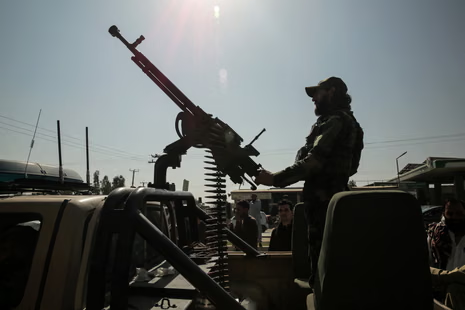
A volatile atmosphere has descended upon the border regions between Afghanistan and Pakistan this week. Tensions reached a breaking point on Monday following a series of violent mortar and missile strikes. Afghan officials reported that these attacks hit the city of Asadabad in Kunar province. The assault resulted in a tragic loss of life and caused widespread injuries among civilians. Local authorities confirmed seven people died while at least 85 others suffered severe physical wounds. This incident marks a grim turn in the long-standing conflict between these two neighbouring nations. It stands as the first major act of aggression since recent peace talks held abroad. China had mediated these high-level discussions earlier this month to foster a much-needed regional stability. Both governments had previously agreed to avoid any further escalation of their ongoing military confrontation. That promise of peace now seems shattered by the latest violence unfolding in Kunar province.
The reported strike specifically impacted residential areas and the Sayed Jamaluddin Afghani University campus. Afghan officials stated that the wounded included many innocent students, children, and local women. The Ministry of Higher Education noted that thirty professors and students sustained injuries during shelling. Medical facilities in Asadabad were quickly overwhelmed by the sudden influx of desperate civilian patients. Eyewitnesses at the hospital described scenes of absolute chaos as families searched for lost loved ones. Sahatullah, a local labourer, spoke of his young nephew who was caught in the blast. He explained that the child was playing outside when the sudden shelling began hitting ground. Another resident named Zmarai Kunari lost a relative and saw others suffering from terrible wounds. The emotional toll on the community is immeasurable following this sudden and unexpected military escalation.

Pakistan has vehemently denied these accusations regarding the targeting of the Afghan university site today. Their information ministry dismissed the Afghan claims as a blatant lie and entirely fabricated information. Officials in Islamabad maintained that their military operations are always precise and based upon intelligence. They explicitly stated that no strike occurred against the university or any civilian infrastructure facility. The Pakistani government argued that the reports from Kabul are frivolous and fundamentally fake news. This sharp denial highlights the deep distrust that continues to plague bilateral diplomatic efforts today. The conflicting narratives from both sides make it difficult to determine the exact tactical reality. However, the impact on the ground remains undeniably devastating for the local Afghan population. Both nations have traded accusations throughout this period of intense and bloody border fighting.
This regional conflict has persisted for months and claimed hundreds of lives since late February. The trouble began when Afghanistan launched a retaliatory cross-border attack after previous Pakistani airstrikes occurred. Islamabad subsequently declared that it was in an open state of war with the Afghan administration. Such hostile rhetoric has only served to fuel the fire between these two neighbouring states. The situation is complicated by the presence of militant groups operating along the rugged border. Pakistan frequently accuses Kabul of harbouring militants that carry out deadly attacks inside their territory. They specifically point toward the Pakistani Taliban, also known as the Tehrik-e-Taliban Pakistan group. While this group is allied with the Afghan Taliban, Kabul continues to deny these serious charges. This ongoing blame game complicates every attempt to build a lasting and meaningful peace process.
Diplomats from both sides had travelled to Urumqi in China earlier this April for discussions. The Chinese government expressed optimism that both sides would finally choose a path of diplomacy. Other nations have also attempted to mediate at various times throughout this difficult regional crisis. Turkey, Qatar, the United Arab Emirates, and Saudi Arabia have all played roles in mediation. Despite these international efforts, the situation on the ground remains incredibly tenuous and highly unpredictable. Sporadic fighting continued even while delegations were present at the negotiating table in China. The peace process feels fragile when daily realities involve mortars falling on university campuses daily. The international community is watching with growing concern as the death toll continues to rise. There is a desperate need for a permanent ceasefire to save countless more innocent lives.

Earlier this year, a temporary truce was declared for the holy holiday of Eid al-Fitr. Fighting had largely subsided throughout March as families celebrated the religious festival with much hope. That brief period of quiet followed a massive and deadly strike on a drug facility. Afghanistan claimed that strike killed more than four hundred civilians in the capital of Kabul. Pakistan strongly denied targeting those civilian facilities and fiercely disputed the reported death toll figures. The disconnect between official claims and reported reality remains a defining feature of this war. This cycle of violence and denial threatens the long-term stability of the entire central region. The United Nations office in Afghanistan recently reported that the conflict has displaced many people. Nearly ninety-four thousand individuals have been forced from their homes due to this escalating violence.
The humanitarian situation is becoming increasingly dire for those caught in the crossfire of nations. Families living near the border are terrified of the next sudden outburst of mortar fire. They struggle to maintain a normal life while living under the constant threat of war. Education for young people is being disrupted as schools become targets of military-grade artillery shells. The international community must now pressure both sides to return to meaningful and sincere dialogue. Without a breakthrough, more lives will surely be lost in this pointless and tragic conflict. The residents of Asadabad deserve safety and the opportunity to live without constant physical fear. Diplomacy remains the only viable path to ending this cycle of death and regional destruction. The world waits to see if both governments can overcome their differences and choose peace. Leaders on both sides must prioritize the lives of their citizens over persistent military aggression. Only then can the people of this region hope for a future free from violence.
Related News:
 Capitol Attack Anniversary Sparks Deep Political Divide
 Saudi Officials Report Zubaidi Flee Before Yemen Peace Talks
 UK Targets in New York Bomb Threat Hoax: Man Jailed
 Gambia Supreme Court Hears Case to Overturn FGM Ban
 Trump targets Iran trade with 25% tariff warning
 Rudd successor: Defence chief and former ministers considered
 US Senate rejects resolution limiting Trump military powers
 Venezuela regime claims release of political prisoners signals new era
 Gulf states warn Trump Iran strikes risk wider Middle East war
 Machado Trump medal gesture reshapes Venezuela power struggle
 Greenland defence seen as shared Nato duty amid troop arrivals
 Geopolitical football: Iran, Trump and the World Cup clash
 Canada-China trade gains momentum in new strategic partnership
 Trump Receives Machado’s Nobel Medal in White House Meeting
 Syria President Declares Victory as Ceasefire Reached with SDF
 US Considers Asylum for British Jews Amid Rising Antisemitism
 Trump slams UK ‘stupidity’ over Chagos Islands, eyes Greenland takeover
 Trump Tightens Grip on EU and UK Energy Supply
 Shinzo Abe’s killer receives life sentence in Japan
 China General Under Investigation Amid Leadership Purge
 Philippines ferry disaster leaves 15 dead, dozens missing
 Cambridge Faces Scrutiny Over Arms Investment Transparency
 Epstein UAE Emails Shake British Royal Andrew’s Legacy
 Christchurch gunman seeks to vacate guilty plea
 Infantino Faces Russia Threat and Trump Concerns at Uefa Congress
 Concerns rise for Canberra boy amid Iran detention fears
 Caribbean Leaders Urge Dialogue Amid US Oil Embargo on Cuba
 Ukraine Sends Drone Experts to Defend US Bases in Jordan
 New Zealand Covid Response Praised Despite Lingering Scars
 Abramovich Chelsea Sale Cash Faces Jersey Probe
 Yvette Cooper: UK Must Follow Principles, Not US Pressure
 US Strike on IRIS Dena Strains Strategic Indian Security Ties
 Slovenia Election: A Nation at a Crossroads
 Jury Rules Meta and YouTube Liable for Addictive Design
 Saudi Arabia Urging US to Keep Up Iran Attacks
 Trump Softens Cuba Oil Stance as Russian Tanker Nears
 The Woman Guarding Earth From the Threat of Asteroids
 IMF Predicts Global Economic Crisis Due to Gulf Unrest
 California Defies Trump With Strict New AI Standards
 Germany Grapples With AI Abuse Following TV Star Scandal
 Exiled Tycoon Warns of New Russian Attacks on UK Soil
 Labor Under Fire Over Stalled University Fee Reform
 LA 2028: Millions of Affordable Olympic Tickets Announced
 Trump Slams Europe as Transatlantic Tensions Boil Over
 Inside the Deceptive Machine: A Former Producer Speaks Out
 Italy Faces Third Successive World Cup Absence After Loss
 Starmer Urges Ambitious EU Ties Amid Middle East Conflict
 Spain Faces Backlash Over Xenophobic Chants in Egypt Draw
 A Global Voice For Justice: Stephen Lewis Dies At Age 88
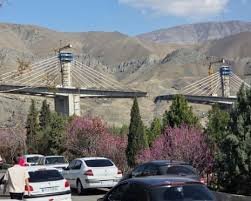 Trump Issues Stark Warning After Strike On Iran’s Largest Bridge
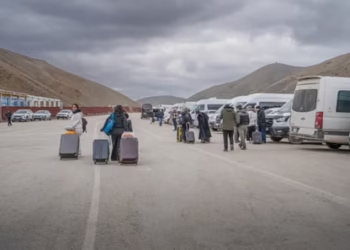 Hope and Fear as Iranians Flee Across the Turkish Border
 Tragic End to Outback Search as Floods Claim a Life
 Ben Roberts-Smith Arrested Over Alleged War Crimes
 Reform UK Pledges To Halt Visas Over Reparations Demands
 US and Iran Agree to Two-Week Provisional Ceasefire
 Starmer visits Gulf as US and Iran agree ceasefire
 Gaza Child Arrives in UK for Life-Changing Care
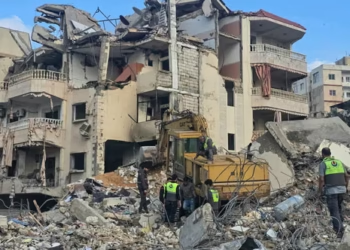 Israel Defies Ceasefire as Lebanon Operations Persist
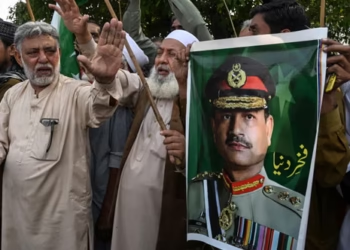 Pakistan Brokers Historic Peace Deal Amid Rising Tensions
 UK Holds Firm on Strait of Hormuz Amid Trump Pressure
 Rory McIlroy Eyes New Horizons After Masters Defence
 Trump Signals Hope for New Iran Talks as Ceasefire Fades
 Reeves Slams Trump Over Iran War Lack Of Exit Plan
 US and Iran Pursue Extension of Ceasefire via Pakistan
 Trump’s Islamabad Gamble: The High Stakes of a New Iran Deal
 Wall Street Hits Historic High Amid Hopes for Iranian Peace
 Ian Katz to Step Down as Channel 4 Content Chief
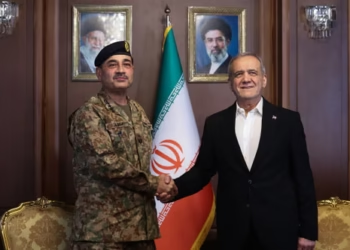 The General’s Gambit: Pakistan’s New Role in Global Peace
 Mexico, Spain and Brazil call for Cuba dialogue amid crisis
 US Forces Seize Iranian Ship Near Hormuz Blockade
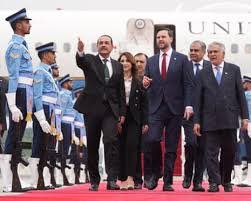 Pakistan’s Ambitious Bid for Middle East Peace
 Trump Starts $166bn Tariff Refund Process
 Israeli Soldiers Jailed Over Vandalism of Lebanese Statue
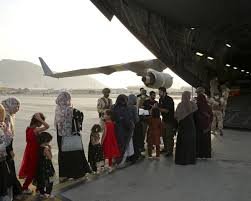 Trump Weighs Sending Afghan Allies to the Congo
 Timor-Leste Faces Tough Questions Over Resort Proposal
 Pentagon Shakes Up Navy Leadership Amid Hormuz Blockade
 Trump Threatens UK With Big Tariff Over Tech Tax
 Prominent Voices Challenge Palestine Action Ban
 Security Scrutiny After Washington Shooting Incident
 Stalled Diplomacy: Middle East Peace Efforts Reach Deadlock