Published: 07 May 2026. The English Chronicle Desk. The English Chronicle Online.
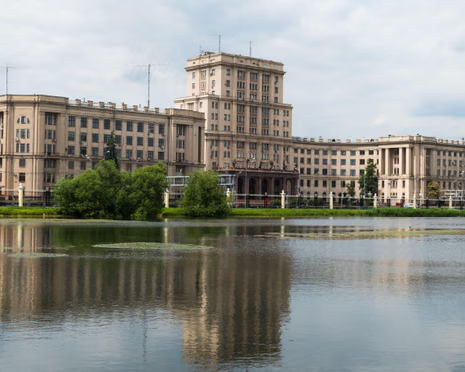
The shadow of the Kremlin looms over the hallowed halls of Moscow today. Recent leaks reveal a deep connection between education and elite military intelligence operations now. This discovery follows a secret visit by Vladimir Putin to the Bauman University campus. He spoke to bright students about space missions to the moon and Mars recently. Yet his public words masked a far darker purpose hidden within the university walls. A secret department prepares young minds for a life of global digital warfare instead. This faculty is known to insiders only as Department Four or Special Training units. It serves as a direct pipeline into the notorious Russian military intelligence directorate today. Graduates often join the ranks of the GRU to launch clandestine foreign attacks soon. Their work includes hacking western parliaments and poisoning dissidents on various foreign soils too. They also engage in sophisticated election interference across Europe and the United States lately. This secret path from the classroom to the frontlines is now fully exposed tonight. More than two thousand internal documents have been obtained by a major investigative consortium now. Journalists from six international outlets analyzed these files to uncover the hidden truth here. The records span several years of activity and include detailed course syllabuses and records. They also contain staff contracts and the specific career assignments of many young graduates. These students move from hacking exercises to notorious cyber units in the Russian military.

Bauman University has a long history of supporting the vast Russian military complex today. It was founded in eighteen thirty and trained the scientists who built Soviet rockets. Today it continues this tradition by conducting extensive research for the Ministry of Defence. Internal letters suggest that forty percent of its work serves the national military interests. Department Four remains embedded within this massive military training center for secret operations now. It is divided into three specialist streams focused on various forms of global reconnaissance. The most prominent stream is titled the Special Reconnaissance Service in the leaked files. The GRU maintains direct control over the recruitment and the final grading process here. Military officers conduct exams and approve every candidate for their future intelligence roles today. The line between a professor and a handler is blurred within this unique program. Lieutenant Colonel Kirill Stupakov leads this department with a focus on signals intelligence now. He signed a contract with a key GRU unit in twenty twenty two recently. Stupakov teaches students to master electronic eavesdropping and complex covert surveillance techniques for missions. His lectures feature various tools of deception like hidden cameras inside common smoke detectors. Other devices sit between keyboards and computers to log every single keystroke made daily. Monitor cables can also act as silent screenshot machines to store stolen data secretly.
Another notable teacher is Viktor Netyksho who is a western sanctioned major general now. He previously commanded a hacking group known to the world as Fancy Bear today. His officers were indicted for interfering in the twenty sixteen United States presidential election. The curriculum at Bauman includes a core course on defence against technical reconnaissance now. Students spend over one hundred hours learning the full toolkit of modern hacking skills. This includes password attacks and finding software vulnerabilities to exploit for various strategic gains. They also study Trojans which are malicious programs disguised as legitimate software for users. To pass the course students must carry out practical penetration tests against secure systems. One module is devoted entirely to computer viruses and requires students to develop one. They also study the organization of British and United States military intelligence agencies now. Specific sessions cover the use of western intelligence during the ongoing war in Ukraine. The curriculum includes the development of enemy reconnaissance and strike drones for the battlefield. Beyond hacking the students are also trained in the art of modern information warfare. Advanced trainees must complete a seminar on developing a disinformation campaign for social media. They create videos using manipulation and hidden propaganda to influence global public opinion today.
Students learn the mechanics of psychological manipulation to impose a specific perception on audiences. The teaching materials are saturated with Kremlin orthodoxy regarding the war in Ukraine now. They claim the conflict was inevitable and that nationalists hold power in the capital. These materials also allege that Russians in the Donbas face genocide from western powers. Western intelligence services have become increasingly vocal about these Russian cyber activities in Europe. A recent report from Dutch intelligence warned of increasing hybrid activities across the continent. These operations combine cyber attacks and sabotage to target critical infrastructure in many nations. Sweden has also accused Russia of carrying out destructive attacks against European Union institutions. The leaked documents suggest that sixty nine students graduated from Department Four last spring. One graduate named Daniil Porshin maintained perfect grades while playing for the faculty team. He was assigned to the Fancy Bear hacking unit immediately after his graduation ceremony. Not every student makes the cut as dozens are dismissed for failing their exams. Assessments written by senior officers can be very withering regarding a student’s technical skills. Some evaluations mention an insufficient understanding of how to carry out remote network attacks.

Many students are deemed worthy of working inside the GRU after their final years. Fifteen members of the latest cohort were directed into various military intelligence units recently. One student was posted to a unit in the popular resort town of Anapa. This location is home to the hacker unit known as Sandworm by westerners. Sandworm is accused of unleashing destructive cyber attacks over the last ten full years. Their targets included the Ukrainian power grid and the French presidential campaign in history. They also targeted the Winter Olympics and investigations into the Salisbury nerve agent poisoning. The investigative consortium reached out to the university and the mentioned officers for comment. No responses have been received from the university or the individuals at this time. Intelligence experts suggest that Russia is ramping up its hybrid attacks on European allies. They attempt to cause havoc in the west while remaining officially deniable to everyone. This strategy avoids crossing the threshold that could trigger a full military response now. Hacking and cyber attacks remain a key part of this ongoing global power struggle. The Bauman program shows no signs of slowing down its production of digital soldiers. The latest cohort of trainees will not graduate until the twenty twenty seven year. This trove of documents provides an unprecedented look into this systematic training program today. Insiders say this is only one part of a much larger training network. Another university called Mirea is also crucial in training hackers for the Russian state. Bauman remains an elite institution used to identify gifted students for intelligence recruitment now. The pipeline from the classroom to the digital front line is stronger than ever. These young specialists are the new face of conflict in a deeply connected world. Their training ensures that the next generation of warfare will be fought on screens. The international community must now decide how to respond to this growing digital threat. Understanding the source of these attacks is the first step toward building a defense. The English Chronicle will continue to monitor these developments as more information emerges soon. This report highlights the urgent need for increased cybersecurity awareness in the United Kingdom. Protecting our national infrastructure from these trained specialists is a top priority for officials. The future of global security depends on our ability to counter such hidden threats. These students represent a new era of intelligence that transcends traditional borders and rules.
Related News:
 Capitol Attack Anniversary Sparks Deep Political Divide
 Saudi Officials Report Zubaidi Flee Before Yemen Peace Talks
 UK Targets in New York Bomb Threat Hoax: Man Jailed
 Gambia Supreme Court Hears Case to Overturn FGM Ban
 Trump targets Iran trade with 25% tariff warning
 US Senate rejects resolution limiting Trump military powers
 Gulf states warn Trump Iran strikes risk wider Middle East war
 Machado Trump medal gesture reshapes Venezuela power struggle
 Greenland defence seen as shared Nato duty amid troop arrivals
 Geopolitical football: Iran, Trump and the World Cup clash
 Canada-China trade gains momentum in new strategic partnership
 Trump Receives Machado’s Nobel Medal in White House Meeting
 Syria President Declares Victory as Ceasefire Reached with SDF
 US Considers Asylum for British Jews Amid Rising Antisemitism
 Trump slams UK ‘stupidity’ over Chagos Islands, eyes Greenland takeover
 Shinzo Abe’s killer receives life sentence in Japan
 China General Under Investigation Amid Leadership Purge
 Philippines ferry disaster leaves 15 dead, dozens missing
 Cambridge Faces Scrutiny Over Arms Investment Transparency
 Epstein UAE Emails Shake British Royal Andrew’s Legacy
 Christchurch gunman seeks to vacate guilty plea
 Infantino Faces Russia Threat and Trump Concerns at Uefa Congress
 Concerns rise for Canberra boy amid Iran detention fears
 Ukraine Sends Drone Experts to Defend US Bases in Jordan
 Abramovich Chelsea Sale Cash Faces Jersey Probe
 Yvette Cooper: UK Must Follow Principles, Not US Pressure
 Slovenia Election: A Nation at a Crossroads
 Jury Rules Meta and YouTube Liable for Addictive Design
 Saudi Arabia Urging US to Keep Up Iran Attacks
 Trump Softens Cuba Oil Stance as Russian Tanker Nears
 The Woman Guarding Earth From the Threat of Asteroids
 IMF Predicts Global Economic Crisis Due to Gulf Unrest
 California Defies Trump With Strict New AI Standards
 Germany Grapples With AI Abuse Following TV Star Scandal
 Exiled Tycoon Warns of New Russian Attacks on UK Soil
 Labor Under Fire Over Stalled University Fee Reform
 LA 2028: Millions of Affordable Olympic Tickets Announced
 Trump Slams Europe as Transatlantic Tensions Boil Over
 Inside the Deceptive Machine: A Former Producer Speaks Out
 Italy Faces Third Successive World Cup Absence After Loss
 Starmer Urges Ambitious EU Ties Amid Middle East Conflict
 Spain Faces Backlash Over Xenophobic Chants in Egypt Draw
 A Global Voice For Justice: Stephen Lewis Dies At Age 88
 Trump Issues Stark Warning After Strike On Iran’s Largest Bridge
 Hope and Fear as Iranians Flee Across the Turkish Border
 Tragic End to Outback Search as Floods Claim a Life
 Ben Roberts-Smith Arrested Over Alleged War Crimes
 Reform UK Pledges To Halt Visas Over Reparations Demands
 US and Iran Agree to Two-Week Provisional Ceasefire
 Starmer visits Gulf as US and Iran agree ceasefire
 Gaza Child Arrives in UK for Life-Changing Care
 Israel Defies Ceasefire as Lebanon Operations Persist
 Pakistan Brokers Historic Peace Deal Amid Rising Tensions
 UK Holds Firm on Strait of Hormuz Amid Trump Pressure
 Rory McIlroy Eyes New Horizons After Masters Defence
 Trump Signals Hope for New Iran Talks as Ceasefire Fades
 Reeves Slams Trump Over Iran War Lack Of Exit Plan
 US and Iran Pursue Extension of Ceasefire via Pakistan
 Trump’s Islamabad Gamble: The High Stakes of a New Iran Deal
 Wall Street Hits Historic High Amid Hopes for Iranian Peace
 Ian Katz to Step Down as Channel 4 Content Chief
 The General’s Gambit: Pakistan’s New Role in Global Peace
 Mexico, Spain and Brazil call for Cuba dialogue amid crisis
 Pakistan’s Ambitious Bid for Middle East Peace
 Trump Starts $166bn Tariff Refund Process
 Israeli Soldiers Jailed Over Vandalism of Lebanese Statue
 Trump Weighs Sending Afghan Allies to the Congo
 Timor-Leste Faces Tough Questions Over Resort Proposal
 Pentagon Shakes Up Navy Leadership Amid Hormuz Blockade
 Trump Threatens UK With Big Tariff Over Tech Tax
 Prominent Voices Challenge Palestine Action Ban
 Security Scrutiny After Washington Shooting Incident
 Merz Criticises US Approach in Iran Conflict
 UK Envoy Sparks Controversy Over Special Relationship Claims
 Ukraine Urges UK to Seize Russian Oil Tankers
 US Calls Australia Media Law “Foreign Extortion”
 The Billionaire’s Secretary and the £1m Fraud
 Questions Remain Over The Tragic Bondi Massacre
 Ukraine strikes Tuapse as oil disaster worsens
 Brewing Tension: Taiwan Baristas Rebrand for World Stage