Published: 07 May 2026. The English Chronicle Desk. The English Chronicle Online.
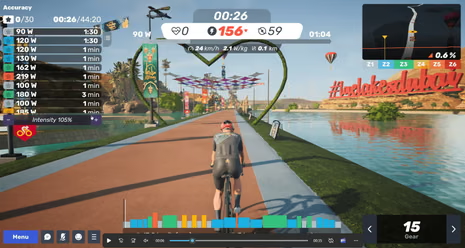
The rapid rise of virtual cycling has fundamentally transformed how competitive athletes train and race today. What began as a niche hobby has blossomed into a massive global phenomenon with huge stakes. Thousands of dedicated cyclists from every corner of the world now regularly compete in digital arenas. The introduction of substantial cash prizes has further elevated the intensity of these online cycling events. One major platform has decided to take a bold step to ensure fair play for all. MyWhoosh is the latest virtual cycling giant to implement rigorous anti-doping tests for its elite competitors. This decision reflects a growing need for professional standards within the expanding world of digital sports. The platform currently hosts the prestigious UCI Esports World Championships for riders across the entire globe. Officials recently told reporters that top riders in the Sunday Race Club will face random tests. These tests are designed to mirror the strict protocols found in traditional professional road cycling events.
The Sunday Race Club is a weekly highlight that attracts both serious professionals and ambitious beginners. Participants compete for prizes that range from twenty dollars up to over two thousand dollars each. Most of these competitors participate from the comfort of their own homes or private home gyms. Despite the domestic setting, the level of competition remains incredibly fierce among the top-ranked virtual riders. The new policy starting next week requires selected riders to remain at their current racing location. Riders might be notified of a test before, during, or immediately after their scheduled virtual race. They must stay put for up to three hours to allow official testers to arrive safely. This window gives the International Doping Tests and Management team enough time to reach the athlete. Professional testers will then collect samples of urine, blood, or even dried blood spots for analysis. Such measures ensure that the integrity of the virtual podium remains untarnished by any illicit substances.

Matt Smithson serves as the director of esports and game operations at the popular MyWhoosh platform. He noted that roughly seven hundred elite athletes would be included in the initial testing pool. The organization aims to test at least ten percent of these registered athletes every single year. Drug testing is just one component of a much larger program focused on total competitive integrity. This initiative is specifically designed to combat various forms of what is now called e-doping today. Some dishonest riders try to miscalibrate their equipment to inflate the power data they produce online. Others might lie about their body weight to gain an unfair advantage on virtual uphill climbs. Some extreme cases even involve the use of sophisticated bots to fake high wattage output data. Smithson emphasizes that the primary goal is to protect clean riders throughout the entire global community. He believes that every participant should be able to trust the results of every single race.
Comparing an athlete in an Australian garage to one in a Swedish garage is very difficult. This logistical challenge makes the evolution of virtual racing unique compared to any other modern sport. Smithson admits that while mechanical cheating is common, the platform has developed many ways to stop it. Every rider is now required to use a specific approved trainer to enter any major race. These devices must provide two different ways of verifying the power output of the individual rider. Athletes are also required to complete what the company calls a comprehensive power passport test annually. This process includes a filmed test to verify the physical identity of the person on the bike. Officials can monitor power levels, heart rates, and other vital physiological metrics during the verification process. This data creates a unique physiological print for every athlete competing at a high level online. The new drug testing program adds another layer of security to this already complex verification system.
While Zwift currently remains the largest platform, MyWhoosh is growing at a truly remarkable pace lately. The platform now boasts hundreds of thousands of registered users who compete in various digital cycling events. Last year alone, the company paid out a staggering five million dollars in total prize money. This financial incentive makes the implementation of professional anti-doping controls an absolute necessity for the sport. Smithson believes this policy represents the next logical step in the long-term evolution of bike racing. He predicts that virtual cycling will only continue to grow larger over the next twenty years. We are currently witnessing the infancy of a sport that could eventually rival traditional road racing. Many high-level riders with professional backgrounds are already flocking to these competitive virtual cycling platforms. The current UCI cycling esports world champion is a prime example of this professional athletic crossover. Jason Osborne won a silver medal in rowing before transitioning into a successful professional cycling career.
The move toward physical testing highlights the seriousness with which virtual sports are now being viewed globally. Governing bodies recognize that digital achievements deserve the same respect as those earned on the road. Without trust in the data, the entire ecosystem of virtual racing could potentially face a collapse. Sponsors and fans alike demand transparency and fairness whenever significant prize money is on the line. The logistical feat of sending testers to private homes is expensive but considered a worthy investment. It sends a clear message that cheating will not be tolerated in the digital peloton anymore. As technology improves, the methods used to detect and prevent cheating must also become more sophisticated. This balance between innovation and regulation will define the future of the entire esports industry soon. For the hundreds of athletes in the testing pool, the garage is now a professional venue. The lines between the virtual world and the real world continue to blur with each race.

Clean athletes have generally welcomed these new measures as a way to validate their own hard work. Many riders spend hours every day training specifically for the unique demands of virtual platform racing. Knowing that their competitors are being held to the same high standards provides great peace of mind. It also helps to legitimize the sport in the eyes of the wider traditional cycling community. Traditionalists have sometimes been skeptical of the performances recorded in the virtual world of online racing. Rigorous testing protocols help to bridge this gap and build a bridge between two cycling worlds. As the prize pools continue to grow, the pressure to perform will only increase for athletes. Having a robust system in place protects the athletes from suspicion as much as it catches cheaters. The English Chronicle will continue to monitor how these new testing protocols impact the racing scene. It is a fascinating time to be a fan or a participant in this digital revolution.
The success of this program could lead other virtual sports platforms to adopt similar anti-doping measures. If MyWhoosh proves that home testing is viable, the entire esports landscape might change forever today. Integrity is the currency of sport, whether that sport is played on grass or on screens. The commitment to a level playing field is what keeps the spirit of competition alive everywhere. Riders must now be prepared for a knock on the door at any given moment. This reality brings a new level of professionalism to the lives of thousands of virtual cyclists. The thrill of victory is much sweeter when everyone knows it was earned through pure effort. As we look toward the future, the integration of physical and digital sport seems completely inevitable. This new chapter in cycling history is just beginning to unfold for racers and fans alike. Every pedal stroke in the garage is now subject to the highest levels of professional scrutiny. The era of the casual virtual race is quickly being replaced by a professional standard.
Related News:
 How Bringing Forests Into Preschools Boosts Children’s Health
 Critically Endangered Spider Rediscovered in UK After 40 Years
 UK Bans Fake Numbers: Scammers Lose Their Trick
 England Curriculum Review Recommends Major Changes
 Mortgages and AI Set to Feature in English Schools
 Experts Urge Legal Right to Timely Cancer Care
 Patients to Test Health at Home to Ease NHS Winter Pressure
 One of world’s last dinosaurs on sale for £3m
 North Sea oil workers must lose weight or face job loss
 No link found between paracetamol in pregnancy and autism
 Government urges schools to ban phones to curb classroom disruption
 Northern Lights May Illuminate UK Skies Amid Strong Solar Storm
 Northern Lights may illuminate UK skies this week
 UK Greenlights First Small Nuclear Plant in North Wales
 Higgs Donates Nobel Medal to His Beloved University
 Coffins Now Too Large to Cremate Amid Rising Obesity Crisis
 UK Taskforce Unveils Plan to Streamline Nuclear Reactor Rules
 Thinktank Urges Smaller Hospitals to End NHS ‘Permacrisis’
 NHS paediatric leave parents waiting months for answers
 Ofcom urges platforms to limit abuse and curb online ‘pile-ons’
 Starmer’s communications chief to outline media strategy overhaul
 UK Car Sales Pass 2 Million as Chinese Brands Surge
 AI Grok Sparks Child Safety Alarm in the UK
 Lammy and Vance unite against AI abuse images on X
 UK Threatens Action Against X Over Sexualised AI Images
 Amazon Milton Keynes closure sparks concern for UK warehouse workforce
 AI will transform human jobs, enhancing skills, says minister
 TikTok to Strengthen Age Verification Across the EU
 MPs warn AI financial risks threaten UK stability
 MPs warn AI financial risks threaten UK stability
 AI job losses UK: Britain faces sharper employment shock
 Pornhub blocks new UK users over age checks dispute
 UK New Car Discounts Near £6,000 as Prices Are Slashed
 Barnsley tech town leads UK AI transformation
 Childnet Censorship Row Over Teen Safety Speeches
 Revenge Porn Crackdown: 48-Hour Rule Warning
 UK Anti-Slavery Watchdog Urges Adult Sites Overhaul
 Facial Recognition Error Leads to Wrongful Arrest in Milton Keynes
 UK Social Media Ban for Under-16s Gains Momentum
 Met police to trial handheld facial recognition checks in London
 UK Teen Social Media Ban Trials Begin
 Cancer Death Rate in Britain Falls by Nearly a Third
 Ministers Urged to Act Faster on Deepfakes Threat
 MPs Reject Ban on Social Media for Under-16s
 Scientists Unveil Heavier Proton at CERN LHC
 Charity Watchdog Warns Alan Turing Institute Over Conduct
 Traffic: The Science Behind Why Slower Cars Always Catch Up
 The Night an AI Bot Threw a Party in Manchester
 OpenAI Halts Stargate UK Project Amid Energy Crisis
 Heavier SUVs Accelerate Britain’s Pothole Crisis
 Europe EV Demand Surges as Fuel Prices Rise
 Liz Kendall: UK Must Seize AI Growth Despite Risks
 Reform UK funding: mystery billionaire revealed
 Tatooine Dreams: 27 New Worlds Found With Double Suns
 Cambridge South Signals New Era for British Rail Travel
 Alarm as Sextortion and AI Abuse Threaten UK Children
 UK rejects EV charging VAT cut amid Treasury clash
 UK firms accused of ‘AI washing’ boom
 British Paralympian Set to Make History in Earth Orbit
 UK to Expand Prostate Cancer Trials for Black Men
 NHS Approves Landmark Ovarian Cancer Drug
 Tech Trends and the Battle Against Exam Hall Cheating
 Aviva Exposes Record £230m in Fraudulent AI Claims
 Stolen Mobiles Could Soon Become Useless Bricks
 UK Ministers Lobby Trump Over Under-16s Social Media Ban
 AI Lawyer Triumphs in Landmark English Court Victory
 How the ‘Happy Vowel’ Defines Class in Manchester
 UK Mobile Connectivity Trails Global Peers
 Reeves Launches City AI Skills Compact
 London’s 2026 ‘Great Stink’ Raises Sewer Concerns
 Sundar Pichai Cautions on AI Hype and Market Risks
 Inside the Helpline Protecting Missing Children in the UK
 PlayStation PS5 Deals Hit Lowest Prices Ahead of Black Friday
 Five-Year-Old Dies After Rare Tonsil Surgery Complication
 Starmer Says Labour’s Economic Plan Needs Years to Deliver
 Reform UK Faces Crisis as Newly Elected Councillors Resign
 Starmer Strikes Back as 100 MPs Sign Support Pledge
 UK Firms Freeze Spending as Iran Conflict Bites
 Reeves to Fast-Track Clean Energy Amid Iran Crisis
 The Battle for Wembley Sparking Unprecedented Legal Warfare