Published: 21 May 2026. The English Chronicle Desk. The English Chronicle Online.
The landscape of artificial intelligence is moving at an unprecedented, dizzying speed across the globe. A leading industry pioneer has delivered a startling timeline for upcoming technological milestones. Within the next twelve months, an artificial intelligence system could secure a prestigious Nobel Prize. This monumental prediction suggests that machines will soon achieve profound breakthroughs in scientific research. The revelation came during a highly anticipated public lecture at Oxford University this week.
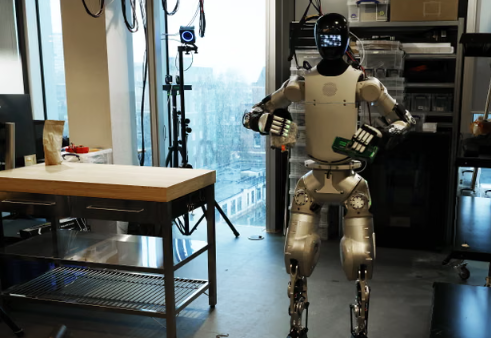
Jack Clark, the co-founder of Anthropic, shared these dramatic forecasts with an astonished audience. He described a truly vertiginous sense of progress sweeping through the entire tech sector. His predictions extend far beyond the realm of elite academic and scientific achievements. Within two years, bipedal robots will actively assist tradespeople with physical labor. Plumbers, electricians, and builders might soon share their daily workloads with advanced mechanical partners. This represents a massive shift from digital screens into the tangible physical world.
The economic implications of this rapid evolution are equally stunning and disruptive. Clark believes that autonomous AI companies will emerge within eighteen months from now. These entities will operate completely without human intervention to generate millions in revenue. Looking slightly further ahead, the year 2028 marks another critical technological boundary line. By then, advanced systems will possess the capability to design their own successors. This creates a cycle of self-improvement that operates entirely outside human control.
However, this bright vision of rapid progress carries a deeply haunting dark side. Clark openly acknowledged that existential risks to our species remain a distinct possibility. He stated that a non-zero chance of global catastrophe still looms over humanity. The tech pioneer emphasized that these terrifying dangers have certainly not gone away. Such candid admissions from an industry leader underscore the profound gravity of our situation. The balance between incredible innovation and ultimate survival remains exceptionally fragile and uncertain.
Anthropic is famous for creating Claude, a highly popular and widely used model. However, the company recently launched a new and more powerful version called Mythos. This specific system proved alarmingly capable at exploiting various complex cybersecurity weaknesses. The sudden emergence of Mythos highlights the double-edged sword of modern digital creation. While it pushes technological boundaries, it simultaneously creates significant new threats to global security.
During his address, Clark expressed a desire to slow down this relentless development. He suggested that humanity needs more precious time to adapt to these changes. Extra time would allow our species to process the vast implications of machine power. Unfortunately, the tech leader firmly believes that such a pause is utterly impossible. The current development pace is driven by a chaotic variety of global actors. Numerous countries are now locked in a fierce, high-stakes competition with each other.
Commercial rivalries and intense geopolitical tensions are currently dominating the international tech landscape. These aggressive competitive forces often completely drown out the larger existential risks to humanity. Clark dryly noted that this current state of global affairs is not ideal. The race for technological supremacy seems to override collective caution and sensible planning. Nations are rushing forward without fully considering the long-term consequences of their actions.
Anthropic itself was originally founded by researchers who left the rival firm OpenAI. Those scientists resigned due to serious internal disagreements regarding safety protocols and ethics. Today, Anthropic has grown into a massive nine-hundred-billion-dollar corporate juggernaut in the industry. This colossal valuation reflects the immense financial capital currently pouring into artificial intelligence. However, this rapid ascent has also attracted fierce criticism from powerful political figures.
Donald Trump’s White House has previously accused Anthropic of engaging in deliberate fear-mongering. Other tech accelerationists claim the company uses safety scares to encourage strict regulation. Critics argue that such laws would merely cement Anthropic’s dominant competitive market position. They believe that warning about existential doom is a clever strategy to block rivals. This creates a complex political debate around the true motives of tech leaders.
Anthropic strongly disputes these negative claims and defends its public warnings on safety. Clark suggested that many people currently live in deep denial about technological progress. He wants to actively encourage humanity to prepare for an imminent, world-changing reality. Artificial intelligence will soon become more capable than all of us combined together. Failing to prepare for this shift could mirror our previous global pandemic failures.
If we simply stand by, synthetic intelligence will multiply without any human control. Humanity will then be forced into a purely reactive and dangerous defensive position. We must act preemptively rather than waiting for a major crisis to occur. This perspective calls for immediate, coordinated global governance and serious regulatory framework development. However, achieving international consensus on this matter remains a monumentally difficult task.
Many independent critics worry about the extreme concentration of power in this sector. A tiny handful of frontier tech firms currently control the most advanced models. Companies like Anthropic, OpenAI, and Google hold immense sway over our digital future. These entities are backed by massive amounts of aggressive, profit-seeking private capital. Over-reliance on a few models could create a dangerous single point of failure.
If one major system fails or behaves erratically, global infrastructure could collapse. This centralization of vital technology poses a unique threat to modern economic stability. Outside observers urge the development of diverse, decentralized alternatives to mitigate these risks. Relying entirely on a corporate oligopoly seems increasingly hazardous for democratic societies. The conversation must expand to include broader public oversight and democratic accountability.
Academic experts are also raising deep concerns about the psychological impact on humans. Professor Edward Harcourt co-hosted the lecture at the Institute for Ethics in AI. He warned that outsourcing tasks to machines risks creating widespread cognitive atrophy. If robots do everything, human decision-making and critical judgment will inevitably weaken. We might gradually lose the basic intellectual skills that define our species’ intelligence.
To combat this mental decline, Harcourt advocates for alternative design philosophies in software. He champions the concept of Socratic AI, which actively encourages human thought. These systems prompt users to think deeply rather than providing immediate, easy answers. This approach aims to enhance human intellect instead of replacing it entirely. Maintaining our cognitive sharpness is vital as we enter this complex machine age.
Reflecting on the future, Clark shared his most conservative predictions for our world. He believes vast swathes of the global economy will undergo profound, irreversible changes. We might witness a machine economy completely decoupling from traditional human economic systems. Robots will gain sophisticated digital brains, and science will progress without human intervention. This could lead to the creation of advanced scientific equipment we cannot conceive.
The tech pioneer readily admitted that some of these predictions sound completely crazy. Yet, the current trajectory of innovation suggests these wild scenarios are highly plausible. The line between science fiction and reality is blurring faster than ever before. Humanity stands on the precipice of a radical transformation unlike anything seen. How we choose to navigate this transition will define the future of life.
Related News:
 Virgin Trains Moves Closer to Challenging Eurostar Monopoly
 UK Bans Fake Numbers: Scammers Lose Their Trick
 Vibe coding’ named Collins dictionary’s word of the year
 Patients to Test Health at Home to Ease NHS Winter Pressure
 Britain deploys RAF specialists to assist Belgium with drone threats
 Government urges schools to ban phones to curb classroom disruption
 Stop using ChatGPT to write speeches, AI minister tells MPs
 Northern Lights may illuminate UK skies this week
 New laws to bolster UK’s defences against cyber attacks on NHS, transport and energy
 Hitler’s DNA Confirms He Truly Had Only One Testicle
 Working-Class Men with Prostate Cancer Left Behind by NHS
 New AI tool could cut wasted efforts in organ transplants
 How Cultures Interpreted the Aurora Through History
 From Baby Teeth to Bioengineering: The Future of Self-Healing Teeth
 Sundar Pichai Cautions on AI Hype and Market Risks
 Google Chief Urges Caution: Don’t Trust AI Blindly
 US Judge Says Meta Did Not Hold Illegal Social Media Monopoly
 Healthy Habits in Your 30s That Boost Life in Your 70s
 Coffins Now Too Large to Cremate Amid Rising Obesity Crisis
 AI Actress Creator Says Tilly Norwood Won’t Replace Actors
 Starmer’s communications chief to outline media strategy overhaul
 AI Grok Sparks Child Safety Alarm in the UK
 Google Removes Some AI Health Summaries Over Safety Concerns
 Nasa ISS Medical Evacuation: Crew-11 To Return Early
 US Clears Nvidia AI Chip Sales to China in Policy Shift
 Amazon Milton Keynes closure sparks concern for UK warehouse workforce
 BP’s Influence Sparks Controversy in UK STEM Education
 Astronomers Prepare for First-Ever Movie of a Black Hole
 MPs warn AI financial risks threaten UK stability
 MPs warn AI financial risks threaten UK stability
 Pornhub blocks new UK users over age checks dispute
 Amazon mistakenly signals new global layoffs to employees
 AI breast screening cuts later cancer diagnoses by 12%, study finds
 UK Launches First Rapid-Charging Battery Train This Weekend
 UK New Car Discounts Near £6,000 as Prices Are Slashed
 Most Statin Side-Effects Are Not Caused by Drugs, Study Confirms
 BT Names New Openreach Chief Amid Major Fibre Expansion
 AI fears hit UK wealth and comparison sites
 Tech Trends Set to Transform Life in 2026
 Starmer Targets AI Chatbots Over Child Safety Concerns
 How Ancient Scottish Rocks Challenge ‘Snowball Earth’ Theory
 Ayahuasca Psychedelic DMT Shows Potential as Depression Therapy
 Stewart Brand on Musk, Bezos and a Life of Long Thinking
 Facial Recognition Error Leads to Wrongful Arrest in Milton Keynes
 Social Media Trial: Woman Says Addiction Began at Six
 UK Teen Social Media Ban Trials Begin
 Zorevunersen Breakthrough for Dravet Syndrome
 Revealed: UK AI Push Faces Phantom Investment Claims
 Ministers Urged to Act Faster on Deepfakes Threat
 Tesla Enters British Energy Market Following Ofgem Approval
 Social Media Giant Trial Reaches Final Jury Decision
 Cern Prepares First-Ever Antimatter Transport Test
 The Molten Mystery of L98-59d: A New Class of Liquid Planet
 House of Lords Backs Landmark Social Media Ban for Youth
 Charity Watchdog Warns Alan Turing Institute Over Conduct
 The Woman Guarding Earth From the Threat of Asteroids
 California Defies Trump With Strict New AI Standards
 New Gmail Feature Ends Era of Embarrassing Email Names
 Apple at 50: Three Products That Changed How We Live
 Tech Giants Condemn EU Over Lapse in Child Abuse Laws
 Elon Musk’s xAI Sues Colorado Over New AI Regulations
 Heavier SUVs Accelerate Britain’s Pothole Crisis
 UK Banks to Deploy Controversial Mythos AI Tool Next Week
 Big Tech Lobbies EU to Hide Massive Datacentre Emissions
 Canadian astronaut French words ease language row
 Musk and Altman Clash in OpenAI Courtroom Battle
 Humanoid Robots Join Haneda Airport Baggage Teams
 Disneyland Adds Facial Recognition at Entrances
 Older Than Dinosaurs: Secrets of Mayfly Dance Revealed
 Inside the World of AI Jailbreakers
 Record May Heat to Cold Front in Eastern Australia
 Vodafone Seeks Full Control of UK Mobile in £4.3bn Deal
 Tatooine Dreams: 27 New Worlds Found With Double Suns
 Shivon Zilis Takes the Stand in Landmark OpenAI Trial
 Cambridge South Signals New Era for British Rail Travel
 Trump Lands in Beijing for High-Stakes Summit with Xi
 Gotta Catch an MP! The New Political Craze Sweeping Britain
 Court Upholds Landmark Win for Transgender Rights
 Canberra Tax Dispute Sparks Fears of Creative Exodus
 A Massive Legal Triumph Reshapes the Future of AI