Published: 22 May 2026 | The English Chronicle Desk | The English Chronicle Online
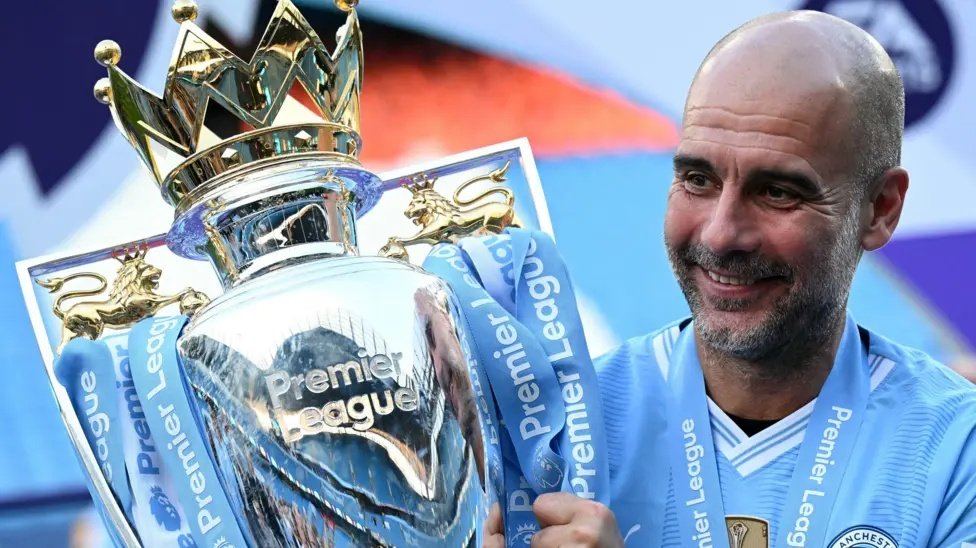
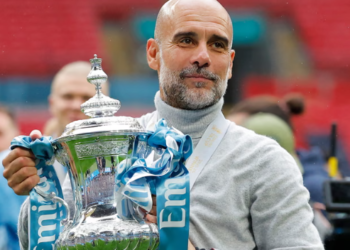
Pep Guardiola will leave Manchester City after a decade in charge, bringing an end to one of the most successful managerial eras in English football history.
The club confirmed on Thursday that Guardiola’s final match as manager will take place this Sunday at the Etihad Stadium against Aston Villa. His departure closes a remarkable ten-year period during which Manchester City transformed into one of the dominant forces in world football under the Spanish coach’s leadership.
Guardiola, now 55, leaves behind a legacy defined by tactical innovation, relentless success, and a style of football that reshaped the modern Premier League. During his time at City, he guided the club to 17 major trophies, including six Premier League titles, multiple domestic cups, and the long-awaited UEFA Champions League triumph that cemented his project in Manchester.
His announcement comes only days after City officially surrendered the Premier League title to Arsenal F.C. following a draw against AFC Bournemouth. Arsenal’s title victory marked the club’s first league championship in 22 years and signalled the end of another dramatic Premier League season.
Although speculation surrounding Guardiola’s future had intensified in recent months, the confirmation still sent shockwaves across football. Reports earlier this week suggested City executives had already begun preparing internally for his exit despite the manager signing a contract extension in late 2024 that was originally expected to keep him at the club until 2027.

Speaking emotionally after the announcement, Guardiola insisted his decision was driven not by conflict or dissatisfaction, but by personal instinct and timing.
“Don’t ask me the reasons I’m leaving,” Guardiola said. “There is no reason, but deep inside, I know it’s my time.”
He added that while no era lasts forever, his emotional bond with Manchester City would remain permanent through memories, supporters, and relationships formed over the last decade.
City confirmed Guardiola would continue working with the wider City Football Group in a new role as global ambassador after stepping down as first-team manager. The move ensures the club will maintain ties with the coach who helped elevate City into a global football powerhouse.
Attention has already turned toward who could replace him. Former Chelsea F.C. manager Enzo Maresca, who previously worked under Guardiola within City’s coaching structure, has emerged as the leading candidate. Maresca is highly regarded within the club hierarchy and is viewed as someone capable of continuing Guardiola’s football philosophy and tactical identity.
Guardiola first arrived at Manchester City in 2016 after the club secured his signature months in advance while he was still managing Bayern Munich. The appointment was seen at the time as a defining statement of ambition from City’s ownership, who had spent years building infrastructure designed specifically to attract the Catalan coach.
His first season, however, proved unexpectedly difficult. Guardiola finished the 2016-17 campaign without winning a trophy for the first time in his managerial career. Critics questioned whether his possession-based methods could fully adapt to the intensity and physicality of English football.
Those doubts quickly disappeared.
The following season, Guardiola’s Manchester City side produced one of the greatest campaigns in Premier League history. City became the first English top-flight team to reach 100 points in a single season while also scoring a record-breaking 106 league goals. Their football combined relentless attacking movement, tactical precision, and extraordinary technical quality.
Over the years that followed, Guardiola built several versions of title-winning teams while continuously evolving his tactical ideas. City’s dominance became so complete that rival managers frequently described them as the highest standard modern English football had ever witnessed.
Perhaps the defining achievement of Guardiola’s reign came during the 2022-23 season when City secured a historic Treble, winning the Premier League, FA Cup, and Champions League in the same campaign. The achievement matched the feat previously accomplished only by Manchester United during the 1998-99 season under Sir Alex Ferguson.
That Champions League triumph carried particular emotional importance for both Guardiola and the club. Since his arrival, European success had remained the one major prize repeatedly slipping away despite domestic dominance. Winning the tournament finally completed City’s transformation into one of football’s elite institutions.
Guardiola’s teams also established unprecedented consistency in the Premier League. During the 2023-24 season, City became the first club ever to win four consecutive English league titles, another record that underlined the scale of their dominance under his management.
Beyond trophies, Guardiola leaves a profound tactical legacy across English football. His emphasis on positional play, ball retention, and fluid movement influenced coaches throughout the league and beyond. Many clubs restructured their academies and recruitment strategies to mirror City’s technical and tactical model.
His influence extended far beyond Manchester. Young coaches across Europe studied Guardiola’s methods, while former assistants and players moved into managerial roles carrying variations of his philosophy. Modern football’s increasing focus on structured possession and tactical flexibility owes much to Guardiola’s impact over the last two decades.
Before joining City, Guardiola had already established himself as one of football’s most celebrated managers. At FC Barcelona, he built one of the greatest club sides ever assembled. Between 2008 and 2012, Barcelona won multiple La Liga titles and two Champions Leagues while playing a revolutionary style of football built around short passing, pressing, and positional intelligence.
After leaving Barcelona, Guardiola spent three successful seasons at Bayern Munich, winning three Bundesliga titles and further enhancing his reputation as an elite tactician.

His achievements as a player were equally impressive. Guardiola spent the majority of his playing career at Barcelona, winning six La Liga titles, two Copa del Rey trophies, and the club’s first European Cup in 1992. Internationally, he represented Spain 47 times and captained the country’s Olympic team to gold at the 1992 Barcelona Games.
For Manchester City supporters, Guardiola’s departure marks the end of an era unlike any in the club’s history. When he arrived in 2016, City were already wealthy contenders. By the time he leaves, they have become a global football institution associated with excellence, innovation, and sustained success.
Questions now surround whether the club can maintain those standards without the manager who defined its modern identity. Guardiola’s departure creates not only an emotional void but also a major strategic challenge for City’s leadership as they attempt to begin a new chapter.
Sunday’s farewell at the Etihad Stadium is expected to be an emotional occasion, with thousands of supporters preparing to celebrate the manager who delivered the most successful period the club has ever known.
While Guardiola insists nothing lasts forever in football, his influence on Manchester City — and on the game itself — is likely to endure for generations.
Related News:
 Tottenham shine at Everton but Frank wary of title push
 Matty Cash seals Villa win as City falter again at Villa Park
 Sarr Double Sinks Young Liverpool in Carabao Cup
 Nwaneri and Saka Secure Arsenal Win Over Brighton
 Woltemade Hot Streak Fires Newcastle Past Spurs
 Kieffer Moore Hat-Trick Ends Coventry’s Unbeaten Run
 Salah & Gravenberch Lead Liverpool to Win Against Villa
 Dyche Criticises Corner Decision as Forest Draw with United
 Caicedo Shines as Chelsea Edge Spurs in Chaotic Derby
 Granit Xhaka Rescue Earns Everton Draw at Sunderland
 Liverpool Edge Real Madrid 1-0 in Champions League Thriller
 Van de Ven Stunner Lifts 10-Man Spurs to UCL Glory
 Merino Shines as Arsenal Beat Slavia 3-0 Without Gyokeres
 Burn and Joelinton Head Newcastle to Victory Over Bilbao
 Foden shines as Man City dismantle Dortmund in dominant display
 Garnacho Spares Chelsea From Shock Champions League Loss in Baku
 Tension and Turmoil at Aston Villa v Maccabi Match
 Bellingham has ‘the edge’ among England No 10s
 Arteta Left Frustrated as Sunderland Deny Arsenal Late Win
Chelsea Cruise Past Wolves to Go Second in the Premier League
Man City Masterclass on Guardiola’s Milestone Day Exposes Liverpool Woes
Arteta Left Frustrated as Sunderland Deny Arsenal Late Win
Chelsea Cruise Past Wolves to Go Second in the Premier League
Man City Masterclass on Guardiola’s Milestone Day Exposes Liverpool Woes
 Lando Norris Dominates Brazil GP to Strengthen F1 Title Bid
 England cannot afford to be in awe of the All Blacks, warns Jamie George
 VAR Must Rein Its Neck In to Save Football’s Spirit
 Trescothick Hints Pope Will Keep Number Three Spot
 Ronaldo Confirms Final World Cup and Plans Retirement
 Mary Earps’s Manchester United Return Faces Mixed Reception
 Sam Kerr Stars in Chelsea Return with Champions League Double
 This kid is something else: Alex Scott’s rise to England call-up
 Anthony Joshua Faces Backlash Over Proposed Jake Paul Fight
 Former Lion Heskey Warns of Shortage of England Strikers
 Rogers Double Aston Villa as Leeds Slip Deeper into Trouble
 Moyes Defends Gueye After Dramatic Everton Bust-Up
 Rookie Driver Hollie McRae Flips Car but Walks Away Safe
 Gerrard warns Liverpool’s terrible run could worsen
 Jac Morgan to Miss Six Nations Start After Surgery
 Alexander Isak ends drought as Liverpool stop rot with win at West Ham
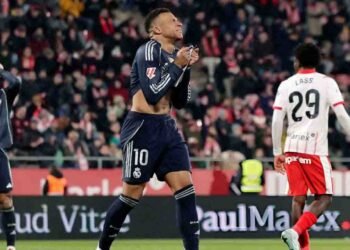 Mbappe rescues Real Madrid with a penalty at Girona
 Wales hits 20,000-strong milestone in women’s football
 Stokes urges empathy for England players amid Ashes struggles
 Sports piracy surges in UK with 3.6bn illegal streams reported
 Chelsea fans inquiry launched after Charlton match policing concerns
 Arsenal vs Man Utd LIVE: Jesus Starts as Carrick Stays Loyal
 Arsenal Edge Closer to Ending ‘Nearly-Men’ Era After Cup Breakthrough
 Newcastle fans face bleak reality under Saudi ambitions
 Hugo Ekitike Becomes Liverpool’s New Cult Hero
 BBC World Cup Presenting Duties Shared Among Trio
 Steve Borthwick Turns to 2003 Icons for Inspiration
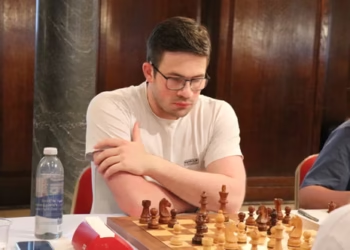 British Success at the Isle of Wight Masters Chess
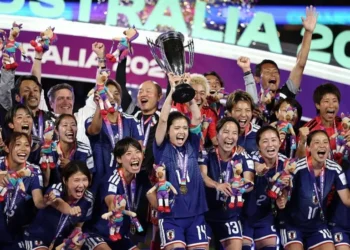 Japan Triumphs 1-0 Over Australia to Claim Women’s Asian Cup
 Romero Vows Fight as Spurs Face Relegation Threat
 Middlesex Icons Launch Bold Revolt Against Club Leadership
 Farke’s Leeds revival: from pressure to FA Cup glory chase
 John Terry Faces Backlash Over Political Posts
 Scott Parker Leaves Burnley After Premier League Drop
 Premier League drama defines crucial weekend
 Foden Commits Future to Man City Until 2030
 Rugby Faces Crisis Over Referee Row Culture
 RFU Backs Borthwick Despite England’s Poor Six Nations
 World Cup Ticket Price Surge Leaves Many National Teams Stunned
 Southampton Face Misconduct Charge Amid Spying Claims
 From Grassroots to Stamford Bridge: The Rise of McFarlane
 Aaron Rai Triumphs in Thrilling PGA Championship Finish
 De Zerbi Rallies Spurs To Fight Relegation Threat
 Southampton Face Player Legal Action Over Playoff Scandal
 The Battle for Wembley Sparking Unprecedented Legal Warfare
 Tuchel Defends Tough England Squad Decisions
 Farewell to an Icon: Pep Guardiola to Exit Manchester City
 Huddersfield Giants Face Fight to Save Super League Status Amid Stadium Crisis
 Safeguarding Probe Limits West Ham Owner’s Role
 England Cruise Past Costa Rica as World Cup Warm-Up Sharpens Tuchel’s Vision
 Inside the Three Lions: Bellingham Reveals Euro 2024 Flaws
 Blackpool Cricket Stands Firm Amid County Struggles
 Declan Rice Facing Burnout as Tuchel Confronts Midfield Crisis
 Ben Stokes Was Fallible But That Made Him Our Champion
 Morocco Beat Dutch in Wild World Cup Penalty Drama
 Ben Stokes Retires: The End of an Extraordinary Era
 The Last Stand of English Cricket’s Greatest Partners
 England’s 10 Men Hold Firm in World Cup Thriller
 World Cup Fever Set to Boost UK Economy by £500m