Published: 25 May 2026. The English Chronicle Desk. The English Chronicle Online.
The glittering world of K-pop has always been at the absolute forefront of global entertainment innovation. Now a brand new and highly ambitious theme park in South Korea is taking things further. Located in the bustling Gangdong district of eastern Seoul, Galaxy Robot Park spans sixteen thousand square metres. This massive facility claims to be the very first robot theme park in the world today. It represents an audacious vision of a future where machines do not just assist humans. Instead, these advanced creations are designed to entertain crowds and perform massive concerts across different continents.
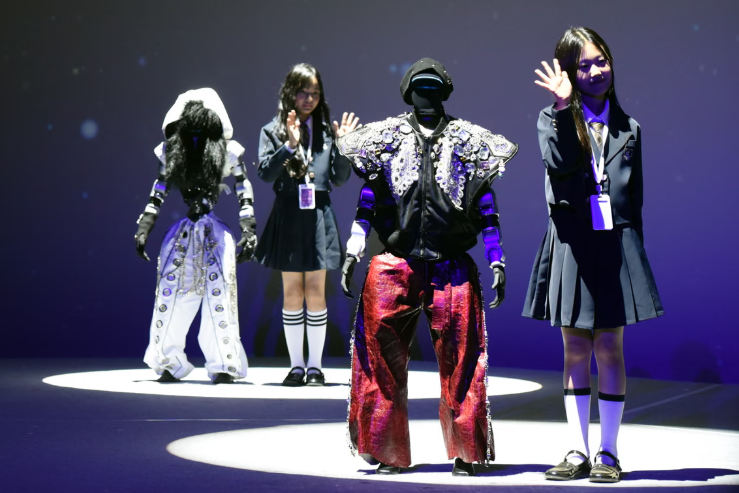
During the spectacular opening show, four child-sized humanoid robots took the main stage of the arena. As the energetic beats of a hit song by G-Dragon began, they started to dance. Their arms swung and their legs stepped in perfect sync as their stylish wigs swished around. Mid-performance, one of the robotic dancers seemingly suffered a sudden malfunction and left the stage entirely. Despite this minor technical hiccup, the remaining machines executed their complex moves with surprising and impressive fluidity. Their extensive repertoire included popular tracks like Home Sweet Home, Advice, and the hit song Idea.
Behind this unique and futuristic project is Galaxy Corporation, a major player in the entertainment industry. The company proudly positions itself as an enter-tech firm by blending entertainment with cutting-edge technology. They manage massive superstars like G-Dragon, Taemin from Shinee, and the acclaimed actor Song Kang-ho. The South Korean music industry has long served as a fertile testing ground for experimental tech. For instance, the group Aespa successfully pairs real-life human members with their own virtual avatars. Furthermore, fully virtual boybands like Plave have already achieved significant commercial success within the music charts.
The chief executive officer of Galaxy Corporation, Choi Yong-ho, remains incredibly optimistic about this venture. He frequently refers to himself as the chief happiness officer when speaking to the global media. Choi announced plans to host three to six K-pop robot concerts on a daily basis. This aggressive scheduling means the park will host over one thousand individual shows every single year. Furthermore, the company intends to take these robotic performers on a massive worldwide tour very soon. This international tour is scheduled to begin by the conclusion of this current calendar year.
However, industry experts and music critics remain somewhat skeptical about how global audiences will react. Cha Woo-jin, a prominent music critic, views the project as a fascinating cultural and economic experiment. He noted that placing a robot in an Elvis museum would likely repulse traditional fans. Yet, he explained that K-pop is fundamentally built upon a highly polished visual packaging model. Because of this unique structural nature, performing robots feel slightly less alien to modern pop audiences. A global robot tour would essentially function like an incredibly precise electronic cover dance crew.
From a purely financial perspective, a robotic tour offers several massive advantages to entertainment companies. Machines do not require expensive hotel bookings, flights, or daily food allowances during long tours. They can perform continuously without experiencing physical exhaustion or demanding complex contract renewals every few years. Beyond the main concert arena, the new theme park offers various other interactive robot experiences. Helpful robot valets warmly welcomed guests at the front door during the grand opening event. Meanwhile, robotic dogs roamed around the outdoor areas, playfully interacting with excited children and adults.
Inside the facility, a unique robotic arm with a face attachment drew portraits for visitors. This creative machine actively chatted with guests while it worked diligently on its artistic creations. While the resulting sketches were highly accurate, some visitors felt the drawings made them look older. Further up the hill, a specialized boxing ring allowed guests to control large humanoid fighters. This interactive experience utilized a responsive mirroring system to replicate human movements in real time. The machines battled each other fiercely, occasionally sending boxing gloves flying directly into the surprised crowd.
During one intense match, a robot fell completely off the stage onto the floor below. However, the machine quickly recuperated on its own and got straight back into the action. Galaxy Corporation also plans to stage the world’s first official robot fashion show very soon. This highly anticipated fashion event is scheduled to take place in late May this year. Following the show, the enter-tech firm intends to launch a dedicated robot fashion label globally. Choi offered very few specific details about how exactly the robots would model the clothing. He also remained quiet about what a specialized robot fashion brand might actually entail long-term.
The broader corporate vision involves deploying these K-pop performing robots to very remote areas worldwide. They want to send these mechanical performers to places where human stars cannot easily travel safely. This includes active war zones and remote regions lacking proper infrastructure for massive stadium concerts. Once the complex choreography is programmed into one central robot, all machines learn it instantly. This allows the company to host identical, concurrent shows across multiple different countries at once. Such capabilities could fundamentally change how live music is distributed and consumed on a global scale.
Despite the incredible technology, the ultimate success of the project remains highly uncertain for many. The real question is whether machines can ever truly replicate the essential ingredient of K-pop. That core ingredient is the deep, emotional connection that human idols build with their fans. This unique bond is forged through years of hard work, personal interactions, and shared human experiences. K-pop fans are famous for their intense loyalty and deep emotional investment in their favorite stars. Critics wonder if a cold machine can ever evoke the same passion as a living artist.
If audiences embrace these android performers, it could signal a genuine and permanent cultural shift globally. If they reject them, the park may just become a quirky, short-lived novelty show for tourists. The intersection of humanity and technology is becoming increasingly blurred in the modern entertainment landscape today. South Korea is clearly leading the charge into this brave new world of automated artistic expression. Whether the world is truly ready for robotic pop idols remains to be seen completely. For now, Galaxy Robot Park stands as a bold testament to human imagination and ambition. Visitors can judge for themselves whether these machines possess the true spirit of pop stardom.
Related News:
 Virgin Trains Moves Closer to Challenging Eurostar Monopoly
 UK Bans Fake Numbers: Scammers Lose Their Trick
 Vibe coding’ named Collins dictionary’s word of the year
 Patients to Test Health at Home to Ease NHS Winter Pressure
 Britain deploys RAF specialists to assist Belgium with drone threats
 Stop using ChatGPT to write speeches, AI minister tells MPs
 Northern Lights may illuminate UK skies this week
 New laws to bolster UK’s defences against cyber attacks on NHS, transport and energy
 Hitler’s DNA Confirms He Truly Had Only One Testicle
 Working-Class Men with Prostate Cancer Left Behind by NHS
 New AI tool could cut wasted efforts in organ transplants
 How Cultures Interpreted the Aurora Through History
 Sundar Pichai Cautions on AI Hype and Market Risks
 Google Chief Urges Caution: Don’t Trust AI Blindly
 US Judge Says Meta Did Not Hold Illegal Social Media Monopoly
 Healthy Habits in Your 30s That Boost Life in Your 70s
 Coffins Now Too Large to Cremate Amid Rising Obesity Crisis
 AI Actress Creator Says Tilly Norwood Won’t Replace Actors
 Google Removes Some AI Health Summaries Over Safety Concerns
 Nasa ISS Medical Evacuation: Crew-11 To Return Early
 UK Threatens Action Against X Over Sexualised AI Images
 EU launches Grok AI probe into X over explicit images
 AI job losses UK: Britain faces sharper employment shock
 UK AI avatar firm Synthesia valuation jumps to $4bn
 ABC Facebook Page Briefly Hacked, Adult Photos Posted
 US Robotaxis Train for London Streets Before Launch
 Meta trial over child exploitation claims begins
 Autistic Girls Often Missed in Childhood Diagnoses, Study Finds
 Most Statin Side-Effects Are Not Caused by Drugs, Study Confirms
 Childnet Censorship Row Over Teen Safety Speeches
 BT Names New Openreach Chief Amid Major Fibre Expansion
 Tech Trends Set to Transform Life in 2026
 Starmer Targets AI Chatbots Over Child Safety Concerns
 Ocean Warming Drives Massive Marine Life Loss, Study Warns
 Stewart Brand on Musk, Bezos and a Life of Long Thinking
 Facial Recognition Error Leads to Wrongful Arrest in Milton Keynes
 Rolling Hills and Heritage: A Car-Free Break in Leicestershire
 Middle East Airspace Crisis Strands Thousands
 Zorevunersen Breakthrough for Dravet Syndrome
 Cancer Death Rate in Britain Falls by Nearly a Third
 Taking Multivitamins Daily Could Slightly Slow Ageing, Study Finds
 Tesla Enters British Energy Market Following Ofgem Approval
 The Kill Line: A Shifting Vision of the American Dream
 ‘Drinking from a Fetid Pond’: Superbug Genes in Lough Neagh
 Scientists Unveil Heavier Proton at CERN LHC
 Meta child exploitation verdict shocks tech world
 Artemis II: Humanity Returns to the Moon After Decades
 Own an Entire Australian Town for the Price of a UK Flat
 Battle of Britain Tower to House Tourists and Bats
 Artemis II Returns After Historic Moon Flyby
 Norway’s Telenor Faces Lawsuit Over Myanmar Data Breach
 UK Banks to Deploy Controversial Mythos AI Tool Next Week
 Robots Outpace Humans in Beijing Half-Marathon
 UK Faces Growing Threat of Scale Hacktivist Attacks
 Border Chaos: UK Travellers Face Massive EU Delays
 WHO approves first malaria drug for babies
 UK Watchdogs Warn Over AI Facial Recognition Oversight
 DeepMind Staff Vote to Unionize Over US Military Contract
 Trump Lands in Beijing for High-Stakes Summit with Xi
 Australia Welcomes the Iconic Michelin Guide
 Gotta Catch an MP! The New Political Craze Sweeping Britain
 Court Upholds Landmark Win for Transgender Rights
 Labor Defies Warnings Over Controversial Capital Gains Reform
 Belfast Approves Pilot Extension of Sunday Trading Hours
 Man killed in shark attack on Great Barrier Reef
 Thailand Tightens Visa Rules to Curb Tourist Misbehavior
 British Paralympian Set to Make History in Earth Orbit
 Stolen Mobiles Could Soon Become Useless Bricks
 SpaceX Prepares for Historic Valuation Launch
 AI to Help Botanists Win the Critical Race Against Extinction
 UK Ministers Lobby Trump Over Under-16s Social Media Ban
 Deadly H5 Bird Flu Reaches Australia’s East Coast
 Sydney Records Hottest June Since 1859 as Expert Warns New High a ‘Signature’ of Global Warming
 Record £28m Fine for Virgin Media Over Cancellation Woes
 Telstra Software Fault Triggers Massive Nationwide Outage
 Jet2 Sees Summer Surge Despite Global Tensions
 Police Alert Facials: A New Era of Retail Security
 London Tube Heat Reaches Dangerous Levels
 Weight-Loss Drugs Offer Food Savings Mainly to High Earners
 Gen Z turns to BirdTok for a gentler digital escape