
Published: 02 June 2026. The English Chronicle Desk. The English Chronicle Online.
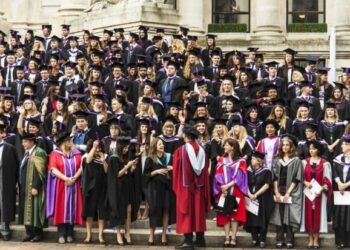
For many decades, the path to a successful career seemed clearly defined for young people. Leaving school and heading straight to university was considered the standard route to financial security. A university degree was viewed as a golden ticket that guaranteed better employment opportunities. Graduates could traditionally expect to secure higher salaries than those who entered work early. This long-standing assumption is now facing unprecedented skepticism across the entire United Kingdom. Recent data suggests that the public perception of higher education has shifted dramatically. A significant portion of the population now questions the true value of university. The financial reality of obtaining a degree has changed the minds of many.
The traditional graduate premium has started to shrink in a very noticeable way. Young people face spiralling student debt that accumulates rapidly during their three years. There is also a growing fear about artificial intelligence altering the job market. These combined factors mean that public confidence in higher education has plummeted significantly. This shift in attitude follows decades of unfettered expansion across the university sector. The latest British Social Attitudes survey has highlighted this massive change in public opinion. The data shows that public trust in the university model is declining fast. Many people now believe that the system does not deliver on its promises.
According to the latest findings, a third of people question higher education. The proportion of people holding this negative view has jumped significantly since 2005. Back then, only fourteen percent of people felt a degree was poor value. That figure has now risen sharply to thirty-four percent in recent polling. Correspondingly, fewer people believe graduates end up much better off than non-graduates. That optimistic financial view has nosedived from fifty percent down to thirty-six. This represents a profound shift in how British society views the academic path. The romanticized idea of university life is being replaced by harsh economic reality. Parents and students alike are now looking at the numbers more closely.
Higher education in the United Kingdom has undergone a truly massive transformation overall. The first British Social Attitudes survey was conducted way back in 1983. At that time, only six percent of school leavers went to university. That small group represented a highly elite segment of the youthful population. By 2025, that proportion had ballooned massively to thirty-six percent of youth. Today, more than two million domestic students are enrolled in higher education. This massive expansion has completely changed the landscape of the British workforce. It has also altered the social expectations placed upon young school leavers. Going to university became the norm rather than a rare privilege.
This massive expansion means that far more graduates are hunting for jobs today. The competition for entry-level positions has become incredibly fierce in every sector. At the same time, students are paying much more for their education. When tuition fees were first introduced in 1998, they were low. Students paid just one thousand pounds a year for their university courses. Now, English students pay up to nine thousand five hundred thirty-five. This substantial sum excludes the rapidly rising costs of standard daily living. The financial burden of attending university has reached an all-time high. Many students must borrow large sums just to pay for basic accommodation.
Younger graduates have direct experience of this very expensive modern fee system. Consequently, they are understandably more disillusioned than older generations who studied for free. Those who attended university before fees were introduced view things quite differently. The survey clearly shows a generational divide in attitudes toward educational value. Younger people are bearing the brunt of a heavily financialized education system. They start their working lives with a massive financial burden on their shoulders. This debt influences their life choices, from buying homes to starting families. The stress of this debt is a constant shadow over their achievements.
Meanwhile, student loan repayment thresholds have been frozen many times by politicians. These thresholds dictate the salary level above which graduates must pay back loans. Ideally, these repayment levels should rise in line with regular annual inflation. Instead, the government has repeatedly kept them at a lower stagnant level. Furthermore, thresholds will be frozen for three years from 2027 onwards. This administrative decision effectively forces graduates to pay back more of their income. It acts as a stealth tax on young professionals trying to establish themselves. Many feel that the rules of the game are being changed unfairly.
Growing disquiet about above-inflation interest rates has also prompted many serious questions. People are wondering whether the financial burden placed on graduates is simply too great. The compounding interest means that balances increase even as people make regular payments. This creates a psychological burden that leaves many graduates feeling completely hopeless. They see their balances rise despite working hard and paying what they owe. This situation has led to widespread criticism of the student finance system. Experts warn that this model may be unsustainable in the long term. The system appears to punish those it was designed to help.
Representatives from the university sector are quick to defend the traditional model. Vivienne Stern serves as the chief executive of the organization Universities UK. She acknowledges that the current labour market is very challenging for everyone. This difficult environment reflects the wider economic struggles within the United Kingdom today. However, she stresses that data consistently shows the tangible benefits of degrees. Graduates are still more likely to have a job and earn more. They also tend to report better overall health outcomes throughout their lives. She argues that a university education benefits the individual and the state.
In her view, graduates are essential if the country wants economic growth. Businesses need highly skilled individuals to drive innovation and productivity in the future. Nick Hillman, the director of the Higher Education Policy Institute, agrees. He notes that university still benefits most graduates most of the time. However, he admits that a lack of substantial economic growth hurts rewards. The financial returns are not always as great as people initially hope. Despite years of negative rhetoric, only one in three people reject university. He believes that the system still holds significant value for the majority.
Students themselves offer a more nuanced perspective on this complex ongoing debate. Alex Stanley is the vice-president for higher education at the student union. Despite his growing loan debt, he is genuinely glad he attended university. He believes he would not be in his current role without it. The experiences he gained beyond the classroom made his time there valuable. He values the personal growth and networking opportunities that university life provided. However, he openly states that the funding system did not work well. He had to work three jobs alongside his studies to survive.
Consequently, his academic grades suffered as a direct result of this exhaustion. He was unable to live on the insufficient maintenance loans he received. Today, he faces over fifty thousand pounds of debt which grows monthly. This growth occurs despite him making regular repayments from his monthly salary. He believes the funding system is broken and decays trust in universities. He wants a system where young people can expand their horizons safely. They should be able to deepen their knowledge without facing financial ruin. Right now, he feels that the current system fails to deliver this.
This reality should serve as a wake-up call for everyone involved. Universities and the government need to address these serious flaws very urgently. Alex Scholes, a co-author of the report, shared his insightful thoughts. He noted that universities are engines of social mobility and economic growth. They provide vital research and foster innovation that benefits the entire nation. However, these institutions are also under immense financial pressure themselves right now. Recent debates about fairness have clearly filtered through to the public mind. People are thinking critically about the real value of a university degree.
If public confidence continues to fall, the financial situation will worsen. Fewer applicants will choose to enter higher education in the coming years. This decline could lead to a funding crisis for many British universities. Some institutions might be forced to cut courses or close down completely. The ripple effects would be felt across the entire UK economy. The balance between cost and benefit has clearly shifted in recent times. Addressing this lack of trust is crucial for the future of education. The nation must decide what value it truly places on higher learning.
Related News:
 Six-Figure Tutors Teach Toddlers to ‘Be British’
 How Bringing Forests Into Preschools Boosts Children’s Health
 Is a two-week half-term a good deal? Some parents in England aren’t so sure
 Bridget Phillipson Vows to Confront Unions Over Reading Tests
 Children to Learn Local History in Major Curriculum Overhaul
 Top Christmas Books Reads: Classics to Cozy Romcoms
 England Curriculum Review Recommends Major Changes
 Mortgages and AI Set to Feature in English Schools
 Greta Thunberg Backs Student Facing UK Visa Revocation
 Audio Books deals and promo codes to explore in November 2025
 London’s Childlessness Crisis: Schools Closing as Families Shrink
 No link found between paracetamol in pregnancy and autism
 Government urges schools to ban phones to curb classroom disruption
 Stephen Fry backs SafeCall to protect missing children
 England’s Special Needs Support Faces Breaking Point
 Higgs Donates Nobel Medal to His Beloved University
 UK Schools Face Staff Exodus Amid Wellbeing Crash
 Schools urged to trial four-day week to ease pressure on teachers in England and Wales
 Oxford Names ‘Rage Bait’ Word of the Year
 Cambridge College Faces Backlash Over Private School Recruitment
 Glasgow rector cleared by watchdog in antisemitism case
 UK Launches First Town of Culture Competition
 UK Ministers Drop Foreign Student Targets for Global Education Push
 City & Guilds pay surge sparks backlash amid £22m cuts
 School Suspensions Now Reserved for Only Severe Misbehaviour
 Harvey Willgoose School Stabbing Red Flags Missed
 Kingsbury stabbing probe led by counter-terror police
 School phone policies drain English staff resources, study finds
 English secondary schools urged to expand Send inclusion bases
 Send spending gap leaves deprived areas behind
 Children’s vocabulary shrinking amid rising screen time concerns
 Councils Urge Means Testing for Send School Transport
 SEND overhaul gives schools new support funds
 SEND Plan Gains Cautious Support Amid England Schools’ Workload Concerns
 Student Loan Crisis Sparks Outrage Among Graduates in England
 New Era for UK Special Needs Support
 UK Parents Voice Concerns Over Special Education Support
 Keir Starmer Vows Strong Action Against Online Tech Giants
 Student Loan Interest May Rise Despite 6% Cap
 City & Guilds Sale Sparks Fees and Pay Uproar
 NHS Safety Fears as Nurses Cover Doctor Gaps
 Sussex Wins Landmark High Court Battle Against OfS Fine
 City & Guilds Faces Governance Crisis Over Sale
 Tractor Breakdown Tests Lincolnshire Farmers
 Public Confidence in University Degrees Plummets in the UK
 Tech Trends and the Battle Against Exam Hall Cheating
 Ban the Smack: New Study Links Hitting to Poor Grades
 The Hybrid School Revolution Defying the Social Media Ban
 Systemic Failure: White Working-Class Pupils Left Behind
 School Bosses Face Strict Pay Cap
 British Teens in EU Face Soaring UK University Fees
 UK Schools Struggle as Classrooms Top 40C
 Cambridge Professor Jason Arday Found Dead at Home
 White Low-Income Pupils in England Show Lowest Levels of School Engagement, Study Finds
 Reeves Faces Setback as Labour May Miss Homes Target
 Kate Winslet to Narrate Film Highlighting King’s Environmental Mission
 Trump’s UK Ambassador Urges North Sea Drilling to Strengthen US Ties
 UK Bans Fake Numbers: Scammers Lose Their Trick
 Millionaires group urge Reeves to introduce wealth tax to ‘lift kids out of poverty’
 Reeves rejects £1bn plea for NHS redundancy payouts
 PM Condemns Leaks, Vows Loyalty to Ministers and Stability
 Phillipson Accused of Appeasing Unions by Diluting EBacc
 Inside the Helpline Protecting Missing Children in the UK
 PlayStation PS5 Deals Hit Lowest Prices Ahead of Black Friday
 Inquiry into HMRC child benefit errors launched by NAO
 Rising Costs Force Families to Rethink Days Out
 Scott Mills Sacked by BBC Over Personal Conduct Claims
 Palantir Boss Defends NHS Deal Amid Government Break Clause
 Relationship with Trump may be beyond repair, Starmer warned
 UK Government Poised to Revive Stalled Hillsborough Law
 Home Office Faces Legal Risks Over Asylum Hotel Living
 Crisis in NHS Surgery Scheduling Hits Patients Hard
 Blue Badge Abuse: The Rising Tide of Public Hostility
 Scott Parker Leaves Burnley After Premier League Drop
 Silent Tracks: Rail Line Without Passengers
 RFU Backs Borthwick Despite England’s Poor Six Nations
 Major test for Labour as polls open in Great Britain
 Keir Starmer Struggles to Secure His Grip on Downing Street
 Farage Faces Standards Probe Over Cash Property Purchase
 Closing the Gap: UK Pensions Commission Demands Action