Published: 05 June 2026. The English Chronicle Desk. The English Chronicle Online.
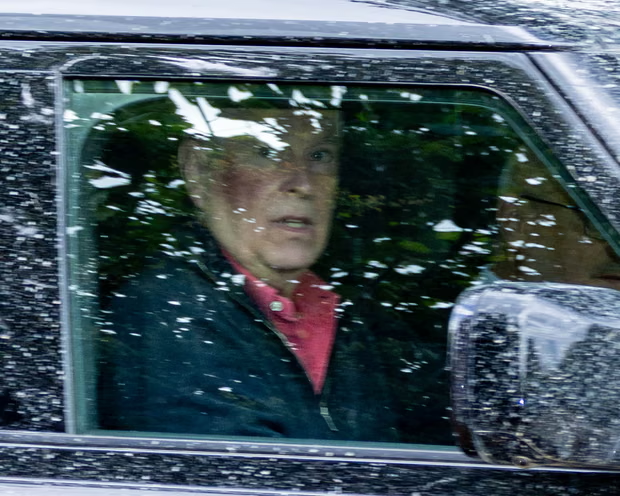
A significant new report into royal property arrangements has ignited intense public debate across the United Kingdom this week. The National Audit Office has released a detailed review concerning the financial management of historic royal estates. This comprehensive document exposes several controversial leasing agreements involving high-profile members of the British monarchy. Most notably, the findings reveal specific details about the private finances of Andrew Mountbatten-Windsor. The report confirms he generated private income by subletting three cottages on his former estate. These lucrative arrangements occurred while he paid a mere peppercorn rent to the Crown Estate.
The extensive investigation sheds light on the complex inner workings of royal property management. Public scrutiny has intensified following previous revelations about the residency at Royal Lodge in Windsor. The disgraced Duke was recently evicted from this grand mansion by his brother, King Charles. The newly published figures will now form the cornerstone of an upcoming parliamentary inquiry. The Commons Public Accounts Committee plans to investigate these property arrangements thoroughly in the coming weeks. This decision follows widespread public outcry regarding the remarkably low costs enjoyed by some royals. The contrast between these privileges and ordinary housing costs has sparked considerable anger online.
According to the auditors, the financial arrangements differ depending on who manages each specific property. Some residences fall under the direct control of the self-funding public corporation, the Crown Estate. Other historic properties are managed internally by the official staff of the Royal Household instead. For properties overseen by the household, an adjusted rent system is typically put in place. This special rate is usually set at sixty percent of the open market value. Officials justify this steep discount by citing the extreme security measures required for these locations. Inhabitants must undergo rigorous vetting procedures to live within these heavily guarded palace cordons.
The report provides precise breakdowns of these adjusted rental rates for several prominent family members. Princess Beatrice pays sixty-eight percent of the open market value for her St James’s Palace apartment. Meanwhile, Princess Eugenie pays sixty-four percent of the market rate for her Kensington Palace cottage. The document tracks how these specific figures fluctuated notably between the years twenty-twenty and twenty-twenty-five. King Charles personally covers these adjusted rents using his private income from the Duchy of Lancaster. This arrangement ensures his non-working royal nieces can continue residing inside secure, prestigious royal palaces.
Furthermore, the King funds the Kensington Palace apartment of Prince and Princess Michael of Kent. Interestingly, auditors discovered absolutely no official records of valuation for this lease before this year. The report also highlights substantial public spending on other major royal residences in recent months. The Prince and Princess of Wales relocated to the historic Forest Lodge home last year. Before their move, the Crown Estate funded four hundred thousand pounds worth of essential repairs. William and Catherine subsequently signed a twenty-year lease on this beautiful Grade II-listed Georgian house.
The expansive Windsor property features magnificent gardens, a paddock, a spacious barn, and three additional cottages. The young family pays an annual rent of three hundred and seven thousand pounds. This substantial figure is scheduled for an official review every five years by the estate. The royal couple paid no upfront premium but remain fully responsible for internal alterations. In stark contrast, Andrew Mountbatten-Windsor paid a one-million-pound premium for his initial seventy-five-year lease. He also spent seven and a half million pounds on refurbishments back in twenty-three.
Following his eviction, the former pilot now resides at Marsh Farm on the Sandringham Estate. His original lease explicitly permitted subletting, though his total earnings from this remain entirely undisclosed. He could theoretically be entitled to nearly five hundred thousand pounds in early surrender compensation. However, officials state that extensive property dilapidations will likely wipe out any potential compensation payouts. Inside sources claim the subletting activities did not generate an actual profit for the Duke. They suggest the rent was calculated purely to cover essential maintenance and staff running costs.
Crucially, no official balance sheets or formal rental agreements have been made available to the public. This lack of transparency has drawn sharp criticism from several veteran political figures and campaigners. Former Liberal Democrat minister Norman Baker expressed deep anger over these newly disclosed housing arrangements. He stated that the findings added severe insult to injury for hard-working British taxpayers. Baker argued that allowing Andrew to profit privately from subletting while paying nothing was unacceptable. He firmly believes those rental funds should have gone directly to the public Crown Estate.
The report also examines the living arrangements of the Duke and Duchess of Edinburgh. Prince Edward and Sophie paid a hefty five-million-pound premium for their home at Bagshot Park. Their current lease, established in August twenty-seven, replaced an older agreement from nineteen ninety-eight. The royal couple pays a peppercorn rent but previously generated extra income from their stables. They rented out the stable block consistently until the arrangement concluded in twenty-twenty, auditors found. Currently, seven members of the royal family lease five separate properties from the Crown Estate.
The independent corporation emphasizes that all these leases were agreed upon using professional market advice. Financial terms were assessed by external experts at the specific time each lease was signed. Furthermore, the Royal Household provides free accommodation to eleven working royals in exchange for duties. This includes King Charles and Queen Camilla, who occupy seven residences across various active palaces. The National Audit Office concluded that standard commercial practices were generally followed across the board. Variations in specific lease outcomes are expected given the extensive fifty-year timeframe of these agreements.
A spokesperson for the Crown Estate warmly welcomed the thorough findings of the audit office. They reiterated that all leases align perfectly with independent valuations and professional estate management. The organization looks forward to discussing the detailed report with the parliamentary committee very soon. Simultaneously, a Buckingham Palace spokesperson expressed gratitude for the transparency provided by the new review. They expressed hope that the official findings would help contextualize ongoing public debates regarding property. The palace maintains that varying arrangements ensure historic residences are managed appropriately for the nation.
Related News:
 Reeves Faces Setback as Labour May Miss Homes Target
 Kate Winslet to Narrate Film Highlighting King’s Environmental Mission
 Trump’s UK Ambassador Urges North Sea Drilling to Strengthen US Ties
 UK Bans Fake Numbers: Scammers Lose Their Trick
 M&S Profits More Than Halve After Cyber-Attack
 Patients to Test Health at Home to Ease NHS Winter Pressure
 Millionaires group urge Reeves to introduce wealth tax to ‘lift kids out of poverty’
 Reeves rejects £1bn plea for NHS redundancy payouts
 Northern Lights may illuminate UK skies this week
 PM Condemns Leaks, Vows Loyalty to Ministers and Stability
 Major Rent Reform Ends No-Fault Evictions in England
 Stroke Patient Mistaken for Drunk, Care Delayed
 Inside the Helpline Protecting Missing Children in the UK
 Boots Showstopper Beauty Bundle Outshines Many Advent Calendars This Holiday Season
 PlayStation PS5 Deals Hit Lowest Prices Ahead of Black Friday
 Five-Year-Old Dies After Rare Tonsil Surgery Complication
 Starmer Says Labour’s Economic Plan Needs Years to Deliver
 UK unemployment rises to four-year high of 5.1% before budget
 Wiltshire Police Use Lasso to Catch Rampaging Village Goat
 Coasting Drinks: The Trend Redefining Alcohol Enjoyment This New Year
 Rising Hate Crimes Threaten Safety on UK Public Transport
 Starmer Faces Parliamentary Battles Over UK-EU ‘Reset’ Plan
 Met Police Vetting Failures Let Serial Rapists Remain
 Google Employee Claims Redundancy After Harassment Report
 Fatal Bolton Taxi Crash Claims Three Teens and Driver
 ScottishPower Tops List of Worst UK Energy Suppliers
 Judi Dench Champions Fight to Save London’s Green Spaces
 Crowborough Camp Welcomes First Asylum Seekers
 BBC Funding Crisis: Tim Davie Warns of Jeopardy Ahead
 Artificial intelligence will cost jobs, admits Liz Kendall
 Older Women Vanish from BBC Screens, Review Confirms Bias
 Streeting moves on doctor pay to end strike dispute
 Send spending gap leaves deprived areas behind
 Hidden Crisis: Domestic Abuse Suicide Toll in UK
 UK Unemployment Rate Climbs to 5.2% Peak
 BBC World Cup Presenting Duties Shared Among Trio
 Wales Approves Assisted Dying Bill Consent
 CPS Updates Guidance on Honour-Based and Dowry Abuse
 Asylum Seekers to Work After Year-Long Wait
 Inquiry into HMRC child benefit errors launched by NAO
 Rising Costs Force Families to Rethink Days Out
 Scott Mills Sacked by BBC Over Personal Conduct Claims
 Palantir Boss Defends NHS Deal Amid Government Break Clause
 Relationship with Trump may be beyond repair, Starmer warned
 UK Government Poised to Revive Stalled Hillsborough Law
 UK Staycations Rise as Travel Fears Grow
 Home Office Faces Legal Risks Over Asylum Hotel Living
 Official Admits Debate Over Mandelson Vetting Records
 Crisis in NHS Surgery Scheduling Hits Patients Hard
 Welsh Labour Faces Potential Historic Election Defeat
 Blue Badge Abuse: The Rising Tide of Public Hostility
 UK Faces Future Where Deaths Outnumber Births Yearly
 Scott Parker Leaves Burnley After Premier League Drop
 Silent Tracks: Rail Line Without Passengers
 RFU Backs Borthwick Despite England’s Poor Six Nations
 Major test for Labour as polls open in Great Britain
 Keir Starmer Struggles to Secure His Grip on Downing Street
 Fear and Betrayal: The Chilling Case of Kouri Richins
 Farage Faces Standards Probe Over Cash Property Purchase
 Closing the Gap: UK Pensions Commission Demands Action
 Sun and Jams: Britain Braces for a Sizzling Bank Holiday
Russian Electronic Attack Targets UK Defence Chief Jet
Sun and Jams: Britain Braces for a Sizzling Bank Holiday
Russian Electronic Attack Targets UK Defence Chief Jet
 UK Shoppers Face Prolonged Price Rises At Tills
 Tube Strike Brings Capital to a Standstill Over Shift Disputes
 Labour Denies Benefit Tax Hike Amid Mandelson Leak
 Makerfield Voters Demand Real Change as Election Looms
 UK House Prices Drop For Third Month Due To War Fears
 The Hidden Crisis Eroding Trust in British Communities
 Deepfake Abuse on X Sparks Safety Concerns for Dissidents
 Stolen Mobiles Could Soon Become Useless Bricks
 Clean Air Initiatives Spark Major Fall in London Hospital Admissions
 United Kingdom Politics Worse Now Than Before Brexit, Warns MP
 Russian Tanker Captain Remanded in UK Court After Channel Seizure
 Shocking Zoo Incident Sparks Attempted Murder Probe
 The Hybrid School Revolution Defying the Social Media Ban
 UK Care Crisis: Row Explodes Over New Visa Settlement Rules
 Sainsbury’s Boss Optimistic As Grocery Inflation Eases
 US Airman Avoids British Court in Indecent Exposure Case
 Ann Widdecombe, Formidable Political Figure, Dies at 78
 UK Schools Struggle as Classrooms Top 40C