Published: 08 June 2026. The English Chronicle Desk. The English Chronicle Online.
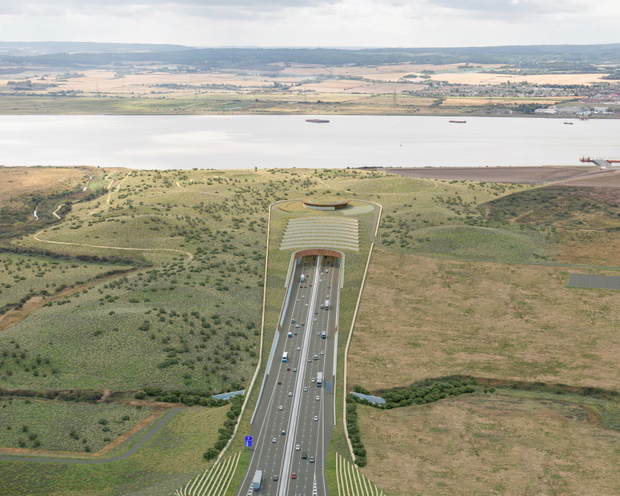
The British government has approved substantial new funding for the controversial Lower Thames Crossing development. Ministers recently earmarked an extra one hundred and seventy-four million pounds for this scheme. This decision has renewed major concerns about the rapidly expanding costs of the project. The planned road tunnel is currently one of the largest infrastructure projects in Britain. This major route will link Kent and Essex beneath the historic River Thames. The massive development is currently estimated to cost around eleven billion pounds in total. Experts note this project costs more per mile than the high-speed rail line. The government provided this recent financial boost as part of a larger plan. Officials intend to spend over three billion pounds of public money overall. This state funding is required before securing huge investments from the private sector. Ministers hope a private firm will eventually inject over seven billion pounds.
The extra cash will fund essential public works on both sides. This funding will be extracted entirely from existing transport department financial budgets. The Department for Transport confirmed these specific spending arrangements earlier this week. Reports previously revealed that central government took direct control of the development. National Highways was forced to step down from its lead planning role. A private consortium is expected to receive a licence to run it. This lucrative arrangement will also include the existing Dartford Crossing further west. The long-term operating contract will likely be handed over in twenty-nine. This private operation will remain active in perpetuity under a public regulator. The official completion date for the construction is now scheduled for thirty-four. Both Chancellor Rachel Reeves and Transport Secretary Heidi Alexander support the scheme. They believe this new connection is vital for the national economy. Top ministers state the crossing will significantly ease congestion on the motorway.
However, transport officials have still not published the outline business case. This specific assessment is usually completed before any large-scale construction work begins. The government previously allocated five hundred and ninety million pounds to it. This initial funding was provided during the major twenty-five spending review. Another eight hundred and ninety-one million pounds came from the budget. This combination reached nearly one and a half billion pounds quite rapidly. The newest cash boost was confirmed in a road strategy document. This addition brought the grand total to over one and a half billion. The Chancellor previously described the autumn budget funding as the final tranche. This public money was meant to allow private firms to build. The government has already spent over three billion pounds on it. A significant portion of this cash went towards securing planning permission.
Moving extra funds from the broader national highway budget caused anger. Campaigners accused the transport department of secretly siphoning off public money. They claim officials moved cash to the tunnel without informing parliament. High-profile roads campaigners accuse the department of hunting desperately for funds. They believe this massive tunnel project is running completely out of control. Activists point out that the Chancellor promised the final public funding. Yet the government has now offered millions more to this project. Critics are angry that officials still refuse to publish business cases. The spiralling costs and intense secrecy resemble previous rail project failures. The road tunnel already costs much more per mile than rail. Campaigners argue that nationalising trains while privatising roads seems totally incoherent.
A transport department spokesperson strongly defended the massive infrastructure investment today. The representative stated that the road tunnel remains a vital project. The government has committed over three billion pounds to the development. This includes the massive autumn fund to unlock private sector investment. No final decisions have been made regarding future user toll charges. Any future vehicle tolls will be managed by an independent regulator. This oversight ensures that prices remain fair for all British motorists. The government remains confident that private backing will secure successful completion. Officials believe the long-term benefits will outweigh the current financial costs. The project continues to move forward despite fierce opposition from groups.
The ongoing debate highlights the challenges of funding modern British infrastructure. Many citizens worry about the long-term impact on national transport budgets. Independent economists are currently questioning the financial viability of such schemes. They wonder if private investment will actually arrive as ministers expect. The construction sector remains watchful as initial preparation work continues daily. Local communities in Kent and Essex expect significant disruptions during building. Environmental groups also express deep concerns about potential damage to habitats. The government must balance these environmental worries against urgent economic needs. Traffic congestion around London has worsened significantly over the last decade. A new crossing could potentially resolve these severe delays for commuters.
The financial scale of this project demands intense public scrutiny weekly. Parliament will likely debate these new funding allocations in coming days. Opposition MPs are demanding total transparency regarding the hidden business case. They want to see the official data justifying these immense costs. The transport secretary maintains that the secret documentation will be released. However, no specific date has been set for this publication. This delay continues to fuel suspicion among political rivals and activists. The relationship between the state and private infrastructure firms remains complex. History shows that large projects often suffer from major delay issues. The British public remains wary of grand promises regarding transport improvements.
Construction firms are already preparing bids for the lucrative main contracts. The engineering required for a river tunnel is incredibly sophisticated today. Specialised machinery will be needed to bore beneath the water safely. This technical complexity partly explains the exceptionally high cost per mile. Project managers face immense pressure to keep the schedule on track. Any further delays will inevitably drive total costs even higher. The Department for Transport insists that tight management controls are active. They believe the new governance structure will prevent previous mistakes. National Highways will still offer technical advice during the construction phase. Their local expertise remains valuable despite losing overall control of planning.
The coming months will be crucial for the tunnel project. The government must officially secure the promised private sector financial backing. Failure to attract a private consortium would be a disaster. It would leave taxpayers responsible for the entire multi-billion bill. Ministers are currently holding high-level talks with global investment funds. They hope to present a convincing case for long-term returns. The regulated toll model is designed to attract these cautious investors. It offers a steady stream of predictable income for decades. Drivers will watch these developments closely as twenty-nine approaches steadily. The balance between public funding and private profit remains delicate.
Ultimately, the Lower Thames Crossing represents a massive political gamble. The current administration has staked its economic reputation on infrastructure growth. Success could transform freight transport across the southeast of England dramatically. Failure could result in another incredibly expensive transport planning disaster. The coming debates in parliament will certainly be lively and intense. Citizens deserve clear answers about how their taxes are being spent. For now, the extra millions will keep the project moving. The true cost of the tunnel remains to be seen. The English Chronicle will continue tracking this major story closely.
Related News:
 Reeves Faces Setback as Labour May Miss Homes Target
 Kate Winslet to Narrate Film Highlighting King’s Environmental Mission
 Trump’s UK Ambassador Urges North Sea Drilling to Strengthen US Ties
 UK Bans Fake Numbers: Scammers Lose Their Trick
 M&S Profits More Than Halve After Cyber-Attack
 Patients to Test Health at Home to Ease NHS Winter Pressure
 Millionaires group urge Reeves to introduce wealth tax to ‘lift kids out of poverty’
 Reeves rejects £1bn plea for NHS redundancy payouts
 Northern Lights may illuminate UK skies this week
 PM Condemns Leaks, Vows Loyalty to Ministers and Stability
 Major Rent Reform Ends No-Fault Evictions in England
 Stroke Patient Mistaken for Drunk, Care Delayed
 Inside the Helpline Protecting Missing Children in the UK
 Boots Showstopper Beauty Bundle Outshines Many Advent Calendars This Holiday Season
 PlayStation PS5 Deals Hit Lowest Prices Ahead of Black Friday
 Five-Year-Old Dies After Rare Tonsil Surgery Complication
 Starmer Says Labour’s Economic Plan Needs Years to Deliver
 UK unemployment rises to four-year high of 5.1% before budget
 Wiltshire Police Use Lasso to Catch Rampaging Village Goat
 Coasting Drinks: The Trend Redefining Alcohol Enjoyment This New Year
 Rising Hate Crimes Threaten Safety on UK Public Transport
 Starmer Faces Parliamentary Battles Over UK-EU ‘Reset’ Plan
 Met Police Vetting Failures Let Serial Rapists Remain
 Google Employee Claims Redundancy After Harassment Report
 Fatal Bolton Taxi Crash Claims Three Teens and Driver
 ScottishPower Tops List of Worst UK Energy Suppliers
 Judi Dench Champions Fight to Save London’s Green Spaces
 Crowborough Camp Welcomes First Asylum Seekers
 BBC Funding Crisis: Tim Davie Warns of Jeopardy Ahead
 Artificial intelligence will cost jobs, admits Liz Kendall
 Older Women Vanish from BBC Screens, Review Confirms Bias
 Streeting moves on doctor pay to end strike dispute
 Send spending gap leaves deprived areas behind
 Hidden Crisis: Domestic Abuse Suicide Toll in UK
 UK Unemployment Rate Climbs to 5.2% Peak
 BBC World Cup Presenting Duties Shared Among Trio
 Wales Approves Assisted Dying Bill Consent
 CPS Updates Guidance on Honour-Based and Dowry Abuse
 Asylum Seekers to Work After Year-Long Wait
 Inquiry into HMRC child benefit errors launched by NAO
 Rising Costs Force Families to Rethink Days Out
 Scott Mills Sacked by BBC Over Personal Conduct Claims
 Palantir Boss Defends NHS Deal Amid Government Break Clause
 Relationship with Trump may be beyond repair, Starmer warned
 UK Government Poised to Revive Stalled Hillsborough Law
 UK Staycations Rise as Travel Fears Grow
 Home Office Faces Legal Risks Over Asylum Hotel Living
 Official Admits Debate Over Mandelson Vetting Records
 Crisis in NHS Surgery Scheduling Hits Patients Hard
 Welsh Labour Faces Potential Historic Election Defeat
 Blue Badge Abuse: The Rising Tide of Public Hostility
 UK Faces Future Where Deaths Outnumber Births Yearly
 Scott Parker Leaves Burnley After Premier League Drop
 Silent Tracks: Rail Line Without Passengers
 RFU Backs Borthwick Despite England’s Poor Six Nations
 Major test for Labour as polls open in Great Britain
 Keir Starmer Struggles to Secure His Grip on Downing Street
 Fear and Betrayal: The Chilling Case of Kouri Richins
 Farage Faces Standards Probe Over Cash Property Purchase
 Closing the Gap: UK Pensions Commission Demands Action
 Sun and Jams: Britain Braces for a Sizzling Bank Holiday
Russian Electronic Attack Targets UK Defence Chief Jet
Sun and Jams: Britain Braces for a Sizzling Bank Holiday
Russian Electronic Attack Targets UK Defence Chief Jet
 UK Shoppers Face Prolonged Price Rises At Tills
 Tube Strike Brings Capital to a Standstill Over Shift Disputes
 Labour Denies Benefit Tax Hike Amid Mandelson Leak
 Makerfield Voters Demand Real Change as Election Looms
 US Condemns ‘Two-Tier’ UK Policing After Student Murder
 Deepfake Abuse on X Sparks Safety Concerns for Dissidents
 Stolen Mobiles Could Soon Become Useless Bricks
 Clean Air Initiatives Spark Major Fall in London Hospital Admissions
 United Kingdom Politics Worse Now Than Before Brexit, Warns MP
 Russian Tanker Captain Remanded in UK Court After Channel Seizure
 Shocking Zoo Incident Sparks Attempted Murder Probe
 The Hybrid School Revolution Defying the Social Media Ban
 UK Care Crisis: Row Explodes Over New Visa Settlement Rules
 Sainsbury’s Boss Optimistic As Grocery Inflation Eases
 US Airman Avoids British Court in Indecent Exposure Case
 Ann Widdecombe, Formidable Political Figure, Dies at 78
 UK Schools Struggle as Classrooms Top 40C
 Former Diplomats Urge UK and France to Act on Palestine