Published: 14 July 2026. The English Chronicle Desk. The English Chronicle Online.
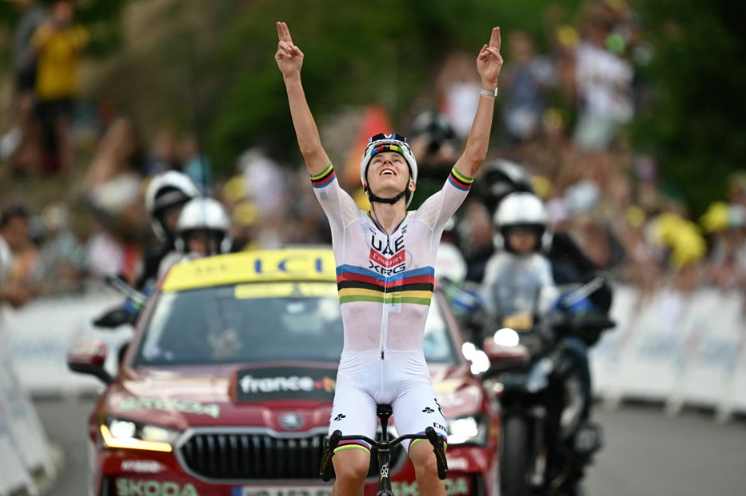
Riding the Tour de France in intense forty-degree heat remains difficult for every single rider. It becomes even harder when you must race against Tadej Pogacar every single day. As the massive peloton takes a breather, they lounge in the cool morning shade. They rehydrate carefully on the Tour’s first rest day during this long, grueling season. Most professional team managers are pondering what genuine opportunities they might still have today. They face Pogacar’s absolute domination and wonder how to try to achieve some success.
After he and his team faced harsh criticism for chasing down every small breakaway, questions arose. Even if those breakaways posed little or no threat to the overall standings, the intensity continued. L’Equipe recently asked their readers: Is the young champion Tadej Pogacar killing professional road cycling?
On the stage to Ussel on Sunday, UAE Team Emirates asked for help from others. They requested aid from other teams in pursuing the day’s early escapers, including Tom Pidcock. Pidcock’s former team Netcompany Ineos promptly obliged, although many observers found it hard to understand. We decided to contribute to the chase because we believed in Pippo Ganna, said the director.
Pogacar and his team would certainly deny it, but there is no doubt regarding his status. The four-time champion is clearly cycling’s new patron, echoing other great serial Tour winners. He resembles legends like Eddy Merckx and Lance Armstrong, who effectively controlled the race outcome. They often dictated the flow of most stages in the Tour, even those they ignored.
Pogacar is untouchable in the high mountains, and his detractors would say he is untouchable elsewhere. Few on this Tour have displayed much genuine scepticism towards the Slovenian rider this year. He recently shattered the record climbing time on the famous and difficult Col du Tourmalet. There is not the same open cynicism in France that was on show during the past. This differs significantly from the treatment towards Chris Froome, who won four Tours with Sky.
There is nonetheless growing incredulity at the roadside towards the sheer scale of Pogacar’s supremacy. Pogacar and his team have already won three stages and it seems inevitable they win more. With six mountain stages still to come, including a mountain time trial, he looks strong. He may be entirely out of sight by the time the Tour turns towards beautiful Paris.
He is also in absolute control elsewhere in the race, choosing his own successful future path. Already it feels as if he has personally chosen his own successor for the coming years. On the basis of what we have seen, it is more probable to be his teammate. He prefers the Mexican climber Isaac del Toro over the highly sought-after French prodigy Paul Seixas. That young Frenchman is currently subject to contract offers from most of the leading professional teams. While Seixas, a Tour debutant, is still an apprentice, Del Toro has already finished on podiums.
The UAE team are also one of the primary suitors for the young Frenchman Paul Seixas. Nino Seixas, his brother, was hosted at a winter training camp by the powerful team. Pogacar has also made a very specific point of praising the young Frenchman quite often lately. If his team were to sign Seixas, they would employ three of the world’s top ten.
Jonathan Vaughters, manager of EF Education EasyPost, recently shared his thoughts on the current power balance. In the World Tour, there are essentially five haves and there are thirteen have-nots, he explained. Your average budget now sits at thirty-two or thirty-three million, but five teams have much more. You can see with what UAE did last year that they are on track again today. The American has long been a vocal advocate of a strict, fair, and effective salary cap. Very few teams are able to win the major races now, he told the gathered media. Everyone else can be there and race for minor placings, but winning belongs to a few.
The issue of spiralling budgets for some teams, while others tread water, has been echoed elsewhere. In cycling, there are only a handful of potential Tour de France winners at any time. By the end of this season, Pogacar and UAE Team Emirates may be employing three of them.
A decade ago, according to Vaughters, there were not four or five huge mega-budget teams around. Those massive budgets were not pushing up the salaries as they are doing in the current era. Now you have got serious bidding wars between the richest teams to sign the best young talent. And what that has done is pushed up team budgets, creating a divide in the sport. It means you are dividing the professional landscape between the wealthy haves and the struggling have-nots.
For the French fans, the curtailing of the Seixas hype has been particularly tough to take. It is difficult in the face of UAE’s total control of the race for many years. Vaughters sympathises with those feeling the ennui of watching another Tour dominated by one lone rider. There is little chance of success for the lesser teams to challenge such a massive, well-oiled machine. The way the sport is currently set up, we are actively discouraging many sponsors and fans.
If you are not a fan of UAE in cycling, you might feel quite left out. If you are not interested in another Pogacar win, why are you watching the race right now? This question resonates deeply with those who love the unpredictability that defined the sport for many years. As the race continues toward the capital, the peloton will hope for a different tactical approach. For now, however, the yellow jersey remains firmly on the shoulders of the sport’s new patron.
Related News:
 Granit Xhaka Rescue Earns Everton Draw at Sunderland
 Bellingham has ‘the edge’ among England No 10s
 Man City Masterclass on Guardiola’s Milestone Day Exposes Liverpool Woes
 VAR Must Rein Its Neck In to Save Football’s Spirit
 Mary Earps’s Manchester United Return Faces Mixed Reception
 UK and Ireland Announce Venues for Euro 2028 Tournament
 Saka Solidifies Role as Tuchel’s Key England Lieutenant
 Former Lion Heskey Warns of Shortage of England Strikers
 Tiny Curacao Makes History as Smallest Nation to Reach World Cup
 Haiti Qualifies for World Cup Despite Coach Never Visiting Country
 Australia Face Big Changes as Cummins and Lyon Ruled Out of Ashes
 Van de Ven Tackle Leaves Isak with Fractured Leg
 ECB powerless to halt England’s recurring Ashes failures
 Stokes urges empathy for England players amid Ashes struggles
 Aston Villa Remain Arsenal’s Key Obstacle in Title Pursuit
 Salah Shines as Egypt Knock Out Ivory Coast at Afcon
 Raphinha doubles up as Barcelona beat Real Madrid in Super Cup
 Xabi Alonso leaves Real Madrid, Arbeloa Takes Over
 Maya Joint stunned by Valentová in Australian Open upset
 Chelsea warn fans of danger in Naples after hospital incidents
 Liverpool Chase Champions Glory With Stunning Qarabag Victory
 Ben Stokes injury joke after brutal ball strike
 Wrestler at 60: A Powerful New Start in the Ring
 Arsenal blow lead as Arteta rues Wolves draw
 BBC World Cup Presenting Duties Shared Among Trio
 Craig Tiley Leaves Australian Open Legacy
 English Cricket Faces Moral Crisis Over Indian Investment
 Hudson-Odoi Sends Nottingham Forest Into Europa Last 16
 Buttler Eyes Vital Run Surge as England Face New Zealand
 World Cup Drinks Breaks Could Bring ITV Ad Debate
 Saka criticism response: Arsenal star dismisses outside noise
 Spurs Coach Defends Early Kinsky Substitution at Atlético
 Abramovich Chelsea Sale Cash Faces Jersey Probe
 Champions League Failure Sparking Premier League Crisis
 African World Cup Fans Face $15,000 Entry Bond Fee
 Teenage Titan: Sooryavanshi Smashes IPL Records
 Sam Konstas Dropped as Australia Unveils New Contract List
 ECB Faces Backlash Over Disability Premier League Inclusion
 The Wildest Plastico: Leverkusen and Wolfsburg Thriller
 Maguire Commits Future to Manchester United with New Deal
 Can De Zerbi Restore Belief to Save Spurs From the Drop?
 Robots Outpace Humans in Beijing Half-Marathon
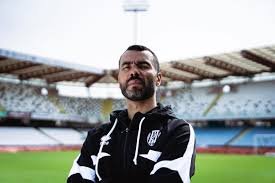 Ashley Cole: Finding His Voice and Vision in Italy
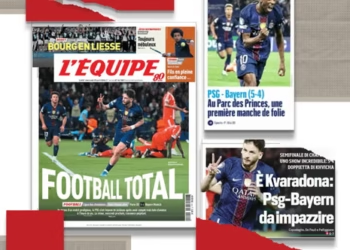 A Nine-Goal Thriller Redefines European Football Brilliance
 Scott Parker Leaves Burnley After Premier League Drop
 $13bn World Cup Set to Break All Revenue Records
 Arteta urges Arsenal to step up in Atlético semi-final
 RFU Backs Borthwick Despite England’s Poor Six Nations
 Infantino Defends Soaring World Cup 2026 Ticket Costs
 FIFA Confirms Global Ban for Benfica Star Prestianni
 England Call Up Janse van Rensburg for Nations Campaign
 Guardiola to Exit Man City; Maresca Lineup Nears
 Bracing for the Cherries: Guardiola Likens Vital Bournemouth Trip to the Dentist
 Alice Capsey Sparks England Win With Brilliant Fifty
 The Battle for Wembley Sparking Unprecedented Legal Warfare
 Chasing Glory: The Quest for a New World Cup Champion
 Tuchel Defends Tough England Squad Decisions
 Ben Proud Defends Enhanced Games Participation
 Chasing Paris Glory Amid Familiar Echoes
 Man City Threaten Legal Action Over Haaland Real Madrid Shirt
 Is Ollie Robinson the Chaos English Cricket Needs Today?
 Captain in the Spotlight: The Future of England Cricket
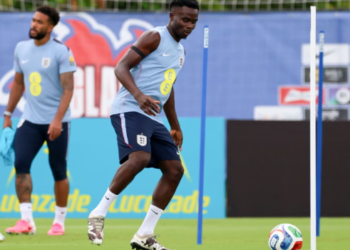 Saka Playing Through Pain As England World Cup Campaign Looms
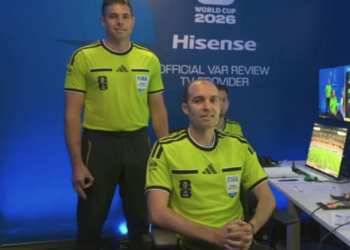 Fifa Official Under Investigation Over Hand Gesture Controversy
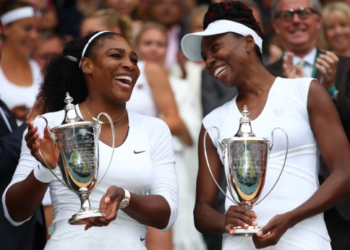 Williams Sisters Reunite for Wimbledon Icon Return
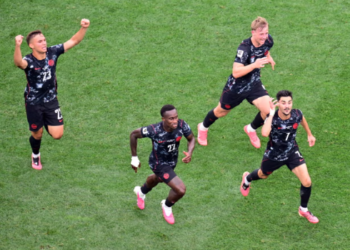 Canada Secure Historic Last 16 Spot with Late Goal
 Women’s T20 World Cup Breaks Records But Gaps Remain
 Martinelli Strikes Late as Brazil Edge Past Brave Japan
 France Dominate Sweden as Deschamps’ New Era Takes Shape
 US Advance Past Bosnia in World Cup Thriller
 Kane Saves Tuchel as England Survive Dramatic Exit
 England Triumph in Azteca World Cup Thriller
 Trump’s Red-Card Intervention Hurts the US World Cup
 USA World Cup Heartbreak: Belgium Ends Their Dream
 Kylian Mbappé Slams Paraguayan Senator Over Racist Attack
 Sports, Women’s Cricket A Historic Lord’s Bow for Beaumont and England
 Wallabies Call Upon Meredith Amid Injury Crisis
 Mbappé Brilliance Leads France Into Semi-Finals
 England and Norway Fans Turn Miami Into World Cup Carnival
 Spain’s Superstar Fan: Keyne Yamal Steals the Spotlight