Published: 14 July 2026. The English Chronicle Desk. The English Chronicle Online.
For almost two years, thousands of commuters in Sydney have faced a difficult daily struggle. Passengers in the inner west and south-west have endured the frustration of the replacement bus. In suburbs like Marrickville, the queue for buses snakes past local shops and cafes. During the morning peak, commuters often wait for several buses before finding a seat. These passengers have long awaited a permanent solution to their daily travel headaches and delays. But with testing now starting on the new extension, those replacement buses will soon vanish. This new line promises to make those long, cramped morning queues just a bad memory. The project connects Sydenham to Bankstown, offering a modern transport solution for a growing city. Yet, a cloud of uncertainty remains as the government refuses to set a firm start date.
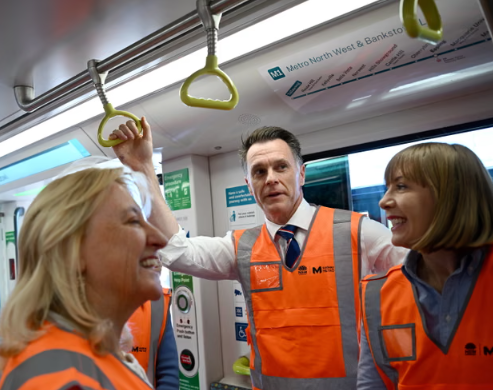
Premier Chris Minns spoke to reporters on Tuesday about the current status of the project. He noted that the government is currently working closely with the national safety rail regulator. Officials are hesitant to announce a specific opening date to avoid missing a public promise. During a recent media event, the premier took a ride along the new metro track. As the doors closed at Sydenham, the potential for rapid travel seemed very close to reality. The journey promises to link the inner west to the heart of the city very quickly. However, the train did not move immediately, reminding everyone that complex infrastructure projects need patience. The premier joked about the timing while exiting the train at the busy Marrickville station stop.
Once the train finally moved, it zoomed through the inner west at impressive, unprecedented speeds. The journey reached top speeds of one hundred kilometres per hour as it crossed the region. Passengers could see the Cooks River passing underneath while travelling toward the next station stop. As the train arrived at stations like Campsie and Canterbury, signs of progress were everywhere. Workers in bright orange hi-vis vests were busy putting the final touches on the platforms. They were seen removing plastic covers from new benches and installing clear, modern transit signage. These specific stations have remained closed to the public since the autumn of last year. Their closure followed the successful opening of the city metro extension just one month prior.
Since that time, metro trains have been running from Tallawong in the north-west to the city. Those trains previously terminated at Sydenham, leaving a significant gap in the southern rail network. Starting this week, trains will carry on through the extension, a process known as through running. These test runs will gradually increase in frequency until the line is ready for regular passengers. Last month, local media reports suggested that Sydney Metro was targeting an opening in mid-October. However, the acting transport minister, Jenny Aitchison, was careful not to commit to any date. She emphasized that the project is following a revised program designed to meet all safety targets. Her cautious approach reflects the high stakes involved in launching such a massive public transport upgrade.
Many residents are asking why the construction closure has taken much longer than originally expected. The former state government had initially predicted the work would take only three to six months. In contrast, the current government later stated that the project would require at least one full year. Minister Aitchison now attributes these significant delays to complex heritage issues found across the rail network. This sentiment was echoed by Alia Karaman, the project director for the Sydney Metro Southwest team. She explained to reporters that they are working within a brownfield site with many hidden challenges. She noted that the team encounters unexpected technical hurdles on the rail line almost every single day. Such obstacles are common in massive urban renewal projects that involve retrofitting existing, older railway infrastructure.
The reality of these technical challenges was highlighted during the recent media test run itself. Outside the suburb of Lakemba, the train came to an unexpected and sudden halt today. The loud horn blared, and the train ground to a stop on the tracks abruptly. The faces of the transport officials on board clearly showed their immediate, deep, and genuine concern. They worried that something had triggered a sensitive alarm system somewhere on the rail network. There was a brief fear that an object might be blocking the path ahead today. Thankfully, the issue was resolved quickly, and the train soon started moving again with speed. Despite this brief interruption, the train reached the rejuvenated Bankstown station in just over twenty-six minutes.
This travel time is not yet the top speed that the line will eventually achieve. Even so, it clearly demonstrates the time savings that will soon benefit thousands of daily commuters. A journey from Bankstown to Central is expected to take only twenty-eight minutes in total. This represents a significant six-minute saving compared to the travel times on the old line. Residents travelling from Lakemba to Victoria Cross can expect a total trip of thirty-seven minutes. That journey represents a massive twenty-four-minute saving compared to the old, slower, and outdated transit system. The government estimates that this new extension will add capacity for seventeen thousand more peak-hour passengers.
The big question remains whether this added capacity will be enough to meet future city demand. Minister Aitchison confirmed that the transport department has thoroughly modelled the expected levels of passenger demand. She acknowledged that there will naturally be high demand once the new service finally begins operating. However, she admitted it is difficult to know the exact numbers until services start running daily. For now, the people of Sydney must deal with a few more transport service interruptions. There will be full line closures across the network during several weekends throughout this coming July. At times during the trip, passengers could still see the replacement buses running alongside. For the residents of Sydney, those buses remain the status quo for just a little longer. Everyone waits with bated breath to see when the shiny new metro trains will finally open.
Related News:
 Victoria Police Ends Warrantless Search Powers, Consolidating Peace
 Liberal Turmoil Threatens Victorian Election Hopes
 Adelaide Festival Sparks Widespread Controversy Among Writers
 Racist Attack on Imam Sparks Melbourne Police Action
 PM pushes urgent hate speech and gun laws after Bondi terror attack
 Hanson and Joyce Use Rinehart Jet to Tour Flooded Queensland
 Craig Silvey faces charges over child exploitation material in Australia
 Labor’s Hate Speech and Gun Laws Face Federal Roadblocks
 Bondi memorial flowers preserved in lasting tribute artwork
 Sydney shark attack leaves boy critically injured in harbour waters
 Sydney Shark Attack Surge Shocks Australia Beaches
 Melbourne Antisemitic Attack Targets Young Boys
 NSW Shark Attacks Surge, Authorities Urge Swimmers to Stay Out
 Nationals Crisis Meeting Threatens Coalition Stability
 Sussan Ley leadership milestone shakes Liberal future
 Deadly NSW Shooting Leaves Three Dead, Gunman Escapes
 Silence and Unity Mark Bondi Terror Attack Memorial
 Andrew Hastie Emerges as Leadership Rival to Ley
 Record-Breaking Heat Looms Over South-East Australia as Catastrophic Fire Risk Escalates
 Victorians Evacuate Otways Amid Massive Fire Threat
 David Speers to host ABC panel on Jewish Australian experiences
 Morrison Faces Backlash Over Call to Regulate Islam in Australia
 How Sandhill Ashes Rebuilt a Bushfire-Hit Rural Community
 David Littleproud and Sussan Ley to Discuss Coalition Future
 Jess Wilson Event Exit After Joyce Controversy
 Townsville Hospital Probes Privacy Breach After Activist Posts Foetus Image
 Psychiatric failings linked to Bondi Junction stabbings, coroner finds
 Gus Lamont Case: Grandmothers ‘Devastated’ by Major Crime Status
 Australia’s Opposition Coalition Reunites After Rift
 Lenore Taylor steps down as Guardian Australia editor
 Liberal Party Faces Leadership Spill as Taylor Challenges Ley
 Angus Taylor Faces Immense Test with New Frontbench
 Sydney Businessman Falsely Claimed Security Advice Came From Kevin Rudd
 NSW to Introduce Minimum Age for Ebike Riders
 NSW Braces for Return of IS-Linked Women and Children
 Reserve Bank May Hike Rates Twice Amid Persistent Inflation
 ‘It’s a horrible feeling’: Loma Bropho’s Struggle to Secure Housing
 Anthony Albanese Must Uphold Rights for All Australians
 Liberal Review Shelved After Historic Election Loss
 SA Liberals Back Candidate With Controversial Views on Homosexuality
 Family of Alleged Bondi Gunman Seeks Name Suppression
 Victorian Liberals Face New Crisis Over Candidate Ethics
 Sam Konstas Dropped as Australia Unveils New Contract List
 Labor Reforms NDIS Amidst Mounting Budget Concerns
 Governments Fail Murray-Darling River Projects
 Senator’s Anzac Day Post Sparks Online Music Controversy
 Record May Heat to Cold Front in Eastern Australia
 Queensland Government Faces Heat Over Ministerial Scandal
 Search Intensifies for Missing Hiker on WA Bibbulmun Track
 One Nation Stuns Australia With Historic Farrer Win
 Tony Abbott Returns as New Liberal Party President
 Tony Abbott Returns as New Liberal Party President
 Man killed in shark attack on Great Barrier Reef
 Shockwaves Across Australian Cricket as Melbourne Rivals Dissolve
 Global Tech Giants Face Off Against Australia Over Media Levies
 NSW Prosecutors Charge Labor Officials Over Campaign Funds
 The impact on families six months after Australia’s social media ban
 Breakthrough in Hunt for Sovereign Citizen Accomplices
 A State in Turmoil: Aussie MP Denies Assault Allegation
 The Crisis of Essential Medication Withdrawals
 Moira Deeming Gains Respite in Liberal Party Standoff
 Court Lifts Suppression on Senator Thorpe MCG Assault Case
 China’s Pacific Missile Test Sparks Regional Alarm
 The Melbourne Bird: Art or Vandalism?
 Taylor Defends Henderson Over Triple-Zero Calls
 Brisbane School Stabbing Leaves Teenager Critical
 Zelenskyy Signs Fighter Jet Deal Amid Russian Drone Attacks
 Sundar Pichai Cautions on AI Hype and Market Risks
 Shadow Fleet at Sea: Europe’s Battle Against Illicit Oil Shipping
 Snow and Ice Cause Travel Chaos in North Yorkshire
 Director Michael Caton-Jones Reflects on Career and Beginnings
 Inside the Helpline Protecting Missing Children in the UK
 PlayStation PS5 Deals Hit Lowest Prices Ahead of Black Friday
 Wes Streeting faces narrow road to Labour members’ favour
 Keir Starmer Struggles to Secure His Grip on Downing Street
 Trump and Xi Convene in Beijing for Historic High-Stakes Summit
 Farage Faces Standards Probe Over Cash Property Purchase
 Closing the Gap: UK Pensions Commission Demands Action
 Reality TV Under Scrutiny Following Serious Allegations
 UK Eases Russian Oil Sanctions as Fuel Costs Soar