Published: 09 June 2026. The English Chronicle Desk. The English Chronicle Online.
The intricate machinery of political accountability in New South Wales has shifted decisively into motion once again. State prosecutors have officially commenced formal legal proceedings against two prominent political figures from the Labor Party. The serious allegations center on a sophisticated attempt to disguise campaign donations nearly a decade ago. These hidden financial contributions were channeled directly into the early election campaign of Premier Chris Minns. The stunning announcement was made public on Tuesday afternoon by the state independent electoral watchdog.
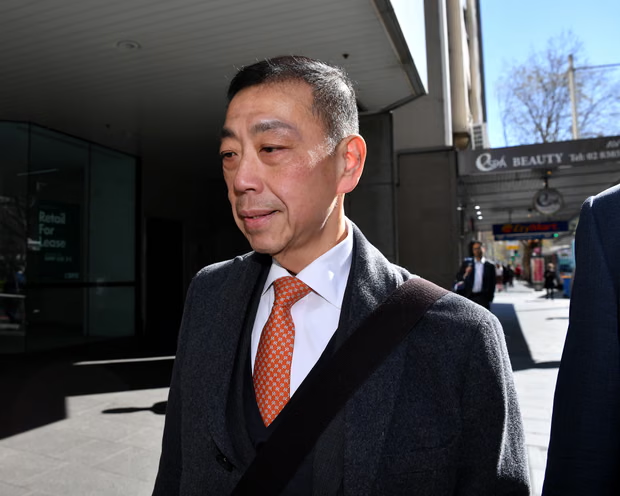
According to an official statement, the director of public prosecutions is targeting these specific individuals. The legal action focuses heavily on former New South Wales member of parliament Ernest Wong. Facing charges alongside him is well-known Sydney restaurateur and prominent community figure Jonathan Yee. The independent commission initially launched a secretive, comprehensive investigation into the financial matter back in 2019. Investigators dedicated years to uncovering what they describe as a calculated, deliberate, and illegal scheme. This covert operation was designed specifically to circumvent strict state laws governing electoral campaign funding.
The core of the prosecution case rests upon activities occurring over a ten-month period. Legal documents allege the unlawful scheme operated between late October 2014 and mid-August 2015. During this time, the defendants allegedly moved substantial funds through various locations across Sydney. The state regulatory body asserts the pair actively violated the Election Funding, Expenditure and Disclosures Act. Their actions supposedly undermined the transparent framework established to keep local democratic elections completely fair. The complex legal battle will now play out inside the highly public arena of the courts.
Crucially, the current New South Wales Premier has not been accused of any personal wrongdoing. The regulatory commission explicitly clarified that no other related matters were forwarded to state prosecutors. This distinct separation isolates the premier from the immediate legal fallout of the growing financial scandal. The official findings indicate the broader investigation into the political campaign has concluded its work. No additional politicians or campaign workers face impending charges under this particular line of inquiry. The focus remains tightly fixed on the specific actions of the two named defendants.
The roots of this dramatic legal development trace back to a massive anti-corruption inquiry. Regulatory officials first discovered evidence of potential breaches during a highly publicized watchdog operation. That sprawling investigation, known publicly as Operation Aero, captured intense media attention across the nation. In a landmark 2022 report, the anti-corruption agency found Ernest Wong guilty of corrupt conduct. The extensive corruption findings revealed he actively concealed illicit donations from a wealthy foreign property developer. That developer was later identified in open parliamentary hearings as the billionaire businessman Huang Xiangmo.
Following those historic findings, the corruption watchdog strongly recommended seeking expert advice from state prosecutors. They specifically urged a detailed review regarding the potential prosecution of several high-profile individuals. Jonathan Yee was among those specifically named as requiring further intense legal scrutiny by authorities. The original public inquiry heard gripping testimony regarding a hidden ten-thousand-dollar cash donation. This specific sum of money was allegedly injected into the local campaign during 2014. The financial transaction reportedly took place during a bustling, crowded Chinese Friends of Labor fundraising dinner.
The path to the current courtroom battle involved a complex exchange of highly confidential information. The electoral commission revealed it delivered crucial evidentiary materials to prosecutors earlier this year. These sensitive documents were transferred in stages between the months of March and May. The fresh evidence originated from a separate inquiry by a powerful state parliamentary committee. This unexpected influx of parliamentary data provided the final catalyst needed to launch formal prosecutions. The sudden convergence of separate investigative streams has effectively sealed the fate of the accused.
In an unusual move, the electoral watchdog chose to explain its decision to go public. The commission stated that releasing this highly sensitive information was firmly in the public interest. Recent legislative amendments to the state Electoral Act finally permitted the disclosure of such details. These modern laws grant the commission greater flexibility when balancing transparency with ongoing legal integrity. The public right to know about potential democratic subversion was deemed paramount by officials. This calculated transparency aims to maintain deep public confidence in the regional democratic process.
The commission carefully weighed several competing factors before making its historic Tuesday afternoon announcement. Officials considered the immense importance of supporting the administration of justice across the state. They also emphasized the fundamental need for total fairness to the specific individuals involved. Furthermore, maintaining the absolute integrity of the political funding system remains a primary objective. Because the specific matters are now officially before a judge, no further comments will occur. The regulatory body will remain strictly silent while the legal process runs its course.
Simultaneously, a powerful parliamentary committee held a concurrent hearing into the contentious historical donations. This legislative inquiry is meticulously examining financial contributions made between 2014 and late 2016. The political heat inside the parliament building was palpable as senior officials gave evidence. Lawmakers are determined to uncover exactly how deep the alleged financial deception traveled back then. This parliamentary oversight ensures that the political lessons of the past are not entirely forgotten. The hearings provide a grim reminder of the enduring consequences of illicit campaign financing.
During this intense parliamentary hearing, Electoral Commissioner Rachel McCallum provided definitive, clarifying testimony. She confirmed to lawmakers that only two specific individuals have been referred for prosecution. The commissioner stated categorically that the agency holds no active lines of inquiry remaining. This reassurance effectively places a firm boundary around the scope of the current scandal. The statement brings a sense of finality to a long and grueling investigative process. It suggests that any systemic vulnerabilities identified during the probe have been thoroughly mapped.
In response to the fast-moving developments, the premier released a formal statement through representations. A government spokesperson emphasized that the historical donations were originally received in good faith. The administration noted that the disputed funds were subsequently and fully repaid to authorities. This proactive repayment occurred long before the current round of criminal charges was finalized. The premier has consistently maintained a stance of absolute innocence regarding the entire affair. From the very beginning, his rejection of personal wrongdoing has been entirely emphatic.
The unfolding legal drama underscores the rigorous nature of political oversight within Australian democracy. Transparent funding laws are considered vital for protecting the integrity of every single vote cast. When these systems are allegedly manipulated, the response from independent institutions is formidable. This case demonstrates that the passage of time does not diminish accountability for politicians. Actions taken a decade ago can still return to challenge the careers of leaders. The upcoming court trials will undoubtedly command significant attention from the public and media.
Related News:
 Sydney Shark Attack Surge Shocks Australia Beaches
 Andrew Hastie Emerges as Leadership Rival to Ley
 Search Intensifies for Missing Hiker on WA Bibbulmun Track
 One Nation Stuns Australia With Historic Farrer Win
 Man killed in shark attack on Great Barrier Reef
 BBC to Apologise Over Edited Trump Speech Amid Backlash
 Britain deploys RAF specialists to assist Belgium with drone threats
 Palace May Restore Hyphen to Andrew Mountbatten-Windsor’s Name
 Greene Pushes Epstein Files Amid Trump Fallout
 December Run-Off in Chile as Election Produces No Winner
 Zelenskyy Signs Fighter Jet Deal Amid Russian Drone Attacks
 Canada Passes Carney’s First Budget in Tight Parliamentary Vote
 Shadow Fleet at Sea: Europe’s Battle Against Illicit Oil Shipping
 Tiny Curacao Makes History as Smallest Nation to Reach World Cup
 Deadly Russian Strikes Hit Western Ukraine, 20 Killed in Ternopil
 Ukraine Peace Plan: Zelensky Ready for Dialogue
 Royal Navy Shadows Russian Warships Entering the Channel
 US Suspends Afghan Immigration After White House Shooting
 Georgians Defy Government Crackdown After Year of Protests
 Tokyo court rules Japan’s same-sex marriage ban constitutional
 ‘Extinct’ Antelope Returns to Sahara, Bringing Hope
 Irish Beach Tragedy: Irish Drown at Whitehaven Beach in Australia
 Sanctioned oil tankers sail Channel amid Russia scrutiny
 PM pushes urgent hate speech and gun laws after Bondi terror attack
 US and UK Withdraw Personnel as Middle East Tensions Rise
 Bondi memorial flowers preserved in lasting tribute artwork
 Half the World’s Largest Cities Face Rising Water Stress
 Pentagon Signals Reduced Role in Deterring North Korea
 UK and US Drop in Global Corruption Index Rankings
 SA Police Intensify Search in Gus Lamont Case
 Canberra Poster Seizure Sparks Free Speech Row
 Evo Morales Returns After Mysterious Absence
 El Mencho Killed as Mexico Faces Violence
 Australian children in Syria deserve safe return
 ‘It’s a horrible feeling’: Loma Bropho’s Struggle to Secure Housing
 Greenpeace $345m Ruling Sparks Appeal Battle
 Jacinda Ardern Moves To Australia Following Her US Fellowships
 Jacinda Ardern Move Sparks Kiwi Reflection
 Middle East Airspace Crisis Strands Thousands
 Nick Greiner Warns Over Election Review Fallout
 Kelly Wilkinson Inquest Reveals Bail Failure
 Tehran Strikes Mark War’s Most Devastating Night
 Injured Mojtaba Khamenei Elevated as Iran Leader
 Gordon Brown urges court for crimes against children
 Gaza Detainee Abuse: Israel Drops Charges Against Soldiers
 The Kill Line: A Shifting Vision of the American Dream
 Oil Prices Jump After Trump Claims Iran Oil Hub Destroyed
 Pakistan Targets Militant Hideouts in Afghanistan
 Lebanon Ground Campaign Raises Occupation Fears
 Family of Alleged Bondi Gunman Seeks Name Suppression
 UK Condemns Reckless Iranian Missile Threats on Global Bases
 ICE detention warning sparks fear among immigrants
 Air Canada CEO Faces Outcry Over Recent Language Misstep
 Extreme Weather: Europe Shivers as Cyclone Narelle Hits
 Sam Konstas Dropped as Australia Unveils New Contract List
 Asia Turns Back to Coal Amid Middle East Energy Crisis
 Relationship with Trump may be beyond repair, Starmer warned
 Trump’s Six-Week Iranian War: The High Cost of Ignorance
 Artemis II Returns After Historic Moon Flyby
 Orbán Ousted: Péter Magyar’s Tisza Party Wins in Hungary
 Trump Brokers Landmark Lebanon Ceasefire Amid Regional Hopes
 Ben Roberts-Smith Denies War Crime Allegations in First Statement
 Labor Reforms NDIS Amidst Mounting Budget Concerns
 UK Stands Firm on Falklands Amid US Rift
 Oil Prices Surge Above $120 Amid Iran Blockade Fears
 Trump orders US troop pullout from Germany
 Japan Protests Erupt Over Plans to Revise Constitution
 Global Conflict Hits Home As Bullock Warns Of Economic Pain
 RFU Backs Borthwick Despite England’s Poor Six Nations
 Infantino Defends Soaring World Cup 2026 Ticket Costs
 Trump Announces 3-Day Russia–Ukraine Ceasefire Deal
 Trump Rejects Tehran Peace Plan as Regional Truce Crumbles
 Cruisers Face Perth Quarantine After Hantavirus Outbreak
 Fear and Betrayal: The Chilling Case of Kouri Richins
 Maldives Cave Diving Tragedy Raises Safety Alarm
 Farage and Reform UK Reshape British Politics
 Aukus Deal Facing Fierce Backing and Historic Criticism
 Le Pen to Run for President Despite Embezzlement Conviction
 Ukraine Creates Long-Range Strike Command
 Houthis Strike Saudi Arabia as Middle East Tensions Rise