Published: 29 July 2026 | The English Chronicle Desk | The English Chronicle Online
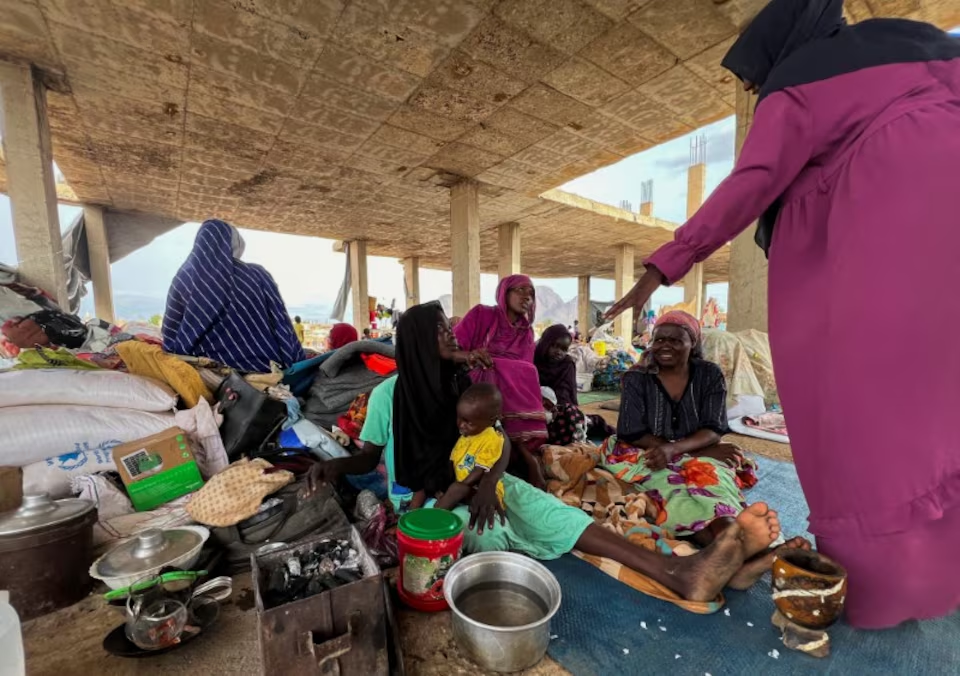
Thousands of civilians trapped in a key Sudanese city say they have nowhere safe to go as fighters from the Rapid Support Forces (RSF) continue advancing, deepening fears of further violence and a worsening humanitarian crisis.
Residents and aid organisations have described a desperate situation, with families sheltering in homes, schools and temporary camps while facing shortages of food, medicine and basic supplies. Many civilians say they are caught between front lines, with escape routes becoming increasingly dangerous as fighting spreads.
The crisis comes as Sudan’s devastating civil war continues to cause widespread displacement, destruction and suffering more than two years after conflict erupted between the Sudanese Armed Forces (SAF) and the RSF.

The city at the centre of the crisis has become a strategic battleground because of its military and political importance.
As RSF fighters push forward, residents say uncertainty and fear have increased. Many families want to leave but face major obstacles, including dangerous roads, high transport costs and the risk of being caught in clashes.
Some residents say they have attempted to flee but were forced to return because routes out of the city were too unsafe.
Others say they cannot afford transportation or do not know where they would find shelter if they managed to escape.
Humanitarian groups warn that civilians are facing an impossible choice: remain in areas threatened by fighting or attempt a dangerous journey into an uncertain future.
Aid organisations say conditions for civilians have deteriorated rapidly.
Many families have limited access to clean water, electricity and healthcare. Hospitals and medical facilities in conflict zones have struggled to operate because of shortages of supplies, damage to infrastructure and insecurity affecting healthcare workers.
Children, older people and those with existing medical conditions are among the most vulnerable.
Relief agencies have repeatedly called for safe humanitarian access so that food, medicine and emergency assistance can reach communities affected by the fighting.
However, ongoing clashes and security concerns have made aid deliveries extremely difficult.
The RSF, a powerful paramilitary organisation that emerged from Sudan’s former Janjaweed militias, has been fighting the Sudanese military since April 2023.
The conflict began after disagreements between the two sides over the future structure of Sudan’s security forces during a planned transition to civilian rule.
Since then, fighting has spread across several parts of the country, creating one of the world’s largest displacement crises.
The RSF has gained control over significant areas of Sudan, while the military continues to hold key positions, including important government institutions and strategic locations.
Both sides have been accused of serious violations during the conflict, including attacks affecting civilians.
Residents in areas threatened by RSF advances say they fear a repeat of violence seen elsewhere during the war.
Human rights organisations have documented allegations of killings, sexual violence, forced displacement and attacks on civilian infrastructure during fighting in Sudan.
The RSF has denied accusations of widespread abuses and has said it is committed to protecting civilians.
The Sudanese military has also faced accusations of violations during the conflict.
International observers have warned that continued fighting increases the risk of further atrocities and deepens the humanitarian emergency.
Sudan’s war has forced millions of people from their homes, creating one of the largest displacement crises in the world.
Many displaced families have sought refuge in neighbouring countries, including Chad, Egypt, South Sudan and Ethiopia.
Others remain internally displaced, moving between cities and rural areas in search of safety.
However, humanitarian organisations say there are fewer and fewer safe areas available as fighting expands.
Many displaced people are living in overcrowded shelters with limited access to essential services.
For civilians caught in the conflict, daily life has become a struggle for survival.
Parents worry about finding enough food for their children, while many families have been separated during attempts to flee violence.
Schools in conflict areas have been closed or converted into shelters, disrupting education for millions of children.
Healthcare systems have been severely affected, leaving many people without access to treatment for injuries or chronic illnesses.
Residents say the psychological impact of living through constant violence is also severe, particularly for children who have experienced repeated displacement and fear.
The international community has urged Sudan’s warring parties to agree to ceasefires and allow humanitarian assistance to reach civilians.
The United Nations and humanitarian organisations have repeatedly warned that the conflict could create even greater suffering if fighting continues.
Diplomatic efforts have taken place through regional and international channels, but attempts to secure a lasting peace agreement have repeatedly failed.
Both military and RSF leaders have publicly expressed willingness to negotiate at different points, but disagreements over political control and security arrangements have prevented a breakthrough.
The war has also devastated Sudan’s economy.
Businesses have closed, infrastructure has been destroyed and millions of people have lost sources of income.
Food prices have risen sharply in many areas, making basic necessities unaffordable for many families.
Agricultural production has also been disrupted, increasing concerns about hunger and food shortages.
Aid agencies warn that economic collapse could worsen the humanitarian situation even if fighting decreases.
For thousands sheltering in the city, the future remains unclear.
Many residents say they are exhausted after months of fear and uncertainty but have few options available.
Leaving could expose them to danger, while staying could mean facing advancing forces and continued fighting.
Families continue searching for information about safe routes, available assistance and possible evacuation opportunities.
Humanitarian workers say the priority must be protecting civilians and ensuring that people are not forgotten amid the wider political struggle.

The war between the RSF and Sudanese military has transformed what was once a political dispute into a nationwide humanitarian disaster.
With no immediate end to fighting, civilians remain the greatest victims of the conflict.
The situation in the besieged city reflects the broader reality facing millions across Sudan: a population caught between armed groups, political uncertainty and a desperate need for peace.
As RSF forces continue their advance and battles continue elsewhere, residents say their greatest hope is simple—to survive and find a safe place where they and their families can live without fear.
Related News:
 BBC to Apologise Over Edited Trump Speech Amid Backlash
 Britain deploys RAF specialists to assist Belgium with drone threats
 US Justice Department Files Lawsuit Against California Over Partisan Voting Maps
 Greene Pushes Epstein Files Amid Trump Fallout
 Trump Deploys DHS to Charlotte in Major Arrest Operation
 December Run-Off in Chile as Election Produces No Winner
 Canada Passes Carney’s First Budget in Tight Parliamentary Vote
 Shadow Fleet at Sea: Europe’s Battle Against Illicit Oil Shipping
 Pentagon Officials in Ukraine to Discuss War End
 Venezuela Threatens Nobel Winner Machado with Fugitive Status
 Georgians Defy Government Crackdown After Year of Protests
 EU plans $105bn Ukraine aid using frozen Russian assets
 Global campaign launched to free Palestinian leader Barghouti
 Russia losses Ukraine war peace talks intensify amid rising deaths
 Zelenskyy Accuses Russia of Sabotaging Peace Talks
 Albanese Opens Door to Bondi Royal Commission Amid Rising Pressure
 Trump Escalates Minnesota Immigration Surge Amid Rising Tensions
 Iran Protesters Defy Crackdown as Violent Clashes Intensify
 Trump Threatens Strong Action If Iran Executes Protesters
 Machado Trump medal gesture reshapes Venezuela power struggle
 Trump Receives Machado’s Nobel Medal in White House Meeting
 EU weighs response amid Greenland tariff crisis with Trump
 US Considers Asylum for British Jews Amid Rising Antisemitism
 ICE street raids expose a chilling future for public freedoms
 EU Says US Ties Have Suffered ‘Big Blow’ After Greenland Crisis
 Andrew Hastie Emerges as Leadership Rival to Ley
 Starmer China visit raises human rights pressure on Beijing
 Israel Moves to Bar MSF From Gaza Operations
 Trump Praises ‘Terrific’ Petro After White House Talks
 Sydney Protest Escalates and Elderly Woman Suffers Severe Injury
 Tarique Rahman’s Rise Toward Bangladesh’s Top Job
 Australian Families Leave Syrian Camp for Home
 Trump Attacks UK-California Energy Pact
 Kim Jong-un Unveils Housing for War Families
 Trump and Chagos Deal Rift Over Iran Strikes
 Andrew Arrest Sparks Republic Debate in Australia
 Global corruption crisis: Who Washington shields
 Farage Chagos Islands Row Sparks Fury
 Chad Shuts Border With Sudan in Bid to Stop Conflict Spreading
 Trump Speech Sparks Intense Debate Across Divided America
 Jacinda Ardern Moves To Australia Following Her US Fellowships
 Has Europe truly learned from the failures of 2022?
 Trump Faces Questions Over Iran Conflict Plan
 Herzog Asio meeting sparks security storm
 UK Prepares Aircraft Carrier for Middle East Crisis
 Pete Hegseth Iran War Remarks Spark Alarm
 Kasasa Island Dispute Fuels Japan-China Tensions
 Trump Pressures Congress Over Save America Act
 Iranian Football Squad Asylum Drama Shocks Australia
 Queensland Protest Laws Spark Free Speech Backlash
 Eswatini Deal Sparks Global Outcry Over US Deportations
 Yvette Cooper: UK Must Follow Principles, Not US Pressure
 Trump Iran War Stance Hardens as Conflict Widens
 Hormuz Strait Crisis: Trump Pressures Allies to Act
 Trump Nato threats expose Iran strategy vacuum
 Philippines energy emergency sparks coal power surge
 Trump Iran Plan Faces Doubts Amid Renewed Tensions
 Trump Facing Backlash from Epstein Survivors Over Files
 Report Says Pezzullo Acted ‘Recklessly’ in Dealings
 Trump Employs Nixon’s Madman Theory Amid Iran Crisis
 Canadian astronaut French words ease language row
 Southeast Asia Turns to Russia Amid Energy Crisis
 US Calls Australia Media Law “Foreign Extortion”
 Capitalism ‘Suicidal’, Warns Petro at Climate Summit
 Cartel crackdown raises fears of fresh violence
 Trump Threatens UN Budget Cuts as US Pushes ‘Trade Over Aid’ Agenda
 US Court Restores Abortion Pill Access Temporarily
 Tensions Emerge in Netanyahu-Trump Alliance
 US Awaits Iran Reply on New Ceasefire Proposal
 “The Eagle’s Catch”: Fugitive Former Power Minister Saleh Mamman Apprehended in Pre-Dawn Raid
 Discontent grows around Putin amid war strain
 Farage and Reform UK Reshape British Politics
 Trump’s Iran Legacy Hangs on Tehran Deal
 UK Government Cancels Higher Education Programme for Women and Girls
 Le Pen to Run for President Despite Embezzlement Conviction
 NATO Unveils £37bn Joint Missile Defence Initiative
 Le Pen’s Popularity Holds Despite Conviction
 Bangladesh President to Step Down After Political Shift
 Burnham Reaffirms Support for Ukraine During Zelensky Visit
 Trump Hosts Zelensky and Netanyahu as Ukraine and Iran Conflicts Shape Global Agenda