Published: 23 September 2025. The English Chronicle Desk. The English Chronicle Online
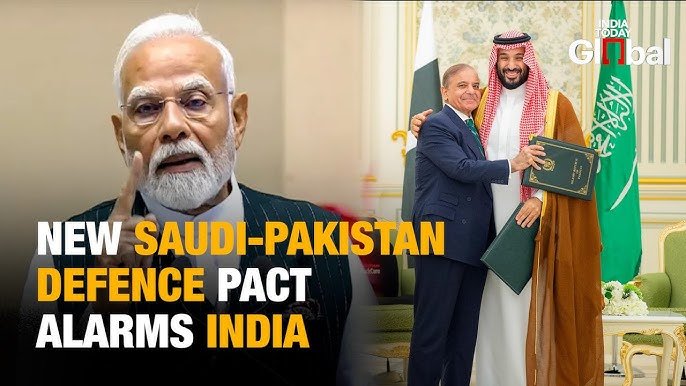
When Pakistan’s Prime Minister Shehbaz Sharif embraced Saudi Crown Prince Mohammed bin Salman in Riyadh last week, the gesture carried a significance far beyond warm diplomacy. It was the culmination of a strategic mutual defence agreement between Pakistan—the Islamic world’s only nuclear-armed nation—and Saudi Arabia, the Gulf’s most ambitious monarchy. The signing of this pact has rippled through South Asia and the Middle East, but nowhere more uneasily than in India, where policymakers, analysts and the public alike are weighing the implications for regional security.
According to Saudi officials, the agreement merely formalises decades of military and defence cooperation between the two countries, including troop deployments, training and the supply of weapons. Yet the wording of the deal—that “any aggression against either country shall be considered an aggression against both”—has unsettled India deeply. At a time of simmering hostility between New Delhi and Islamabad, the notion of Saudi Arabia underwriting Pakistan’s security has raised alarm bells. India and Pakistan, both nuclear powers, have fought multiple wars since partition in 1947, most of them centred on the disputed region of Kashmir. Their relationship has deteriorated sharply this year following a brief but deadly four-day conflict, making Riyadh’s latest alignment with Islamabad appear particularly provocative to Indian observers.
Prominent Indian strategist Brahma Chellaney described the pact as a clear message to Delhi, suggesting that Saudi Arabia sought to tie itself to Pakistan’s manpower and nuclear capabilities in a way that could serve as both insurance and leverage. He argued that Riyadh’s decision reflected less on Pakistan’s strength—given its persistent economic crises and dependence on foreign aid—than on Saudi Arabia’s ambitions to position itself as a more independent actor in global geopolitics. Chellaney and others warn that Riyadh, by binding itself to Pakistan, risks destabilising the security balance in South Asia while signalling to India and even Washington that its strategic autonomy will not be compromised.

Former Indian foreign secretary Kanwal Sibal was even more critical, calling the agreement a “grave misstep” by Saudi Arabia. He argued that backing an economically fragile and politically volatile Pakistan as a security guarantor was a dangerous proposition that could directly threaten India’s security. To Sibal, the move was “strategically adventurous” and carried the risk of undermining the fragile equilibrium that India has carefully maintained with Riyadh in recent years.
The Indian government itself has responded more cautiously, avoiding public confrontation with Saudi Arabia. A foreign ministry spokesman said New Delhi would carefully study the implications of the pact for “national security and regional and global stability.” He also expressed hope that Saudi Arabia would continue to value its deep and mutually beneficial strategic ties with India, which is Riyadh’s second-largest trading partner and one of its top buyers of crude oil.
Despite these reassurances, many Indian analysts fear the agreement could gradually tilt the regional balance of power. Michael Kugelman, a South Asia expert, downplayed the immediate military risks, pointing out that Saudi Arabia is unlikely to engage in hostile acts against India given its vast trade and energy ties with New Delhi. Nevertheless, he warned that by formally embedding Pakistan within the Middle East’s security architecture, Riyadh had effectively “checkmated” India, anchoring Islamabad more firmly to a trio of powerful patrons: China, Turkey and now Saudi Arabia. Both China and Turkey provided arms to Pakistan during its recent clashes with India, and their alignment with Saudi Arabia could consolidate into a more formidable bloc.
Former Pakistani ambassador Husain Haqqani, now a scholar in Washington and Abu Dhabi, suggested that the pact could echo the Cold War era when the United States served as Pakistan’s main benefactor. With Saudi financial power behind it, Pakistan could rebuild its military strength and potentially offset India’s dominance in South Asia. Haqqani emphasised that the details of the pact—including how “aggression” is defined—would determine its true scope, but he acknowledged that it could complicate India’s economic and diplomatic overtures to Riyadh.
Some experts, however, caution against overstating the novelty of the pact. Md. Muddassir Quamar of Jawaharlal Nehru University in Delhi pointed out that Saudi-Pakistan defence ties stretch back to the 1960s, when Pakistani soldiers helped strengthen the Saudi military and even played a role in suppressing the 1979 Mecca mosque siege. In more recent decades, Pakistan has supplied weapons, trained Saudi officers, and provided ideological solidarity as well as security manpower. Riyadh even appointed a former Pakistani army chief to lead its Saudi-backed coalition against ISIS in 2017. In this sense, Quamar argues, the new pact is simply a formalisation of a relationship that has always been close.
The deeper driver of this agreement, analysts say, lies in Saudi Arabia’s shifting view of its own security environment. Confidence in the US security umbrella has waned in Riyadh, particularly following American hesitancy to respond to regional crises, including Iranian threats and Israel’s recent military actions that unsettled Gulf states. By turning to Pakistan, Saudi Arabia is signalling its intent to diversify security partnerships and reduce reliance on Washington. As Ahmed Aboudouh of Chatham House noted, the pact is less about battlefield commitments and more about showing that Riyadh can chart an independent course. While Saudi Arabia continues to cooperate militarily with the US, the partnership with Pakistan underscores its determination to broaden its strategic options.
For India, the risks may be more political and diplomatic than military. Analysts warn that the pact could eventually evolve into an “Islamic NATO,” hardening regional alliances in a way that complicates India’s “Look West” policy, which has prioritised building closer economic and strategic ties with Gulf states. If Saudi Arabia and Pakistan deepen their defence cooperation, India could find itself facing not only its arch-rival Pakistan but also a coalition of Muslim-majority states aligned against it. Such a development could undermine New Delhi’s efforts to project itself as a bridge between Asia and the Middle East.
From Pakistan’s perspective, the pact offers an invaluable lifeline. Islamabad has long relied on Saudi Arabia for financial support, including deferred oil payments and direct economic aid during crises. By linking itself more closely to Riyadh, Pakistan stands to gain both material assistance and greater legitimacy in the Arab and Islamic worlds. The defence agreement may also bolster its strategic leverage against India at a time when bilateral relations are once again at a low point.

Whether the pact ultimately alters the regional balance of power remains uncertain. For now, it symbolises both Saudi Arabia’s desire for autonomy in its defence partnerships and Pakistan’s enduring reliance on Gulf allies for survival and strength. For India, the challenge lies not in immediate military threats but in the optics of a shifting Middle Eastern alignment that increasingly places Pakistan at the centre.
As experts note, the true measure of the pact will be seen in how Riyadh and Islamabad define “aggression” and whether Saudi Arabia is genuinely willing to involve itself in Pakistan’s disputes with India. Until then, New Delhi will remain wary, carefully recalibrating its strategies while keeping a watchful eye on a partnership that could reshape the geopolitics of South Asia and the Middle East.
Related News:
 Ousted Bangladeshi Leader Sheikh Hasina Indicted for Crimes Against Humanity Amid High-Stakes Trial for 2024 Uprising
 Shadow Fortresses in the Sea: Satellite Revelations Expose China’s Expanding Military Stronghold in Disputed Waters
 Singapore Corruption Scandal: Details Emerge on Iswaran’s Luxury Flight and Ties to Tycoon Ong Beng Seng
 Tariff Tempest: India Rebukes Trump’s ‘Unfair’ Oil Sanctions as Diplomatic Tensions Mount
 UN Calls for Renewed Global Solidarity as Rohingya Forced Exodus Marks Eight Years
 Xi, Putin and Kim Display Unified Front at Massive Beijing Military Parade
 Deadly Bomb Blast Strikes Near Political Rally in Quetta
 India Triumph in Dubai Amid Unexpected Twists
 Typhoon Ragasa Batters Taiwan, Hong Kong and China
 Gen Z Uprising in Asia: How Social Media and TikTok Fuel Anti-Corruption Movements
 Thai Court Sentences Assassin of Cambodian Opposition Politician to Life Imprisonment
 Taliban Diplomatic Breakthrough: Why Amir Khan Muttaqi’s Visit Marks a New Era in India-Afghanistan Relations
 Acclaimed South Korean Author Baek Se-hee Passes Away at 35, Leaves Legacy Through Writing and Organ Donation
 China’s Youth Save, Not Spend, Amid Job and Housing Worries
 British Doctors Arrested in India for Unauthorized Border Crossing
 Israeli Strike Kills 13 Near Palestinian Camp in Lebanon
 India’s COP30 Delay Raises Global Climate Concerns
 Night Bus Crash in Cambodia Kills 16
 Historic Floods Devastate Thailand and Southeast Asia
 Hong Kong Wang Fuk Court Fire Leaves Dozens Dead
 Singapore Women Acquitted After Pro-Palestine March
 Thousands Homeless After Massive Fire in Dhaka Shantytown
 Sri Lanka Floods Leave 56 Dead, Dozens Missing
 India’s Labour Law Overhaul Sparks Fierce Debate
 Video shows Israeli troops kill Palestinians after surrender
 Fury After Hong Kong’s Deadliest Fire in Decades
 ICC to Rule on Duterte’s Provisional Release
 Huawei, ZTE secure 5G deals in Vietnam amid US tensions
 Southeast Asia floods claim 241 lives, rescue efforts continue
 Chinese & Japanese Boats Clash Near Disputed Islands
 Hong Kong Orders Probe Into Deadly 151-Death Fire
 Putin Meets US Envoy Amid Key Ukraine Peace Talks
 Maxwell withdraws from IPL 2026 after 13 seasons
 Indonesia to Repatriate Two Dutch Drug Convicts
 Kinnock’s Rebuke Echoes Loudly as Corbyn Allies Launch Left-Wing Breakaway: “A Gift to Farage”
 Post Office Scandal Compensation Tops £1 Billion as Victims Finally See Justice
 Exclusive: Leaked Documents Reveal Khan’s Controversial Road Policy Overhaul – Drivers Warn of ‘Final Nail in Coffin’
 UK Banks Granted Reprieve as BoE Delays Basel III Capital Rules Until 2028
 Trump Administration Dismisses 17 Immigration Judges, Sparking Debate Over Judicial Independence
 England Grapples with Unprecedented Bluetongue Virus Outbreak: Entire Nation Declared Infected Zone
 Northern Ireland Family of Three Shot Dead in Maguiresbridge Home Incident
 West End Exposed as London’s Knife Crime Epicentre Amid Alarming Surge in Violence
 Mystery Wallaby Spotted on Norfolk-Suffolk Border Sparks Police Appeal
 Peter Andre Breaks 16-Year Silence with Scathing Statement Against Katie Price
 UK Weather: Heat Alerts Extended as Temperatures Set to Reach 30°C This Weekend
 Access to Iconic Cornish Beach Cut Off by National Trust Amid Safety Concerns
 Hundreds of Swimming Pool Closures Leave Children ‘At Risk of Drowning’, Union Warns
 Denmark Investigates Professional Drone Incursions Across Multiple Airports, No Evidence of Russian Involvement
 Arsenal Showcase Depth and Flexibility as Arteta Eyes Title Challenge
 UK Affirms No Relaxation of Visa Rules for India Amid Trade Push
 Vice President Vance Warns of ‘Painful’ Job Cuts as U.S. Government Shutdown Deepens
 Japanese Court Sentences Man to Death for 2023 Quadruple Murder in Rare Gun and Knife Attack
 Zelensky to Urge Missile Aid as Trump and Putin Plan Summit
 Manchester United triumph as Mbeumo brace seals thrilling win
 Hospice Cuts Raise Alarm Across England Amid Funding Crisis
 Tragedy on Lizard Island: Cruise Passenger Dies
 Zarah Sultana Launches Party to Change Politics
 US Senate Passes Funding Bill to End Historic Shutdown
 Mary Earps’s Manchester United Return Faces Mixed Reception
 Son Reveals UK Couple in Iran Resort to Hunger Strike for Help
 Pressure Mounts on Starmer to Sack Chief of Staff Over Briefing Row
 Japan Deploys Police to Curb Deadly Bear Attacks
 US Justice Department Files Lawsuit Against California Over Partisan Voting Maps
 Former Lion Heskey Warns of Shortage of England Strikers
 Orban Says Ukraine Has ‘No Chance’ as EU Support Continues
 Mother Watches in Horror as Teen Daughter Dies on Tracks
 Seven Countries, One Winner: Europe’s Best Christmas Market
 Haiti Qualifies for World Cup Despite Coach Never Visiting Country
 Serial Rapist and Former Cop Found Guilty Again
 Pentagon Officials in Ukraine to Discuss War End
 Vietnam Battles Deadly Floods as Rains Continue
 Scottish Families Take Legal Action Over School CO Leak
 Venezuela Threatens Nobel Winner Machado with Fugitive Status
 Vicki Fears Losing Motability Car
 Millions Face Higher Taxes Under Reeves New Budget
 Two National Guard Soldiers Critically Injured Near White House
 Southern Lebanon reels as Israeli strikes shatter communities
 Jordan Bardella: France’s Young Presidential Contender
 Search underway for British man overboard off Tenerife
 Pavarotti statue frozen in Italian ice rink sparks backlash