Published: 28 September ‘2025. the English Chronicle Desk
The international community may be on the cusp of a historic breakthrough in Gaza, as signs emerge that world powers are coalescing around a potential peace agreement that could bring an end to more than two years of devastating conflict. The situation in Gaza, marked by widespread destruction, loss of life, and an ongoing humanitarian catastrophe, has captured global attention, and senior UK politicians are now cautiously optimistic that the long-standing impasse may finally see resolution.
Speaking after returning from a United Nations summit, the newly appointed UK Foreign Secretary, Yvette Cooper, indicated that a rare moment of international consensus appears to be forming. “We have reached a moment where the world wants to end this war,” Cooper told the Guardian in an exclusive interview ahead of the Labour party conference in Liverpool. She suggested that recent diplomatic efforts, including statements from US President Donald Trump indicating that a peace deal was within reach, signal tangible progress toward ending the hostilities.

Cooper, a veteran Labour politician, underscored the urgency of the situation on the ground in Gaza, where civilians continue to bear the brunt of the conflict. She urged the Israeli government to reconsider its current military strategy, warning that continued offensives are exacerbating an already dire humanitarian crisis. While Cooper refrained from declaring the ongoing violence as constituting genocide—a position aligned with the UK government’s legal assessment—she emphasised that halting the bloodshed must be the immediate priority.
“The words seem hollow in the face of the screams and suffering of children in Gaza,” Cooper said. “The world must seize the momentum behind this potential peace deal to ensure that we bring an end to the violence, restore humanitarian aid, and release those being held hostage. Every day that passes without action prolongs unimaginable suffering.”
The peace initiative, reportedly backed by the White House, envisions the temporary leadership of Gaza by a technocratic administration under former UK Prime Minister Tony Blair. Blair’s involvement, facilitated through his enduring ties with Gulf states and connections with key figures in Washington, is seen as an attempt to provide neutral oversight while stabilising the region. Cooper, however, was circumspect regarding the former prime minister’s role, noting the sensitivities surrounding his past interventions in the Middle East, including the controversial Iraq War of 2003.
“There is a consensus forming, and there was real energy and determination at the UN around achieving peace,” Cooper said. She described the process as beginning with essential steps: the establishment of a ceasefire, the restoration of humanitarian aid, and the release of hostages, while acknowledging the fragility and complexity of the negotiations. Cooper stressed that the path to peace will not be straightforward, highlighting the entrenched political and logistical obstacles that must be navigated carefully.
The White House has reportedly drafted a 21-point plan aimed at stabilising Gaza, aligned broadly with a UN-endorsed framework for Palestine. The proposals emphasise no mass displacement, the exclusion of Hamas from administrative roles, and no further annexation in the West Bank. Diplomats caution, however, that aspects of the plan remain contentious, particularly Blair’s proposed leadership role and the distribution of responsibilities between international actors. Cooper confirmed that work continues to align the various stakeholders while maintaining the fragile consensus achieved so far.
Cooper’s comments come at a time of heightened concern over the impact of ongoing military action on Gaza’s civilian population. She emphasised that there is no viable military solution to the crisis and that the security of both Israelis and Palestinians depends on an urgent cessation of hostilities. “The Israeli government urgently needs to change course,” she said. “Security cannot be achieved through further offensives. True safety for Israelis and Palestinians alike comes from dialogue, compromise, and the restoration of humanitarian conditions.”
Internally, the UK Foreign Office continues to assess the risk of atrocities in Gaza, with the current determination that the situation, while catastrophic, does not legally constitute genocide. Nonetheless, Cooper acknowledged the emotional weight of the crisis, describing the global distress as palpable and underscoring the moral imperative to act decisively. “The horror is visible to all, and the feeling that nothing is being done is palpable. The challenge now is to convert this rare moment of international focus into concrete action that ends the war and lays the groundwork for lasting peace,” she said.

The Foreign Secretary also addressed wider geopolitical concerns, including Russian military activity over Poland and Scandinavian countries. Cooper accused President Vladimir Putin of deliberate provocation intended to destabilise Europe, urging the US and NATO allies to take stronger collective action. She highlighted the need for a more comprehensive approach to sanctions on Russian oil and gas, calling for coordinated international measures to counter ongoing threats to European security.
While the coming weeks will determine whether these diplomatic efforts translate into tangible outcomes on the ground, Cooper’s statements suggest cautious optimism that a concerted international effort could finally break the deadlock in Gaza. The emphasis on immediate humanitarian relief, a ceasefire, and a structured peace process reflects a shift in global priorities, signalling that the world may be ready to confront one of the longest-running conflicts in recent memory with renewed determination and political will.
The situation remains fluid, and challenges are manifold. Yet Cooper’s remarks provide a rare window into the behind-the-scenes diplomacy and emerging international consensus that may, for the first time in years, offer hope to the people of Gaza and to the broader Middle East. The coming diplomatic engagements, including upcoming meetings with Israeli and Palestinian leaders, will be critical in shaping whether this potential peace deal can move from aspiration to reality, bringing an end to the prolonged suffering of countless civilians caught in the crossfire.
Related News:
 Kinnock’s Rebuke Echoes Loudly as Corbyn Allies Launch Left-Wing Breakaway: “A Gift to Farage”
 Tories in Turmoil as Sir Jake Berry’s Defection to Reform Sparks Fears of Further Exodus
 UK and Norway Forge Stronger Ties Through Joint Sanctions and Enhanced Defence Cooperation
 Trump Administration Dismisses 17 Immigration Judges, Sparking Debate Over Judicial Independence
 Lammy Condemns Israel’s Targeting of Starving Palestinians: Sanctions Threatened Amid Global Outrage
 Tony Blair Pressured to Repay Thousands for Designer Clothing Discounts, Reveals Newly Declassified Records
 Modi’s London Visit Seals Historic UK-India Trade Pact Amid Global Tensions
 UK Must Act with Courage and Clarity on Israel-Palestine Conflict, Says Foreign Affairs Committee Report
 Philippine Supreme Court Halts Impeachment of Sara Duterte, Fuelling 2028 Election Speculation
 New Missile, New Balance: US Precision Strike Weapons Redefine Taiwan’s Defence Horizon
 Trump Threatens 100% Tariff on Nations Importing Russian Oil Amid India Standoff Over Ukraine War
 MPs Call on UK Government to Delay Biometric Visa Checks for Gaza Students Amid Humanitarian Crisis
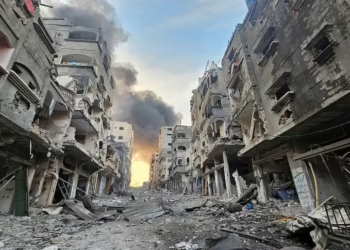 Netanyahu Announces Plan to Take Over Gaza City, Escalating Conflict Further
 Radioactive Leak at UK’s Nuclear Warhead Base Sparks Outcry Over Safety and Secrecy
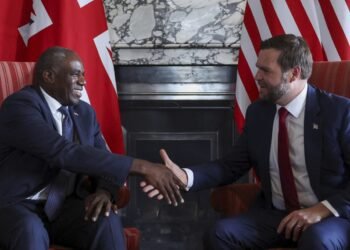 Lammy and Vance Meet in Britain to Advance US-Brokered Ukraine Peace Talks
 Mutual Inconvenience: Why Alaska Was Chosen for the Trump-Putin Summit on Ukraine
 Prominent Al Jazeera Journalist Anas al-Sharif Among Five Reporters Killed in Israeli Airstrike on Gaza
 Hong Kong Summons UK and Australian Envoys Following Asylum Grants to Democracy Activists
 Is the UK Ready to Put Boots on the Ground in Ukraine? Assessing Military Capacity and Challenges
 Ukraine-Russia War Latest: Trump Suggests Putin Avoiding Zelensky Summit Due to ‘Personal Dislike’
 Protests Expected as Israeli Arms Firms Join Global Defence Trade Fair in London
 Trump Appears Sidelined as Israel’s Unprecedented Strikes Hit Qatar
 Meeting Between Keir Starmer and Israeli President Marked by Tense Exchanges Over Gaza Aid
 Conservative Influencer Charlie Kirk Fatally Shot During University Debate
 UK Imposes 100 New Sanctions Targeting Russia’s Revenues and Military Supplies
 Thousands Gather in London to Protest Donald Trump’s Second UK State Visit
Trump Urges UK to “Call Out the Military” to Secure Borders Amid State Visit
Thousands Gather in London to Protest Donald Trump’s Second UK State Visit
Trump Urges UK to “Call Out the Military” to Secure Borders Amid State Visit
 Channel Crossings Surge: Over 1,000 People Arrive in the UK in Small Boats in a Single Day
 Widow of Charlie Kirk Forgives Killer at Emotional Memorial Service
Trump’s UN Speech Criticises London and UK Policies, Draws Far-Right Attention
Widow of Charlie Kirk Forgives Killer at Emotional Memorial Service
Trump’s UN Speech Criticises London and UK Policies, Draws Far-Right Attention
 Denmark Investigates Professional Drone Incursions Across Multiple Airports, No Evidence of Russian Involvement
 Sir Sadiq Khan Accuses Trump of Racism and Islamophobia Following UN Remarks
 UK Fighter Jet Purchase Could Breach Nuclear Treaty, Warns CND
 Moldova’s Pro-European Party Secures Election Victory
 A Third of EU Citizens in UK Report Discrimination by Public Bodies Post-Brexit
 Jailed Georgian Opposition Leaders Warn UK of Iranian Links to Ruling Party
 Russia repeatedly targets UK military satellites, warns Space Command chief
 Pro-Palestine March to Proceed in London Despite Calls to Cancel After Manchester Attack
 Japan’s First Female Governing-Party Leader Emerges Amid Ultra-Conservative Politics
 Misinformation and Political Pressure Force Weston-super-Mare to Abandon Refugee Sanctuary Plan
 UK Universities Warn Students Ahead of 7 October Pro-Palestine Protests
 Public Trust in SNP Hits Historic Low Amid NHS Concerns
 Johnson Suggests Mandelson Linked to China Spy Controversy
 UK Extradition Law Change Sparks Fears Among Hong Kong Dissidents
 Witness statements reveal the CPS China spy row collapse in the UK
 Nigel Farage Calls Vladimir Putin ‘A Very Bad Dude’
 Rachel Reeves signals welfare reform ahead of key budget
 Kosovo agrees to host Britain’s refused asylum seekers
 Ireland Votes as Two Women Compete for Presidency
 Rachel Reeves to lead UK trade push in Saudi Arabia amid rights debate
 Experts Warn Russia’s Burevestnik Missile Could Destabilise Arms Control
 British Woman in Iran ‘Losing Hope’ Amid Ongoing Detention
 Johnson Approved China’s London ‘Super-Embassy’ in 2018
 BBC Journalist Held and Interrogated in Vietnam
 UK University Suspends Human Rights Research Following Pressure from China
 UK University Faces Counter-Terror Probe Over China Pressure
 Abigail Spanberger Elected Virginia’s First Female Governor
China-critical UK academics face ‘extremely heavy’ pressure from Beijing
Abigail Spanberger Elected Virginia’s First Female Governor
China-critical UK academics face ‘extremely heavy’ pressure from Beijing
 British military receives first Ajax armoured vehicles – eight years late
 Hannibal Gaddafi Freed After Nearly a Decade in Lebanon
 Ukraine-Russia war latest: Putin’s troops exploit bad weather to force Kyiv withdrawal from multiple towns
 Trump Claims Victory as Longest Shutdown Ends
 Hamas Fighters in Gaza Tunnels Stall Ceasefire Progress
 New review urges UK to repatriate Shamima Begum, others from Syria
 US Justice Department Files Lawsuit Against California Over Partisan Voting Maps
 Trump Deploys DHS to Charlotte in Major Arrest Operation
 Why Russian Liberals Push Strongly Pro-Israel Narratives
 Congress Approves Release of Epstein Files, Trump Expected to Sign
 Rama Rebukes Mahmood for Targeting Albanian Families
 Russian Vessel Used Lasers on RAF Pilots, UK Claims
 Pentagon Officials in Ukraine to Discuss War End
 US Military Team Visits Kyiv Amid War Talks
 Venezuela Threatens Nobel Winner Machado with Fugitive Status
 Texas Governor Faces Lawsuit From CAIR
 Trump Envoy to Discuss Ukraine Peace at Kremlin
 Pope Leo XIV Begins Historic Trip to Turkey and Lebanon
 India’s Labour Law Overhaul Sparks Fierce Debate
 Video shows Israeli troops kill Palestinians after surrender
 Trump to Recheck Green Cards from 19 Nations After DC Attack
 Chinese & Japanese Boats Clash Near Disputed Islands