Published: 03 October 2025. The English Chronicle Desk
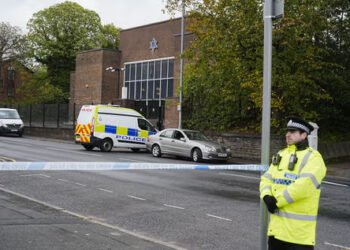
The quiet Thursday morning in north Manchester was supposed to be one of solemn prayer and reflection. Worshippers had gathered early at Heaton Park synagogue, known locally as Heaton Park shul, for the holiest day in the Jewish calendar, Yom Kippur. Rabbi Daniel Walker, dressed in long white ceremonial robes, had begun to lead the special prayers. But within minutes, the calm atmosphere was replaced by screams and chaos as a terror attack unfolded in a matter of six horrifying minutes.
At around 9.30 in the morning, witnesses noticed a small black car being driven erratically towards the synagogue gates. Some assumed the driver had lost control or perhaps suffered a medical emergency. That assumption quickly vanished when the car crashed into the gates and the driver leapt out, dressed entirely in black, wielding a knife. Without hesitation, he began stabbing people standing nearby. Panic spread instantly as an elderly man collapsed near the synagogue entrance, bleeding heavily, while another lay motionless beneath the car bonnet.
Inside the synagogue, worshippers scrambled to barricade the doors as the attacker lunged at windows, trying to force his way in. Desperate prayers turned into desperate screams. “It was a rampage,” one witness later recalled, describing how the attacker slashed indiscriminately. The synagogue had not seen such terror in its long history.

By 9.31 am, Rabbi Walker’s white robes were already bloodstained, bearing witness to the violence at the gates. The situation escalated quickly, and police, alerted by frantic emergency calls, raced to the scene. Armed response units arrived within minutes. By 9.37 am, officers had engaged the knifeman, shooting him to the ground. To the horror of those nearby, as the assailant lay prone, observers noticed three white objects strapped to his waist. “He’s got a bomb!” someone shouted. Fear rippled through the crowd, and many pleaded with officers to end the threat immediately. When the man attempted to rise again, a police marksman fired a final shot that killed him.
Within just six minutes, two people were dead and at least four others critically injured. Greater Manchester Police declared a major incident almost immediately, triggering Operation Plato — the nationwide contingency plan for marauding terrorist attacks. The area was locked down, bomb disposal teams were summoned, and military reinforcements were rushed in from surrounding counties. Two “Blue Thunder” helicopters, used by special forces, were seen circling overhead as ambulances ferried the injured to local hospitals.
For residents of the quiet neighbourhood of Crumpsall, the sudden descent of violence was almost incomprehensible. Fran Barrie, a 75-year-old local resident whose flat overlooks the synagogue, recalled hearing a loud crash followed by a series of bangs. “At first I thought it was a car accident,” she explained, “but within minutes the street was filled with sirens and armed police.” She and her neighbours were ordered away from their windows and later evacuated as the bomb squad conducted three controlled explosions, including one on the attacker’s car. Each blast sent silence and dread through the cordoned streets.
For the Jewish community of Manchester, this attack struck at the heart of both faith and identity. Yom Kippur, the Day of Atonement, is traditionally marked by fasting, prayer, and reflection. Phones are often switched off, and many avoid travel. News of the violence, therefore, spread slowly at first. Families rushed to the synagogue in desperation, many dressed in pyjamas or household clothes, searching for loved ones. Outside the police cordon, volunteers handed out blankets and water to traumatised survivors.
Journalist Josh Aronson, a Manchester-based correspondent for the Israeli newspaper Maariv, had planned to attend the synagogue later that morning. Instead, he found himself reporting from within a terror zone in his own neighbourhood. “I’ve been in war zones and recognised the sound of gunfire instantly,” he said. “But I never thought I’d hear it here.” He later saw Rabbi Walker’s robe stained red. “I have no words,” he admitted. “I’ve covered these kinds of attacks abroad, but to see it happen to my own community is shocking.”
The suspect was later identified as Jihad Al-Shamie, a 35-year-old British citizen of Syrian descent. Police confirmed that three others — two men in their 30s and a woman in her 60s — were arrested on suspicion of involvement in terrorism. The attack was swiftly categorised as an act of terror. Security forces also surrounded a nearby house, taking at least one man into custody as part of their wider investigation.
The shock was compounded by the fact that Heaton Park shul lies in one of the most historic and diverse Jewish communities in Britain, its roots stretching back to the 18th century. The synagogue also borders Cheetham Hill, an area with a large Muslim population. Relations have generally been peaceful, but recent tensions over the conflict in Gaza have heightened anxieties. Just months earlier, antisemitic graffiti had appeared across Manchester, and red paint was splashed on buildings linked to Israel. The Community Security Trust, which tracks anti-Jewish hate, recorded over 200 incidents in Greater Manchester during the first half of the year.

Community leaders fear this attack will be seen as part of that disturbing trend. Aronson described the assault as “a wake-up call” about the rise of antisemitism in Britain. “There’s so much hatred between Jews and non-Jews right now. There needs to be dialogue. Not everything happening in Israel has to define the Jewish faith here.”
Residents and survivors expressed shock and sorrow rather than anger. Barrie, who witnessed the aftermath, said simply: “You don’t do this in a civilised society. I’m feeling sad.” Her neighbour, 75-year-old Joyce Goldstone, added: “I was born Catholic and my husband is Jewish. We all have the same Ten Commandments, so why can’t we get along?”
By evening, the scale of the horror was still sinking in. Hospitals remained on high alert, synagogues across Manchester were given additional police protection, and bomb disposal teams confirmed that no explosives were found on the attacker, despite initial fears. But the memory of six minutes of terror on Yom Kippur would remain etched into the lives of Manchester’s Jewish community, raising urgent questions about safety, tolerance, and the growing threat of hate-fuelled violence in Britain.
Related News:
 Terror Probe Launched After Man Allegedly Shouts “Allahu Akbar” and “Death to Trump” on EasyJet Flight
 Mass Stabbing on Doncaster to London Train Leaves Ten Injured
 Man Arrested Over Manchester Synagogue Terror Attack
 Tragedy in County Fermanagh: Woman and Two Children Named as Victims in Northern Ireland Shooting
 Tasers Introduced in UK Prisons to Combat Rising Violence and Protect Staff
 Southport Stabbing Survivor Speaks Out: ‘I Thought I Was Going to Die’
 Targeted Attack in Bury Sparks Murder Investigation as Community Awaits Justice
 Man Remanded After Children Fall Ill at Leicestershire Summer Camp in Shocking Child Cruelty Case
 Two Decades Without Justice: The Lingering Shadow of Lucy Hargreaves’ Murder and the Hunt for Kevin Parle
 Tragedy in Cambridge: Two Arrested Over Fatal Assault of International Student
 Hunt Intensifies for Southport Riot Suspects as Police Release Full List of 40 Still at Large
 AI Revolutionises Grooming Gang Investigations as Police Target Cold Cases Across England and Wales
 Mind the Grab’: Bold Campaign Launched on Oxford Street to Combat Phone Theft
 Police Prepare for Potential Disorder as Far-Right Groups Promote Anti-Migrant Protests Across England
 Mass Arrests in London as Protest Defies Ban on Palestine Action
 FBI and NSPCC Sound Alarm Over Alarming Surge in Child Sextortion Cases Online
 Mass Arrests at London Protest Draw Amnesty International Criticism
 English Backpacker Pleads Guilty to Causing Death of Perth Father in Drunken E-Scooter Crash
 Appalling Rise in Pharmacy Crimes: Staff Face Increasing Theft and Aggression
 Alarming rise in abusive teen relationships in the UK sparks urgent warnings
 Police Advised to Disclose Ethnicity of Suspects in High-Profile Cases
 Shock and Anger as Child Sexual Exploitation Victims Excluded from Government’s Violence Against Women Strategy
 Dream Dog Scam: Woman Loses £500 to Fake Online Breeder’
 Mother of Olivia Pratt-Korbel Issues Powerful Gun Crime Plea
 Merseyside Police Helicopter Crew Cleared After Low-Altitude Pursuit of Suspect
 Akinwale Arobieke Found Dead at Liverpool Home
 Survivor of Minneapolis School Shooting Identified as 13-Year-Old Endre Gunter, Recovering After Surgery
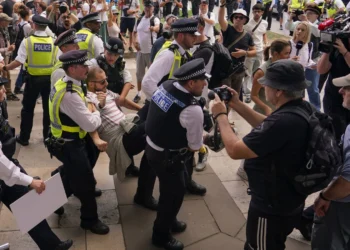 UK Police Face ‘Chronic Pressure’ Amid Surge in Protests Over Asylum and Gaza
 UK Mobile Retailers Lock Doors Amid Surge in Organised Phone Thefts
Met Police Prepared for Mass Arrests as Palestine Action Protest Approaches
UK Mobile Retailers Lock Doors Amid Surge in Organised Phone Thefts
Met Police Prepared for Mass Arrests as Palestine Action Protest Approaches
 Madeleine McCann Case: German Woman at Centre of Hit-and-Run Theory Speaks Out
 Peter Mandelson Referred to Jeffrey Epstein as ‘My Best Pal’ in 50th Birthday Letter
 UK Launches Major Crackdown on Networks Profiting from Online Child Sexual Abuse
 Prime Suspect in Madeleine McCann Case Declines Metropolitan Police Interview Ahead of German Prison Release
 Teenager in Critical Condition Following Shooting Outside Wembley Stadium
 Metropolitan Police Considers Requiring Officers to Declare Freemasonry Membership
 Police Appeal for Witnesses After Woman Raped in Oxfordshire Churchyard
 Manchester Synagogue Attack: A Community Shaken on Yom Kippur
 Stephen Lawrence’s Father Demands Justice Before Killer’s Parole
 Starmer Condemns 7 October Student Protests as ‘Un-British’
 Kate McCann Describes Stress from Alleged Stalker Calling Her ‘Mum’
 Cooper Unveils £4m Cyber Plan Against Russian Hackers
 Former BBC DJ Tim Westwood Charged with Rape and Sexual Assault
 Ambulance Worker Fired After Flinging Amputee from Wheelchair and Offering Bribe
Madeleine McCann Detectives to Testify Against Woman Accused of Stalking the Family
Ambulance Worker Fired After Flinging Amputee from Wheelchair and Offering Bribe
Madeleine McCann Detectives to Testify Against Woman Accused of Stalking the Family
 Ian Watkins Killed in Prison; Ex-Girlfriend Speaks Out
 UK Charities Warn Rising Hate Threatens Staff Safety
 Campaigners Call for CPS Review After Woman’s Suicide
 Lisbon Transport Board Resigns After Deadly Funicular Crash
 UK Gamer Recruited by Wagner Group Found Guilty of Arson
 Hugely Wasted Opportunity’ UK Grooming Gangs Inquiry
 Migrant Sex Offender Deported After Erroneous Prison Release
 Five More Prisoners Freed by Mistake in Essex Week
 Nearly 48,000 Zombie Knives Removed from UK Streets in a Year
 Afghan man charged with murder after west London knife attack
 FBI Director Kash Patel Defends Girlfriend Amid Government Jet Claims
 Trump Speaks on Prince Andrew’s Royal Scandal Fallout
 Man Charged Over Cambridgeshire Train Stabbing
 Just Stop Oil Protesters Convicted Amid Climate Defence Row
 Met Police Culture Makes Racial Harm ‘Inevitable’
 British Grandmother to Return Home After Death Sentence in Bali
 Eleven Arrested After Pro-Palestine Protest at Villa Match
 Jailed UK climate protesters face extremist-style restrictions
 How to get help when a child goes missing – call 999 urgently
 ‘Reckless’ cuts to victims’ services will cost more than they save
 Madeleine McCann Suspect Forced into Woodland Hideout After Release
 New review urges UK to repatriate Shamima Begum, others from Syria
 Victims’ commissioner Baroness Newlove dies aged 63
 ‘Fever Pitch’ Screaming: Red Flags Before Sara Sharif’s Death
 Israel Confirms Returned Hostage as Meny Godard
 Delhi Car Bomb Arrest: Suspect Linked to Deadly Attack
 UK Candidate Moved to Safe House After Election Threats
 Paralegal Fired After Exposé on Illegal Worker Scam
 Mother Watches in Horror as Teen Daughter Dies on Tracks
 Serial Rapist and Former Cop Found Guilty Again
 Man Charged Over Attempted Murder of Senior Officer
 Police Name Woman Who Died in Swindon as Murder Probe Continues
 Swindon Counsellor Dies; Teen Arrested and Released
 Sudanese Family Vows to Stay After Racist Graffiti
 Video shows Israeli troops kill Palestinians after surrender