Published: 05 November 2025. The English Chronicle Desk. The English Chronicle Online.
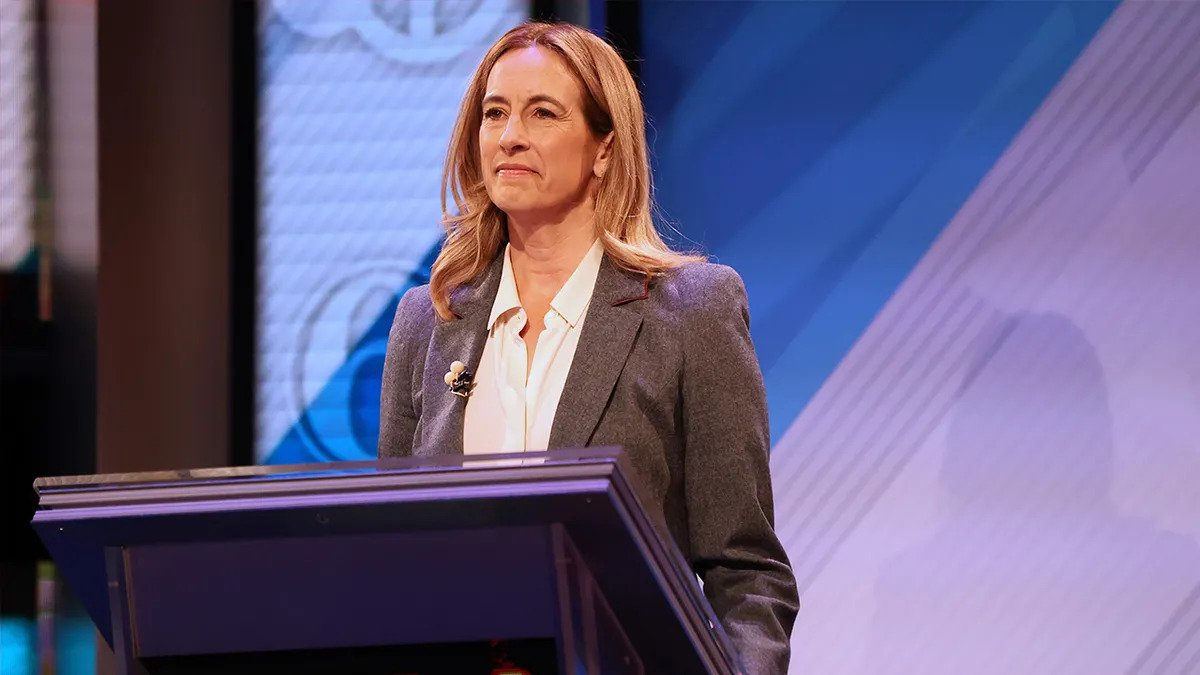
Democratic nominee Mikie Sherrill has been elected the 57th governor of New Jersey, defeating Republican Jack Ciattarelli in a race that drew national attention and underscored the Democratic Party’s resilience amid Donald Trump’s return to political prominence. The Associated Press projected Sherrill’s victory just two hours after polls closed on Tuesday.
“I hear you, Jersey,” Sherrill said to a cheering crowd at her election party in East Brunswick, walking out to Bruce Springsteen’s Born to Run. “Good government doesn’t just manage problems, it solves them.”
The gubernatorial contest was one of only two statewide races in 2025, drawing interest from political analysts as a potential preview of the 2026 midterm elections and an early gauge of Trump’s influence among voters. While New Jersey has a history of alternating between Democratic and Republican governors, the race reflected shifting dynamics within both parties and highlighted the strategic choices voters face ahead of the next national election cycle.

Sherrill, 53, represents New Jersey’s 11th congressional district in Congress and has a unique background for a politician. A former prosecutor and Navy helicopter pilot, she first won her seat in 2018 during the blue-wave elections, flipping a traditionally Republican district. Her mix of military service, law enforcement experience, and moderate politics positioned her as a pragmatic candidate who could appeal to a broad cross-section of voters, including suburban moderates and independents who often determine the state’s tight elections.
The Democratic primary earlier in the year tested the party’s direction in New Jersey. Progressive figures, such as Newark Mayor Ras Baraka, vied for the nomination, but party voters chose Sherrill, signaling a preference for a centrist candidate with executive experience and a record of bipartisanship. Analysts noted that the primary outcome contrasted sharply with the upset win by Zohran Mamdani in New York City’s Democratic mayoral primary, highlighting how different voter bases within the party can prefer divergent strategies: progressive insurgency versus moderate pragmatism.
Ciattarelli, Sherrill’s Republican opponent, is a familiar figure in New Jersey politics. He ran for governor in 2017 but lost the nomination to former Lieutenant Governor Kim Guadagno and narrowly lost the 2021 election to Governor Phil Murphy. In 2025, he secured Trump’s endorsement and crafted a campaign that sought to combine moderate economic messaging with culture war themes on gender identity and immigration. Despite this alignment with Trump, Ciattarelli’s strategy could not overcome the state’s evolving demographics and Sherrill’s broad appeal among moderate and suburban voters.
Affordability, particularly the rising cost of housing and everyday expenses, was a central issue for voters. While social and cultural debates played a role, many analysts agreed that economic concerns ultimately drove the outcome. In Colts Neck, a town near the Jersey Shore that supported Ciattarelli in 2021 and Trump in 2024, retired federal worker John Stolz, 74, explained his vote for Sherrill, citing personal stakes as a gay man. “The Republicans are going to hurt me,” he said, highlighting how social issues intersected with personal experiences to influence voter decisions.
Earlier in October, Politico reported that a campaign ally of Ciattarelli had advocated for a ban on same-sex marriage in the state. While Ciattarelli publicly reaffirmed his support for marriage equality, he did not explicitly condemn the comments. This controversy recalled his record as a state assemblymember in 2012 when he voted against legalizing same-sex marriage. New Jersey legalized same-sex marriage by court ruling in 2013, later codified into law in 2022 by Governor Phil Murphy.
The campaign saw moments of intense drama. Sherrill accused Ciattarelli of contributing to the opioid crisis, claiming his policies were responsible for “killing tens of thousands.” Ciattarelli threatened a defamation suit in response, escalating tensions in the final weeks of the campaign. Additionally, a Ciattarelli ally leaked Sherrill’s military records, prompting criticism from veterans’ organizations and the media. Despite these controversies, Sherrill maintained a steady message focused on solutions, pragmatism, and competent governance.
Leroy Jones, chairman of the New Jersey Democratic Party, commented on the symbolic nature of Sherrill’s campaign logo—a helicopter. “A lot of people made fun of the helicopter,” he said. “But guess what? It landed here today!” The imagery resonated with voters, symbolizing her leadership experience, discipline, and problem-solving skills honed in the military and law enforcement.
Sherrill’s victory is also notable for its implications at the national level. While she avoided direct attacks on Donald Trump during her campaign, her win may signal challenges for the former president as the 2026 midterms approach. Analysts note that suburban voters, younger professionals, and communities in New Jersey’s affluent districts increasingly prioritize practical solutions to economic and social challenges over cultural or partisan messaging, making Sherrill’s moderate approach appealing.
Political strategists see her administration as a potential model for Democrats seeking to retain or regain governorships in states with mixed political leanings. Her record of bipartisanship in Congress, combined with her personal background as a Navy pilot and prosecutor, gives her credibility with voters across the spectrum. Observers predict she will focus on economic development, healthcare access, infrastructure, and education reform in her first term, aiming to demonstrate that Democrats can govern effectively at the state level even while facing polarized national politics.
The 2025 gubernatorial race in New Jersey also reinforces the importance of identity and social issues alongside economic concerns. Voters’ decisions reflected an intersection of personal identity, local priorities, and broader national trends. Issues such as marriage equality, federal workforce protections, and inclusivity influenced turnout in key districts, particularly in suburban and northern counties.
Sherrill’s victory sets the stage for potential legislative cooperation with the state assembly and senate. Democrats hope to leverage this win to advance policies related to affordable housing, healthcare expansion, environmental protections, and education funding. Analysts expect her pragmatic approach will encourage dialogue across party lines, though some partisan challenges are inevitable given New Jersey’s divided electorate.

As Sherrill prepares to take office, political observers will watch closely to see how she balances immediate economic pressures with long-term policy initiatives. Her leadership style, informed by military training and law enforcement experience, may prove instrumental in navigating complex state challenges and delivering tangible results to constituents.
The win is also historic in highlighting the growing role of women in executive politics. With Sherrill as governor, New Jersey joins a small but increasing number of states led by female executives, signaling both a cultural and political shift. Her administration may inspire further participation by women and minority candidates in state and national elections, potentially reshaping political engagement patterns in coming years.
In summary, Mikie Sherrill’s election as New Jersey governor represents a significant moment for the Democratic Party and the state. It combines historic firsts with broader political trends, offering insight into voter priorities, campaign strategies, and the evolving dynamics of American politics under the renewed influence of Donald Trump. Her victory demonstrates that moderate, solution-focused candidates can still resonate with voters and achieve decisive wins in competitive races.
Related News:
 Britain deploys RAF specialists to assist Belgium with drone threats
 US Justice Department Files Lawsuit Against California Over Partisan Voting Maps
 December Run-Off in Chile as Election Produces No Winner
 UN Security Council Approves Trump’s Gaza Peace Plan
 Congress Approves Release of Epstein Files, Trump Expected to Sign
 Shadow Fleet at Sea: Europe’s Battle Against Illicit Oil Shipping
 Rama Rebukes Mahmood for Targeting Albanian Families
 Russian Vessel Used Lasers on RAF Pilots, UK Claims
 Pentagon Officials in Ukraine to Discuss War End
 WhatsApp Messages Expose Nathan Gill’s Bribery
 Venezuela Threatens Nobel Winner Machado with Fugitive Status
 Texas Governor Faces Lawsuit From CAIR
 Trump Envoy to Discuss Ukraine Peace at Kremlin
 Pope Leo XIV Begins Historic Trip to Turkey and Lebanon
 Georgians Defy Government Crackdown After Year of Protests
 Putin Intensifies Territorial Demands Before US Talks
 India’s Labour Law Overhaul Sparks Fierce Debate
 Video shows Israeli troops kill Palestinians after surrender
 Trump to Recheck Green Cards from 19 Nations After DC Attack
 Chinese & Japanese Boats Clash Near Disputed Islands
 Putin Meets US Envoy Amid Key Ukraine Peace Talks
 Kremlin Talks With US Yield No Ukraine Peace Breakthrough
 Kinnock’s Rebuke Echoes Loudly as Corbyn Allies Launch Left-Wing Breakaway: “A Gift to Farage”
 Tories in Turmoil as Sir Jake Berry’s Defection to Reform Sparks Fears of Further Exodus
 UK and Norway Forge Stronger Ties Through Joint Sanctions and Enhanced Defence Cooperation
 Trump Administration Dismisses 17 Immigration Judges, Sparking Debate Over Judicial Independence
 Lammy Condemns Israel’s Targeting of Starving Palestinians: Sanctions Threatened Amid Global Outrage
 Netanyahu Announces Plan to Take Over Gaza City, Escalating Conflict Further
 Prominent Al Jazeera Journalist Anas al-Sharif Among Five Reporters Killed in Israeli Airstrike on Gaza
 Denmark Investigates Professional Drone Incursions Across Multiple Airports, No Evidence of Russian Involvement
 Sir Sadiq Khan Accuses Trump of Racism and Islamophobia Following UN Remarks
 Misinformation and Political Pressure Force Weston-super-Mare to Abandon Refugee Sanctuary Plan
 British Woman in Iran ‘Losing Hope’ Amid Ongoing Detention
 BBC Journalist Held and Interrogated in Vietnam
 US Super-Rich Are Draining Planet’s Safe Climate Space
 UK Charters Emergency Flights to Evacuate Britons from Jamaica
 UK University Suspends Human Rights Research Following Pressure from China
 UK University Faces Counter-Terror Probe Over China Pressure
 Abigail Spanberger Elected Virginia’s First Female Governor
China-critical UK academics face ‘extremely heavy’ pressure from Beijing
Abigail Spanberger Elected Virginia’s First Female Governor
China-critical UK academics face ‘extremely heavy’ pressure from Beijing
 British military receives first Ajax armoured vehicles – eight years late
 US Senate Passes Funding Bill to End Historic Shutdown
 BBC’s Tim Davie to Address Staff Amid Trump $1bn Threat
 Thailand Suspends Cambodia Border Peace Deal Amid Tensions
 Hannibal Gaddafi Freed After Nearly a Decade in Lebanon
 Ukraine-Russia war latest: Putin’s troops exploit bad weather to force Kyiv withdrawal from multiple towns
 Trump Claims Victory as Longest Shutdown Ends
 Hamas Fighters in Gaza Tunnels Stall Ceasefire Progress
 Fog Aids Russian Forces in Deep Push into Pokrovsk
 Hitler’s DNA Confirms He Truly Had Only One Testicle
 South Sudan President Removes Vice-President Amid Political Uncertainty
 Israel Confirms Returned Hostage as Meny Godard
 Trump Deploys DHS to Charlotte in Major Arrest Operation
 UK Asylum Reforms: Temporary Refugee Status and Faster Deportations
 Orban Says Ukraine Has ‘No Chance’ as EU Support Continues
 South African Detained After Neo-Nazi Rally in Australia
 Why Russian Liberals Push Strongly Pro-Israel Narratives
 Israeli Strike Kills 13 Near Palestinian Camp in Lebanon
 Zelensky Meets US Envoy in Turkey to Push Ukraine Peace Talks
 Only One Republican Opposes Mass Release of Epstein Files
 UK Vulnerable to Attack, Defence Committee Finds
 Haiti Qualifies for World Cup Despite Coach Never Visiting Country
 Bangladesh Families Call for Hasina’s Return and Execution
 Scotland Fans Celebrate Historic World Cup Qualification
 Vietnam Battles Deadly Floods as Rains Continue
 US Military Team Visits Kyiv Amid War Talks
 At Least Three Dead in Bangladesh Earthquake
 English Mayors Set to Introduce Tourist Taxes
 Israel Confirms Hamas Returned Dror Or’s Body
 Twenty-Four Nigerian Schoolgirls Freed After Abduction
 Millions Face Higher Taxes Under Reeves New Budget
 Peers Get Extra Time to Debate Assisted Dying Bill
 Planned Palestinian Flag Raising at Belfast City Hall Faces Delay Amid Legal Concerns
 Two National Guard Soldiers Critically Injured Near White House
 Mbappe Scores 4 as Real Madrid Edge Olympiakos
 Man City Lose, Champions League Risk
 Sri Lanka Floods Leave 56 Dead, Dozens Missing
 Government righting decades-old injustice for miners
 Jordan Bardella: France’s Young Presidential Contender
 Indonesia to Repatriate Two Dutch Drug Convicts