Published: 14 November 2025. The English Chronicle Desk. The English Chronicle Online
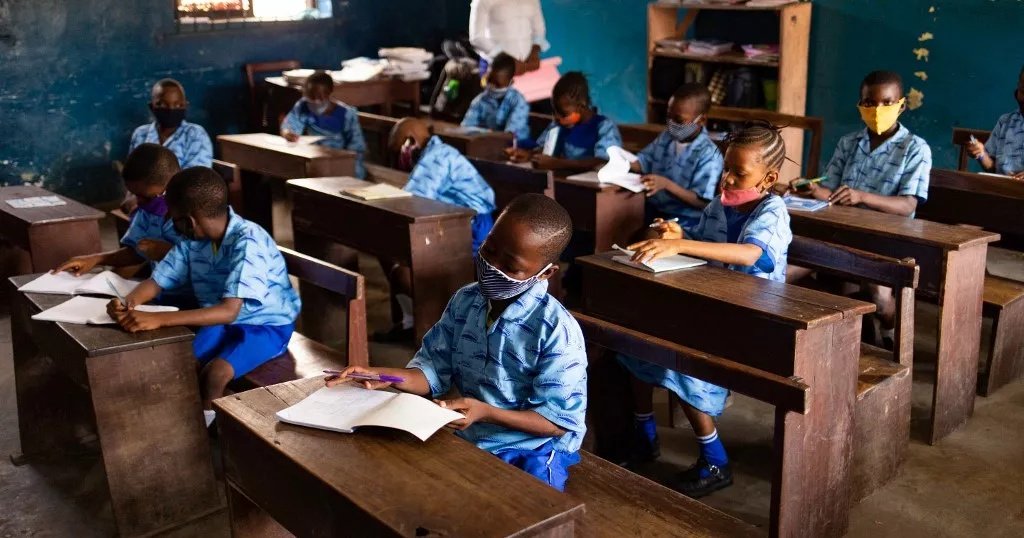
The Nigerian government has officially reversed a controversial educational policy that mandated the use of indigenous languages as the primary medium of instruction in the early years of schooling, opting instead to restore English as the standard language from pre-primary levels through to university. The abrupt policy change marks a significant shift in the country’s education strategy and has sparked widespread debate among educators, parents, and policy analysts.
Education Minister Tunji Alausa announced the decision, saying the policy, which was introduced three years ago, had not achieved its intended results. “The programme did not produce the expected learning outcomes,” Alausa explained, “and it is therefore being discontinued immediately. English will now be reinstated as the primary medium of instruction across all levels of education in Nigeria.”
The now-defunct policy was initially implemented under former Education Minister Adamu Adamu. His vision was based on the widely held belief, supported by several United Nations studies, that children learn most effectively when taught in their first language during the formative years of education. Adamu argued that early instruction in the mother tongue enhances comprehension, fosters cognitive development, and strengthens cultural identity.
Despite these intentions, the Nigerian education system remains plagued by deep-rooted challenges. Poor-quality teaching, inadequate learning materials, low teacher salaries, and frequent strikes have long undermined educational outcomes. While an estimated 85% of Nigerian children attend primary school, fewer than half complete their secondary education. Moreover, nearly 10 million children remain out of school, the highest figure in the world, according to the United Nations. These systemic issues have complicated the implementation of the mother-tongue instruction policy.

Minister Alausa cited stark evidence from national examinations to justify the policy reversal. He pointed to data from the West African Examinations Council (WAEC), the National Examinations Council (NECO), and the Joint Admissions and Matriculation Board (JAMB), which revealed a significant decline in academic performance in regions that had adopted mother-tongue instruction most extensively. “We observed mass failure rates in certain geo-political zones of the country, precisely where indigenous-language teaching was over-subscribed,” he stated, adding that these results demonstrated the urgent need for immediate corrective measures.
The decision has prompted mixed reactions across the country. Some education experts and parents welcomed the reversal, citing the difficulties in implementing the previous policy and the negative impact on academic standards. Others, however, argue that the government abandoned the policy too quickly, before it had sufficient time to mature. Critics maintain that such a sweeping change requires considerable investment in teacher training, the development of textbooks and learning materials in multiple local languages, and a longer implementation period before any meaningful assessment of its effectiveness can be made.
Dr Aliyu Tilde, an education specialist, defended the decision to revert to English-medium instruction. “Nigeria simply does not have enough trained teachers capable of instructing in all of its dozens of indigenous languages,” he explained. “Moreover, major exams such as WAEC, NECO, and JAMB are conducted exclusively in English. To improve the quality of education, we must focus on training qualified teachers and ensuring students are proficient in English, which is vital for national and global opportunities.”
Parents have voiced varied opinions on the policy reversal. Hajara Musa, a mother of two children in early education, expressed support for the decision, saying early exposure to English would give her children a competitive advantage. “English is a global language, and learning it from the beginning will help these children succeed academically and professionally in the future,” she said.
However, some social commentators argue that the policy was terminated prematurely. Habu Dauda, a social affairs analyst, noted that three years is insufficient to properly evaluate a significant educational experiment of this magnitude. “This policy deserves more time, investment, and proper teacher training before we judge its success or failure,” he said. “By abandoning it too soon, the government risks discarding an approach that could have strengthened cultural identity while improving learning outcomes.”
The debate highlights the ongoing tension between promoting Nigeria’s rich linguistic heritage and addressing the practical demands of a national curriculum that is heavily reliant on English. Proponents of mother-tongue instruction emphasize the benefits of learning in one’s first language, including enhanced cognitive development, better understanding of complex concepts, and preservation of cultural heritage. Critics, on the other hand, stress the importance of English fluency for academic performance, national examinations, and future professional prospects.

Nigeria’s educational landscape is complex, given the country’s linguistic diversity. With over 500 spoken languages, implementing an effective mother-tongue programme requires extensive planning, resources, and trained educators, a challenge that experts argue the government underestimated. Teachers must be proficient not only in the local language but also in pedagogy suited to that language, and textbooks must be developed and distributed across schools—a logistical undertaking that can strain resources in a country where many schools already lack basic infrastructure.
The policy reversal also draws attention to broader systemic issues in Nigeria’s education system. Experts argue that regardless of the language of instruction, improving teacher quality, providing adequate learning materials, and ensuring accountability are critical for raising educational standards. Minister Alausa has emphasized that the government is committed to these broader reforms alongside the return to English-medium instruction. “Our priority is to enhance the learning environment, strengthen teacher capacity, and ensure that all Nigerian children can achieve their full potential,” he said.
The reversal has also sparked discussions on the future of education in Nigeria and the balance between cultural preservation and global competitiveness. Advocates for indigenous-language instruction warn that abandoning mother-tongue teaching could weaken cultural identity and limit early cognitive development for young learners, particularly in rural areas where English exposure is minimal. Meanwhile, proponents of English-medium instruction argue that early fluency is essential in a globalised world and prepares students to succeed in higher education and the job market.
International observers have also taken note of Nigeria’s experience, noting that the country’s attempt to implement mother-tongue instruction offers lessons for other multilingual nations. Studies have shown that while early education in the first language can be beneficial, successful implementation depends on long-term investment in teacher training, curriculum development, and educational infrastructure. Without these elements, even well-intentioned policies can fall short, as evidenced by Nigeria’s experience.
As schools prepare to implement English as the medium of instruction once again, educators, parents, and policymakers will be closely monitoring the impact on student performance and learning outcomes. The coming years will be critical in assessing whether the reversal improves academic results and better equips Nigerian students to meet national and international standards.
The debate over mother-tongue education in Nigeria is far from over. It reflects the broader challenge of balancing linguistic and cultural diversity with the practical requirements of a modern education system. While the government’s decision represents an immediate response to declining academic performance, the discussion around cultural preservation, language policy, and educational quality will likely continue to shape Nigeria’s educational reforms for years to come.
Related News:
 Posthumous books are messy and fraught – but Virginia Giuffre’s gives her a voice
 UK University Suspends Human Rights Research Following Pressure from China
 UK University Faces Counter-Terror Probe Over China Pressure
 Top Christmas Books Reads: Classics to Cozy Romcoms
China-critical UK academics face ‘extremely heavy’ pressure from Beijing
Top Christmas Books Reads: Classics to Cozy Romcoms
China-critical UK academics face ‘extremely heavy’ pressure from Beijing
 Algeria Pardons French-Algerian Novelist Sansal After Year in Jail
 British Woman in Iran ‘Losing Hope’ Amid Ongoing Detention
 BBC Journalist Held and Interrogated in Vietnam
 US Super-Rich Are Draining Planet’s Safe Climate Space
 Is a two-week half-term a good deal? Some parents in England aren’t so sure
 Children to Learn Local History in Major Curriculum Overhaul
 World Whisky Tour: 9 Global Gems
 UPS Cargo Plane Crash in Kentucky Kills Seven
 Just Stop Oil Protesters Convicted Amid Climate Defence Row
 Greta Thunberg Backs Student Facing UK Visa Revocation
 Audio Books deals and promo codes to explore in November 2025
 Labour immigration crackdown could cost UK £4.4bn
 Tension and Turmoil at Aston Villa v Maccabi Match
 London’s Childlessness Crisis: Schools Closing as Families Shrink
 BBC to Apologise Over Edited Trump Speech Amid Backlash
 Lando Norris Dominates Brazil GP to Strengthen F1 Title Bid
 Britain deploys RAF specialists to assist Belgium with drone threats
 Government urges schools to ban phones to curb classroom disruption
 Palace May Restore Hyphen to Andrew Mountbatten-Windsor’s Name
 US Senate Passes Funding Bill to End Historic Shutdown
 Suicide Bombing at Islamabad Court Kills 12, Injures Dozens
 BBC’s Tim Davie to Address Staff Amid Trump $1bn Threat
 Ronaldo Confirms Final World Cup and Plans Retirement
 Ukraine-Russia war latest: Putin’s troops exploit bad weather to force Kyiv withdrawal from multiple towns
 Nigeria’s $25m Museum Faces Political Storm Amid Benin Bronzes Debate
 Hitler’s DNA Confirms He Truly Had Only One Testicle
 Phillipson Accused of Appeasing Unions by Diluting EBacc
 England’s Special Needs Support Faces Breaking Point
 US Justice Department Files Lawsuit Against California Over Partisan Voting Maps
 Oklahoma Governor Grants Last-Minute Clemency to Death Row Inmate
 US Pushes Global Effort to Stop Arms Flow to Sudan RSF Forces
 Israel Confirms Returned Hostage as Meny Godard
 Higgs Donates Nobel Medal to His Beloved University
 Trump Deploys DHS to Charlotte in Major Arrest Operation
 Orban Says Ukraine Has ‘No Chance’ as EU Support Continues
 Irish Hero Parrott Says Goal Brought First Tears in Years
 Nigeria Misses World Cup Again After Play-Off Loss
 Why Russian Liberals Push Strongly Pro-Israel Narratives
 Israeli Strike Kills 13 Near Palestinian Camp in Lebanon
 Zelensky Meets US Envoy in Turkey to Push Ukraine Peace Talks
 Congress Approves Release of Epstein Files, Trump Expected to Sign
 Haiti Qualifies for World Cup Despite Coach Never Visiting Country
 Poll Reveals China Leads World in Trusting AI Technology
 Rama Rebukes Mahmood for Targeting Albanian Families
 Russian Vessel Used Lasers on RAF Pilots, UK Claims
 Pentagon Officials in Ukraine to Discuss War End
 Ex-Harvard President Pauses Teaching Over Epstein Emails
 Vietnam Battles Deadly Floods as Rains Continue
 US Military Team Visits Kyiv Amid War Talks
 Scottish Families Take Legal Action Over School CO Leak
 Venezuela Threatens Nobel Winner Machado with Fugitive Status
 At Least Three Dead in Bangladesh Earthquake
 Barcelona Returns to Camp Nou vs Athletic Bilbao
 Texas Governor Faces Lawsuit From CAIR
 Men Aren’t Vanishing From Fiction, But Misconceptions Persist
 Israel Confirms Hamas Returned Dror Or’s Body
 Trump Envoy to Discuss Ukraine Peace at Kremlin
 Twenty-Four Nigerian Schoolgirls Freed After Abduction
 Two National Guard Soldiers Critically Injured Near White House
 Pope Leo XIV Begins Historic Trip to Turkey and Lebanon
 Southern Lebanon reels as Israeli strikes shatter communities
 Mbappe Scores 4 as Real Madrid Edge Olympiakos
 Man City Lose, Champions League Risk
 Sri Lanka Floods Leave 56 Dead, Dozens Missing
 India’s Labour Law Overhaul Sparks Fierce Debate
 Video shows Israeli troops kill Palestinians after surrender
 Families wait in agony for missing after Hong Kong tower blaze
 A Colourful Cultural Escape in Mexico’s Querétaro
 Rare shark attack kills woman, injures man at remote NSW beach
 Oxford Names ‘Rage Bait’ Word of the Year
 Chinese & Japanese Boats Clash Near Disputed Islands
 Indonesia to Repatriate Two Dutch Drug Convicts
 EU plans $105bn Ukraine aid using frozen Russian assets
 Global campaign launched to free Palestinian leader Barghouti
 Trump to attend 2026 FIFA World Cup draw in Washington