Published: 21 November 2025 Friday. The English Chronicle Desk. The English Chronicle Online
Venezuela’s political crisis has taken a dramatic turn as the nation’s opposition leader, María Corina Machado, has been warned that she will be considered a fugitive if she travels abroad to accept her Nobel Peace Prize. The announcement by Venezuela’s Attorney General, Tarik William Saab, has added a new layer of tension to an already volatile political landscape, highlighting the deepening struggle between President Nicolás Maduro’s government and opposition forces.
Saab, speaking to AFP, made it clear that Machado—who has been living in hiding to evade arrest—faces accusations of “acts of conspiracy, incitement of hatred, and terrorism.” The warning comes just weeks after Machado was awarded the Nobel Peace Prize in October for her persistent efforts to foster a “peaceful transition from dictatorship to democracy” in Venezuela.
At 58, María Corina Machado has been a long-standing figure in the Venezuelan opposition. She has been an outspoken critic of Maduro’s administration, describing it as “criminal” and calling on Venezuelans to unite in overthrowing what she regards as an illegitimate government. Her activism has often placed her in the crosshairs of authorities, and she has spent significant periods in hiding to avoid detention.
The Nobel Committee’s decision to honor Machado has drawn international attention, not only for the prestige of the award but also because it underscores the perilous environment for political opposition in Venezuela. In its announcement, the committee hailed Machado as “one of the most extraordinary examples of civilian courage in Latin America in recent times.” Jørgen Watne Frydnes, chairman of the Norwegian Nobel Committee, expressed hope that Machado could attend the award ceremony in Oslo on 10 December but also acknowledged the severe security risks she faces in doing so.

Machado’s recognition comes amid a backdrop of electoral disputes and political unrest. She was barred from running in last year’s presidential elections, which saw Maduro secure a third six-year term. The elections were widely criticized internationally for failing to meet basic standards of fairness and transparency, sparking protests across the nation. Despite her disqualification, Machado effectively mobilized opposition support behind a surrogate candidate, Edmundo González, who was relatively unknown before the campaign.
The government-controlled National Electoral Council officially declared Maduro the winner, even though preliminary polling station tallies suggested a significant victory for González. Following the elections, González fled to Spain out of fear of repression, an exodus mirrored by attempts to detain other opposition officials across Venezuela.
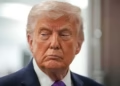
In response to Machado’s Nobel Prize, U.S. President Donald Trump publicly congratulated her. Trump, who was himself nominated for the prize in the past, has had increasingly tense relations with Maduro’s administration, particularly over allegations of drug trafficking and the deployment of U.S. military forces in the Caribbean. Machado has expressed support for these measures, which has further inflamed Maduro’s government, prompting ongoing investigations into her political activities.
The Venezuelan government under Maduro has repeatedly accused external powers of attempting to destabilize the country. Maduro himself has labeled Trump’s actions as efforts to incite war to control Venezuela’s oil reserves. Despite these accusations, the Venezuelan president has also signaled a willingness to engage in direct talks with representatives of the U.S. administration, highlighting the complex geopolitical dimensions of the crisis.
Machado, meanwhile, has continued her advocacy, attempting to persuade the Venezuelan military to reconsider its loyalty to Maduro. She released a video on Tuesday outlining her vision for a post-Maduro Venezuela, which she called a “freedom manifesto.” In it, she urged citizens and the armed forces alike to embrace a new era where fundamental rights and freedoms prevail.
The Nobel Committee’s award has not only highlighted Machado’s courage but also shone a global spotlight on Venezuela’s ongoing political turmoil. While the prize is a personal honor, Machado has been careful to frame it as a recognition of collective effort, stating, “I am just one person. I certainly do not deserve this. This is the achievement of a whole society.”
Her remarks underscore the broader struggle of Venezuelans who have sought democratic reform and political accountability in the face of what many international observers view as an increasingly authoritarian regime. Over the past several years, the Maduro government has faced allegations ranging from election manipulation and suppression of dissent to economic mismanagement and human rights abuses, making the country a focal point for global concern.
The warning from Attorney General Saab effectively raises the stakes for Machado. Should she attempt to travel to Oslo to receive her Nobel Prize, she would risk immediate arrest upon return, intensifying the personal danger she already faces. This situation underscores the broader reality for opposition leaders in Venezuela: the pursuit of political reform and international recognition comes with serious personal risk.
Machado’s advocacy and international recognition reflect a broader pattern of resistance in Latin America, where civilian leaders and activists often operate under the constant threat of government reprisal. Her Nobel Prize is seen by many as an emblem of hope for democratic transition, signaling that the international community continues to monitor and support efforts toward freedom and accountability in Venezuela.

The geopolitical implications are also significant. The U.S. has launched operations targeting alleged drug trafficking routes originating from South America, with Venezuela being a focal point of these actions. Maduro has consistently denied involvement in drug trafficking, accusing foreign powers of fabricating claims to justify intervention. The ongoing tension between Venezuela and international actors adds further complexity to Machado’s situation, especially as she positions herself as a bridge between internal opposition forces and global democratic supporters.
For Venezuelans, Machado’s Nobel Prize is both a symbol of recognition and a reminder of the precarious state of political freedoms. It highlights the courage required to challenge entrenched power structures while drawing attention to the severe consequences faced by those who dissent. The award also reinforces international scrutiny of Maduro’s government and the urgent need for political dialogue and reform.
As the December Nobel ceremony approaches, all eyes will be on María Corina Machado and the Venezuelan government. Her potential attendance could become a flashpoint in the ongoing struggle for democracy in Venezuela, demonstrating the intersection of global recognition, local resistance, and international diplomacy.
In the meantime, Machado continues her work in hiding, advocating for a transition toward democratic governance, and encouraging Venezuelans to envision a future free from repression. Her story exemplifies the extraordinary risks and resilience of individuals fighting for freedom in politically turbulent regions, and the Nobel Prize serves as both a personal accolade and a broader statement on the importance of civilian courage in shaping democratic futures.
Related News:
 WhatsApp Messages Expose Nathan Gill’s Bribery
 Trump Envoy to Discuss Ukraine Peace at Kremlin
 Video shows Israeli troops kill Palestinians after surrender
 Mikie Sherrill Elected New Jersey’s Governor in Key Win
 Britain deploys RAF specialists to assist Belgium with drone threats
 New Epstein Files Spark Political Clash in Washington
 Ukraine Energy Corruption Scandal Hits Zelensky’s Inner Circle
 US Justice Department Files Lawsuit Against California Over Partisan Voting Maps
 Israel Confirms Returned Hostage as Meny Godard
 December Run-Off in Chile as Election Produces No Winner
 UN Security Council Approves Trump’s Gaza Peace Plan
 South African Detained After Neo-Nazi Rally in Australia
 Congress Approves Release of Epstein Files, Trump Expected to Sign
 Shadow Fleet at Sea: Europe’s Battle Against Illicit Oil Shipping
 Rama Rebukes Mahmood for Targeting Albanian Families
 Russian Vessel Used Lasers on RAF Pilots, UK Claims
 Pentagon Officials in Ukraine to Discuss War End
 Trump Slams Democrats With ‘Seditious’ Death Claim
 South African Women Call Purple Protest Over Gender Violence
 Texas Governor Faces Lawsuit From CAIR
 Ex-Classmate Accuses Farage of Dishonesty on Racism Claims
 Twenty-Four Nigerian Schoolgirls Freed After Abduction
 Two National Guard Soldiers Critically Injured Near White House
 Pope Leo XIV Begins Historic Trip to Turkey and Lebanon
 Georgians Defy Government Crackdown After Year of Protests
 Putin Intensifies Territorial Demands Before US Talks
 India’s Labour Law Overhaul Sparks Fierce Debate
 Trump to Recheck Green Cards from 19 Nations After DC Attack
 Ex-Brexit MEP Rejects Claim of Pro-Russia Payments
 Guinea-Bissau President Flees After Military Coup
 Chinese & Japanese Boats Clash Near Disputed Islands
 Putin Meets US Envoy Amid Key Ukraine Peace Talks
 Kremlin Talks With US Yield No Ukraine Peace Breakthrough
 Kinnock’s Rebuke Echoes Loudly as Corbyn Allies Launch Left-Wing Breakaway: “A Gift to Farage”
 UK and Norway Forge Stronger Ties Through Joint Sanctions and Enhanced Defence Cooperation
 Trump Administration Dismisses 17 Immigration Judges, Sparking Debate Over Judicial Independence
 Northern Ireland Family of Three Shot Dead in Maguiresbridge Home Incident
 Netanyahu Announces Plan to Take Over Gaza City, Escalating Conflict Further
 Denmark Investigates Professional Drone Incursions Across Multiple Airports, No Evidence of Russian Involvement
 Misinformation and Political Pressure Force Weston-super-Mare to Abandon Refugee Sanctuary Plan
 British Woman in Iran ‘Losing Hope’ Amid Ongoing Detention
 BBC Journalist Held and Interrogated in Vietnam
 FBI Director Kash Patel Defends Girlfriend Amid Government Jet Claims
 UK University Suspends Human Rights Research Following Pressure from China
 French Taxi Driver Cleared in David Lammy Theft Case After Fare Dispute
 Just Stop Oil Protesters Convicted Amid Climate Defence Row
 BBC to Apologise Over Edited Trump Speech Amid Backlash
 ‘Reckless’ cuts to victims’ services will cost more than they save
 US Senate Passes Funding Bill to End Historic Shutdown
 Ukraine-Russia war latest: Putin’s troops exploit bad weather to force Kyiv withdrawal from multiple towns
 PM Condemns Leaks, Vows Loyalty to Ministers and Stability
 Hitler’s DNA Confirms He Truly Had Only One Testicle
 Oklahoma Governor Grants Last-Minute Clemency to Death Row Inmate
 Indian authorities demolish Kashmir home linked to Red Fort blast
 Greene Pushes Epstein Files Amid Trump Fallout
 Trump Deploys DHS to Charlotte in Major Arrest Operation
 Zelenskyy Signs Fighter Jet Deal Amid Russian Drone Attacks
 Orban Says Ukraine Has ‘No Chance’ as EU Support Continues
 Mother Watches in Horror as Teen Daughter Dies on Tracks
 Canada Passes Carney’s First Budget in Tight Parliamentary Vote
 Israeli Strike Kills 13 Near Palestinian Camp in Lebanon
 Zelensky Meets US Envoy in Turkey to Push Ukraine Peace Talks
 Haiti Qualifies for World Cup Despite Coach Never Visiting Country
 Deadly Russian Strikes Hit Western Ukraine, 20 Killed in Ternopil
 Serial Rapist and Former Cop Found Guilty Again
 Ukraine Peace Plan: Zelensky Ready for Dialogue
 Vietnam Battles Deadly Floods as Rains Continue
 India’s COP30 Delay Raises Global Climate Concerns
 At Least Three Dead in Bangladesh Earthquake
 Israel Confirms Hamas Returned Dror Or’s Body
 Millions Face Higher Taxes Under Reeves New Budget
 Peers Get Extra Time to Debate Assisted Dying Bill
 Planned Palestinian Flag Raising at Belfast City Hall Faces Delay Amid Legal Concerns
 Southern Lebanon reels as Israeli strikes shatter communities
 Mbappe Scores 4 as Real Madrid Edge Olympiakos
 Man City Lose, Champions League Risk
 Sri Lanka Floods Leave 56 Dead, Dozens Missing
 Government righting decades-old injustice for miners
 Jordan Bardella: France’s Young Presidential Contender
 Indonesia to Repatriate Two Dutch Drug Convicts