Published: 28 November 2025 Friday. The English Chronicle Desk. The English Chronicle Online
Prime Minister Mark Carney’s newly announced agreement with Alberta to advance a long-debated oil pipeline to Canada’s Pacific coast has already ignited significant controversy across the country. The deal, presented as a historic reset of relations between Alberta and Ottawa, marks the federal government’s strongest endorsement yet of a major energy project aimed at expanding access to Asian markets. But the announcement has amplified political tensions, prompted the resignation of a key cabinet minister and deepened the rift between Alberta and British Columbia, the province through which the pipeline would need to pass.
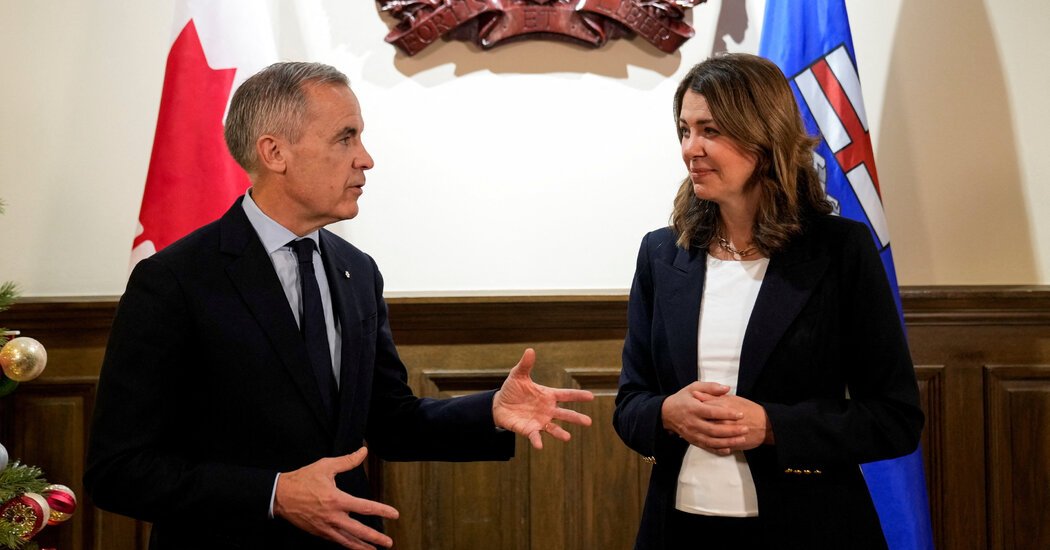
Carney and Alberta Premier Danielle Smith unveiled the energy accord on Thursday, confirming that the pipeline project would be exempt from certain federal climate rules. In return, Alberta agreed to raise its carbon pricing and develop what it says will be the world’s largest carbon capture programme, a commitment central to Carney’s promise to balance energy development with emissions reduction. Smith hailed the deal as a long-awaited breakthrough, saying it marked “the end of dark times” for a province she argues has been restricted from fully developing its natural resources.

Carney framed the agreement as an essential step toward strengthening Canada’s global economic position. He emphasised the importance of diversifying trade beyond the United States, which currently buys more than 90% of Canada’s crude oil exports. In recent months, he has warned that US protectionist measures introduced by President Donald Trump have created vulnerabilities in the Canadian economy. The pipeline, he argued, could help double non-US exports over the next decade by opening new direct access to Pacific markets.
But British Columbia Premier David Eby expressed immediate frustration, saying his province was not included in the negotiations despite being crucial to any pipeline route. He dismissed the project as a political “distraction” and highlighted its major unresolved issues: the lack of private-sector backing, the absence of support from First Nations communities along the proposed corridor and the significant environmental and legal challenges ahead. “It would have been good for BC to be at the table,” he said. “No question about it.”
Eby warned that the pipeline could undermine support for liquified natural gas projects his government is pursuing with Indigenous partners. A coalition representing Coastal First Nations was even more direct, stating that a northern oil pipeline to BC’s coast “will never happen.” The group has long opposed such proposals due to the environmental risks associated with tanker traffic and the potential impact on coastal ecosystems.
The political fallout escalated on Thursday evening when federal culture minister Steven Guilbeault resigned from Carney’s cabinet. A former environment minister and one of Canada’s most prominent climate advocates, Guilbeault said he could not support a deal that grants a major exemption to an oil pipeline project he believes carries severe environmental consequences. Guilbeault rose to prominence decades ago as an activist with Greenpeace and once scaled Toronto’s CN Tower as part of a climate demonstration. In his resignation statement, he warned that key elements of the climate plan he implemented were “being dismantled” or on the brink of reversal.
Carney responded by praising Guilbeault’s commitment to climate action but defended the agreement with Alberta as a pragmatic approach that balances economic and environmental priorities. The accord includes requirements that the pipeline be partially owned by Indigenous groups and financed by the private sector rather than taxpayers. It also suspends Ottawa’s oil and gas emissions cap and exempts the project from a long-standing tanker ban off BC’s coast—policy shifts that mark a significant departure from the climate agenda of Carney’s predecessor, Justin Trudeau.

The proposed pipeline remains in its early planning stages. Alberta has pledged C$14 million to develop an initial proposal, though the project currently has no finalised route. It is expected to connect to BC’s northern coastline, creating a direct path to Asian markets. Still, without private investment or Indigenous buy-in, the plan faces substantial barriers. Critics across BC argue the social, environmental and economic uncertainties could stall the project for years, if not permanently.
Conservative leader Pierre Poilievre downplayed the impact of the Ottawa-Alberta agreement, calling it merely an opening step in what he described as a long, uncertain process. He also took aim at Carney’s campaign pledge to move with “unimaginable speed,” suggesting the new deal provides no guarantee that the pipeline will ever be built.
As debate intensifies, the proposed project has become a flashpoint in broader national conversations about climate responsibility, economic diversification and federal-provincial relations. While Alberta sees the agreement as a long-awaited opportunity to boost economic resilience, British Columbia views it as an unwelcome intrusion that could jeopardise its own energy ambitions. For Carney, the challenge now lies in navigating the political and environmental minefields surrounding the pipeline—an undertaking that is certain to shape Canada’s energy future in the decade ahead.
Related News:
 India’s Labour Law Overhaul Sparks Fierce Debate
 Modi’s London Visit Seals Historic UK-India Trade Pact Amid Global Tensions
 Rachel Reeves to lead UK trade push in Saudi Arabia amid rights debate
 US Super-Rich Are Draining Planet’s Safe Climate Space
 Wales May Introduce Four-Day Work Week After Elections
 Trump’s UK Ambassador Urges North Sea Drilling to Strengthen US Ties
 Rachel Reeves Set to Break Labour Pledge and Raise Income Tax
 Thinktanks Urge Rachel Reeves to Reform UK Tax System
MPs Press Rachel Reeves to Hike Gambling Taxes
Thinktanks Urge Rachel Reeves to Reform UK Tax System
MPs Press Rachel Reeves to Hike Gambling Taxes
 Cuts to home insulation funding threaten UK climate goals
 Canada Passes Carney’s First Budget in Tight Parliamentary Vote
 Turkey to Host COP31 After Breakthrough Deal with Australia
 PM Highlights UK Business at G20 in South Africa
 Starmer Says Labour’s Economic Plan Needs Years to Deliver
 China’s crackdown on civil servant perks sparks economic concerns
 Shein UK Faces Allegations of Shifting Majority of Profits to Singapore to Reduce UK Tax
 UK Imposes 100 New Sanctions Targeting Russia’s Revenues and Military Supplies
 Rachel Reeves Hosts Top UK and US Financial Executives as Trump’s State Visit Begins
 King Charles Earns Over £1 Million from Duchy Land Linked to Scrapped HS2 Project
 Gatwick Secures Approval for £2.2bn Second Runway Expansion
 Kemi Badenoch Unveils ‘Golden Rule’ to Halve Spending Cuts for Deficit Reduction at Tory Conference
 British Woman in Iran ‘Losing Hope’ Amid Ongoing Detention
 BBC Journalist Held and Interrogated in Vietnam
 Virgin Trains Moves Closer to Challenging Eurostar Monopoly
 Green Party Surges Past Labour in Latest UK Poll
 Celebrities and Charities Demand UK Government Act on Child Poverty
 UK Charters Emergency Flights to Evacuate Britons from Jamaica
 UK Small Business Owner to Challenge L’Oréal in Tribunal
 UK University Suspends Human Rights Research Following Pressure from China
 Ryanair Chief UK Economy ‘Doomed’ Under Labour
 Court Hears Challenge Over Water Bills Funding Sewage Fixes
 UK University Faces Counter-Terror Probe Over China Pressure
 UPS Cargo Plane Crash in Kentucky Kills Seven
 Abigail Spanberger Elected Virginia’s First Female Governor
 Mikie Sherrill Elected New Jersey’s Governor in Key Win
 Tony Blair think tank warns Rachel Reeves must cut taxes if manifesto broken
China-critical UK academics face ‘extremely heavy’ pressure from Beijing
Tony Blair think tank warns Rachel Reeves must cut taxes if manifesto broken
China-critical UK academics face ‘extremely heavy’ pressure from Beijing
 British military receives first Ajax armoured vehicles – eight years late
BBC to Apologise Over Edited Trump Speech Amid Backlash
British military receives first Ajax armoured vehicles – eight years late
BBC to Apologise Over Edited Trump Speech Amid Backlash
 Britain deploys RAF specialists to assist Belgium with drone threats
 Warning as Britons prepare to spend £4 billion this Black Friday
 BBC director-general and news chief resign amid bias row
 Millionaires group urge Reeves to introduce wealth tax to ‘lift kids out of poverty’
 Ukraine-Russia war latest: Putin’s troops exploit bad weather to force Kyiv withdrawal from multiple towns
 Trump Claims Victory as Longest Shutdown Ends
 New Epstein Files Spark Political Clash in Washington
 Skims Eyes Global Expansion After Reaching $5 Billion Value
 Hamas Fighters in Gaza Tunnels Stall Ceasefire Progress
 US Justice Department Files Lawsuit Against California Over Partisan Voting Maps
 Berlin Reintroduces Military Service Amid Rising Security Concerns
 Reeves’s Tax U-Turn Triggers Fresh Jitters in UK Markets
 Global markets drop amid tech sell-off and China slowdown
 Greene Pushes Epstein Files Amid Trump Fallout
 Trump Deploys DHS to Charlotte in Major Arrest Operation
 December Run-Off in Chile as Election Produces No Winner
 Why Russian Liberals Push Strongly Pro-Israel Narratives
 UK Rejects Funding to Save Mossmorran Plant
 Congress Approves Release of Epstein Files, Trump Expected to Sign
 Shadow Fleet at Sea: Europe’s Battle Against Illicit Oil Shipping
 Rama Rebukes Mahmood for Targeting Albanian Families
 Russian Vessel Used Lasers on RAF Pilots, UK Claims
 Pentagon Officials in Ukraine to Discuss War End
 Vietnam Battles Deadly Floods as Rains Continue
 US Military Team Visits Kyiv Amid War Talks
 Mossmorran Plant Closure Hits Cowdenbeath Hard
 WhatsApp Messages Expose Nathan Gill’s Bribery
 Venezuela Threatens Nobel Winner Machado with Fugitive Status
 Texas Governor Faces Lawsuit From CAIR
Reeves to Crack Down on Benefit Fraud While Lifting Two-Child Limit
Texas Governor Faces Lawsuit From CAIR
Reeves to Crack Down on Benefit Fraud While Lifting Two-Child Limit
 English Mayors Set to Introduce Tourist Taxes
 Trump Envoy to Discuss Ukraine Peace at Kremlin
 Pope Leo XIV Begins Historic Trip to Turkey and Lebanon
 Georgians Defy Government Crackdown After Year of Protests
 Sri Lanka Floods Leave 56 Dead, Dozens Missing
 Video shows Israeli troops kill Palestinians after surrender
 Trump to Recheck Green Cards from 19 Nations After DC Attack
 Chinese & Japanese Boats Clash Near Disputed Islands
 Putin Meets US Envoy Amid Key Ukraine Peace Talks
 Rising Water Bills Lift Troubled Thames Back to Profit
 Prada buys Versace for $1.38bn, expanding luxury fashion empire