Published: 27 December 2025. The English Chronicle Desk. The English Chronicle Online
On a patch of rough ground near the Irrawaddy River in Mandalay, retired Lieutenant-General Tayza Kyaw, the Union Solidarity and Development Party (USDP) candidate backed by Myanmar’s military rulers, attempts to rally support. Speaking to a crowd of 300-400, he promises better times ahead, but the apathetic audience seems unmoved. Many wear the party’s branded hats and wave flags, but few seem engaged. Children run between the rows of chairs, their attention diverted as they play. Many of the families present are earthquake victims from the region’s devastating March tremor, and their hopes rest on handouts, not political speeches. As soon as the rally ends, they vanish.
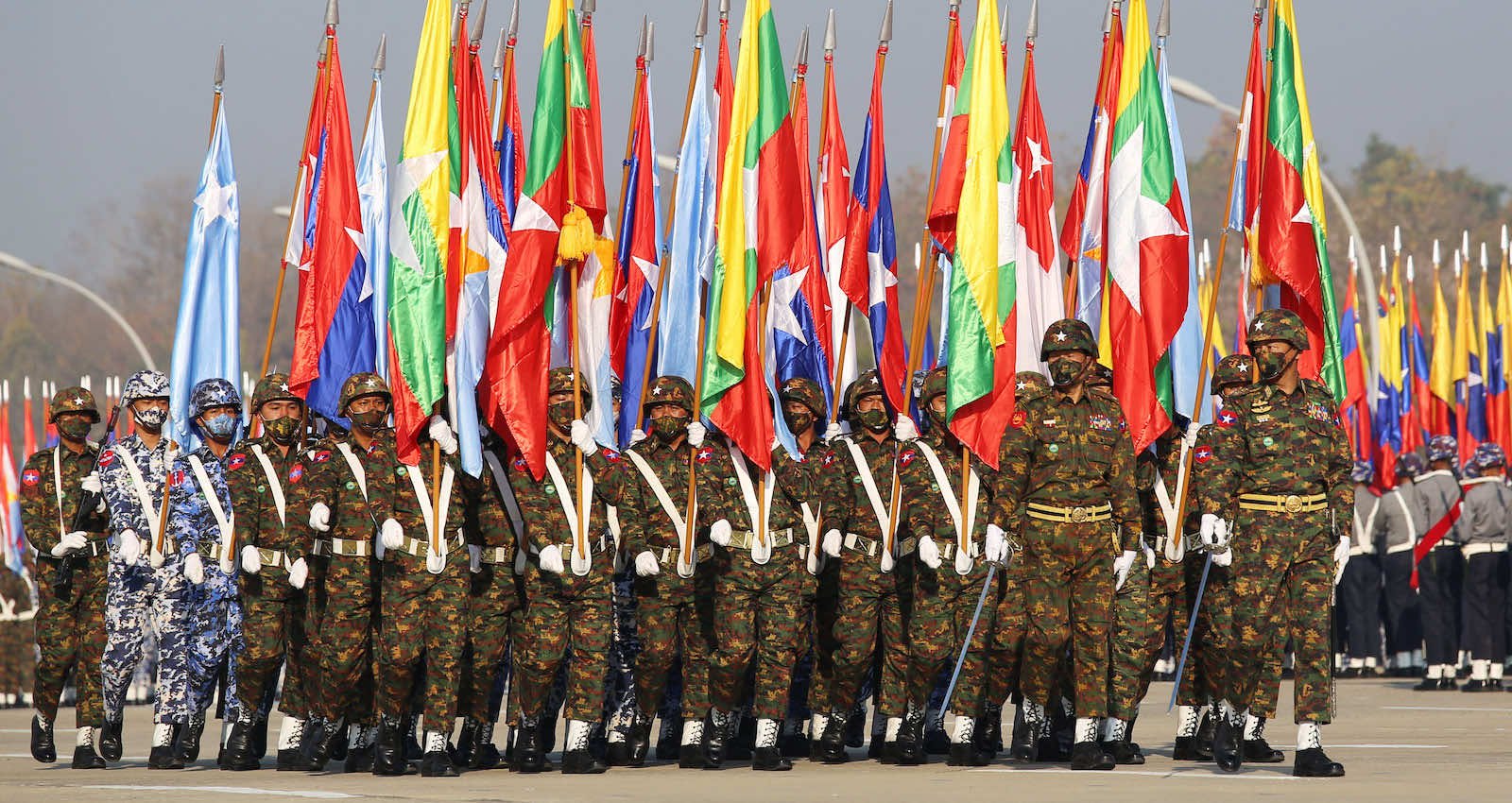
This event is part of Myanmar’s first election since the military coup nearly five years ago, which plunged the nation into civil war. On Sunday, citizens will go to the polls for a vote that has been delayed multiple times by the ruling junta. However, the election is widely regarded as a sham. The National League for Democracy (NLD), the country’s most popular party, has been dissolved, and its leader, Aung San Suu Kyi, remains imprisoned in an undisclosed location.

The election will unfold in three stages over the course of a month, but large portions of the country, still gripped by war, will not even have access to polling stations. In the areas where voting will take place, fear and intimidation cloud the process, overshadowing any semblance of democracy. The situation is compounded by military surveillance and harsh restrictions, including the criminalization of dissent, even on social media.
At the rally in Mandalay, when BBC reporters attempted to ask attendees about their views on the election, they were promptly silenced by party officials. “We don’t know how to speak to journalists,” one man nervously explained. Plain-clothes military intelligence officers were scattered throughout the crowd, and the atmosphere was thick with unease. In a dictatorship where merely liking a Facebook page that criticizes the election can lead to severe punishment, even those supporting the military-backed party fear repercussions for speaking freely.
The pervasive climate of fear extends beyond the rally. At a local market, customers buying fresh river fish were equally unwilling to express their thoughts on the election. “We have no choice; we have to vote,” one person said quietly. The fish seller, visibly concerned, warned the reporter to leave: “You will bring me trouble,” she insisted.

However, one woman, who asked to remain anonymous, agreed to speak candidly. Meeting in private and ensuring her identity remained concealed, she shared her thoughts on the election. “This election is a lie,” she said. “Everyone is afraid. Everyone has lost their humanity and their freedom. So many people have died, been tortured, or fled to other countries. If the military continues to run the country, how can anything change?” Despite her disillusionment, she acknowledged the risks of not voting in this climate of fear.
As the election approaches, the prospects for Myanmar’s people remain bleak. The military junta’s attempt to stage an election, even in the face of widespread opposition, shows how far the country’s military rulers are willing to go to maintain control. However, for many Myanmar citizens, the upcoming vote will offer a choice between fear and submission, rather than real political agency or change.
Related News:
 British Woman in Iran ‘Losing Hope’ Amid Ongoing Detention
 BBC Journalist Held and Interrogated in Vietnam
 UK University Suspends Human Rights Research Following Pressure from China
 UK University Faces Counter-Terror Probe Over China Pressure
 Zohran Mamdani becomes New York City’s first Muslim mayor
 Abigail Spanberger Elected Virginia’s First Female Governor
 Mikie Sherrill Elected New Jersey’s Governor in Key Win
Zohran Mamdani names all-female transition team for NYC mayoralty
China-critical UK academics face ‘extremely heavy’ pressure from Beijing
Mikie Sherrill Elected New Jersey’s Governor in Key Win
Zohran Mamdani names all-female transition team for NYC mayoralty
China-critical UK academics face ‘extremely heavy’ pressure from Beijing
 British military receives first Ajax armoured vehicles – eight years late
 BBC to Apologise Over Edited Trump Speech Amid Backlash
 Second world war veterans honoured as King leads Remembrance Sunday
 Britain deploys RAF specialists to assist Belgium with drone threats
 BBC director-general and news chief resign amid bias row
 Night after night, Belgium is on high alert.
 Ukraine-Russia war latest: Putin’s troops exploit bad weather to force Kyiv withdrawal from multiple towns
 Trump Claims Victory as Longest Shutdown Ends
 New Epstein Files Spark Political Clash in Washington
 Trump Ends Record Shutdown by Signing Temporary Funding Bill
 Hamas Fighters in Gaza Tunnels Stall Ceasefire Progress
 Ukraine Energy Corruption Scandal Hits Zelensky’s Inner Circle
 Early Trends Suggest Modi’s Alliance Leading in Key Bihar Election
 US Justice Department Files Lawsuit Against California Over Partisan Voting Maps
 South Sudan President Removes Vice-President Amid Political Uncertainty
 Berlin Reintroduces Military Service Amid Rising Security Concerns
 Greene Pushes Epstein Files Amid Trump Fallout
 Trump Deploys DHS to Charlotte in Major Arrest Operation
 Former President Backs Public Release of Epstein Records
 December Run-Off in Chile as Election Produces No Winner
 UN Security Council Approves Trump’s Gaza Peace Plan
 Ukraine to Get 100 French Rafale Jets in Historic Deal
 Canada Passes Carney’s First Budget in Tight Parliamentary Vote
 Why Russian Liberals Push Strongly Pro-Israel Narratives
 Congress Approves Release of Epstein Files, Trump Expected to Sign
 Trump Says Crown Prince Knew Nothing About Khashoggi Death
 Shadow Fleet at Sea: Europe’s Battle Against Illicit Oil Shipping
 Rama Rebukes Mahmood for Targeting Albanian Families
 Russian Vessel Used Lasers on RAF Pilots, UK Claims
 Pentagon Officials in Ukraine to Discuss War End
 Turkey to Host COP31 After Breakthrough Deal with Australia
 US Military Team Visits Kyiv Amid War Talks
 WhatsApp Messages Expose Nathan Gill’s Bribery
 Venezuela Threatens Nobel Winner Machado with Fugitive Status
 Texas Governor Faces Lawsuit From CAIR
 Mamdani’s Vision: Affordable, Democratic Socialism
 Trump Envoy to Discuss Ukraine Peace at Kremlin
 Pope Leo XIV Begins Historic Trip to Turkey and Lebanon
 Zambia’s President Faces Stone-Throwing Anger Amid Challenges
 Georgians Defy Government Crackdown After Year of Protests
 Putin Intensifies Territorial Demands Before US Talks
 India’s Labour Law Overhaul Sparks Fierce Debate
 Video shows Israeli troops kill Palestinians after surrender
 Trump to Recheck Green Cards from 19 Nations After DC Attack
 Carney’s Alberta Pipeline Deal Sparks Immediate Pushback
 Guinea-Bissau President Flees After Military Coup
 Chinese & Japanese Boats Clash Near Disputed Islands
 Putin Meets US Envoy Amid Key Ukraine Peace Talks
 Ireland Boosts Ukraine Aid as Zelensky Visits Dublin
 Kremlin Talks With US Yield No Ukraine Peace Breakthrough
 Putin visits India as Ukraine peace, trade push intensifies
 Russia-Ukraine war update: Key events, day 1,379
 EU plans $105bn Ukraine aid using frozen Russian assets
 Global campaign launched to free Palestinian leader Barghouti
 UK Aid Cuts Could Undermine Global Influence, Experts Warn
 Picardo Faces Harsh Criticism in Gibraltar Police Interference Inquiry
 Thailand and Cambodia Agree Ceasefire After Weeks of Deadly Clashes
 UK Must Act with Courage and Clarity on Israel-Palestine Conflict, Says Foreign Affairs Committee Report
 Radioactive Leak at UK’s Nuclear Warhead Base Sparks Outcry Over Safety and Secrecy
 Hong Kong Summons UK and Australian Envoys Following Asylum Grants to Democracy Activists
 Is the UK Ready to Put Boots on the Ground in Ukraine? Assessing Military Capacity and Challenges
 Yvette Cooper Signals Global Momentum Towards Gaza Peace Deal Amid Humanitarian Crisis
 Russia’s Latest Push to Win US Favors Shows Deep Desperation
Trump’s UK Ambassador Urges North Sea Drilling to Strengthen US Ties
Russia’s Latest Push to Win US Favors Shows Deep Desperation
Trump’s UK Ambassador Urges North Sea Drilling to Strengthen US Ties
 Millionaires group urge Reeves to introduce wealth tax to ‘lift kids out of poverty’
 Reeves rejects £1bn plea for NHS redundancy payouts
 PM Condemns Leaks, Vows Loyalty to Ministers and Stability
 Zelenskyy Signs Fighter Jet Deal Amid Russian Drone Attacks
 US Suspends Afghan Immigration After White House Shooting
 Starmer Says Labour’s Economic Plan Needs Years to Deliver
 ‘Extinct’ Antelope Returns to Sahara, Bringing Hope