Published: 30 December 2025. The English Chronicle Desk. The English Chronicle Online.
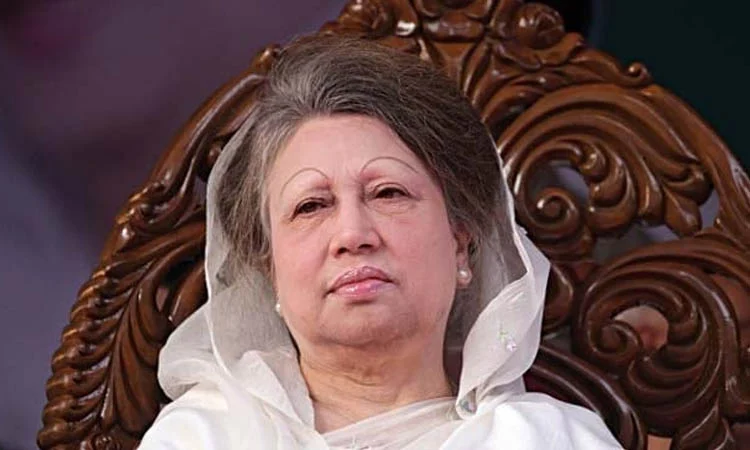
Bangladesh’s first female prime minister, Khaleda Zia, has died at the age of 80 after a prolonged illness, bringing to a close one of the most consequential and polarising political lives in South Asia. Her passing, confirmed early Tuesday by her party, the Bangladesh Nationalist Party (BNP), marks the end of an era defined by fierce rivalry, democratic struggle and the enduring imprint of two women who shaped the nation’s modern politics.
“Our favourite leader is no longer with us. She left us at 6am this morning,” the BNP said in a statement posted on Facebook. Zia had been receiving treatment at Evercare Hospital in Dhaka, where she was placed on life support after doctors described her condition as “extremely critical”. Physicians said her age and frail health made it impossible to pursue multiple intensive treatments simultaneously.
News of her death spread rapidly across the capital. Supporters gathered outside the hospital, many in tears, as police attempted to control crowds and secure the premises. Images from the scene showed mourners holding party flags and portraits of Zia, chanting prayers and slogans in tribute to a leader they regarded as the embodiment of resistance politics.
Khaleda Zia first rose to power in 1991, leading the BNP to victory in Bangladesh’s first democratic election in two decades following years of military rule. Her ascent was historic, making her the country’s first woman to serve as head of government and placing her among a small group of female leaders in the Muslim world at the time. She would go on to serve three terms as prime minister, alternately in office and in opposition, as Bangladeshi politics hardened into a bitter two-party contest.

Born into relative obscurity, Zia entered public life largely through her marriage to Ziaur Rahman, a former army officer who became president after Bangladesh’s turbulent early years of independence. Known initially as a reserved and shy presence beside her husband, she was thrust into the political spotlight following his assassination in a military coup in 1981. The tragedy proved transformative. Within years, she emerged as a determined political actor, eventually assuming leadership of the BNP and challenging entrenched military authority.
During the 1980s, Zia gained a reputation as an uncompromising figure by refusing to legitimise elections held under the military ruler General Hussain Muhammad Ershad. Her stance won admiration among pro-democracy activists and helped broaden her appeal beyond traditional party lines. In a political culture overwhelmingly dominated by men, Zia carved out space for herself through persistence, strategic alliances and a carefully cultivated image of moral authority rooted in sacrifice.
Her first term as prime minister, from 1991 to 1996, is often remembered for restoring parliamentary democracy. With bipartisan support, her government amended the constitution to strengthen democratic institutions and reduce the dominance of the presidency. Initiatives aimed at improving women’s education and social development earned praise at home and abroad, reinforcing her standing as a reformist leader in a fragile democracy.
Yet Zia’s record was not without controversy. Her brief second term in 1996, lasting only weeks, drew sharp criticism after the BNP went ahead with a one-sided election amid opposition demands for a neutral caretaker government to oversee the vote. Parliament later approved the caretaker system before dissolving, paving the way for new elections, but the episode deepened political mistrust and set the tone for years of confrontation.
Zia returned to office in 2001 for a third term, leading a coalition government until stepping down in October 2006 ahead of scheduled elections. That period was marked by intense political violence and allegations of corruption that would later come to define much of the discourse around her legacy. Critics accused her administration of tolerating graft and mismanagement, claims she consistently denied.
For decades, Bangladeshi politics revolved around Zia’s personal and ideological rivalry with Sheikh Hasina, leader of the Awami League and daughter of Bangladesh’s founding father, Sheikh Mujibur Rahman. The two women alternated between power and opposition, their feud shaping institutions, elections and public life. Supporters on both sides viewed the contest as existential, while critics lamented the polarisation it entrenched.
Over the past 16 years, as the Awami League consolidated power, Zia became the most prominent symbol of opposition to a system many critics described as increasingly autocratic. She boycotted the 2014 general election after the caretaker government system was abolished, arguing that free and fair polls could no longer be guaranteed. In subsequent years, she was convicted on corruption charges and imprisoned, a move her supporters denounced as politically motivated. Zia maintained her innocence throughout, insisting the cases were designed to sideline her from politics.
Her health deteriorated significantly during her years in detention and under house arrest. Suffering from kidney damage, heart disease and recurrent respiratory infections, she spent long periods in hospital and was largely absent from public life. Despite this, she remained a powerful figurehead for the BNP and the broader opposition movement.
She was released last year, shortly after mass anti-government protests culminated in the ousting of Sheikh Hasina and her subsequent exile. The political upheaval reshaped Bangladesh’s landscape and revived speculation about the BNP’s return to power. As recently as November, party officials said Zia intended to contest the general elections expected in February, underscoring her symbolic importance even as her physical condition worsened.
The BNP is now positioning itself for a potential comeback, with Zia’s son, Tarique Rahman, widely expected to assume a leading role should the party form the next government. Rahman, 60, returned to Bangladesh only last week after 17 years in self-imposed exile in London, a move seen as signalling a generational transition within the party.

Tributes poured in from across Bangladesh and beyond. Interim leader Muhammad Yunus called on the nation to pray for Zia during her final days, describing her as a source of inspiration. Following her death, he praised her as “a symbol of the democratic movement”, saying the country had lost “a great guardian” whose role in establishing multi-party democracy would be remembered forever.
India’s Prime Minister Narendra Modi said he was “deeply saddened” by her passing and acknowledged her contributions to Bangladesh’s development and bilateral relations with India. “We hope that her vision and legacy will continue to guide our partnership,” he wrote in a message of condolence.
According to the BNP, Zia’s family members, including Tarique Rahman, his wife and their daughter, were at her bedside in her final moments. The party called on supporters and citizens to pray for the forgiveness of her soul, as preparations began for funeral rites expected to draw large crowds.
Khaleda Zia leaves behind a complex legacy. To her admirers, she was a trailblazer who broke gender barriers, restored democracy and stood firm against authoritarianism. To her critics, she was a divisive figure whose tenure deepened political rancour and failed to curb corruption. What is beyond dispute is her central place in Bangladesh’s history. For more than three decades, her life and leadership were inseparable from the nation’s democratic journey, with all its promise, pain and unfinished business.
As Bangladesh mourns its first female prime minister, the question of how her story will be judged by future generations remains open. What endures, however, is the profound mark Khaleda Zia left on a country still grappling with the ideals she championed and the conflicts she embodied.
Related News:
 British Woman in Iran ‘Losing Hope’ Amid Ongoing Detention
 BBC Journalist Held and Interrogated in Vietnam
 Green Party Surges Past Labour in Latest UK Poll
 Celebrities and Charities Demand UK Government Act on Child Poverty
 Army Officers Orders to Cut Ties with Men-Only Clubs
 Trump’s UK Ambassador Urges North Sea Drilling to Strengthen US Ties
 FBI Director Kash Patel Defends Girlfriend Amid Government Jet Claims
 UK University Suspends Human Rights Research Following Pressure from China
 French Taxi Driver Cleared in David Lammy Theft Case After Fare Dispute
 UK University Faces Counter-Terror Probe Over China Pressure
 Rachel Reeves Set to Break Labour Pledge and Raise Income Tax
China-critical UK academics face ‘extremely heavy’ pressure from Beijing
Rachel Reeves Set to Break Labour Pledge and Raise Income Tax
China-critical UK academics face ‘extremely heavy’ pressure from Beijing
 Labour immigration crackdown could cost UK £4.4bn
 MPs Press Rachel Reeves to Hike Gambling Taxes
 Boris Johnson accused of undermining BBC leadership
BBC to Apologise Over Edited Trump Speech Amid Backlash
Boris Johnson accused of undermining BBC leadership
BBC to Apologise Over Edited Trump Speech Amid Backlash
 Britain deploys RAF specialists to assist Belgium with drone threats
 ‘Reckless’ cuts to victims’ services will cost more than they save
 Millionaires group urge Reeves to introduce wealth tax to ‘lift kids out of poverty’
 Starmer Faces Growing Dissent as Labour MPs Weigh Leadership Challenge
 Reeves rejects £1bn plea for NHS redundancy payouts
 Farage appointee to lead Reform youth accused of anti-British views
 Politics latest: Starmer ‘will fight any leadership coup’ as Streeting denies attempt to oust Labour PM
 Ukraine-Russia war latest: Putin’s troops exploit bad weather to force Kyiv withdrawal from multiple towns
 Hamas Fighters in Gaza Tunnels Stall Ceasefire Progress
 PM Condemns Leaks, Vows Loyalty to Ministers and Stability
 Major Rent Reform Ends No-Fault Evictions in England
 Peers Flood Assisted Dying Bill with 942 Amendments
 England’s Special Needs Support Faces Breaking Point
 Senator John Fetterman Hospitalized After Fall from Heart Flare-Up, Keeps Sense of Humor
 US Justice Department Files Lawsuit Against California Over Partisan Voting Maps
 MoD warned over Excel risks before Afghan data breach
 UK Unveils Fast-Track Deportation and Asylum Overhaul
 Greene Pushes Epstein Files Amid Trump Fallout
 Trump Deploys DHS to Charlotte in Major Arrest Operation
 December Run-Off in Chile as Election Produces No Winner
 UK Asylum Overhaul Sparks Debate Over Human Rights and Deportations
 UK Asylum Reforms: Temporary Refugee Status and Faster Deportations
 UK Candidate Moved to Safe House After Election Threats
 Mahmood Defends Tough Overhaul of UK Asylum System
 Canada Passes Carney’s First Budget in Tight Parliamentary Vote
 South African Detained After Neo-Nazi Rally in Australia
 Why India is Unlikely to Return Sheikh Hasina to Face Execution
 UK Warns China After MI5 Issues Espionage Alert
 Westminster Advances Legacy Bill Amid Criticism
 Federal Court Blocks Texas Republican Maps Over Racial Bias
 Only One Republican Opposes Mass Release of Epstein Files
 Shadow Fleet at Sea: Europe’s Battle Against Illicit Oil Shipping
 UK Vulnerable to Attack, Defence Committee Finds
 Bangladesh Families Call for Hasina’s Return and Execution
 Labour Faces Historic Decline in Wales
 Rama Rebukes Mahmood for Targeting Albanian Families
 Pentagon Officials in Ukraine to Discuss War End
 PM Highlights UK Business at G20 in South Africa
 Kate Forbes: Motherhood Harder Than Politics
 Welsh Government Christmas 2020 Lockdown Criticised
 Venezuela Threatens Nobel Winner Machado with Fugitive Status
 Most Tories Expect to Support a Farage-Led Government
 Labour MP claims devolution bill is ‘blatant discrimination’ against Cornwall
 Trump Envoy to Discuss Ukraine Peace at Kremlin
 Millions Face Higher Taxes Under Reeves New Budget
 Peers Get Extra Time to Debate Assisted Dying Bill
 Planned Palestinian Flag Raising at Belfast City Hall Faces Delay Amid Legal Concerns
 Georgians Defy Government Crackdown After Year of Protests
 US National Guard Member Killed in DC Shooting
 India’s Labour Law Overhaul Sparks Fierce Debate
 Video shows Israeli troops kill Palestinians after surrender
 Government righting decades-old injustice for miners
 ICC to Rule on Duterte’s Provisional Release
 Jordan Bardella: France’s Young Presidential Contender
 Starmer Says Labour’s Economic Plan Needs Years to Deliver
 Chinese & Japanese Boats Clash Near Disputed Islands
 UK delays ruling on China embassy plan until January
 EU plans $105bn Ukraine aid using frozen Russian assets
 Global campaign launched to free Palestinian leader Barghouti
 Culture secretary to review Telegraph takeover by Daily Mail owner
 Andy Burnham Apologises for Past LGBTQ+ Police Discrimination
 Russia losses Ukraine war peace talks intensify amid rising deaths
 Zelenskyy Accuses Russia of Sabotaging Peace Talks
 Trump ‘Not Worried’ as China Conducts Massive Taiwan Wargame